Flats in Pune 2026: Areas, BHK Choices and Buying Guide
Areas, BHK Choices and Buying Guide
SHARE:
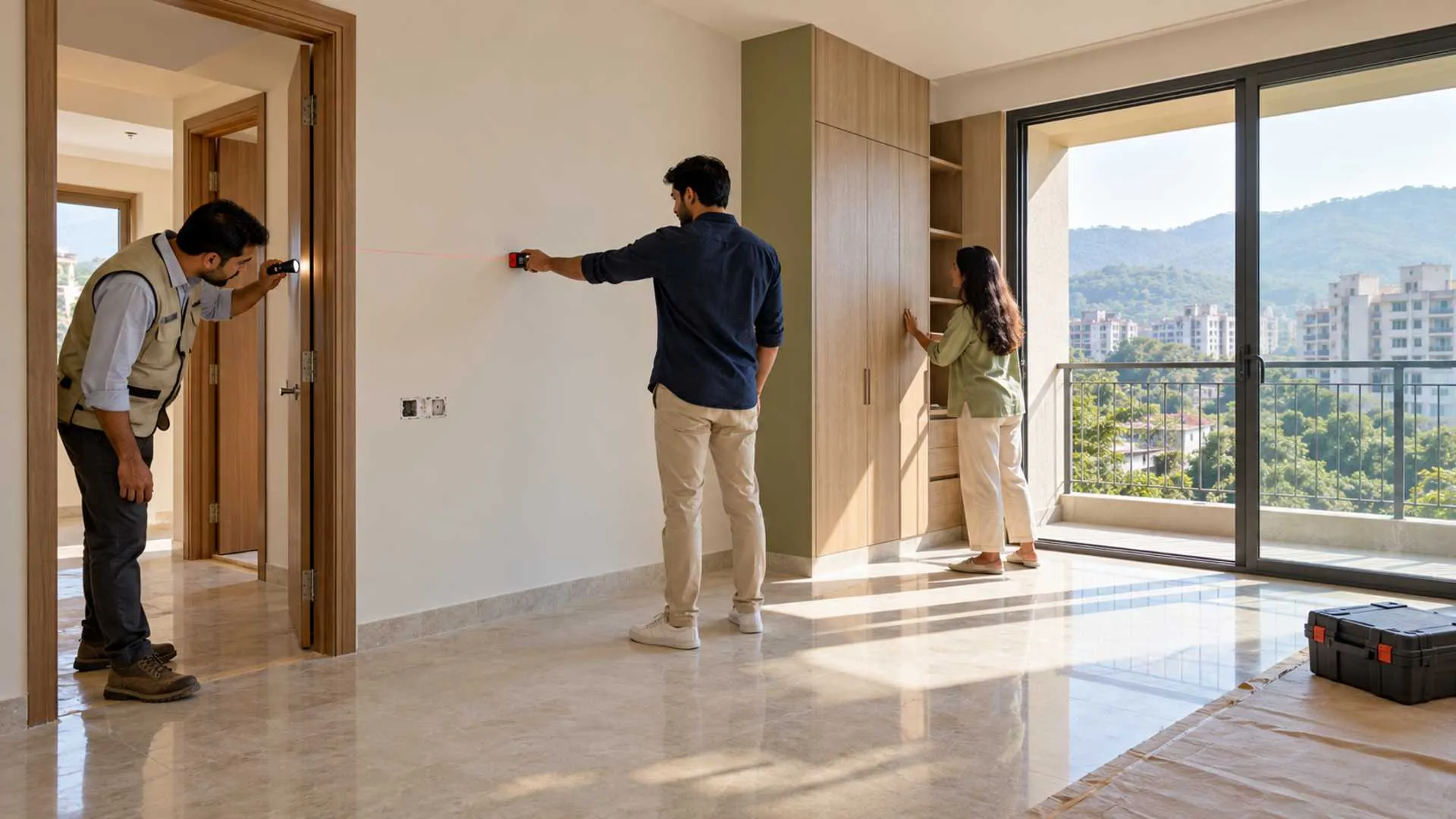
Pune’s housing market is getting tougher. People still want the city’s tech jobs, good schools, and nice neighborhoods, but they’re not going to settle for a bad layout just because the address sounds good. In 2026, buying an apartment in Pune is really about balancing location, usable space, knowing when you’ll actually get the keys, and the final price.
This change is important because Pune isn’t just one market. Areas like Baner and Moshi are very different. Kharadi doesn’t serve the same purpose as Koregaon Park. A small two-bedroom apartment near a tech hub might be more practical than a bigger three-bedroom place with a long, tiring commute. Recent reports also suggest the market is slowing down after growing quickly after the pandemic. New home sales dropped in early 2026, even though buyers still preferred bigger homes, well-known developers, and communities with lots of amenities. For buyers, this isn’t a sign to hurry or back off. It’s a chance to negotiate wisely.
This guide to buying a flat in Pune in 2026 looks at the city’s housing through three practical levels, compares two-bedroom versus three-bedroom apartments, weighs renting against buying, and shows the costs that aren’t advertised upfront.
Should I buy a 2BHK or 3BHK flat in Pune in 2026?
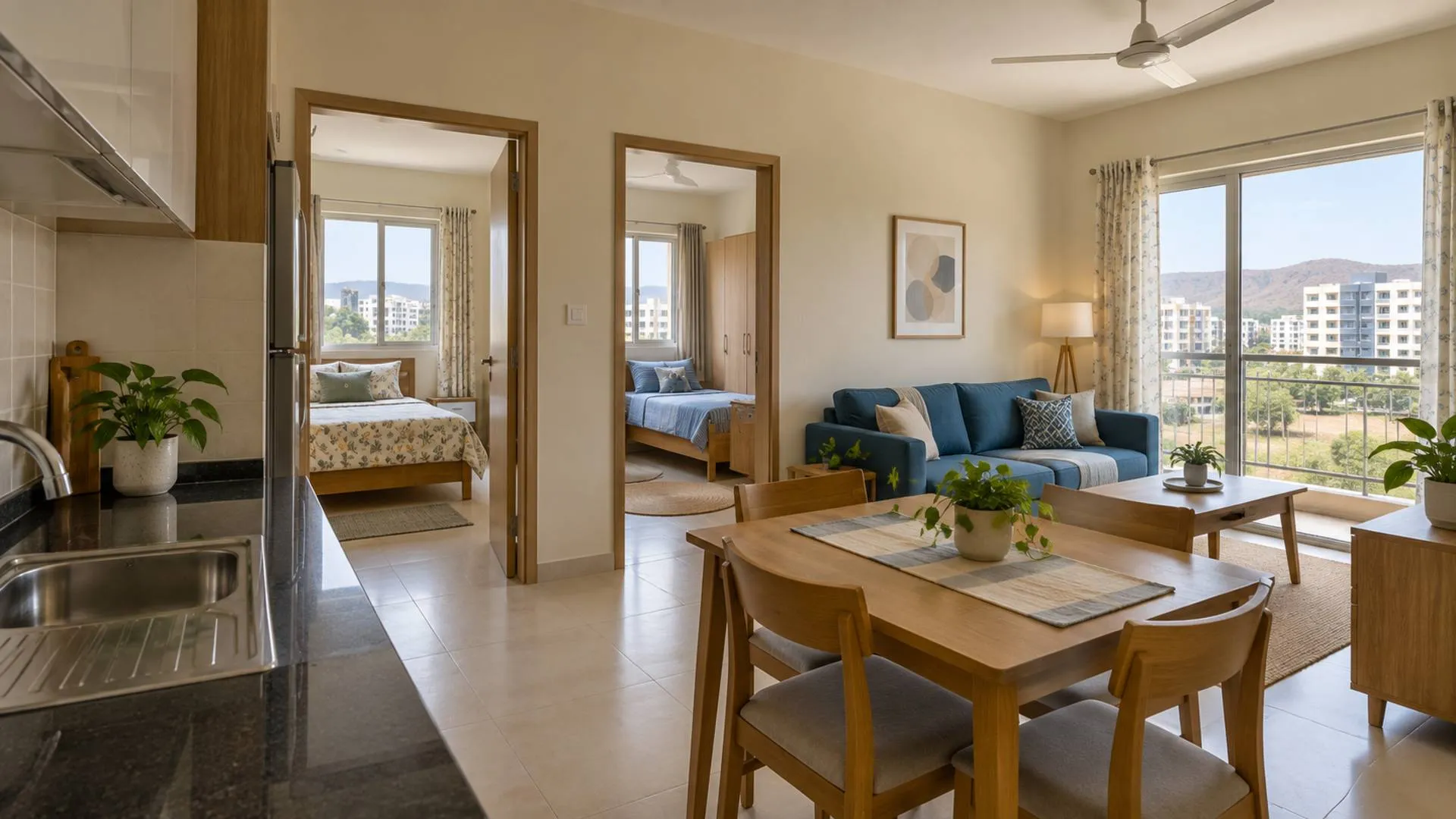
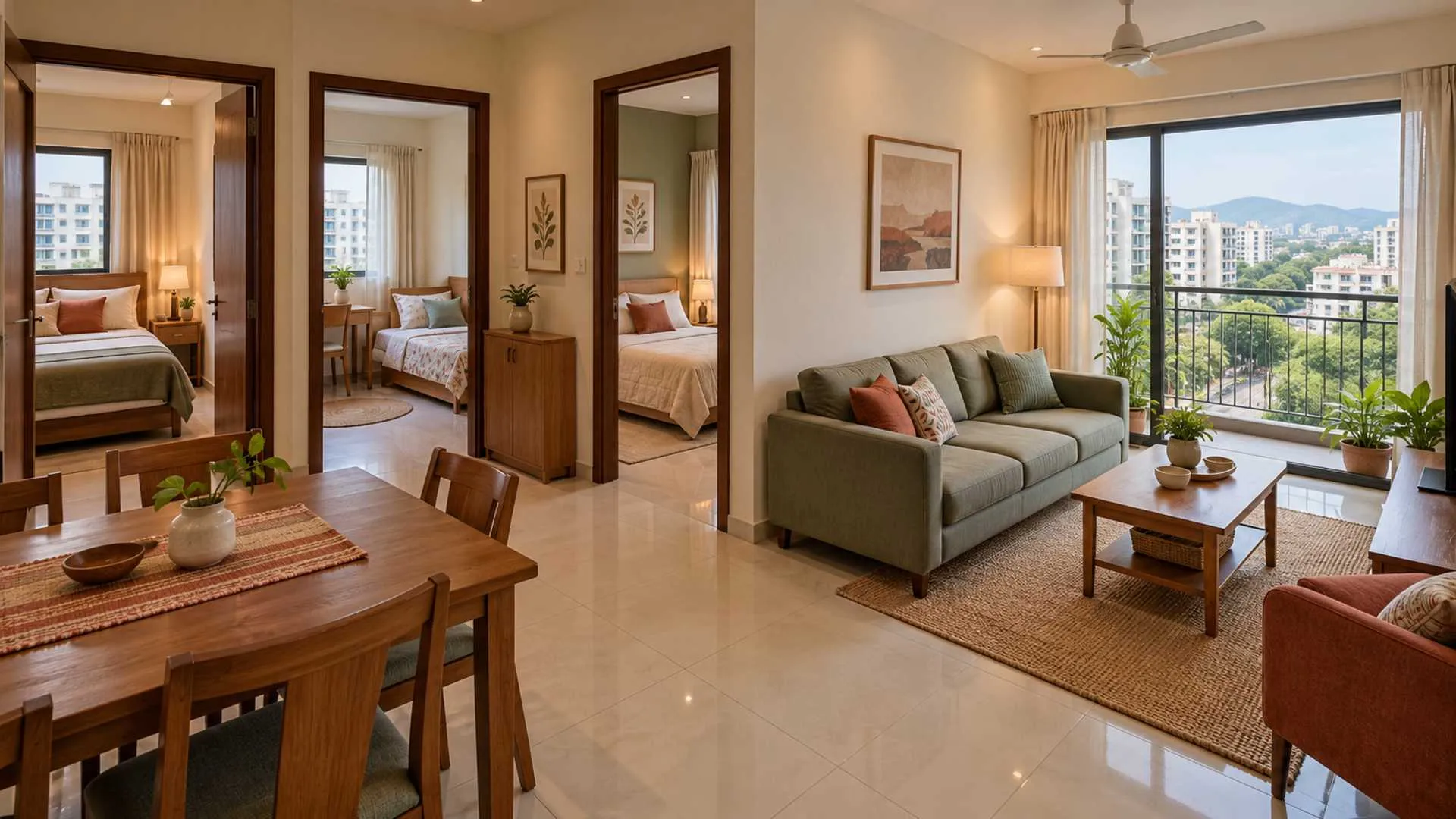
Buy a 2BHK if your all-in budget is below roughly ₹90 lakh, your household is small and location or commute matters more than an extra room. Consider a 3BHK if you can fund the higher down payment without draining emergency savings, expect to remain for seven years or longer, and genuinely need space for children, parents, or remote work. Across Pune, indicative 2BHK prices can run from about ₹45 lakh in emerging locations to above ₹1 crore in premium districts; 3BHK homes can range from around ₹80 lakh on the outskirts to ₹2.5 crore or more in established premium areas. Project, carpet area, construction stage and exact street can change those numbers substantially.
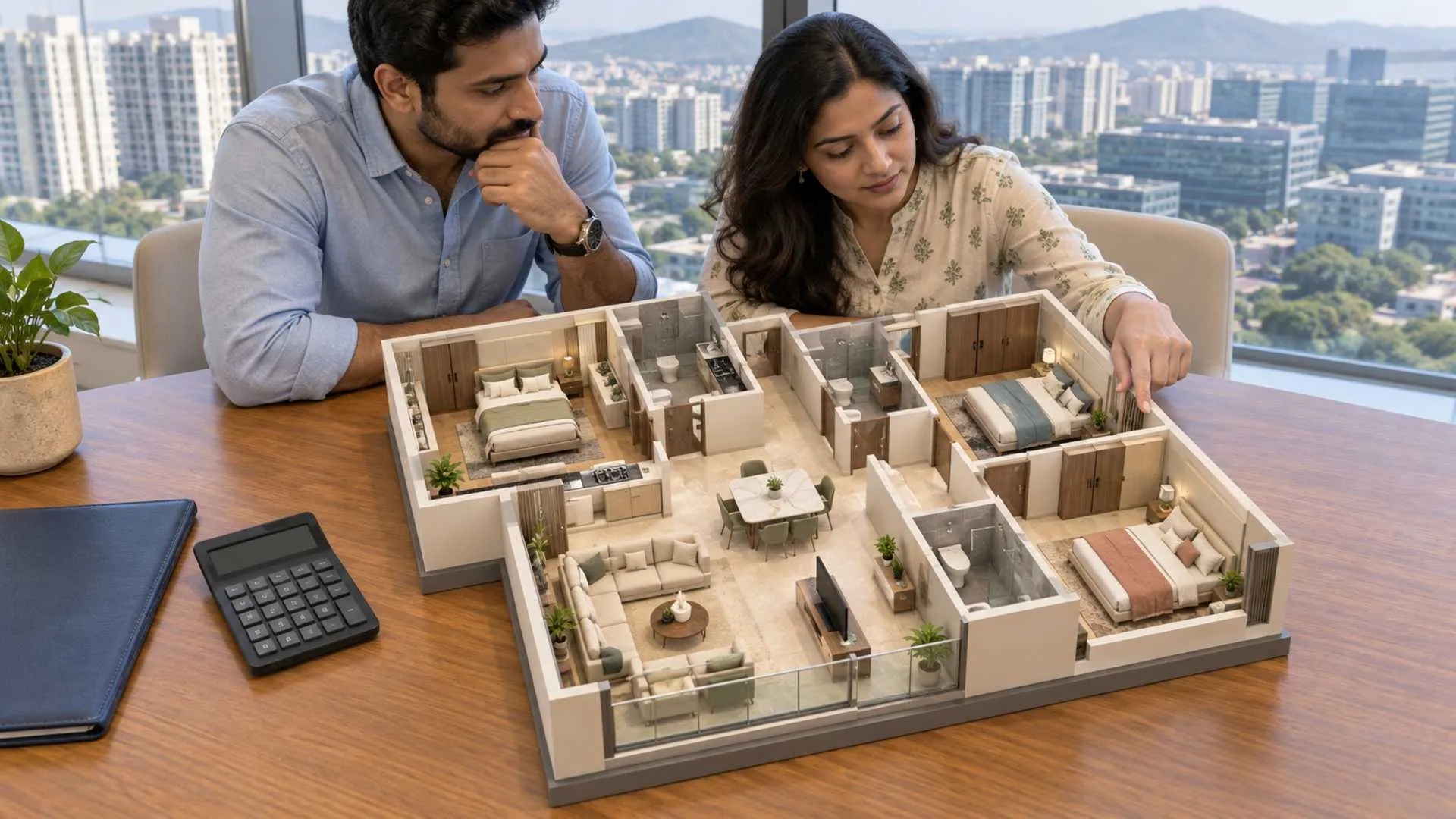
The right answer is therefore not “3BHK is always better.” A badly planned 3BHK can offer less useful space than an efficient 2BHK. Compare RERA carpet area, room dimensions, storage, ventilation and the loading between carpet and saleable area. A family expecting major life changes should price the cost of moving again, while a first-time buyer should protect liquidity. The most expensive spare room is the one that forces a financially uncomfortable loan.
Pune’s three housing markets: premium, IT-led and affordable
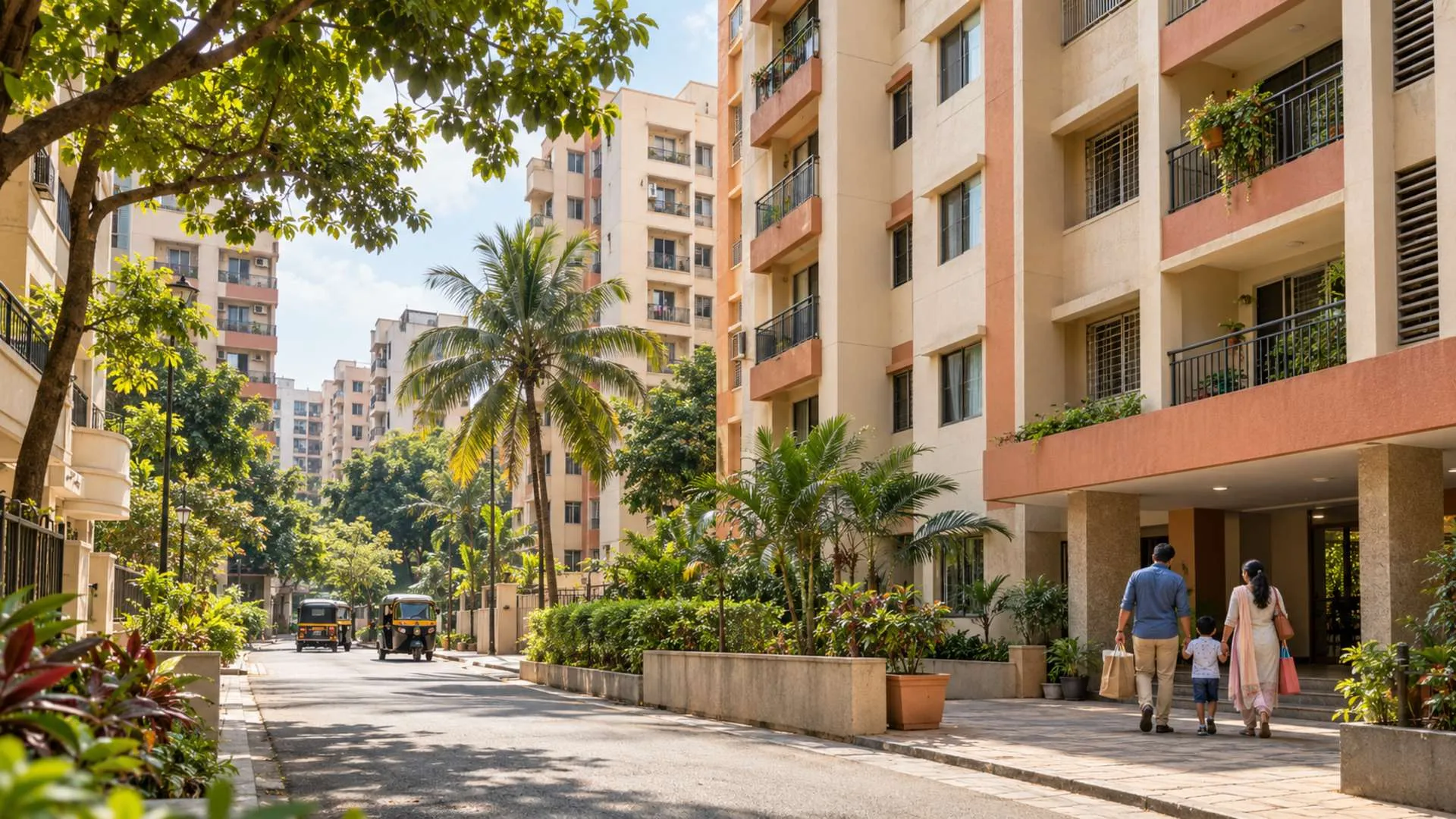
The best areas to buy a flat in Pune depend on what the home must do. Premium neighbourhoods prioritise social infrastructure and established addresses. IT corridors prioritise commute and tenant demand. Affordable growth zones exchange centrality for a lower entry price and future infrastructure potential.
Baner, Balewadi and Aundh remain strong western Pune choices for professionals who want restaurants, schools, hospitals and access to Hinjawadi. Baner’s newer gated developments command a premium, and a standard home below ₹1 crore has become difficult to find without compromising on age, size or precise location. Koregaon Park and Kalyani Nagar sit higher on the luxury curve, supported by lifestyle appeal, business access and a limited supply of prime land. Viman Nagar adds airport proximity and a large rental catchment. Buyers comparing a luxury flat in Pune should study traffic at peak hours and not assume a premium address guarantees a quiet approach road.
Developer material from Kolte-Patil has long framed Pune’s premium housing around design, amenities and lifestyle rather than square footage alone. That remains relevant, but the 2026 buyer should separate visual appeal from durable value. Clubhouses photograph well; dependable water, sound waterproofing, adequate lifts and an efficient maintenance budget matter every day. Projects such as Shubh Tristar in the Koregaon Park Annexe belt may enter a premium shortlist, but their current RERA record, sanctioned plans, inventory and price sheet must be verified before any comparison.
The second market follows jobs. Hinjawadi, Wakad, Tathawade and Punawale serve western IT employment, while Kharadi, Wagholi and Magarpatta attract demand from the eastern technology and business corridor. Aishwaryam’s discussion of 2BHK versus 3BHK homes reflects a visible post-pandemic preference for an extra room, but buyers should treat any exact market-share claim as dataset-specific. What is clear is that hybrid work has increased the value of a study, flexible bedroom, or larger living zone.
Hinjawadi can offer better space for the price than Baner, yet daily traffic and the project’s distance from the actual workplace can change the experience. Wakad provides a broader social ecosystem and dual access towards PCMC and Hinjawadi, usually at a higher ticket size. Kharadi carries strong tenant and end-user demand around EON IT Park and World Trade Center, but internal roads and water arrangements deserve project-level checks. Wagholi offers a more accessible entry point, with longer commutes and uneven civic infrastructure across pockets.
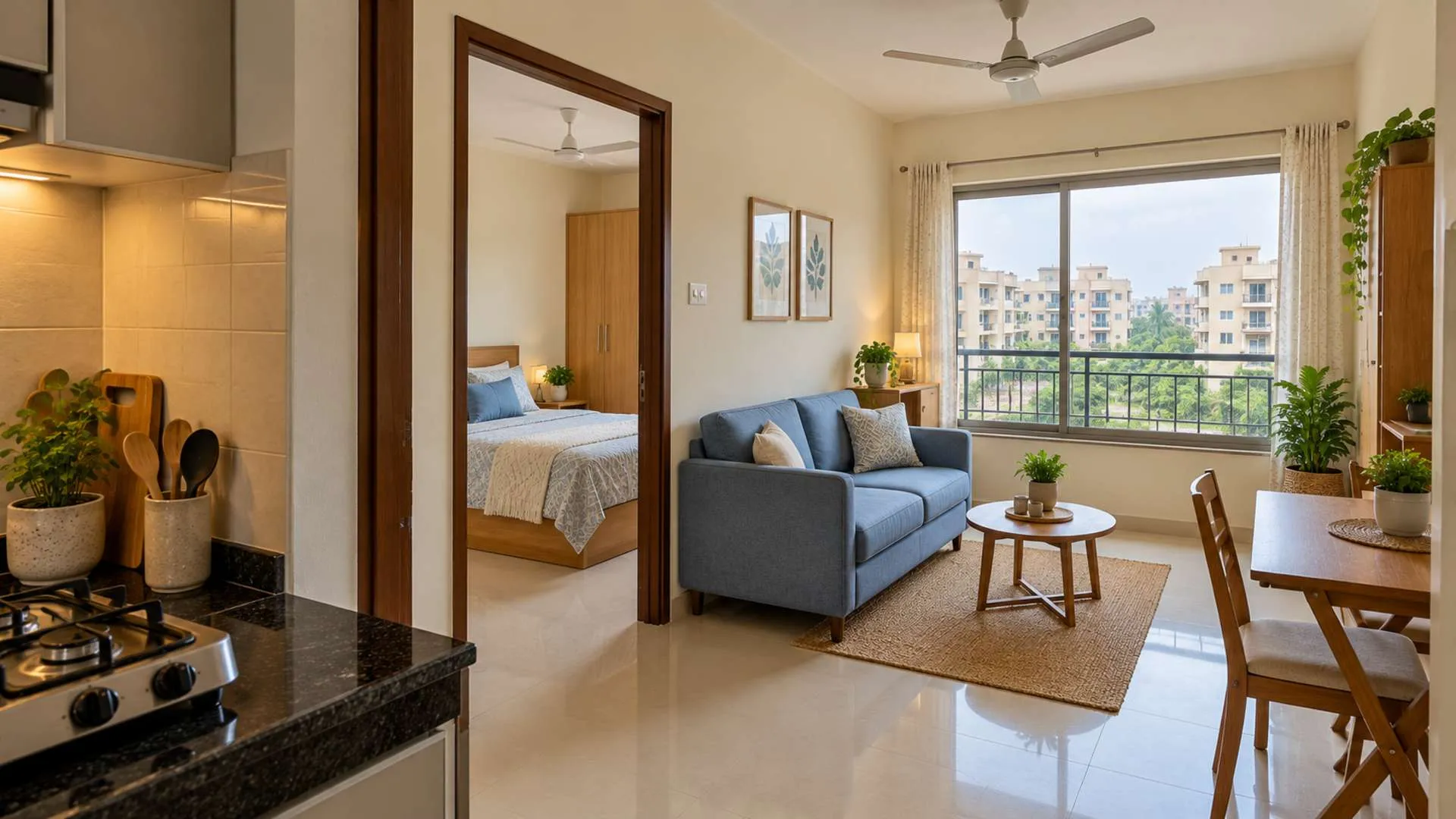
The third market is Pune’s affordability belt. Moshi and Chikhali in PCMC, Wagholi in the east, Punawale and Ravet in the west, and Talegaon Dabhade farther out can still produce a 2BHK flat in Pune near or below ₹50 lakh, particularly in compact, resale or early-stage inventory. Purple Corp’s 2026 budget overview and current listing guides place much of the value search in these emerging zones. Kumar Properties and Esbee’s buyer guides also emphasise that connectivity, developer delivery and social infrastructure should be assessed together rather than through the launch price alone.
For an affordable flat, Pune, Moshi and Chikhali appeal to buyers linked to the PCMC industrial belt. Punawale offers access to the Mumbai–Pune Expressway and Hinjawadi side, although congestion and infrastructure delivery remain important. Talegaon can provide more space and a lower price, but it suits households whose work and family routines do not require a daily central-Pune commute. Affordability stops being value when transport time, private water and recurring travel costs consume the savings.
Indicative 2026 listing evidence shows just how wide the market is. Pune 2BHK homes may begin around ₹45–₹55 lakh in peripheral micro-markets, cluster around ₹60–₹90 lakh in stronger mid-market corridors, and cross ₹1 crore in premium locations. A Pune 3BHK may begin around ₹80 lakh in emerging zones, move through ₹1.1–₹1.8 crore in established IT-linked areas and exceed ₹2.5 crore in premium districts. These are search ranges, not valuations. Floor, view, parking, age, carpet area, possession status and builder reputation can create major differences within the same PIN code.
Buy or rent and should you choose a new launch?
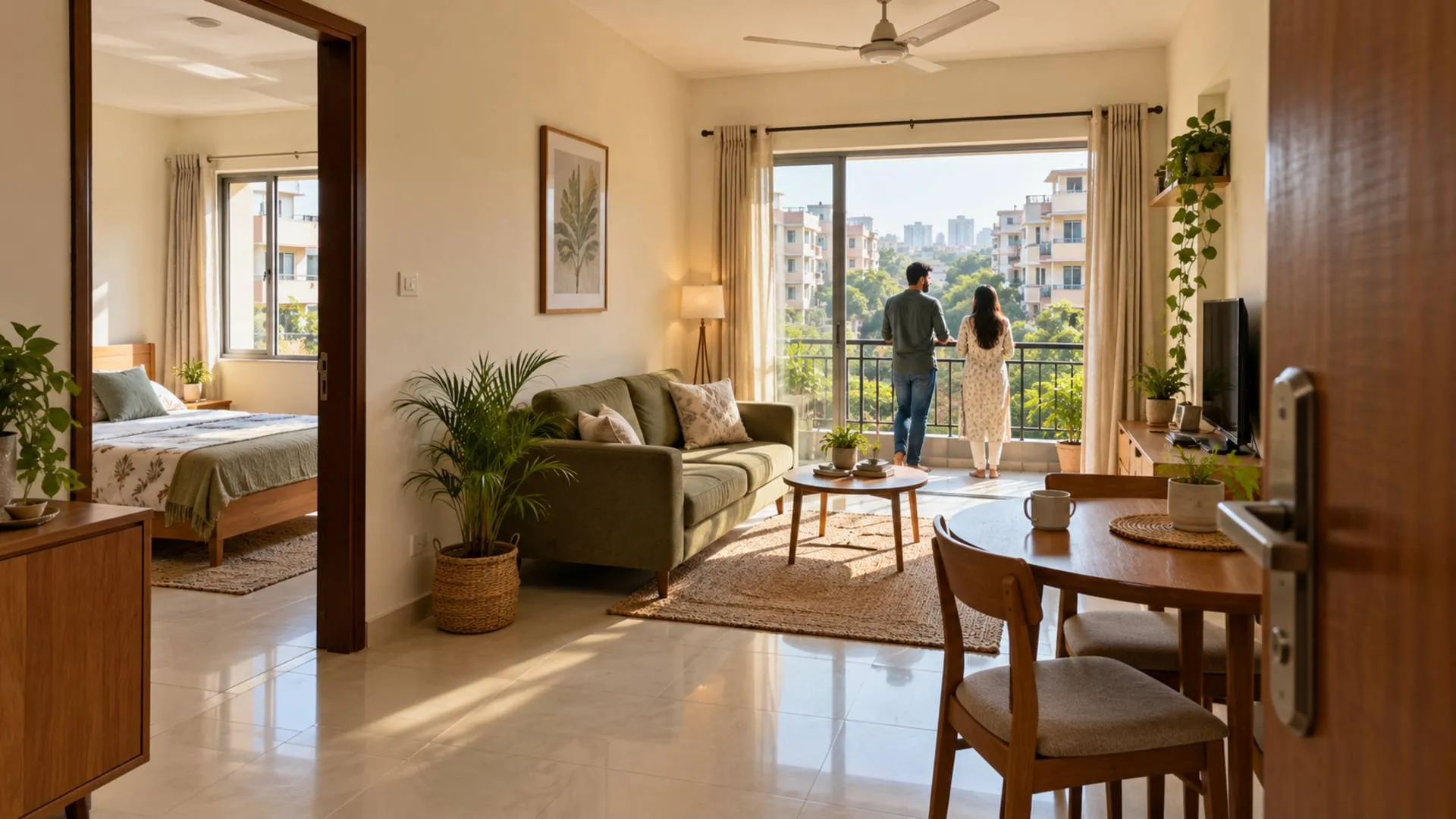
The question “Should I buy a flat in Pune or keep renting?” is best answered with a holding period, not a prediction. Consider a Hinjawadi household paying about ₹28,000 a month for a 2BHK. A comparable purchase financed with a large loan could create an EMI near ₹58,000, depending on price, down payment, rate and tenure. That gap is not automatically wasted rent: the tenant retains the down payment, avoids transaction costs and can move when employment changes. The owner, however, builds equity and gains control over the home.
Renting usually makes more sense when a buyer may relocate within five years, has uncertain income, or would use nearly all savings for the down payment. Buying becomes more persuasive when the household expects to stay for seven to ten years, has an emergency fund after closing, and can carry the EMI without sacrificing retirement or education goals. A sensible housing EMI ceiling is often 30%–35% of take-home income, even if a lender approves more.
New launches can offer choice of unit, staged payments and an introductory price. They also bring completion, quality and infrastructure risk. A new flat in Pune 2026 should be checked on the MahaRERA portal for registration, declared completion date, litigation, approvals and periodic updates. Never rely only on a brochure’s “proposed” road or metro claim.
A ready-to-move flat gives the buyer a physical product to inspect, clearer neighbourhood conditions and immediate use or rent. A completed property with the required completion or occupancy documentation generally avoids the GST applied to an under-construction residential purchase. Resale stock can also offer larger carpet areas in established societies, but needs title, dues, structural condition and society records examined. A new launch may win on payment flexibility; ready property wins on certainty.
The advertised price is not the price you finally pay
The biggest mistake in a property in Pune search is building the budget around the agreement value alone. Within Pune’s applicable urban jurisdictions, the commonly reported 2026 stamp-duty burden is about 7% for a male buyer and 6% where the eligible concession for a woman buyer applies. Registration is generally 1% for lower-value property and capped at ₹30,000 once the value exceeds ₹30 lakh. Rates depend on location, ownership structure and current government rules, so buyers should confirm the payable figure through Maharashtra’s registration system before signing.
An under-construction non-affordable residential home generally attracts 5% GST without input-tax credit; qualifying affordable housing has a different rate. A completed or resale home with the relevant completion status generally does not attract this property GST. Legal review, lender processing and valuation, mortgage documentation, parking, floor-rise or preferential-location charges, advance maintenance, corpus contribution, utility deposits, brokerage, moving and interiors can follow.
For that reason, a buyer may need roughly 8%–18% above the headline price, depending especially on construction status and fit-out ambition. This is a planning range, not a statutory surcharge. On an ₹80 lakh home, stamp duty, registration and 5% GST alone can materially change the cash required, before furniture or loan expenses. Ask the developer for a signed, itemised cost sheet showing the base consideration, taxes, parking, amenities, maintenance and every payable milestone.
The final due-diligence sequence is straightforward. Verify the project and promoter on MahaRERA. Have an independent property lawyer review title, encumbrances, sanctioned plans, approvals and the agreement. Match the quoted area to RERA carpet area. Check water source, drainage, power backup, lift capacity, maintenance assumptions and actual peak-hour travel. For ready property, inspect the occupation certificate, society dues and physical defects. For a resale home, trace ownership and confirm that any existing loan will be closed correctly.
Pune still offers something many large cities struggle to provide: meaningful choice across budgets. But the city’s best purchase in 2026 is not automatically the largest home or the most visible launch. It is the flat whose location, carpet area, legal record and total cost still make sense after the sales pitch has ended. Before you buy a flat in Pune, compare at least three projects on the same all-in-cost and carpet-area basis, visit each approach road during rush hour and keep a cash buffer for life after possession.
Ready to shortlist with clearer numbers? Compare verified projects, neighbourhoods and practical buying considerations through RealtyConnect, then confirm all legal, tax and loan details with qualified professionals before paying a booking amount.