

Pune Housing Launches Reach Three-Year High With 27% Annual Rise
Pune Housing Market 2026: Launches Rise 27% as Supply Grows
SHARE:
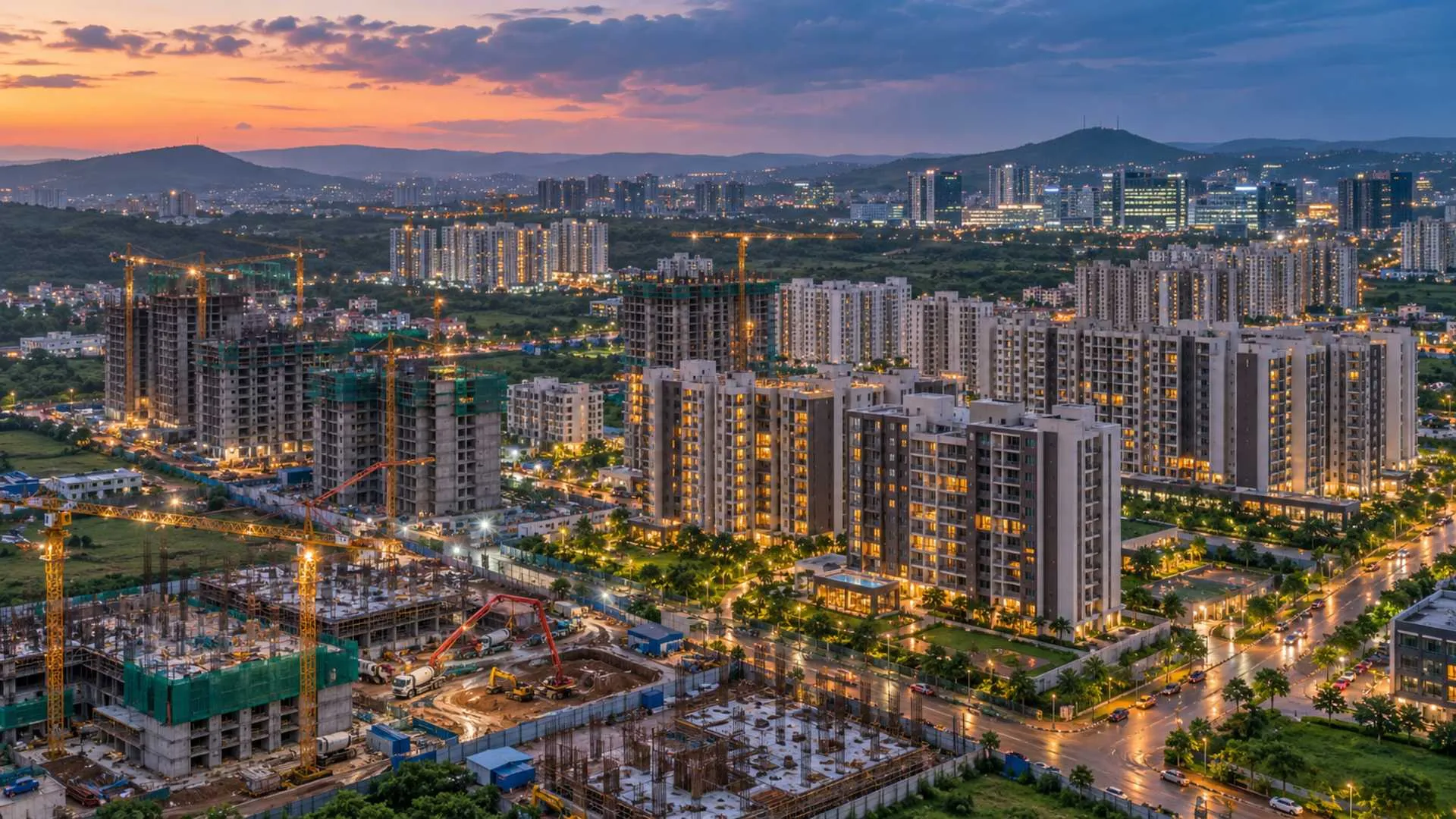
Pune recorded 13,756 residential launches in Q2 2026, its highest quarterly total in three years, according to Cushman & Wakefield’s Pune Residential MarketBeat. Launches increased approximately 21% quarter-on-quarter and 27% year-on-year.
That headline looks bullish, but a second number makes the story more complicated. Gera Developments’ Pune Residential Realty Report found that the value of unsold housing stock rose 28% year-on-year to a record ₹92,110 crore in the 12 months ended June 2026. Pune is therefore not facing a simple boom or slowdown: supply is expanding, sales are recovering, prices are still rising and buyer leverage is improving selectively.
The widely repeated “supply rises 28%” description combines two datasets. Cushman & Wakefield measured Q2 launches rising about 27% annually. Gera measured unsold inventory value rising 28%. For anyone searching for a flat in Pune, a 2BHK flat in Pune, a 3BHK flat in Pune, or an apartment for sale in Pune, those figures answer different questions.
Should I buy a home in Pune right now or wait given the high unsold inventory?
Buy when the project, price and EMI fit your needs; do not wait solely because Pune’s unsold inventory has reached a record value. Citywide supply creates more choice and negotiating scope, but inventory is uneven across locations and price bands. Prices were still rising in 2026, though more slowly. Buyers should compare completed and competing projects, verify MahaRERA details and negotiate on total cost rather than assuming a broad price crash.
The data supports a measured approach. Hindustan Times, citing the Gera report, said annual sales rose 7% to 92,341 homes in the 12 months ended June 2026, the first recovery after three years of declining sales. New launches increased faster, rising 14% to 101,085 units. That produced a replacement ratio of 1.09, meaning slightly more homes entered the market than were sold.
Inventory overhang consequently moved from 10.8 to 11.3 months. That is a warning light for developers, not automatic evidence of distress. It indicates how long available stock could take to sell at the prevailing pace. A buyer considering a ready-to-move flat Pune may gain negotiating power where comparable units compete. A well-priced, employment-linked project may still sell without major discounts.
Where Pune’s new supply is concentrating
The Cushman & Wakefield Q2 2026 report shows that launches were not spread evenly across the city. NH4 Bypass North led with about 41% of Pune’s quarterly supply, supported by project additions in Hinjawadi and Tathawade. The North-East submarket followed with 3,817 homes, or around 28%, driven largely by Wagholi and Kharadi.
North Peripheral contributed 1,728 units, about 13% of supply, with Chikhali and Talegaon Dabhade prominent. East Pune added 927 homes, or roughly 7%, concentrated in Mundhwa. These numbers answer the query “which Pune corridors have the highest new supply in 2026?” more accurately than a generic list of best areas to invest in Pune.
The NH4 Bypass North Pune housing launches 41% supply 2026 story is linked to Hinjawadi’s employment base, Tathawade’s developable land and the expected influence of Metro Line 3 and the Pune Ring Road. Buyers should verify their timelines and on-ground progress rather than treat them as completed advantages.
Kharadi new residential launches in H1 2026 reflect the strength of Pune’s eastern technology and office corridor. Wagholi offers a comparatively lower entry point, while Kharadi commands a premium for employment access and established demand. PCMC and the northern belt continue to attract affordable and mid-segment supply, although one citywide “PCMC Zone 6” rate cannot substitute for project-level comparison.
More homes, but not necessarily cheaper homes
Pune’s Q2 supply was concentrated higher up the price ladder. Cushman & Wakefield recorded 5,643 mid-segment launches, accounting for about 41% of the quarter, while 5,126 high-end homes contributed roughly 37%. Affordable housing represented 2,557 units, or around 19%, up from approximately 16% in the previous quarter.
This composition helps explain why a supply surge has not translated into a citywide decline in Pune flat prices in 2026. The same report placed the weighted average capital value of newly launched projects at ₹12,888 per sq ft, up 5.4% quarter-on-quarter and 1.5% year-on-year. That figure describes the launch mix in Cushman & Wakefield’s dataset; it is not the average price of every existing property in Pune. A greater share of premium launches can lift the weighted average even when rates in individual micro-markets move modestly.
Gera’s broader city study used a different methodology and reported an average residential price of ₹7,082 per sq ft, up 4.8% annually. The two figures should not be directly compared as though one disproves the other. They cover different property universes and measurement periods. Together, they show that Pune property prices continued to rise, but the pace of annual appreciation moderated.
The product itself is changing. Gera reported that the average home size reached 1,275 sq ft. Sales in the 1,401–1,600 sq ft band grew 33%, while the 600–800 sq ft category declined 19%. This helps explain the visibility of 3BHK flat in Pune launches and luxury flat Pune inventory: upgraders seeking larger homes are exerting more influence than the traditional compact-home buyer.
Why prices are rising despite record inventory
Several forces can coexist. Employment around Hinjawadi, Kharadi and Nagar Road continues to support end-user and rental demand. Better-quality projects face higher land, labour, finance and construction costs. Buyers have also shifted towards larger homes and established developers, raising the total value of unsold stock even when unit inventory moves less dramatically.
At the same time, developers generally prefer offers, payment plans or limited inventory deals to visible headline-price cuts. Consequently, the best opportunity may appear in the effective transaction cost rather than the advertised rate. Buyers comparing new projects in Pune in 2026 should ask for floor-rise charges, parking, maintenance deposits, clubhouse fees, statutory charges and finance-linked discounts before judging value.
There is also a difference between quarterly and annual demand signals. BeyondWalls discussed a Q2 2026 sales decline using quarterly market data, while the Gera report recorded 7% growth over the 12 months ended June. Both can be true because the measurement windows and market coverage differ. A weak quarter does not erase an annual recovery; an annual recovery does not guarantee that every new launch will sell quickly.
What the surge means for buyers and investors
For end users, the Pune housing market 2026 offers broader choice. In high-supply corridors, compare projects with similar possession dates and carpet areas. Check construction progress, developer finances, MahaRERA disclosures and actual workplace access. A low introductory rate loses its appeal if possession risk, hidden charges, or travel costs are high.
For property investment in Pune 2026, supply discipline matters. A location with many launches can gain from infrastructure and employment, but excessive competing inventory may limit rent growth and resale speed. Hinjawadi and Tathawade offer IT-corridor depth; Kharadi and Wagholi combine eastern employment access with different entry prices; Chikhali and Talegaon offer affordability but require closer scrutiny of connectivity and end-user demand.
Claims such as “Pune property appreciation 5–6% annually” should be treated as a market observation, not a guaranteed return. Likewise, QTS or quarters-to-sell figures from one research firm should not be interchanged with Gera’s 11.3-month inventory overhang. Investors should prioritise rental demand, vacancy, maintenance, realistic resale comparables and the supply pipeline within the immediate micro-market.
Pune’s market has moved from scarcity to selection
The fact that the launch figures are high indicates that the builders are confident, especially in areas where employment is a key factor. However, the total inventory value of ₹92,110 crore shows that future launches need to be carefully adjusted. The market is sending out the message that competition exists, not that a sudden collapse is imminent.
For buyers, such competition does prove to be beneficial. People who want to buy a flat in Pune or purchase property in Pune in 2026 have a greater number of options, developers and locations from which to choose, and with slower price increases, there is more room for negotiation. The final decision won’t be made by waiting for a citywide correction; instead, it will result from finding a property that is well priced in an area where actual demand can take in the new supply.
Before you book a new flat in Pune in 2026, make sure to compare the project’s total cost, its approvals, delivery record and the range of other properties available. If you would like some guidance on property discovery and want to ask more effective questions of developers, go to RealtyConnect.