Villa Plot vs Ready Villa Near Pune: Which Investment Wins?
Villa Plot vs Ready Villa Near Pune: Investment Guide 2026
SHARE:

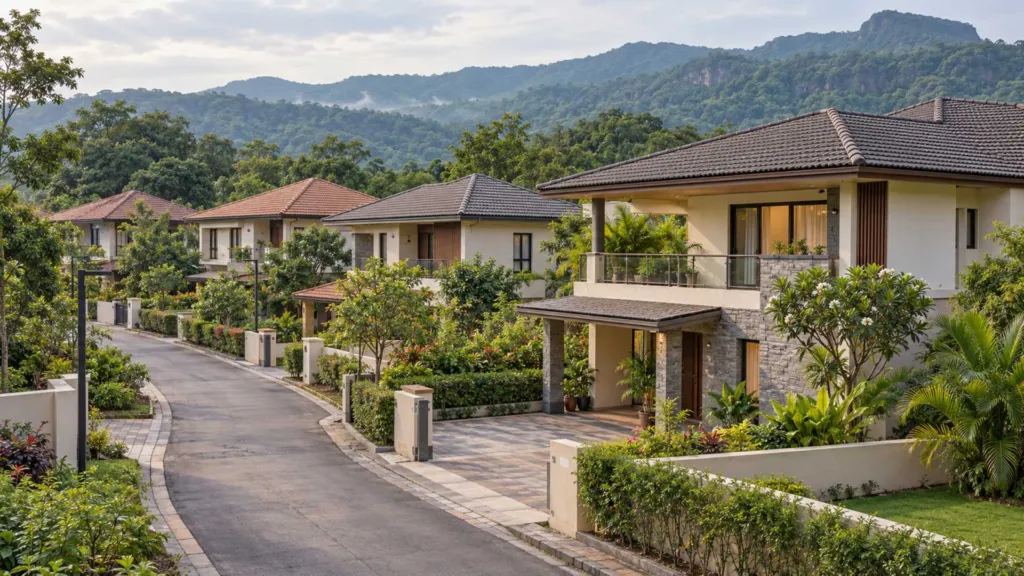
Buying land near Pune tends to offer a variety of opportunities with its appeal: a home that can be shaped around the buyer’s family, a well-placed garden and construction that fits the buyer’s funds at the right time. The ready villa has these same opportunities, with an added bonus of being able to inspect a finished home and move in sooner.
When choosing between buying a villa plot or a ready villa near Pune in 2026, the best option is dependent on what the property has to offer. Is it capital growth or rental income? Could it be a weekend getaway or a full-time living space?
These factors are capable of giving different results at the same budget.
A plot delays the costs of building a home, but also the income from having a residence to rent out and the ability to occupy the building. With the completed villa, the opportunity to utilize the home immediately becomes possible, alongside the responsibilities of upkeep for an existing structure.
The final test of which option is best lies in the value and utility of the property itself, rather than the land or the construction. Those who understand this distinction can avoid spending larger amounts of money on a home that looks good on paper, but fails to provide what they truly need.
Which is a better investment near Pune, a villa plot or a ready villa in 2026?
A villa plot can suit buyers seeking customisation who can wait, manage construction and hold land without rental income. A ready villa can suit buyers prioritising earlier occupation or the opportunity to rent a completed home. Compare total costs, documentation, location, maintenance and resale prospects; neither option guarantees higher returns.
The price gap can shrink once construction enters the calculation
A plot quotation and a ready-villa quotation are prices for different stages of ownership.
The plot buyer is acquiring land and whatever infrastructure or services the agreement includes. The ready-villa buyer is acquiring an existing building alongside the documented rights attached to it.
Kekarav’s residential-plots comparison publishes a starting price of ₹1.9 crore for its Bavdhan Hills plots. However, the ready-home figures in its comparison refer to flats, rather than equivalent completed villas. That table should not be interpreted as a direct plot-versus-villa price comparison.
This matters when evaluating claims that buying land is automatically cheaper.
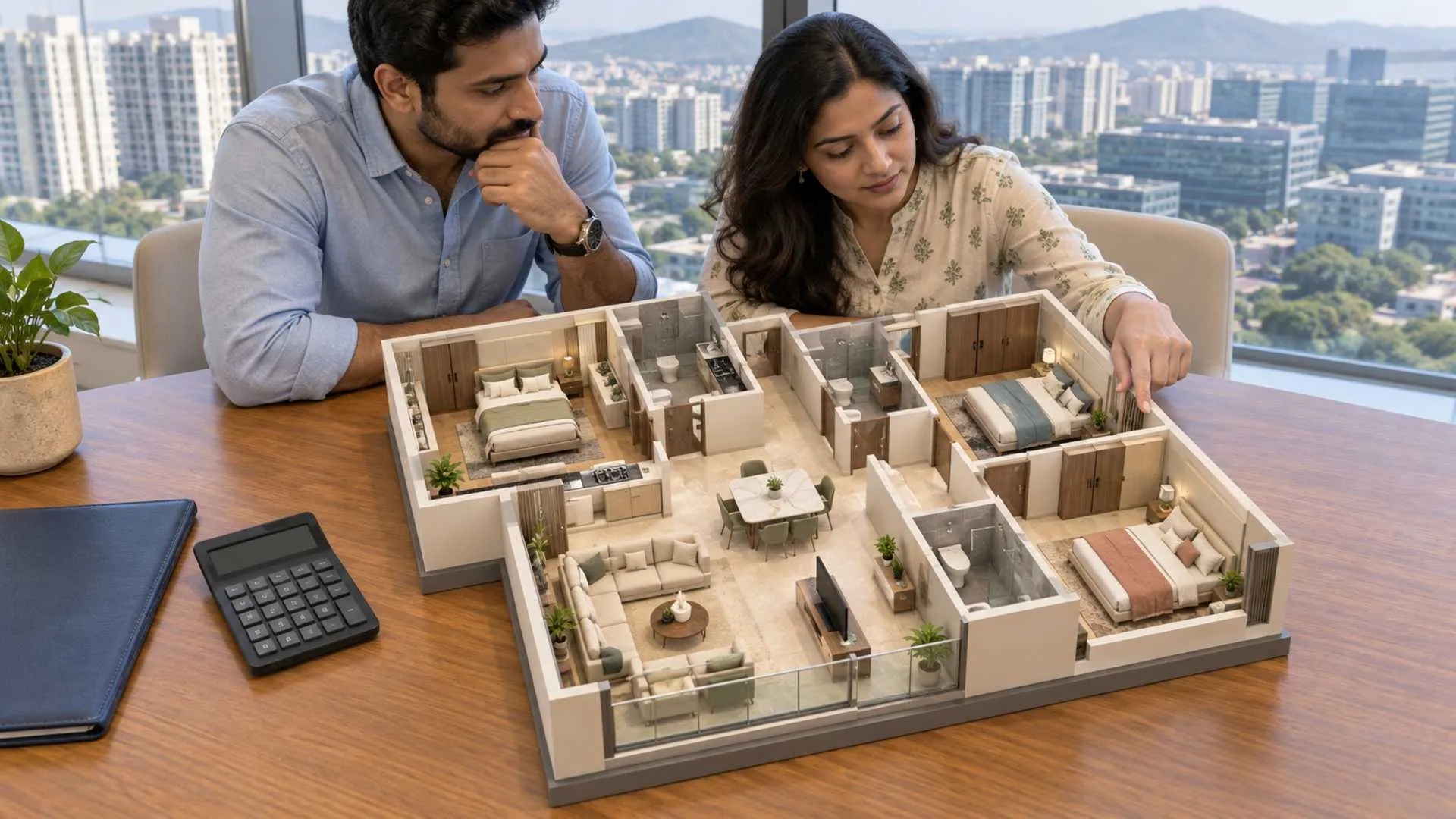
Consider the following hypothetical exercise. These figures illustrate the budgeting method and are not quotations for Pirangut, Bhugaon or any named project.
| Cost component | Plot followed by construction | Ready villa |
| Property purchase | ₹80 lakh | ₹1.65 crore |
| Construction | ₹60 lakh | Included in purchase |
| Other budgeted costs and reserves* | ₹25 lakh | ₹15 lakh |
| Illustrative total | ₹1.65 crore | ₹1.8 crore |
The assumed allowances cover different combinations of acquisition expenses, professional services, connections, interiors, repairs and contingency. Actual costs require separate quotations.
The original ₹85 lakh purchase-price difference becomes a ₹15 lakh difference in this illustration.
That remaining saving may be worthwhile. But it must compensate for the buyer’s construction responsibilities, the waiting period and any additional accommodation costs.
Compare the cost of a usable completed home with another usable completed home. Comparing bare land with finished accommodation exaggerates the apparent saving.
A villa plot offers design control and a project to manage
The strongest reason to buy a villa plot near Pune may be that existing homes do not meet the family’s needs.
A household could want a ground-floor bedroom for parents, a separate study, a shaded courtyard or additional storage. Building from a plot can allow these requirements to shape the home from the beginning, subject to permissions and development rules.
Banyan Tree Realty’s villa-land buyer guide identifies design control, construction timelines and infrastructure as central differences between plotted land and ready accommodation. It also recommends checking title, layout sanction, FSI, access, utilities and boundary demarcation.
Design freedom should therefore be understood as freedom within a verified framework.
Before buying, ask an architect to test the intended house against the actual plot. Road position, shape, slope, setbacks and applicable floor space index affect what can be constructed. A large advertised plot does not necessarily produce the layout the buyer imagines.
Construction requires decisions about specifications, contractors, payments and supervision. The owner must also plan for changes and delays.
EstateBull’s plot-versus-villa explanation, published in August 2025, highlights the effort involved in permissions and construction, alongside exposure to material and labour costs. Its discussion is useful for understanding the process, rather than establishing current Pune prices.
For an investor comfortable commissioning work, that responsibility may be acceptable. For a busy household living elsewhere, professional supervision becomes an essential budget item.
The plot route works best when the buyer has a credible plan for turning flexibility into a completed home.
A ready villa can earn sooner, but gross rent is not profit
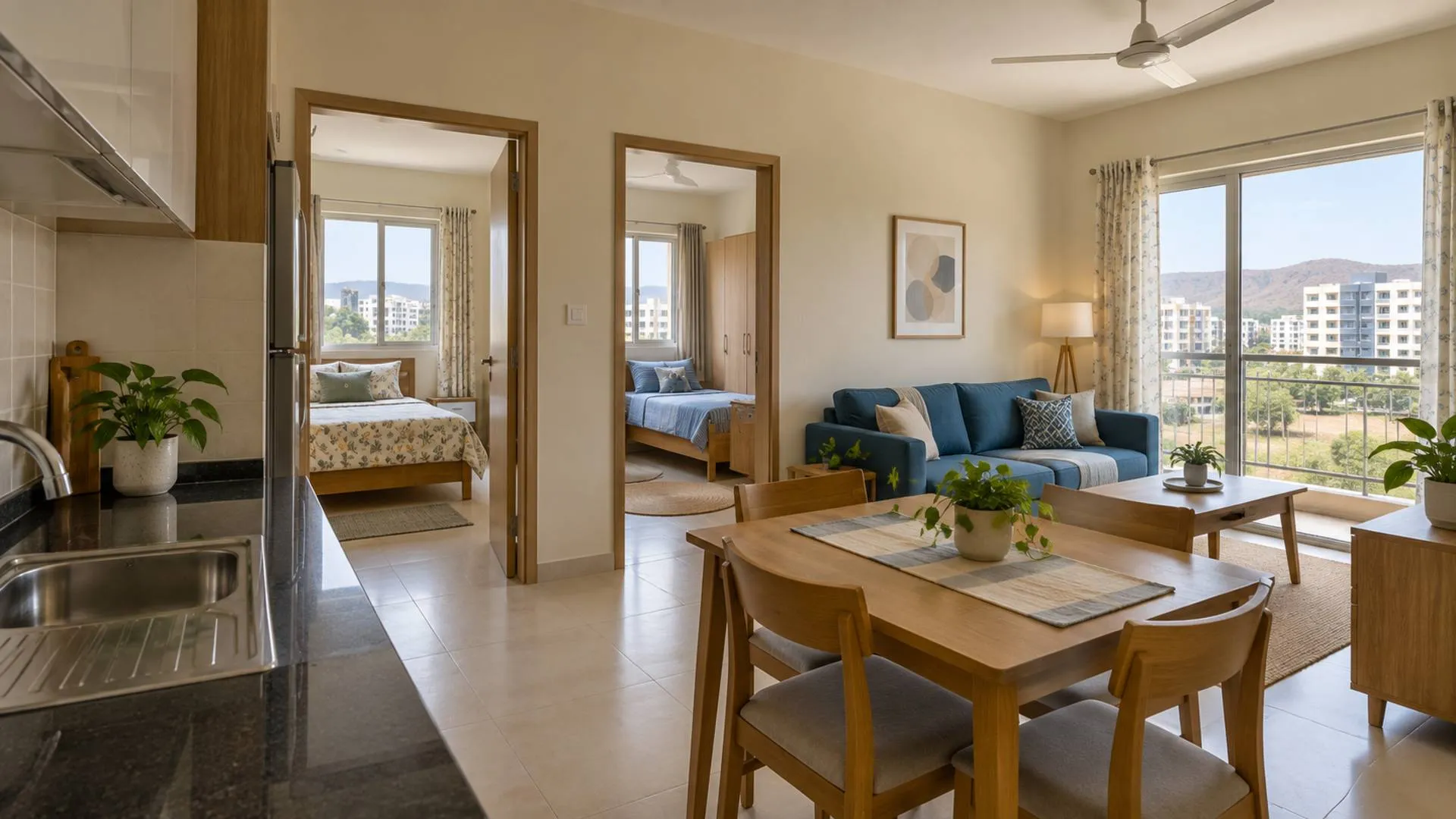
A completed villa creates the possibility of occupation or residential letting without first undertaking a full construction project. It still needs appropriate documentation, inspection and, where necessary, repairs or furnishing.
That distinction is valuable for someone who wants an investment property near Pune to contribute income sooner.
An undeveloped residential plot does not automatically generate housing rent. Any proposed alternative income use needs separate examination of permissions, agreements and costs.
For a ready villa, calculate the return from achievable rent rather than a promotional yield.
Suppose a completed villa costs ₹2 crore and rents for ₹50,000 monthly. At full occupancy, annual rent is ₹6 lakh: a 3% gross yield on the purchase price.
Allow one vacant month, and collections fall to ₹5.5 lakh. Deduct an illustrative ₹80,000 in annual owner-paid expenses, and income becomes ₹4.7 lakh before financing and tax. Against an assumed ₹2.15 crore total investment, the corresponding return is approximately 2.19%.
These are hypothetical figures, not a verified Pune villa rental quotation.
They show why the supplied 3–4% rental-yield range cannot be applied automatically to every ready villa. Maintenance, vacancy, tenant demand and acquisition cost can materially change the result.
Ask for comparable completed leases in the same community. A large villa’s rental market may be narrower than the pool of people interested in viewing it.
A buyer should also distinguish rental income from personal enjoyment. A weekend home can deliver considerable lifestyle value while producing modest financial income.
Near Pune, the location and community can outweigh the format
The best area for a villa plot investment is not necessarily the best area for an immediately usable second home.
Urbanbrick’s Pune investment guide identifies Pirangut, Talegaon and Somatne Phata among its plotted-development search locations. These are starting points for a shortlist, rather than evidence that every parcel in those areas will outperform.
For a villa plot in Pirangut, test access, services and the intended journey to Pune. For Bhugaon, Bavdhan or Lavale, inspect the precise site rather than relying on the wider location’s reputation.
For a plot near Hinjewadi, assess the actual workplace route and whether the surroundings support full-time occupation. If comparing Wagholi or Lonikand with western Pune, use the household’s regular destinations to determine which corridor makes sense.
The supplied references do not establish a dependable locality-wide plot-price table or the specific ₹1.69 crore plot-versus-₹2.1 crore villa comparison. Obtain current, comparable quotations before assigning those figures to a project.
Community completion is another important variable.
Magicbricks’ second-home comparison, published in November 2025, highlights a potential disadvantage of plotted developments: owners may construct at different times, leaving some plots vacant while building activity continues around occupied homes. It contrasts that experience with the convenience of completed villa communities.
On a site visit, count occupied homes and inspect delivered facilities. A clubhouse photograph tells less than a functioning water supply, maintained roads, and an active management arrangement.
The community’s present condition should influence the price you are willing to pay.
Gated plot or standalone land: check what the premium includes
A gated plot in Pune may come with coordinated infrastructure and shared services. Standalone land may require more individual arrangements. Neither description settles the legal position.
An NA plot and a gated plot are also not opposing categories. NA concerns land use; gated describes the development format. A gated villa plot still needs the relevant lawful permissions and documentation.
Ask what is completed, what is planned and what the agreement obliges the seller to deliver. Establish responsibility for roads, drainage, water, electricity and common facilities.
For both formats, arrange an independent legal review covering:
- Title and transfer: ownership chain, seller authority, encumbrances and relevant land records.
- Permitted development: lawful residential use, sanctioned layout, planning restrictions and construction potential.
- Physical identification: boundaries, measured area and documented access.
- Project obligations: applicable registration, development commitments, charges and contractual conditions.
Registration claims should be verified for the exact project and phase. Land-use permission does not replace approval for a particular building design.
For a ready villa, extend the review to the sanctioned building plan, applicable completion or occupancy documents and any alterations. Commission a technical inspection of the structure and services.
A “ready” label should describe more than a building visible from the road. The buyer needs to establish that the property can be occupied as intended and transferred on acceptable terms.
Appreciation and resale: avoid comparing promises with evidence
Some supplied references argue strongly for land.
GenuinePlots’ April 2025 comparison presents customisation and reduced building-upkeep obligations as advantages of plots. These are useful considerations, but they do not establish guaranteed appreciation or superior resale performance.
A ready villa also includes rights associated with land, depending on its ownership structure. The comparison is therefore not simply “appreciating land versus depreciating building”.
The supplied references do not provide a verified dataset proving that villa plots near Pune appreciate at 10–20% annually while ready villas appreciate at 7–9%. Those figures should not become the foundation of an investment decision.
For resale, consider who the next buyer will be. A plot’s flexibility can appeal to someone planning a custom home. A completed villa may appeal to someone who wants to inspect and occupy without managing construction.
Both can be difficult to sell if the asking price, documentation, or location limits the buyer pool.
A five-year holding period is not a guarantee either. Calculate a conservative outcome with limited appreciation, recurring expenses and selling costs. Then consider whether the investment remains acceptable.
Which buyer should choose which option?
A villa plot can be the stronger fit when the buyer has a longer horizon, sufficient reserves and a genuine desire to customise. It also requires comfort with a period without residential rental income.
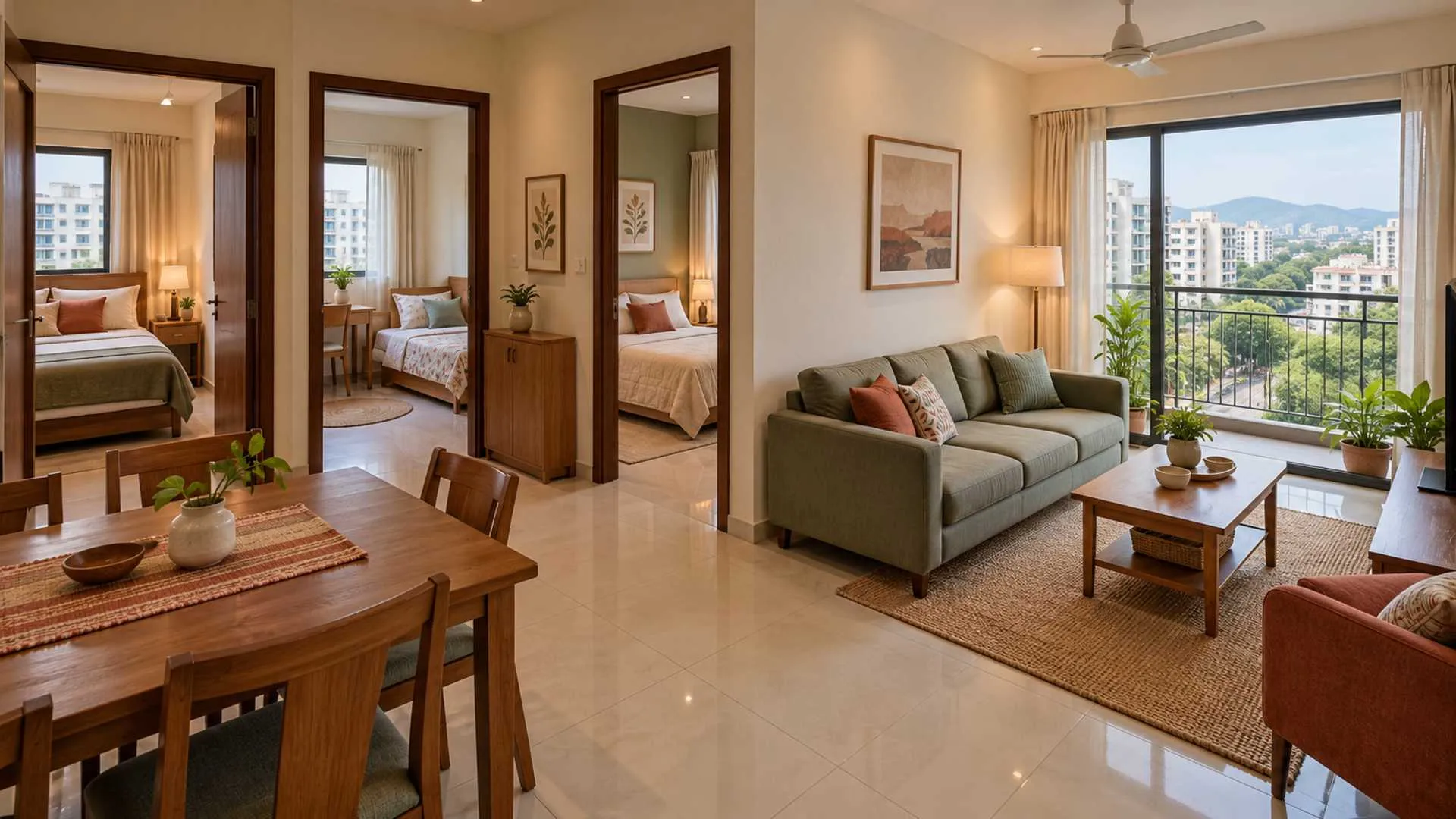
A ready villa can be the stronger fit when the household wants earlier use, can verify the building’s condition and prefers to avoid managing a full construction programme.
For financing, request lender terms for the specific property and borrowing purpose. Plot acquisition, construction and completed-home purchases may be assessed differently. Do not assume one loan quotation applies to all three.
For a remotely managed investment, establish who will inspect the site, coordinate repairs, or supervise construction. The time involved belongs in the comparison, even when it does not appear on a cost sheet.
The villa plot versus ready villa investment decision near Pune in 2026 should ultimately answer one question: which purchase delivers your intended outcome at a cost and level of effort you can sustain?
Before committing, compare one suitable plot with one suitable completed villa using legal reviews, written quotations and a five-year ownership budget. Choose on verified costs and actual use, not promised percentage returns.