Why Pune Homebuyers Are Choosing Larger 3 BHK Homes in 2026
Why Pune Homebuyers Choose 3 BHK Homes in 2026
SHARE:
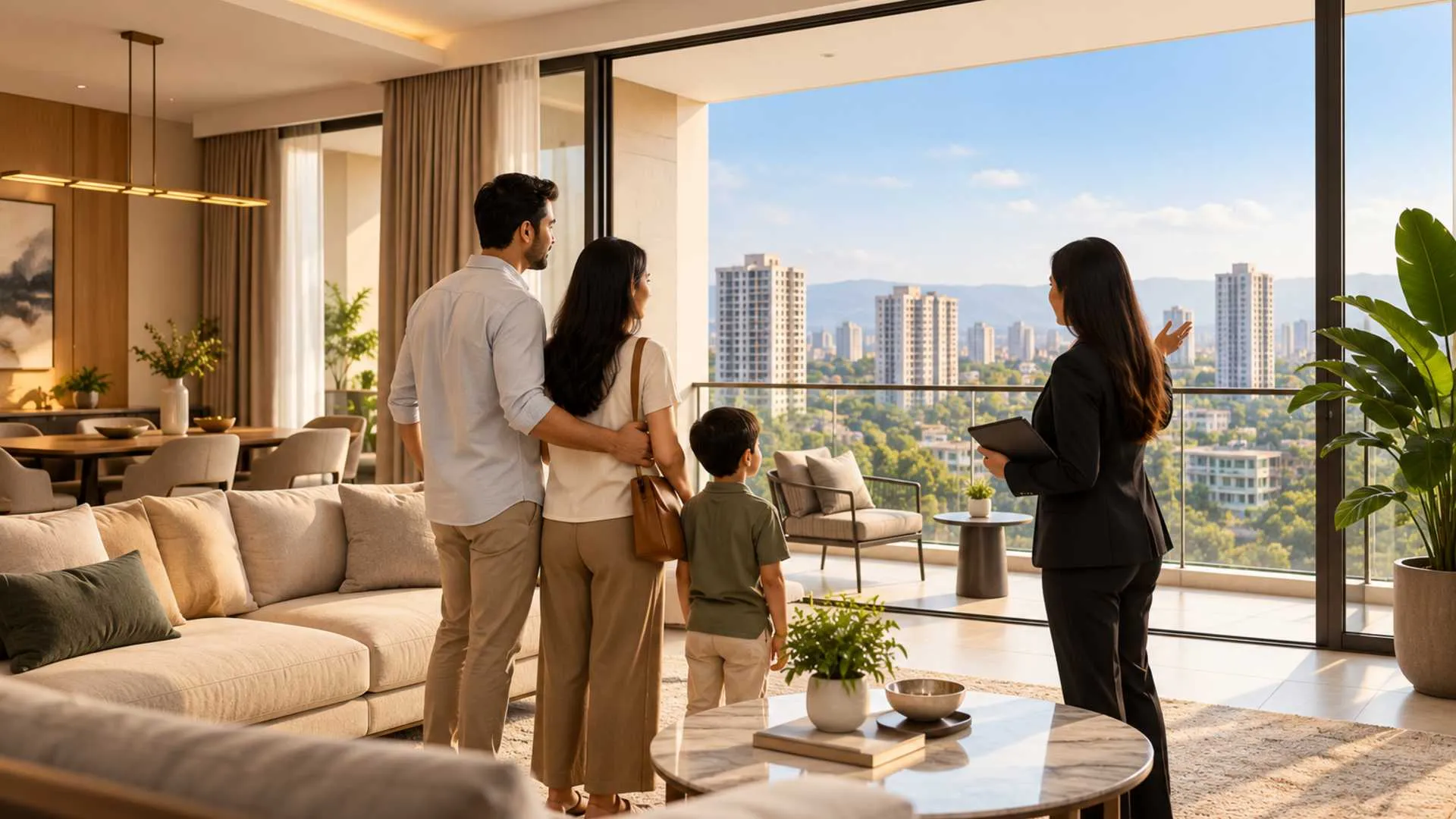
Pune’s housing market is sending a message that cannot be ignored by developers: buyers care about affordability, but many are not willing to solve every issue that comes with living in a compact 2BHK anymore.
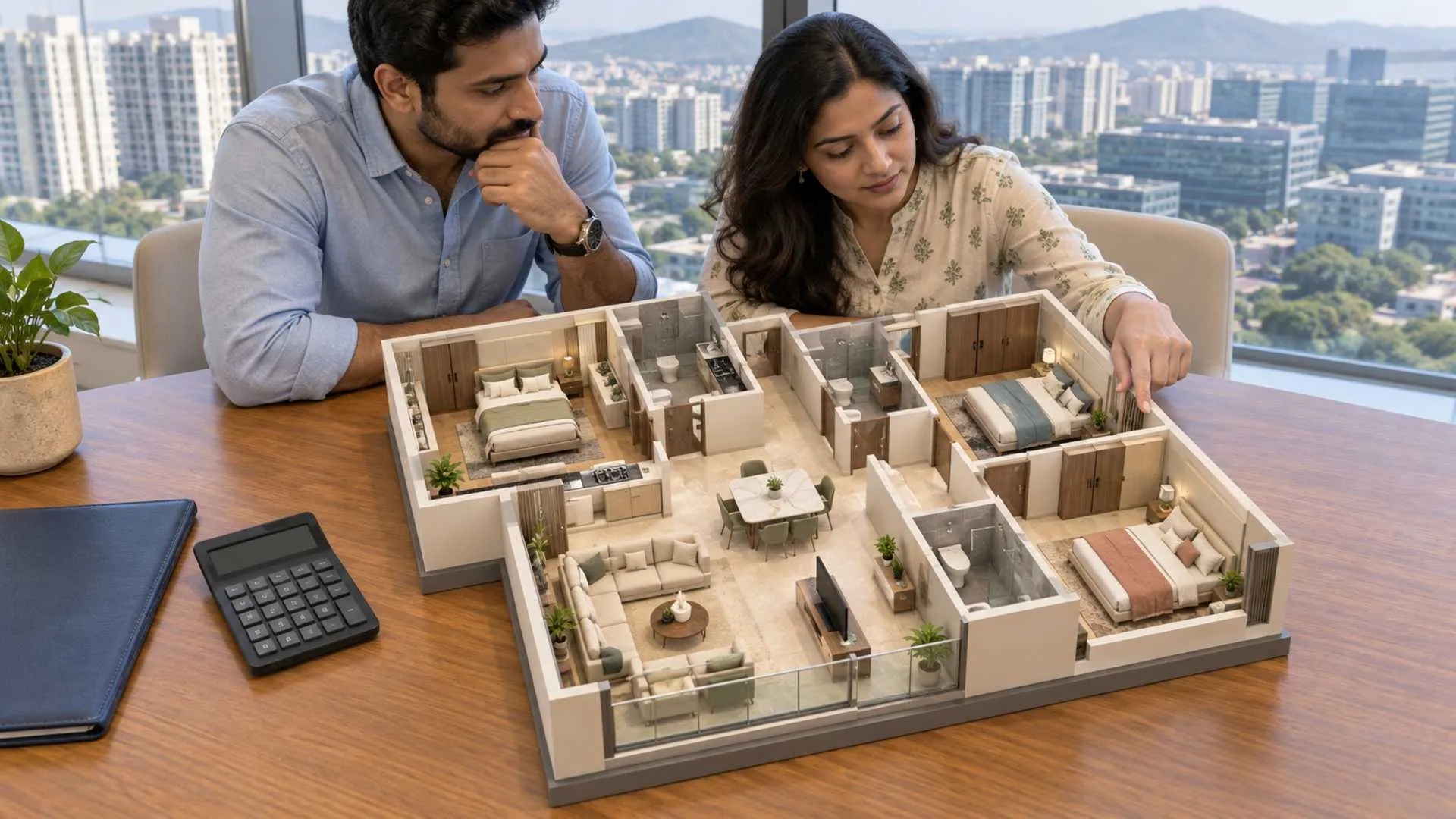
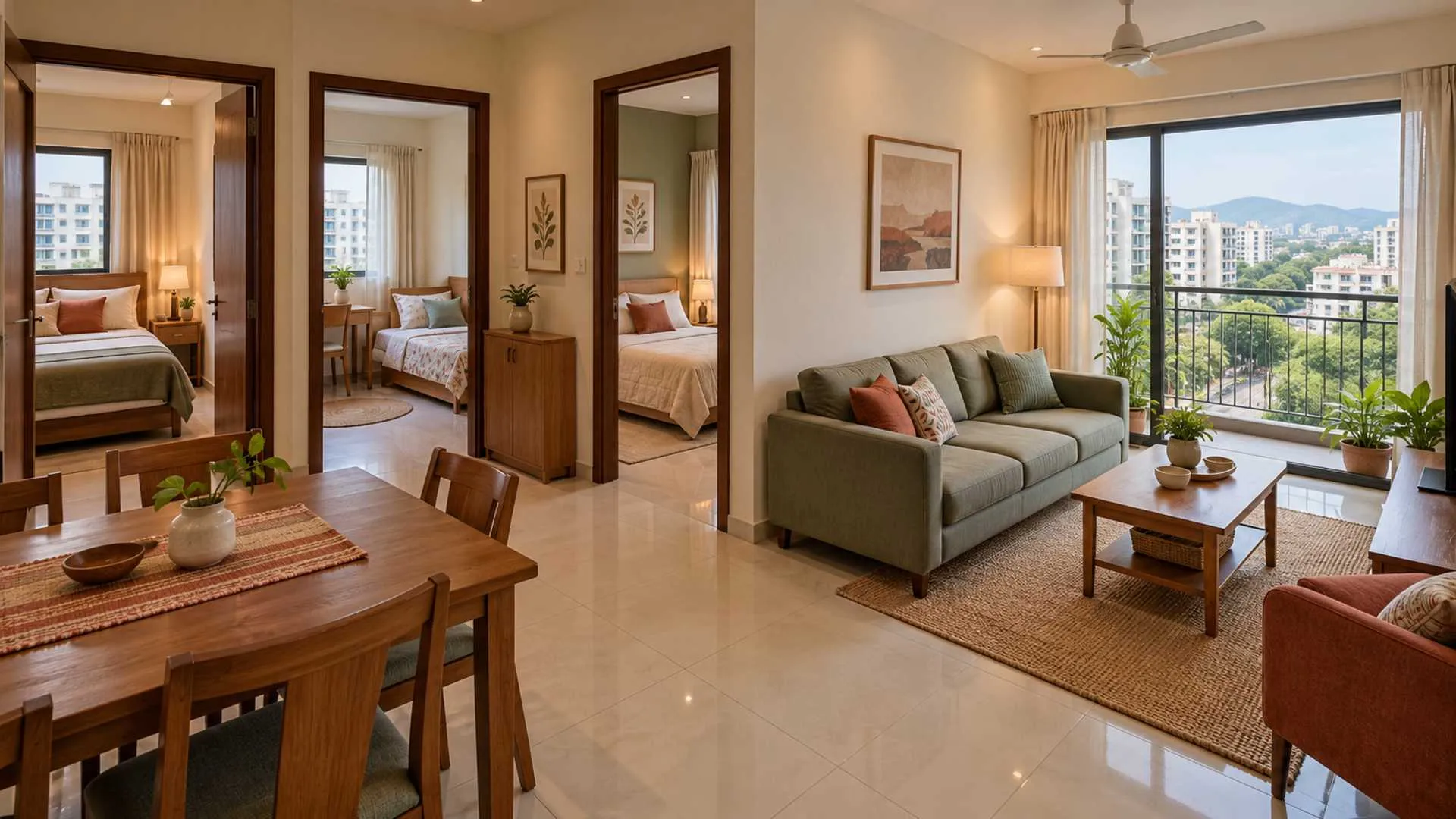
The search for a 3 BHK flat in Pune has gone beyond the typical big-family buyer. Dual-income couples want a genuine work room. Parents want privacy when relatives come to stay. Families with children want storage, study space and a layout that will be useful for the next decade. For some buyers, the third bedroom is not a luxury at all; it is insurance against having to move again.
This shift is visible across Pune real estate in 2026, from an affordable 3 BHK Pune buyer looking in the Moshi or Chikhali direction to a professional comparing a 3 BHK flat in Hinjewadi, a 3 BHK flat in Wakad, Pune and a 3 BHK flat in Kharadi, Pune. At the premium end, demand for a 3 BHK flat in Baner, Pune, or a Koregaon Park residence is being driven by buyers who want location, amenities and a larger carpet area in the same purchase.
National sentiment provides useful context. The Colliers Homebuying Sentiment Survey 2026 found that 62% of prospective buyers were in favour of 2BHK and 3 BHK configurations. It also found that 46% preferred homes priced between ₹50 lakh and ₹1.5 crore and more than 60% preferred ready or near-completion properties. The story is not simply “bigger at any price”; it is more usable space, delivered with price-value alignment and lower execution risk.
Why are Pune homebuyers choosing larger 3 BHK homes in 2026?
Pune homebuyers are choosing larger 3 BHK homes in 2026 because hybrid work, growing families and long holding periods have increased the value of a separate study or guest room. Improved supply in PCMC and Pune’s eastern and western corridors has widened choice, while buyers increasingly view a well-planned 3 BHK as a future-ready home that can delay an expensive upgrade.
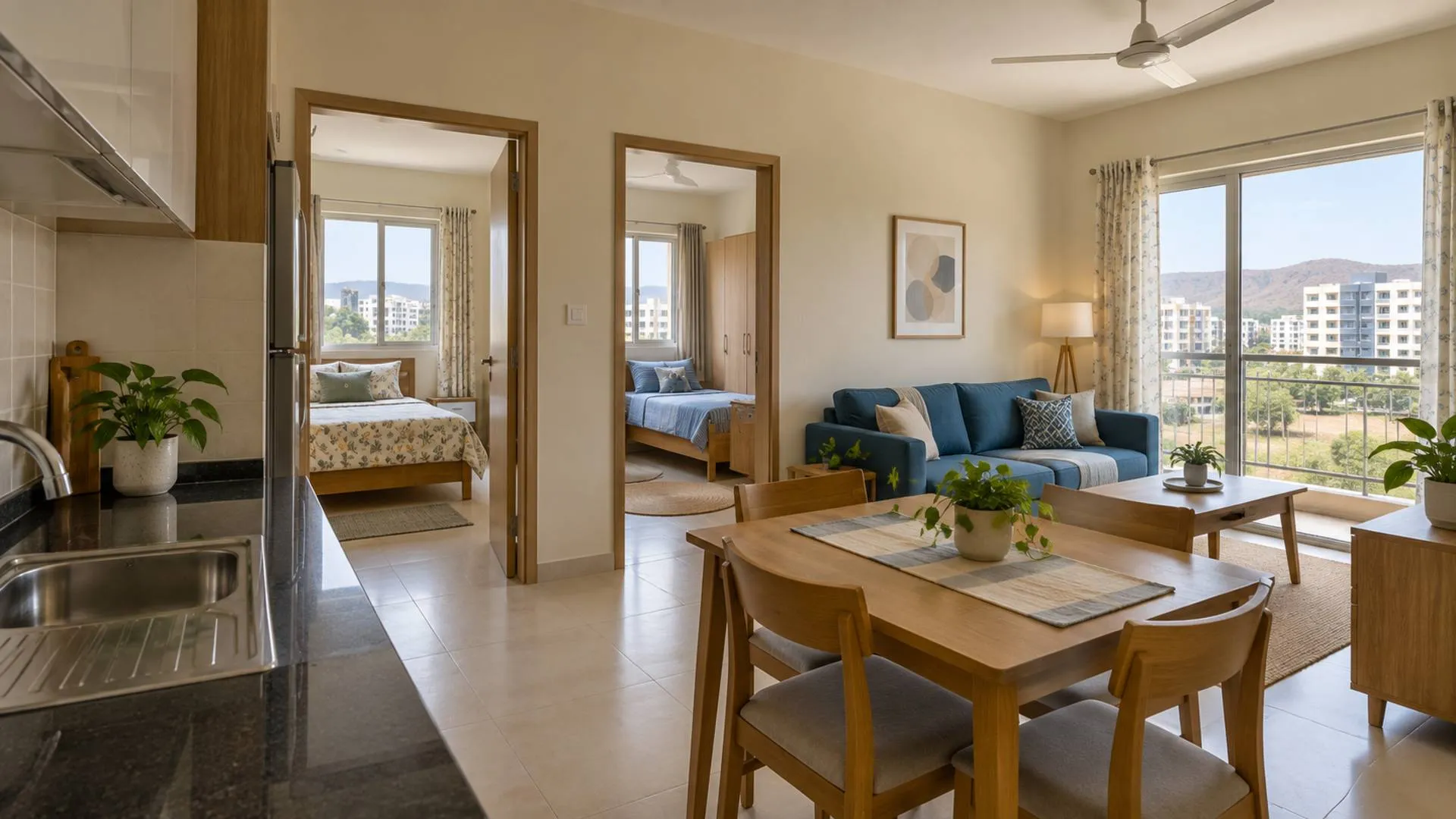
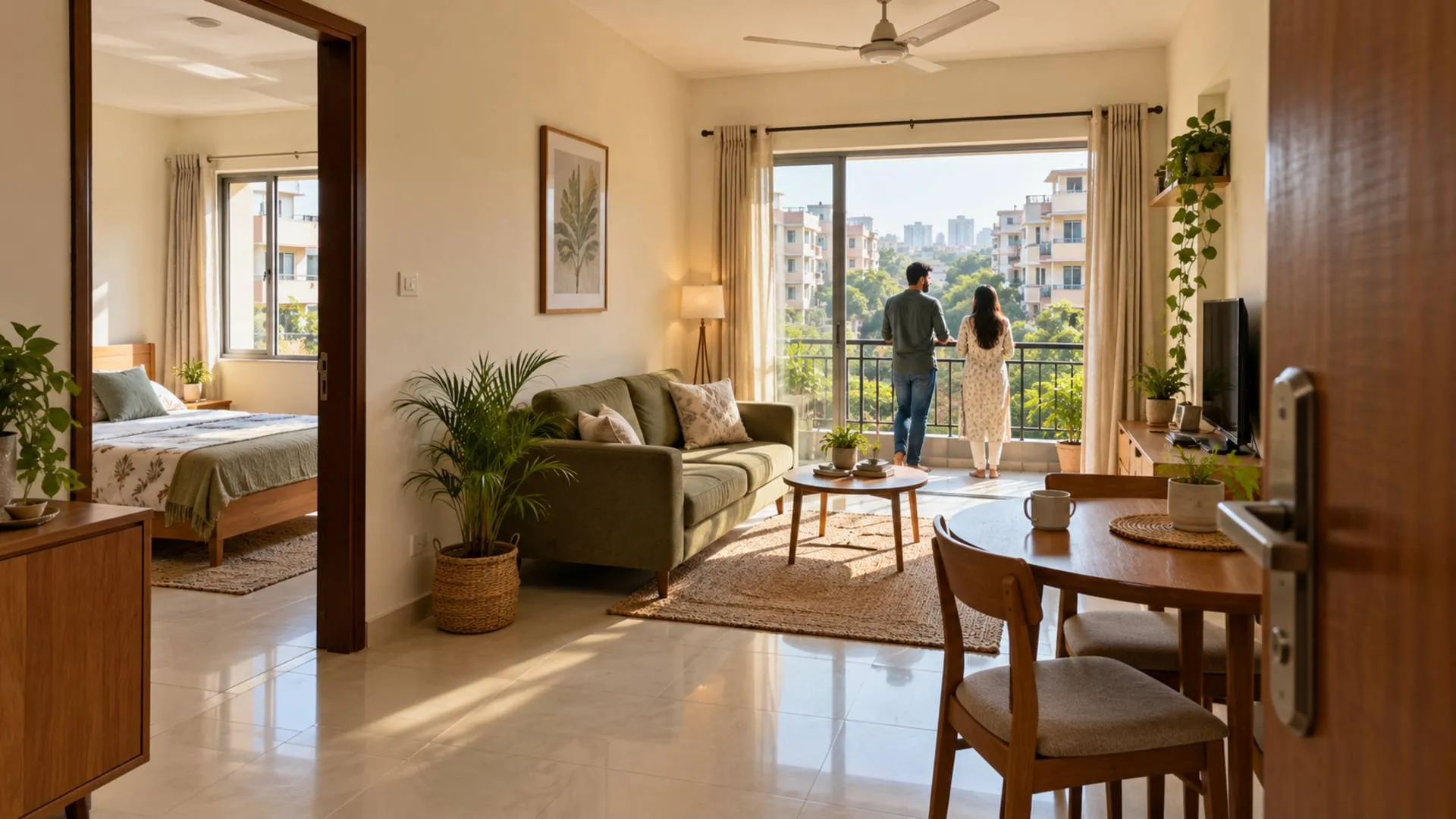
The post-pandemic work-from-home conversation has matured. A desk pushed against a bedroom wall may be manageable for a few months, but it is less convincing when two adults take calls, a child studies and grandparents stay over. The post-COVID WFH study-room requirement therefore remains an important 3 BHK demand driver among Pune IT professionals, particularly around Hinjewadi, Kharadi, Tathawade, Wakad and Magarpatta.
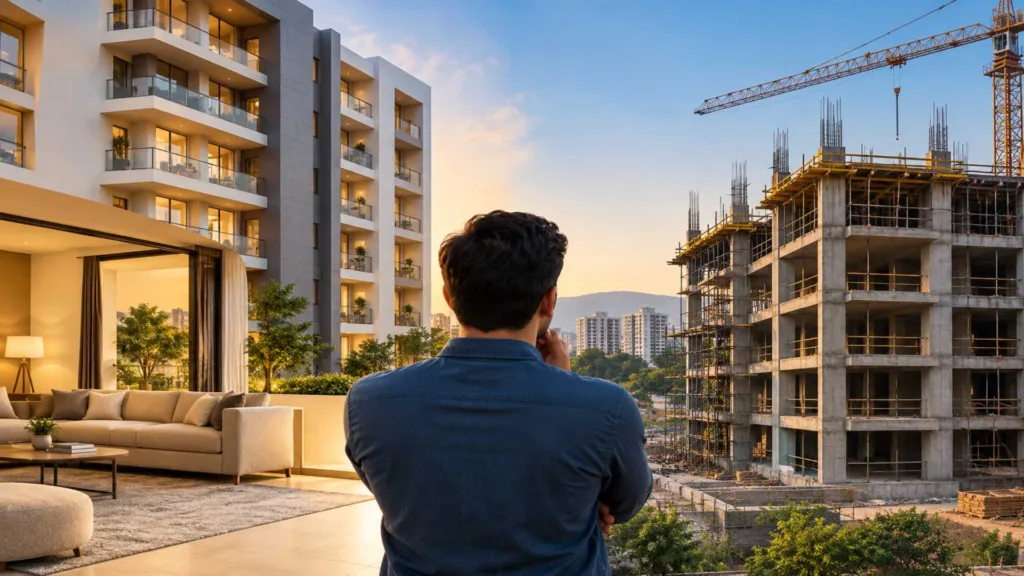
The second driver is tenure. Buyers paying stamp duty, registration costs, brokerage, interiors and loan charges do not want to repeat the transaction after four or five years. A third bedroom can begin as an office, become a nursery and later serve as a room for parents. That adaptability explains why a spacious flat Pune search increasingly overlaps with “new 3 BHK flat Pune” and “ready to move 3 BHK Pune.”
The third factor is supply. Pune’s launch mix has shifted towards mid-premium and larger homes. Market reporting indicates that the combined share of 3 BHK and 4BHK homes in new launches reached about 29% in 2025, compared with roughly 20% earlier, not 10% for a directly comparable category. The important signal is that developers are responding to demand for larger configurations. Cushman & Wakefield also reported nearly 44,000 Pune launches in 2025, with high-end and luxury housing powering much of the momentum.
NOW Realty’s discussion of Pune’s 3 BHK demand points to changing family needs and hybrid work. Aishwaryam Group’s 2BHK-versus-3 BHK analysis reaches a similarly practical conclusion: a 2BHK retains broad affordability and rental appeal, while a 3 BHK suits buyers who need long-term flexibility and can comfortably support the higher purchase and maintenance costs. Kalpataru’s Pune portfolio illustrates the premium side of this shift, while Sentosa Developers highlights the expanding choice in Punawale and the western growth belt.
Pune 3 BHK price guide: where the value is moving
The phrase 3 BHK flat Pune price 2026 hides enormous variation. Current listing-based market snapshots place Pune’s broad 3 BHK spectrum at roughly ₹60 lakh to more than ₹4 crore, with a citywide median near ₹1.28 crore in one September 2026 dataset. Those figures are not a valuation for any individual home. Floor, view, carpet area, parking, project age, possession status, builder, amenities and exact road access can move the price sharply.
| Pune micro-market | Indicative 3 BHK positioning in 2026 | Buyer profile and value case |
| Moshi and Chikhali | About ₹65 lakh–₹95 lakh | A 3 BHK flat in Moshi, Pune or Chikhali can suit budget-led PCMC families seeking larger layouts. |
| Wagholi | About ₹75 lakh–₹1.2 crore, with premium projects higher | A 3 BHK flat in Wagholi, Pune offers an east-Pune entry point, but commute and water arrangements require project-level checks. |
| Punawale, Ravet and Tathawade | About ₹80 lakh–₹1.3 crore | Useful for a 3 BHK flat under 1 crore Pune search at the entry end and for Hinjewadi-linked households. |
| Hinjewadi, Wakad and Kharadi | About ₹1.1 crore–₹1.8 crore | Strong employment access; a 3 BHK flat under 1.5 crore in Pune remains possible in selected projects, locations and resale stock. |
| Baner, Viman Nagar and Koregaon Park | About ₹1.5 crore–₹3 crore-plus | Premium social infrastructure, mature neighbourhoods and scarcity support higher tickets. |
These bands are deliberately wider than sales-brochure “starting prices.” In Moshi and Chikhali, the attraction is space per rupee and PCMC connectivity. Punawale, Ravet and Tathawade offer newer communities and access to the Hinjewadi employment belt. A 3 BHK flat in Tathawade, Pune, or Punawale residence may provide more carpet area than a similarly priced unit in Wakad, though the quality of last-mile roads and completed social infrastructure varies.
Wakad commands a maturity premium, while Hinjewadi is more directly tied to the IT corridor. Kharadi benefits from the EON and World Trade Center ecosystem, but traffic and project-level water sources remain important checks. Baner offers established lifestyle infrastructure and access to the western business corridor. Kalpataru Jade Residences in Baner is one example of premium supply, but any quoted ₹1.44 crore–₹3 crore band should be verified directly for inventory, carpet area and statutory charges. The same rule applies when assessing Saheel Luxton Wakad 3 BHK review price guide 2026 searches or a Shubh Tristar KP Annexe 3 BHK 1275 sq ft guide: confirm whether the area stated is carpet, built-up, or saleable, and verify the MahaRERA record.
The real cost beyond the brochure price
The most expensive mistake is budgeting only for the agreement value. A Pune 3 BHK hidden-cost calculation should account for stamp duty, registration, loan processing and mortgage-related charges, parking or amenity charges where legally and contractually applicable, advance maintenance, corpus contributions, interiors and moving expenses.
Within Pune municipal limits, a headline stamp-duty burden can reach around 7% for many male purchasers after applicable local levies, while eligible women buyers may receive a concession. Registration is separate and is generally subject to the state’s applicable cap rather than simply being 1% without limit. An under-construction home may attract 5% GST without input-tax credit, while a completed home sold after the Occupancy Certificate is generally outside GST. Rates and concessions can change, so the IGR Maharashtra record, sale agreement and a property lawyer should prevail over online calculators.
Consider an illustrative ₹1 crore under-construction 3 BHK. A 20% down payment is ₹20 lakh. Stamp duty and registration can absorb several lakhs more, and GST alone can add ₹5 lakh if applicable. Add interiors, moving, loan charges and reserves, and the buyer may need roughly ₹33 lakh–₹40 lakh in accessible funds before taking possession, depending on concessions and finish level. The correct question is not merely whether the bank will fund the home; it is whether the household can fund the acquisition without emptying its safety net.
For the “how much down payment needed 3 BHK ₹1 crore Pune 2026” query, 20% is a sensible planning assumption, but the lender’s loan-to-value decision may require more. Buyers should retain an emergency buffer equal to at least six months of household expenses and EMIs after paying the down payment. For a ₹1.2 crore purchase, salary needed depends on the interest rate, tenure, existing obligations and co-applicant income; a generic EMI calculation 3 BHK ₹1 crore Pune SBI HDFC 2026 result is only a screening tool, not a sanction.
3 BHK versus 2BHK: comfort must still pass the affordability test
In the 3 BHK vs 2BHK Pune which is better investment 2026 debate, there is no universal winner. A 2BHK usually has a lower entry price, a larger tenant pool and easier maintenance. A 3 BHK can appeal to established families and senior professionals, deliver a higher absolute rent and remain relevant longer for an owner-occupier, but it also creates a larger EMI, fit-out bill and monthly society charge.
A 3 BHK makes sense when the third room has a real use, the buyer expects to remain for seven to ten years, and the all-in housing cost leaves room for retirement, education and emergencies. A 2BHK may be wiser when buying the larger home requires exhausting investments, depending on bonuses or accepting a punishing commute. Bedroom count cannot rescue a weak location, an inefficient floor plan, or an unreliable developer.
The same caution applies to a new launch 3 BHK vs RTM 3 BHK Pune comparison. New launches may offer payment flexibility and modern amenities, but carry construction and timing risk. Ready homes allow inspection and remove most delivery uncertainty, although the upfront ticket may be higher. Colliers’ finding that more than 60% of buyers favour ready or near-completion homes shows how strongly certainty now influences the decision.
Should buyers act now or wait?
Pune’s market is not moving in one straight line. New-home sales reportedly softened in early 2026 after several strong years, while premium launches and long-term employment-led demand remained resilient. That gives prepared buyers negotiating room in some projects, but it does not guarantee a citywide fall in prices.
Buy now when the home fits a verified long-term need, the quoted price compares well with registered and competing transactions, the title and MahaRERA disclosures are clean, and the EMI remains comfortable after stress-testing the rate. Wait when the down payment would erase emergency savings, the third bedroom is aspirational rather than useful, or the purchase depends on an uncertain income jump.
For buyers asking which Pune area gives the best 3 BHK under ₹1.5 crore value, the answer depends on commute. Hinjewadi employees may prefer Tathawade, Punawale, Ravet or Wakad; east-Pune professionals may find Wagholi or selected Kharadi stock more rational; PCMC families can compare Moshi and Chikhali. A cheaper home that adds two exhausting hours to every workday is not automatically better value.
Pune’s larger-home shift is therefore less about status than durability. The winning 3 BHK is not the biggest floor plan in the brochure. It is the one with efficient carpet area, credible delivery, dependable infrastructure and an all-in cost the household can carry through a difficult year.
Planning to buy a 3 BHK flat for sale in Pune? Compare carpet area, MahaRERA progress, possession status, locality infrastructure and the full acquisition cost before paying a booking amount. Shortlist verified options through RealtyConnect and ask for a project-level cost sheet, not merely a headline price.