

Shopping Inside Office Parks: India’s Growing 51.7 Million Sq Ft Market
Office Park Retail in India: 51.7 Million Sq Ft
SHARE:
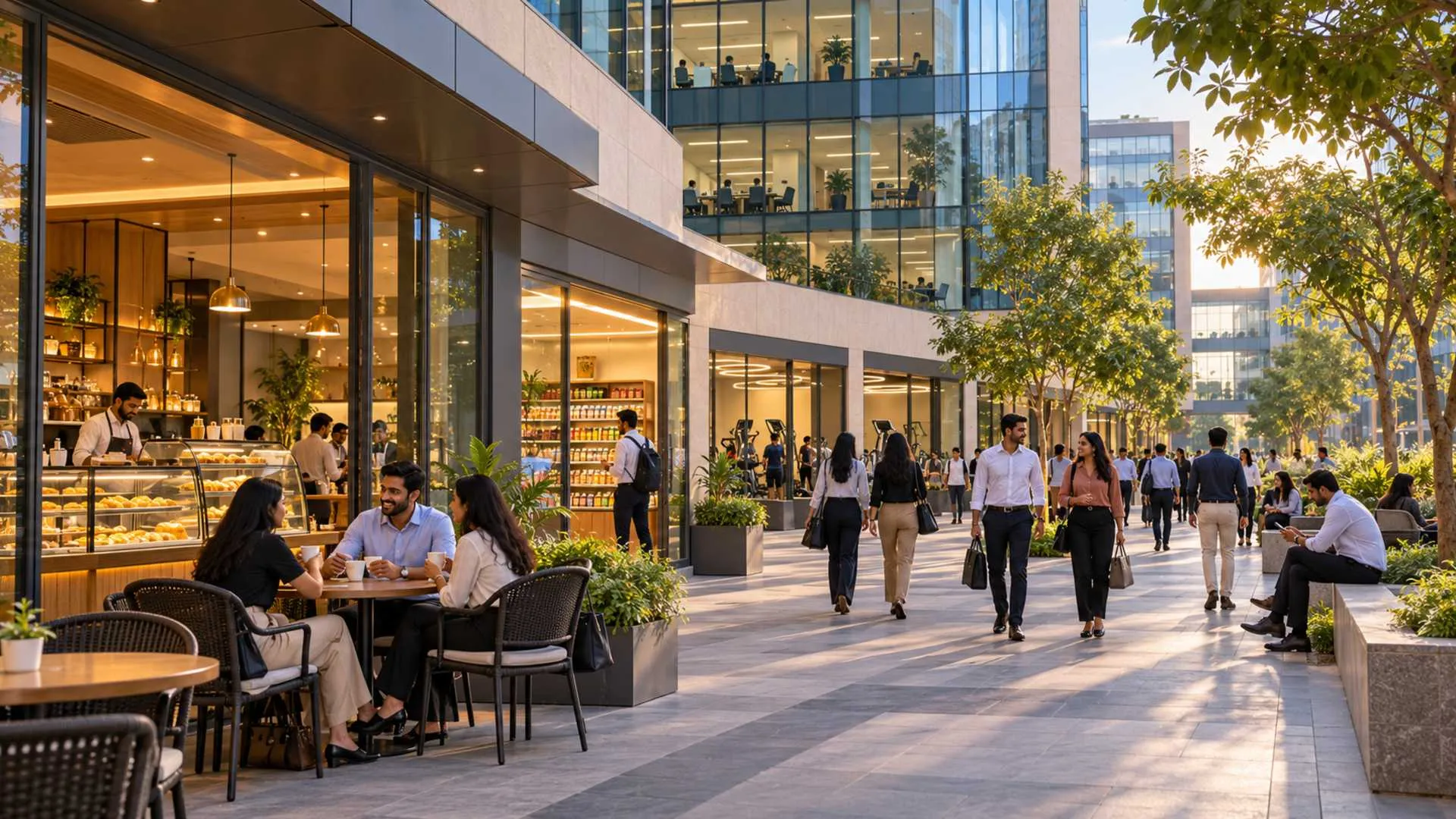


The next shopping destination could be just down the hallway. Coffee breaks before meetings, exercise during lunch hours and even eating a meal after work are shaping how developers design around corporate offices in India.
Shopping within Indian office parks is now a big sector. In 2026, there will be 51.7 million sq ft of office-led amenity retail space within 12 tracked markets, according to CRE Matrix’s retail research report in September, The Economic Times.
This isn’t just a few convenience stores in the office. It indicates that the space is being specifically designed to include retail, which can affect the landlords, brands and surrounding residential areas.
What is office-led amenity retail in India and how big is it?
Office-led amenity retail is dedicated shopping, dining and service space within office developments, serving workers and, where access permits, outside customers. CRE Matrix tracks 51.7 million sq ft across 12 Indian markets. It forms part of 186.2 million sq ft of organised retail stock, alongside shopping malls and tracked high streets.
A third retail format has become too big to ignore
India’s organised retail stock breakdown shows why the commercial real estate conversation needs to extend beyond mall openings.
| Format | Stock across 12 tracked markets | Typical consumer proposition |
|---|---|---|
| Shopping malls | 114.3 million sq ft | Multiple brands and destination visits |
| Office-led amenity retail | 51.7 million sq ft | Workplace-linked convenience and social spending |
| High streets | 20.2 million sq ft | Street-facing shops in established catchments |
| Total | 186.2 million sq ft | Combined tracked stock |
Source: CRE Matrix, India Real Estate Horizons—Retail, September 2026. This is the report’s tracked organised market, not every shop operating in India.
Office-led retail represents approximately 28% of that total, calculated from the published figures. It is already a meaningful part of India’s retail real estate market in 2026.
The growth measure is equally revealing. CRE Matrix’s research summary records 15.4 million sq ft of office-led retail additions during 2021–25, the highest five-year addition in its series. Its comparison with the pre-2000 period indicates roughly tenfold growth in five-year additions.
That does not mean the entire segment became ten times larger between 2021 and 2025. Nor does it establish that office-park retail is currently growing faster than malls on a comparable annual basis.
Gurgaon leads; Pune is ahead of Bengaluru in this category
Which Indian cities have the most retail space inside office developments? The Economic Times’ 12 October report, drawing on CRE Matrix research, places Gurgaon first.
| City | Office-led amenity retail stock |
|---|---|
| Gurgaon | 10.0 million sq ft |
| Mumbai | 8.4 million sq ft |
| Pune | 7.4 million sq ft |
| Bengaluru | 7.1 million sq ft |
Gurgaon, Mumbai and Pune together account for approximately half the tracked segment. Bengaluru’s position is particularly interesting: being a major office market does not automatically mean leading the workplace-retail category.
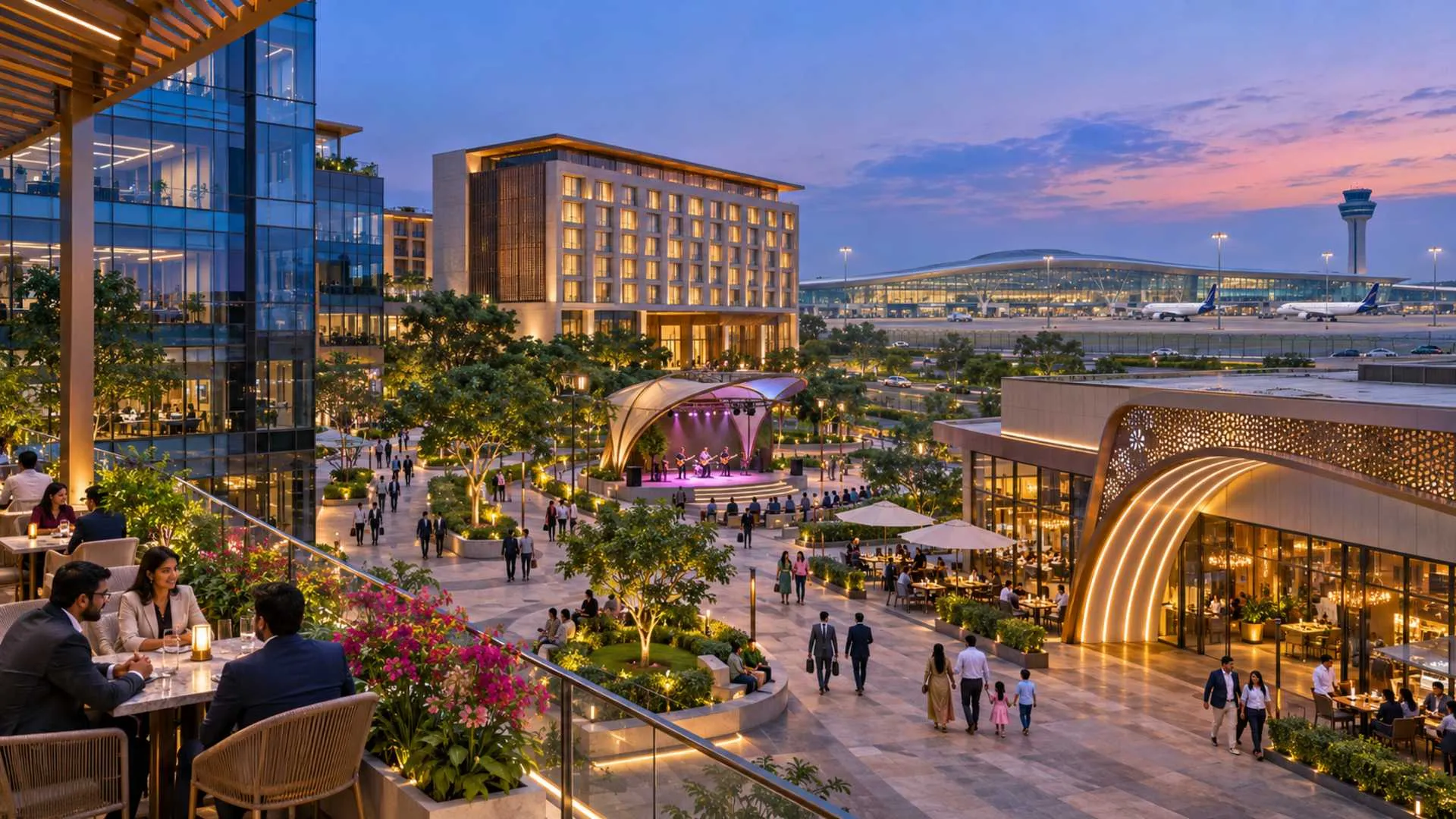
DLF CyberHub in Gurugram offers a recognisable illustration of workplace-linked consumption. DLF presents it as a destination combining dining, shopping, culture and entertainment. Its proposition can attract people for reasons beyond an office lunch break.
The Economic Times also describes retail beneath office buildings at Worldmark and the integration of offices and a mall at Bengaluru’s Bhartiya City. These examples show how office developments can draw employees during working hours and a wider audience afterwards.
The commercial logic is repeat visits. An employee may need a coffee several times a week, while a destination restaurant can bring customers back after the office closes.
Why tech park retail needs more than a food court
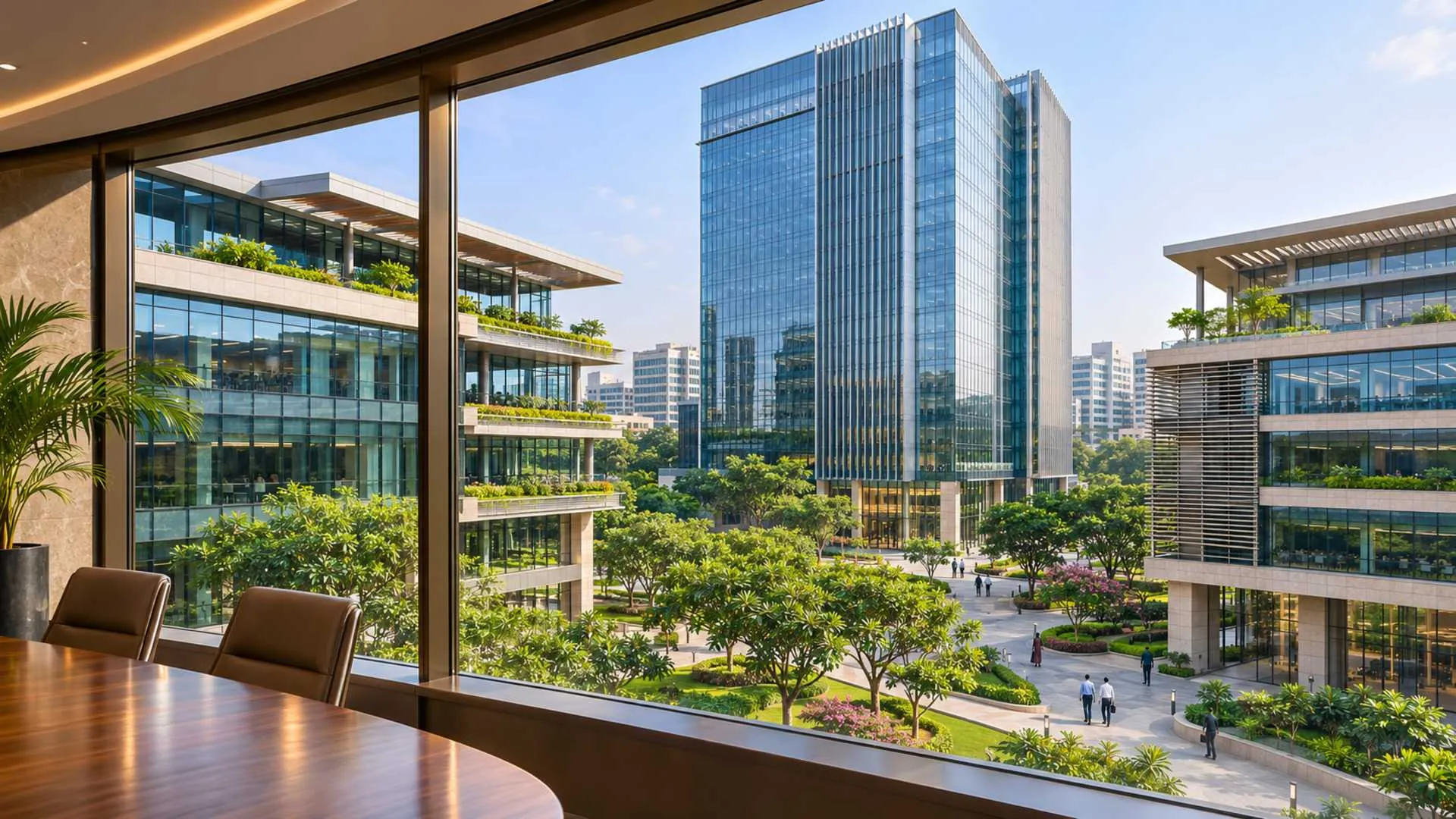
A Grade A office development’s convenience retail ecosystem works best when the tenant mix matches actual daily routines. Food and beverage, fitness, wellness and useful services can give people reasons to stay after their immediate task is finished.
For retailers, the GCC workforce and tech-park employee base create a concentrated catchment. But a captive audience is not a guaranteed customer: hybrid attendance, spending preferences and access restrictions can change how many people reach a shop.
Consider the practical questions. Can nearby residents enter without an employee pass? Is the café visible from the public road? Does a restaurant have independent evening access? Can deliveries reach the outlet without interrupting office security?
These operating details can determine whether a tech park’s amenity retail serves only weekday demand or becomes a broader dining destination.
A food court, coworking amenity and publicly accessible retail street may sit close together, yet have different customers, permissions and opening hours. Investors should establish which business they are actually buying into.
Malls are changing too: What the 72% figure means
Office-led retail is developing alongside a wider change in Indian mall tenant demand.
Free Press Journal’s coverage of CRE Matrix reports that experience-led and discretionary categories accounted for 72% of mall leasing during 2023–25, compared with 54% a decade earlier. The grouping includes fashion, food and beverage, entertainment, leisure and wellness.
The period matters: this is not a finding that 72% of leasing in 2026 alone was experience-led.
Apparel and fashion increased their share from 25% to 35%, while food and beverage rose from 11% to 15%. Department stores and multi-brand retail, together with essentials and grocery, declined from 31% to 11%.
These are shares of leasing demand, rather than a statement that traditional anchors disappeared. The experience economy is encouraging multiple reasons to visit, longer dwell time and spending across categories.
Office campuses and malls are therefore responding to a related consumer preference, while operating with different catchments and schedules.
Do not confuse 51.7 million sq ft with the mall pipeline
The existing office-park retail segment and future mall construction are separate stories.
ETRetail and Retail Asia, citing JLL, report 51.1 million sq ft of projected new shopping mall supply by 2031. JLL’s study covers the top seven cities and projects operational stock reaching 143.2 million sq ft.
CRE Matrix’s 186.2 million sq ft figure covers 12 markets and three retail formats. The totals should not be added together or treated as competing estimates of an identical market.
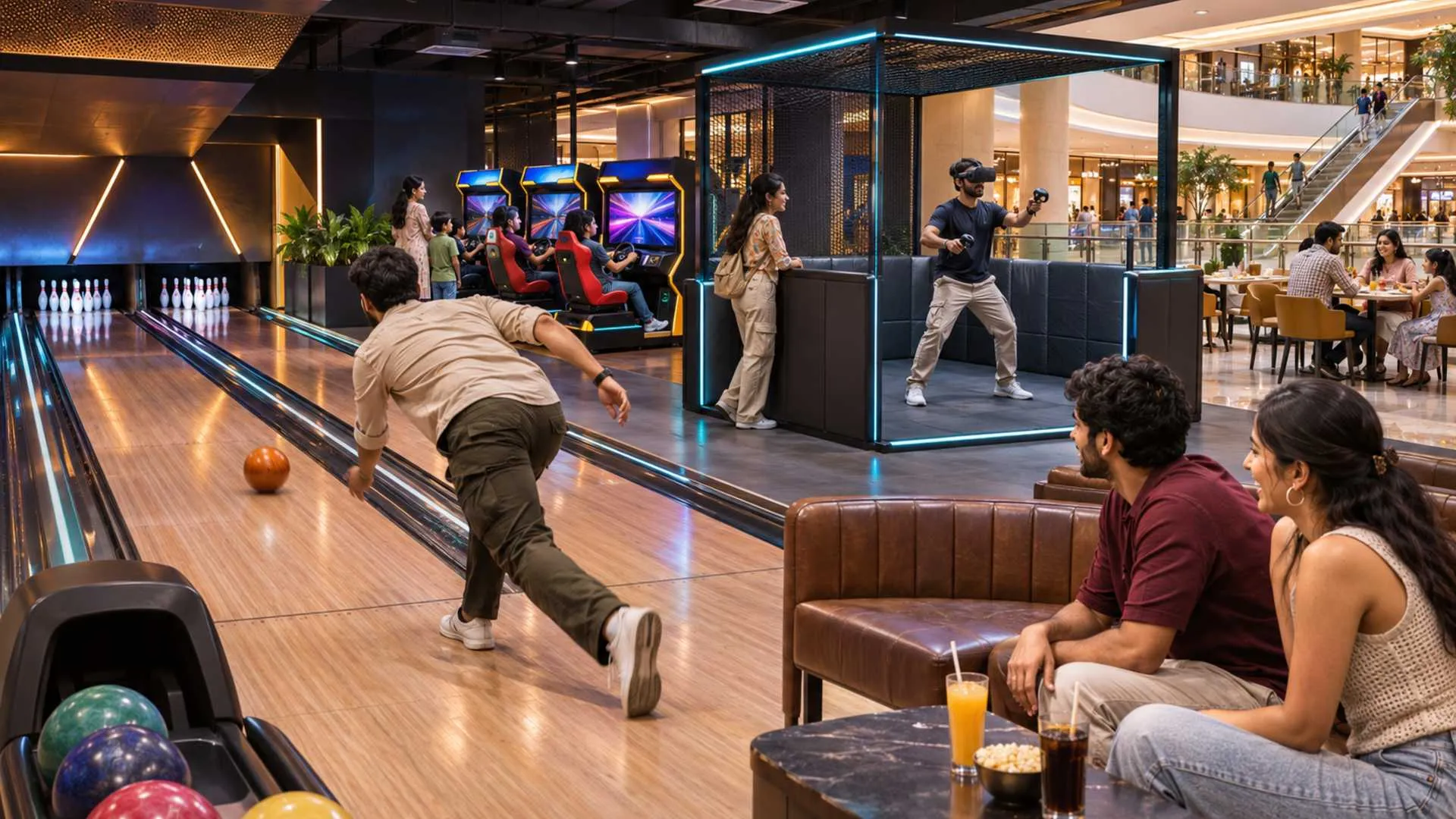
JLL’s research also points to large-format malls and stronger entertainment offerings. Its report discusses gaming, bowling and competitive socialising as ways to turn malls into social destinations.
The message for India’s commercial real estate trends in 2026 is diversification: offices are gaining dedicated consumer spaces, while malls are adapting their own format.
What investors and nearby homebuyers, should examine
For someone considering commercial retail space for lease inside an office park in Pune’s Hinjewadi or Kharadi, the citywide stock number is a starting point. The investment case rests on the particular building.
Before committing, check:
- Actual office occupancy and attendance, rather than only sanctioned capacity.
- Public access, visibility, parking, and evening or weekend opening rights.
- Permitted use, kitchen exhaust, fire compliance and utility requirements.
- Base rent, revenue sharing, common-area charges, fit-out costs and lock-in terms.
- Competition, vacancy and evidence of sales or repeat customer visits.
Rent comparisons need the same care. CRE Matrix reports Mumbai shopping mall passing rent of ₹438 per sq ft per month in H1 2026. A separate report summary by The Realty Today cites prime NCR high-street rents reaching ₹3,000 per sq ft per month. Neither is a representative quote for a shop inside an office park.
For local research, distinguish Gurgaon’s Cyber City from Pune’s Hinjewadi–Kharadi corridors, Bengaluru’s Whitefield–ORR belt, Mumbai’s BKC and Powai, Hyderabad’s HITEC City–Gachibowli, Chennai’s OMR–Sholinganallur, and Noida’s Sector 62 or Expressway locations. Investigate the actual campus and public access in each.
The residential connection is a convenience question, rather than an automatic appreciation forecast.
In Pune, shortlists involving Mantra Melange in Kharadi, Shubh Tristar in KP Annexe–Mundhwa, Saheel Luxton in Wakad and Excellaa’s Pimple Nilakh homes can be assessed against nearby work, dining and service destinations. Their location does not establish an affiliation with any office-park retail development.
Walk the route, test traffic and check which facilities residents can actually use. A restaurant behind a restricted campus gate offers a different benefit from an accessible neighbourhood high street.
The 51.7 million sq ft office-led amenity retail segment shows that shopping inside office parks has moved beyond a supporting role in India’s commercial property market.
For developers, this creates room to design better daily experiences. For retailers, it creates concentrated but demanding catchments. For homebuyers, it adds another practical layer to neighbourhood comparison.