

Climate-Responsive Indian Homes: Smart Design Solutions to Beat Heat
Climate-Responsive Homes: Smart Designs to Beat India's Heat
SHARE:
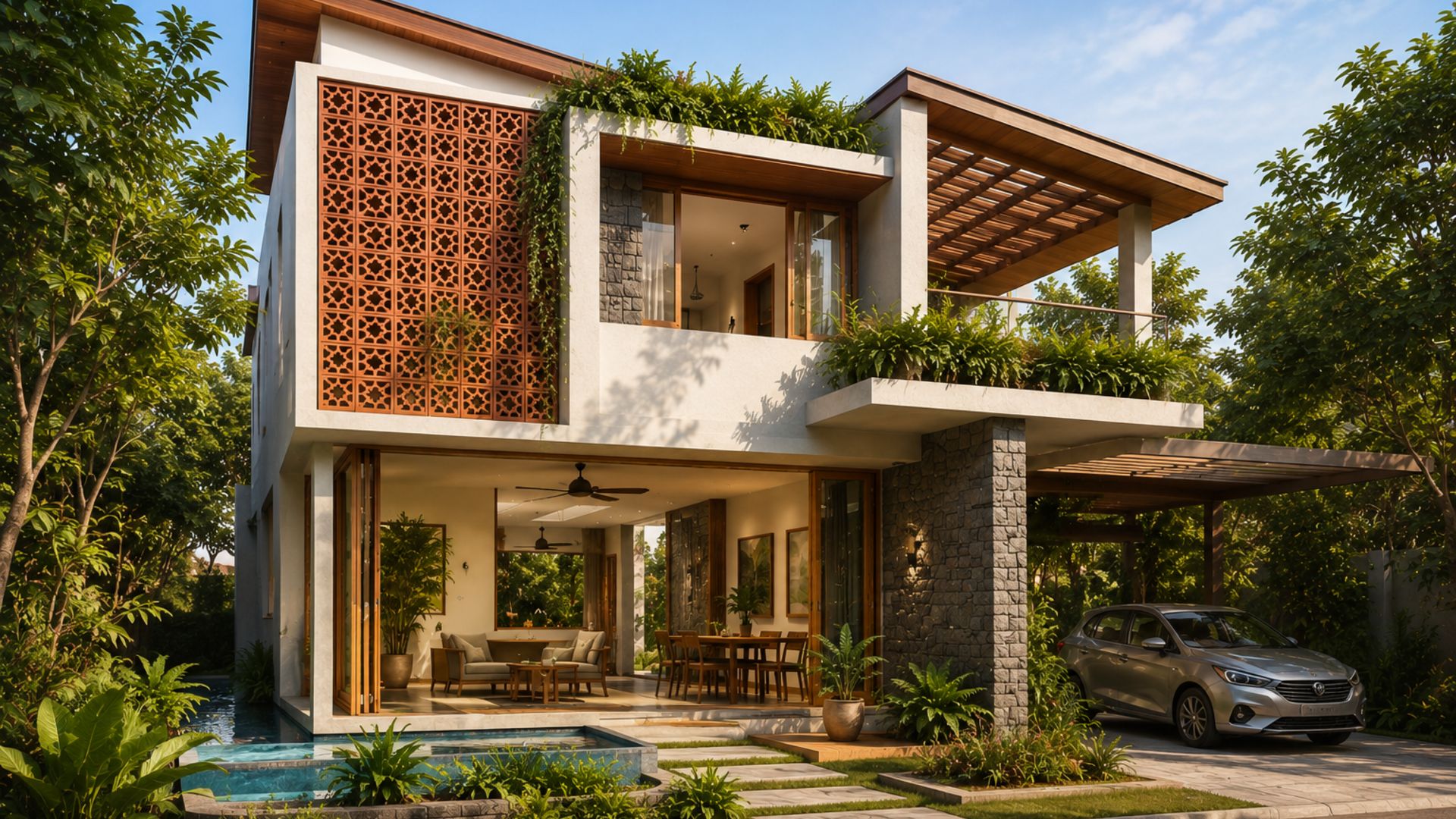
As Indian cities face rising temperatures and longer summers, homeowners are seeking alternatives to air conditioning for comfort. In 2026, more architects and developers are adopting climate-responsive design for Indian homes. They blend traditional methods with modern technology to create spaces that stay cooler, use less energy, and promote healthier living.
This trend brings back design features that were once common in Indian homes, such as jaali screens, deep balconies, courtyards, and shaded verandahs. These elements are paired with new innovations like insulated glazing and energy-efficient materials.
Why Passive Cooling Is Making a Comeback
Experts believe that passive cooling Indian homes beat the heat 2026 is more than a design trend; it is becoming a necessity. Climate-responsive architecture focuses on reducing heat gain before it enters the home, helping lower indoor temperatures and reducing dependence on air conditioning.
Studies indicate that well-planned passive cooling strategies can reduce AC usage by 40–60%, resulting in significant savings on electricity bills.
The Three Design Features Leading the Shift
1. Jaali Screens: Tradition Meets Performance
Once seen in Mughal palaces and Rajasthani havelis, jaali screens modern Indian homes ventilation privacy solutions are finding new relevance.
Benefits include:
- Improved airflow without compromising privacy
- Reduced direct solar heat gain
- Soft, filtered natural light indoors
- A distinctive aesthetic rooted in Indian heritage
Today, architects are using stone, terracotta, laser-cut metal, and concrete jaalis in urban apartments and villas alike.
2. Deep Balconies: The Natural Heat Shield
One of the most effective forms of heat reduction home design India 2026 is the use of deep balconies.
These extended outdoor spaces:
- Act as natural sunshades
- Reduce solar heat gain on walls and windows
- Improve indoor comfort levels
- Create usable outdoor living zones
In cities such as Pune, Bengaluru, and Hyderabad, developers are increasingly integrating larger balconies as a key design feature.
3. Insulated Glazing: Smarter Windows for Hotter Cities
With glass façades becoming common, insulated glazing double glazed windows Indian homes are emerging as an essential solution.
Double-glazed units create a thermal barrier that:
- Minimizes heat transfer
- Improves indoor temperature stability
- Reduces noise pollution
- Enhances energy efficiency throughout the year
For many homeowners, the additional upfront cost is offset by long-term energy savings.

The Future Is Cooler and Smarter
The revival of climate-responsive architecture in India in 2026 marks a move away from energy-intensive living. From deep balconies that reduce solar heat gain to updated glazing systems and traditional jaali screens, the next generation of homes in India is being designed to work with the climate instead of against it.
As temperatures keep rising, homes that focus on passive cooling, good ventilation, and climate-sensitive planning will likely set the standard for comfortable and sustainable living.
If you’re planning a new home or renovation, consider using climate-responsive design principles now. This approach can help create a cooler, healthier, and more energy-efficient living space that is prepared for future climate challenges in India.