

India’s Real Estate Services Surge 24.7%, Outpacing Every Major Segment
SHARE:

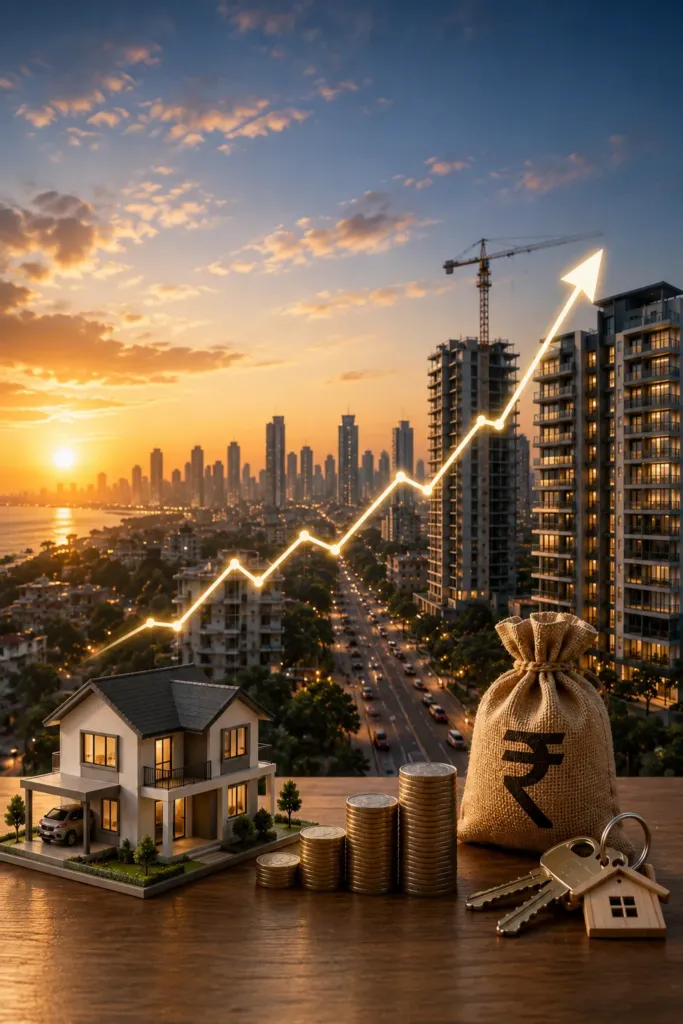
One of the biggest growth stories of 2026 has come from the real estate economy of India. Real estate grew 24.7% year on year in June 2026, the fastest growth in the government’s new services-production data.
India real estate’s 24.7% growth, the fastest services segment in 2026 figure indicates rising transaction and business activity across the sector. But it does not mean that Indian property prices have gone up by 24.7%.
Why Is Real Estate India’s Fastest-Growing Services Sector in 2026?
India’s real estate services segment grew 24.7% year-on-year in June 2026 due to stronger property transactions, sustained residential demand, commercial leasing, GCC-led office expansion and growing activity in organised real estate services. The figure measures services production, not nationwide house-price appreciation.
The Ministry of Statistics and Programme Implementation’s trial Index of Services Production placed real estate ahead of retail trade, wholesale trade and IT services.
The real estate 24.7% vs IT 13.5% vs retail 18% ISP comparison shows the scale of the acceleration:
- Real estate: 24.7%
- Retail trade: 18%
- Wholesale trade: 15.1%
- Administrative and support services: 14.4%
- IT and computer-related services: 13.5%
Overall, 18 of the 19 services subsectors recorded growth, with eight expanding at double-digit rates. This makes the MoSPI Index of Services Production ISP real estate 24.7% June 2026 result part of a broader services upswing, though real estate was the clear leader.
What Is India’s Index of Services Production?
The Index of Services Production, or ISP, measures changes in the volume of activity across selected services. The new MoSPI NSO ISP Index of Services Production base year 2024–25 currently covers 19 subsectors and is being released as an experimental trial series.
For real estate, the ISP is an activity indicator. It should not be read as a property-price index, home-sales figure or investment-return forecast. This distinction is crucial for anyone asking why real estate prices are going up fast in India in 2026.
The June real estate ISP rose to 119 from 95.4 a year earlier, producing a 24.7% annual growth rate. Month-to-month movement can still fluctuate; the index stood at 113.3 in May 2026.
What Is Driving India’s Real Estate Growth?
A combination of residential, commercial and institutional demand appears to be supporting the expansion.
First, premiumisation and end-user housing demand remain visible in Mumbai, Pune and Bengaluru. Mumbai’s 14-year-high August registrations offer a local illustration of buyer resilience, although that registration record should not be directly described as being caused by the national ISP figure.
Second, office demand is becoming a major multiplier. Commercial Design India highlights urbanisation, infrastructure expansion, rising incomes and evolving commercial requirements among the forces reshaping Indian real estate.
The GCC IT financial services office demand residential multiplier effect is particularly important. When Global Capability Centres expand, they create demand for Grade-A offices, managed workspaces and nearby housing. Bengaluru remains a key beneficiary, while Pune, Hyderabad, Chennai, Mumbai and Delhi-NCR are also part of this commercial growth network.
Third, developers are responding with larger integrated projects, premium housing and technology-enabled offices. Institutional capital, REIT-led participation and greater regulatory formalisation are also strengthening organised real estate.
How Does Real Estate Growth Fit Into India’s GDP Story?
India’s real GDP reached ₹81.36 lakh crore in Q1 FY27, increasing 7.8% year on year, according to MoSPI’s GDP estimates.
The broader financial, real estate, IT and professional-services category grew 12.1% at constant prices, helping the tertiary sector expand 10%. This supports the India real estate sector leading services growth 2026 narrative, but real estate’s individual contribution cannot be isolated from the combined GDP category.
Is India’s 24.7% Real Estate Growth Sustainable?
The figure is encouraging, but one month does not establish a permanent growth rate. The ISP is also an experimental series that may undergo refinement.
Sustainability will depend on:
- Household affordability and home-loan costs
- Project delivery and unsold inventory
- Commercial leasing and GCC expansion
- Infrastructure execution
- Whether demand remains end-user-led
The contrast between India affordable vs premium property 24.7% growth also matters. Premium housing may dominate value, while affordable housing continues to face land, construction-cost and financing constraints.
Should Buyers Invest Because Real Estate Grew 24.7%?
No property decision should be based on the national ISP figure alone. Buyers asking “Kya abhi India mein property lena sahi hai 24.7% growth ke baad?” should examine local prices, rental demand, infrastructure, developer execution and personal repayment capacity.
The data does not identify which Indian city is best for property investment in 2026. Mumbai, Pune and Bengaluru benefit from different employment and housing drivers, so city-level evidence remains essential.
Real estate’s 24.7% growth confirms that activity is accelerating, but it does not guarantee a 24.7% rise in prices or returns. For city-specific insights and project research, explore RealtyConnect Chat before preparing your property shortlist.
Track the data, compare local markets and verify every project before investing; the headline may be national, but property returns are always local.