Occupancy Certificate Secured, but Is Your New Home Truly Move-In Ready?
Occupancy Certificate in India: Is Your Home Move-In Ready?
SHARE:

A developer called to say the Occupancy Certificate (OC) has arrived. This means the final payment is due, possession letters are being prepared, and families can finally collect their keys. For most buyers, this seems like the end of the process.
But it’s not.
In India, an OC is one of the most important documents a buyer can get for their property. It basically says that the local authority allows people to live in the building according to the law. However, an OC doesn’t guarantee that everything in the building is actually ready for you. It doesn’t mean every faucet works, all the amenities are open, every leak has been fixed, or the path from the gate to your apartment is safe at night.
This difference is really important, especially now because developers are building big, phased projects in cities like Pune, Mumbai, Bengaluru, and Noida. One building might be legally ready to move into, but the landscaping, shops, or other parts of the project are still being built. Your apartment might have electricity and water, but the cabinets could be unfinished, the tiles might sound hollow, or the waterproofing could be bad.
An OC answers a legal question: is the building legally fit to be occupied? But whether the apartment is truly ready to move into answers a practical question about your daily living experience. A smart buyer needs to get answers to both.
What is the difference between an Occupancy Certificate and a Completion Certificate in India?
A Completion Certificate confirms that a building or project has been completed in accordance with sanctioned plans and applicable construction requirements. An Occupancy Certificate is issued by the competent authority to permit occupation under local law, with provision for civic infrastructure such as water, sanitation and electricity. The exact process and terminology can vary by state and municipal authority, but an OC, CC and builder-issued possession letter are not automatically interchangeable.
The distinction comes directly from the Real Estate (Regulation and Development) Act, 2016. Section 2 defines a Completion Certificate as certification that the project was developed according to sanctioned plans, layout and specifications approved by the competent authority. Section 2(zf) defines an Occupancy Certificate as the certificate permitting occupation of a building under local law where civic infrastructure is provided.
Axis Bank’s guide describes the OC as evidence that construction follows approved plans and the building meets prescribed requirements for occupation. Kotak Bank similarly presents it as non-negotiable before lawful occupation. Marathon Group’s homebuying guide places the certificate among the essential documents that protect ownership, utility access and future resale.
A possession certificate for a flat, possession letter, or key-handover email is different again. It records the developer’s offer or transfer of physical possession. It is not a substitute for an OC issued by the competent authority. Likewise, a ceremonial handover does not prove that statutory approvals are complete.
The safest approach is to verify all three layers: construction compliance through the relevant completion documentation, legal permission to occupy through the OC and the contractual possession process under the agreement for sale.
Why an OC still may not mean “ready tonight”
An OC flat in India has crossed an essential regulatory threshold. Under RERA’s definition, the authority is permitting occupation where civic infrastructure such as water, sanitation and electricity is provided. That is far more meaningful than a builder simply announcing “substantial completion.” However, the certificate is not a customer-satisfaction report and does not replace a detailed inspection.
First, the OC may cover only a particular tower, wing, or phase. In a large development, buyers must match the certificate to the exact building, approved floors and unit being purchased. A project-wide brand name on a document is not enough. An OC for Tower A cannot be assumed to cover Tower B, and a partial OC should be read for its precise scope.
Second, common amenities can follow a different delivery timeline. The apartment may be occupiable while the clubhouse, swimming pool, garden, or commercial frontage remains unfinished, particularly in a phased project. MahaRERA requires promoters to update information relating to common areas and facilities, and buyers should compare those disclosures with the registered agreement and promised amenity dates.
Third, legal occupation does not mean a defect-free home. Doors can scrape, bathroom slopes can be wrong, windows can leak, electrical points can fail and tiles can sound hollow. These are possession-quality issues. RERA Section 14(3) provides a five-year defect-liability period from the date possession is handed over for structural defects and other specified defects in workmanship, quality, provision of services or promoter obligations. If notified, eligible defects are to be rectified without further charge within the statutory period. The five-year protection does not remove the need to document defects on possession day.
Finally, “services available” and “services working smoothly” are not identical. Buyers should test water pressure at different points, drainage, lifts, power backup, access control, fire exits, mobile reception, basement ventilation and the route used by emergency vehicles. A project can have an OC and still deliver an uncomfortable first few months if operations are poorly coordinated.
Can you move in before the builder gets an Occupancy Certificate?
Homebuyers should not treat possession without the required OC as normal. The temptation is understandable: rent and EMI may be running together, interiors may already be ordered and the developer may promise that the certificate is “coming soon.” But moving into a property without the applicable OC can create legal, safety, utility, lending and resale complications.
The 99acres guide on possession without an OC warns that buyers can face difficulty with civic services, financing and future transactions. Kotak Bank also highlights the risks associated with occupying a building that lacks this approval. In February 2026, the Supreme Court reiterated in Parsvnath Developers Ltd. v. Mohit Khirbat that obtaining the OC is a statutory precondition integral to lawful delivery of possession; a contractual possession offer cannot erase that obligation.
If a builder offers keys without an OC, the buyer should ask for the request in writing, check the project’s RERA disclosures, review the agreement for sale and obtain independent legal advice before paying the possession-linked balance or moving in. The correct remedy will depend on the agreement, project status and state authority. A buyer may also explore a complaint before the relevant RERA or consumer forum where appropriate.
For a flat in Pune, the issuing authority may be PMC, PCMC, PMRDA or another competent planning body, depending on the site. For a flat in Mumbai, the relevant BMC or other planning-authority record must correspond to the building and phase. Buyers should not accept a screenshot cropped by a salesperson; request the complete certificate and verify it with the authority or through the project’s regulatory disclosures.
What to inspect before accepting possession, even with an OC
Start with the document itself. Confirm its number, date, issuing authority, survey or plot details, building and wing, approved floors and any stated conditions. Match these against the sanctioned plan, MahaRERA or the relevant state RERA page, and your registered agreement. Where the document is a partial OC, establish exactly what is excluded.
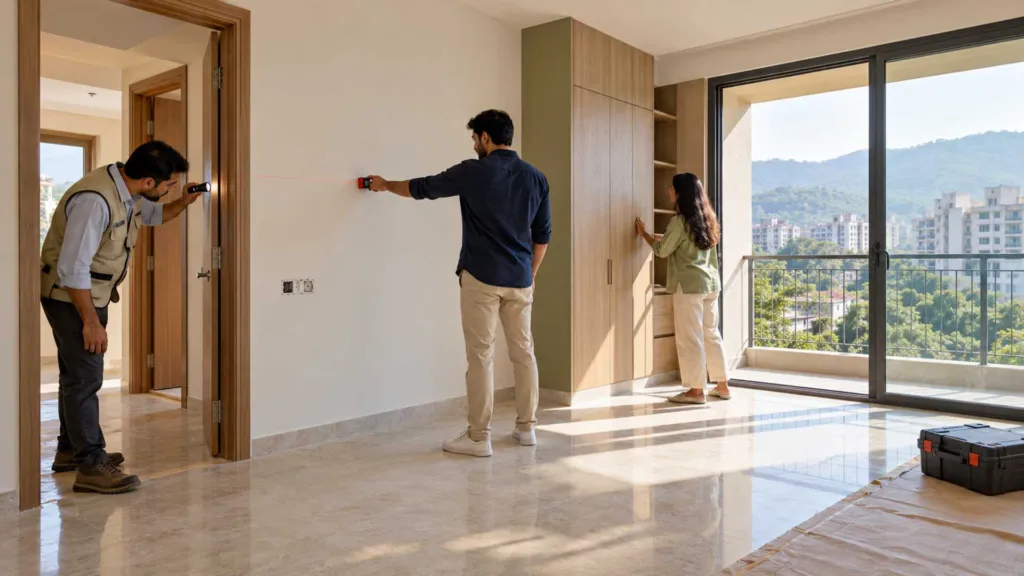
Next, inspect the apartment in daylight with the agreed specifications in hand. Measure the RERA carpet area if there is a concern, test every switch and socket, run all taps, check drainage slopes, look for seepage, examine window sealing and inspect floors, walls, doors, sanitaryware and balcony safety. Photograph and video every defect with a date, then submit a signed snag list rather than relying on verbal assurance.
The common areas deserve equal attention. Test the lifts, fire doors, alarms and emergency lighting. Check whether fire-fighting systems appear commissioned and ask to see the relevant approvals or NOCs where applicable. Walk through the parking bay, ramps, staircases, refuge areas, waste-handling zone, water tanks and access roads. Confirm permanent water and electricity arrangements instead of assuming that temporary construction connections are acceptable.
Then compare amenities on site with the agreement, brochure disclosures incorporated into the contract and RERA filings. Ask which facilities are operational, which belong to a later phase and who bears the cost until the complete project is handed over. Confirm maintenance charges, the charging start date, corpus or deposits, meter readings and the facility-management contact.
MahaRERA’s own possession-stage guidance tells buyers to ensure that requisite documents are in place before taking possession and specifically identifies OC status as a key check. Prateek Group and RealHubb likewise distinguish the OC, CC and possession documentation in their buyer education material. The consistent message is simple: do not let the presence of one correct document stop the verification of everything else.
The smartest meaning of “ready to move”
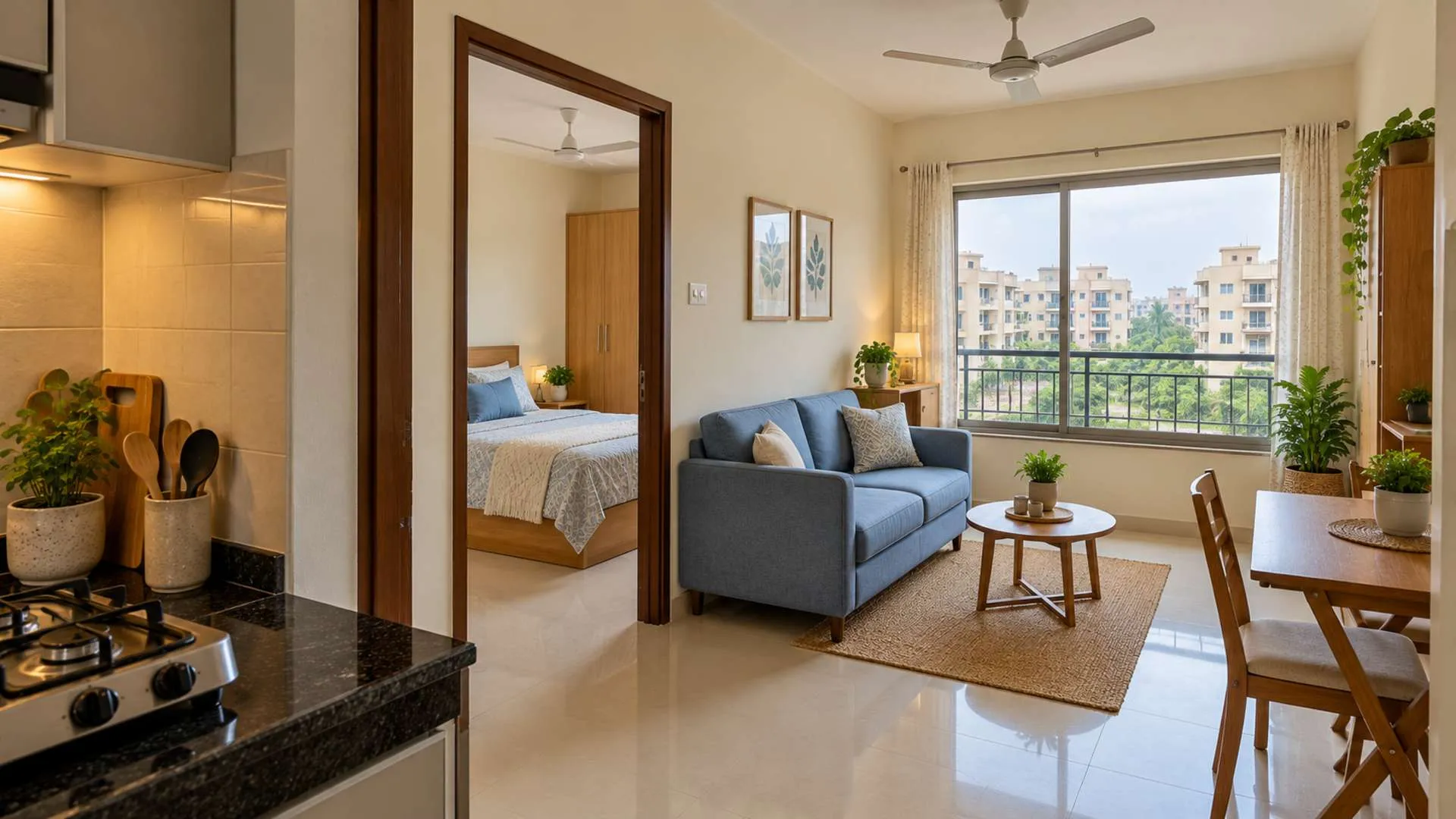
A genuine ready-to-move flat in India should satisfy three tests. It should be legally occupiable, contractually deliverable and practically habitable. The first test requires a valid OC for the relevant building or portion. The second requires the promised documents, specifications and possession process. The third requires a functioning home and usable common areas, with defects recorded and rectification responsibilities clear.
This matters for a ready-to-move flat in Pune or a ready-to-move flat in Mumbai because buyers often pay a premium for certainty. That premium loses its logic if the building has legal approval but daily life still depends on construction lifts, tankers, temporary access, or months of amenity work.
An Occupancy Certificate should therefore be treated as the starting point for possession due diligence, not the end of it. Read the certificate, match it to the exact home, inspect the flat and common areas, reconcile amenities with the agreement, record defects and keep every assurance in writing.
The best possession day is not simply the day the keys arrive. It is the day the legal papers, physical home and promised living conditions finally agree. Before accepting your new home, use RealtyConnect to explore buyer guidance, then have the project documents and possession terms reviewed by qualified legal and technical professionals.