2 BHK Township vs Standalone: Compare Price, Space and Amenities
Township vs Standalone 2 BHK in Pune: 2026 Guide
SHARE:
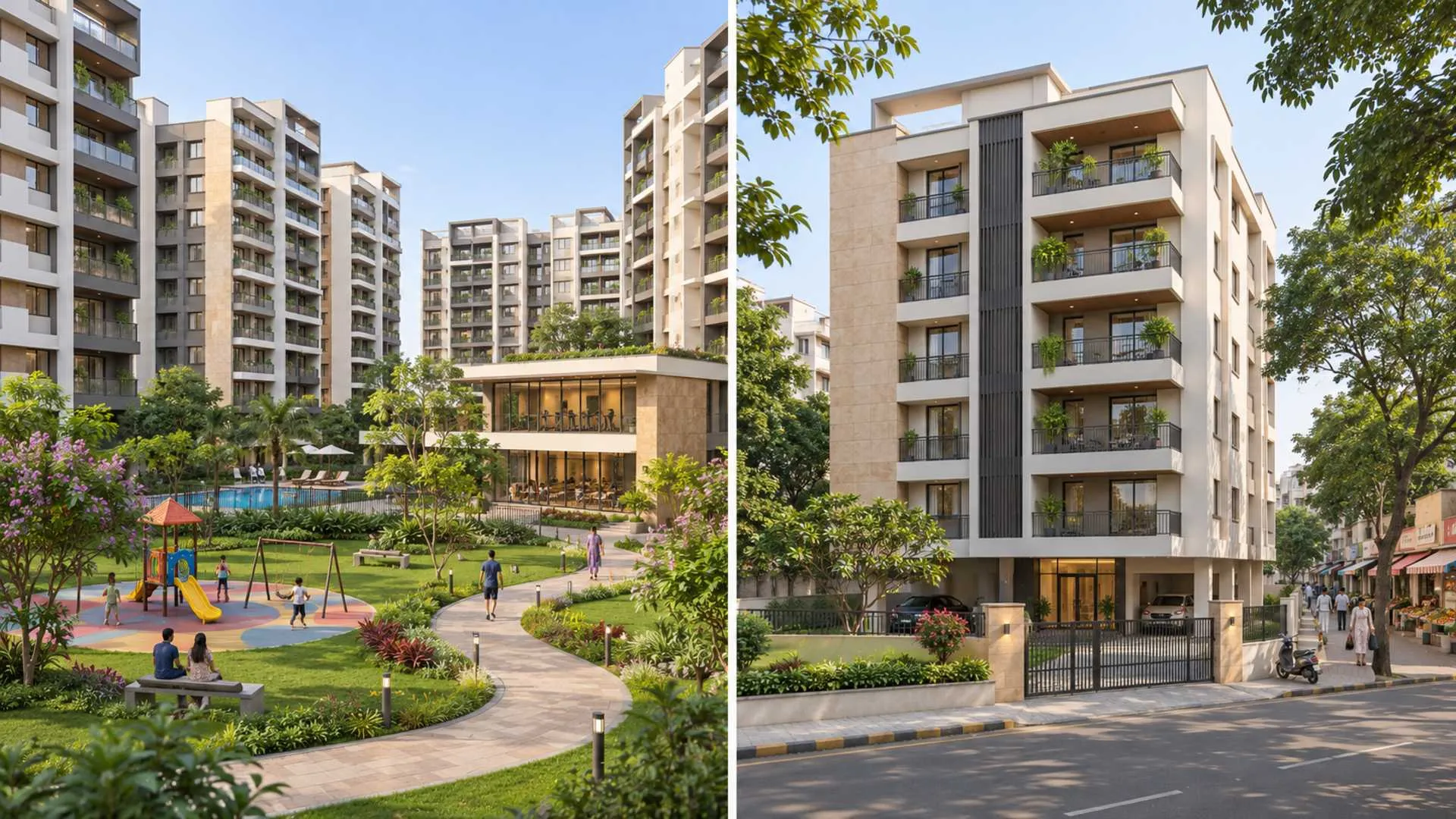


Two bedrooms can buy you two very different lives: one built around township parks, clubs and internal services; another around an independent building and the neighbourhood outside it. A township 2 BHK can justify a higher price when its facilities improve your daily routine. A standalone apartment can offer better value when location, usable space and manageable costs matter more. Neither guarantees a larger home or stronger investment returns. For Pune buyers in 2026, the right comparison is the complete purchase cost, RERA carpet area, recurring charges and actual commute, not the amenity count.
Is a 2 BHK in a township better than a standalone apartment?
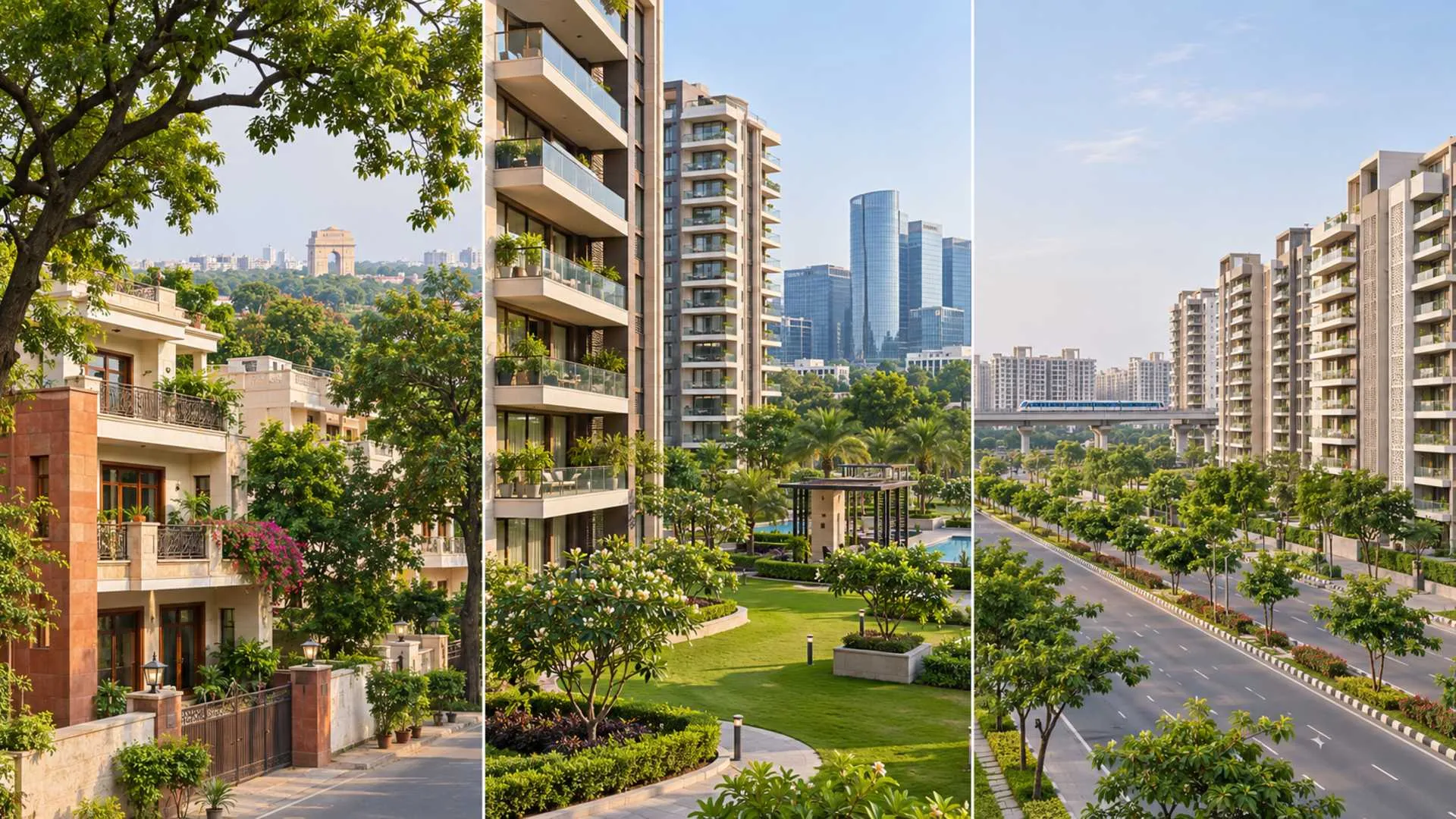
A township suits buyers who will regularly use its shared facilities and can comfortably afford the purchase and maintenance costs. A standalone building can suit buyers prioritising a particular location, fewer neighbours, or a simpler amenity package. Compare similar-sized homes in the same locality before deciding whether a township premium is worthwhile.
Township vs standalone apartment: what are you buying?
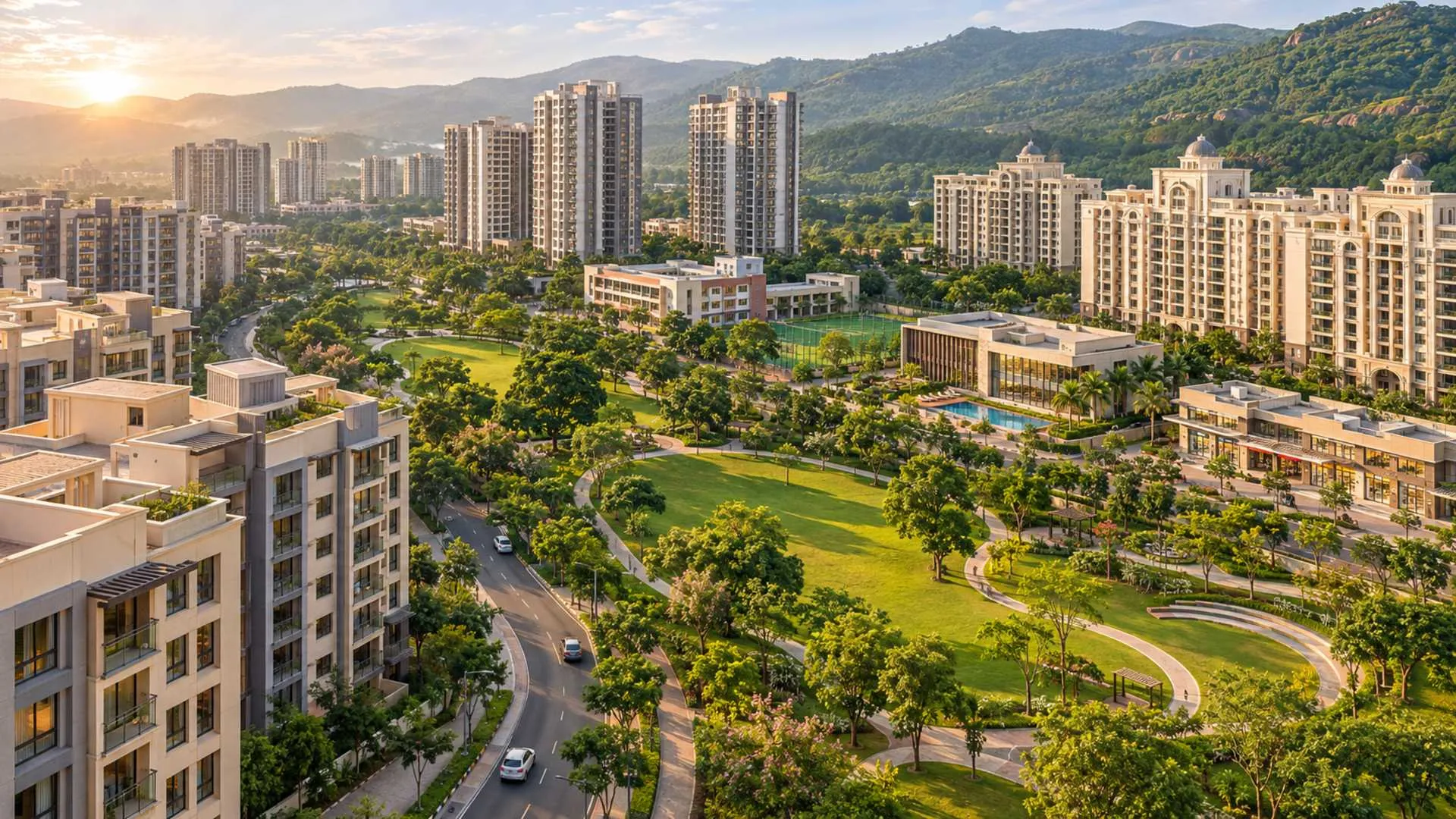
An integrated township is generally a large, master-planned development combining residential precincts with shared infrastructure and services. Depending on the development, these may include retail, recreation, schools, clinics and internal roads.
A standalone apartment building is independent of that wider township framework. It can still have security, parking, lifts, a gym, landscaped areas or professional management. “Standalone” does not automatically mean poorly equipped, and “township” does not automatically mean fully self-sufficient.
The supplied Mamurdi My Home comparison identifies scale, amenities and management as important differences. Buyers should inspect the specific development rather than apply every generalisation to every building.
A gated society is another distinction. Controlled entry does not, by itself, make a project an integrated township.
| Factor | Township 2 BHK | Standalone 2 BHK |
|---|---|---|
| Purchase price | May include a premium for location, brand and shared infrastructure | May offer a lower entry cost, although prime locations can be expensive |
| Apartment space | Depends on the individual floor plan | Depends on the individual floor plan |
| Amenities | Usually a broader township-level offering | Project-specific facilities |
| Maintenance | Can involve building and township-level charges | Costs shared across the building’s owners |
| Daily convenience | Depends on operational internal services and distances | Depends on surrounding neighbourhood services |
| Investment outcome | Driven by entry price, demand and upkeep | Driven by the same fundamentals |
Is a 15–25% township premium worth paying?
The township flat versus standalone apartment price difference must be established through comparable quotations.
One supplied township-investment marketing page quotes a 15–25% branded-township premium. However, it does not establish that range through a transparent, representative dataset. Treat it as a claim to test, not a universal India-wide benchmark.
Consider this hypothetical same-locality comparison, using two homes with identical carpet areas:
| Item | Standalone apartment | Township apartment |
|---|---|---|
| Quoted purchase price | ₹70 lakh | ₹84 lakh |
| RERA carpet area | 750 sq ft | 750 sq ft |
| Quoted price per carpet sq ft | Approximately ₹9,333 | ₹11,200 |
| Township price premium | — | 20% |
These are illustrations, not current project quotations. Applicable transaction costs and other charges must be added separately.
The question is whether the additional ₹14 lakh buys benefits you value: usable recreation, dependable management, a school journey that works, or convenient everyday shopping.
The Pride World City Dhanori comparison, published by its authorised channel partner, emphasises comparing facilities that a household will actually use. That is a useful approach, even though the page’s preference for township living is promotional.
For a Pune 2 BHK under ₹1 crore, or a first-time purchase under ₹80 lakh, compare the all-in amount first. A lower base price can lose its advantage after additional contractual charges and essential interiors.
Carpet area: bigger surroundings do not mean a bigger flat
A township can offer more shared outdoor space while providing less space inside a particular apartment.
Under RERA, carpet area excludes external walls, service shafts, exclusive balconies or verandahs and exclusive open terraces, while including internal partition walls. MahaRERA publishes a clarification on its calculation.
Ask for the registered carpet area, separately stated balcony or terrace area, and a dimensioned floor plan. Do not compare a township’s super built-up area with a standalone apartment’s carpet area.
Then test the layout. Can the bedroom accommodate a bed and wardrobe without obstructing movement? Is there a useful dining space? Does a long passage consume area that another home uses as living space?
Two 750 sq ft apartments can function differently even when their legal carpet areas match.
Claims of 70–80% open space in townships versus 30–40% in standalone projects also need verification. Establish whether “open” includes roads, podium landscaping, setbacks, inaccessible areas, or land intended for later phases. Request the approved layout and the definition behind the percentage.
A garden visible from the balcony is valuable only if residents can access and use it under the applicable arrangements.
Township maintenance cost vs society charges: calculate the real difference
There is no reliable universal rule that township maintenance is always 30–50% higher.
The supplied sources themselves differ. Srivari’s comparison describes potentially higher township charges, while ARV Group’s article argues that shared professional management can reduce costs. Both positions depend on the actual budget and services.
An illustration makes the calculation clearer. Suppose two societies bill maintenance on 1,000 sq ft of chargeable area:
- At ₹2.50 per sq ft monthly, the charge is ₹2,500.
- At ₹3.50 per sq ft monthly, the charge is ₹3,500.
- The second bill is 40% higher, adding ₹12,000 annually.
Over ten years, that difference totals ₹1.2 lakh before increases or special assessments. These are assumed charges, not Pune market averages.
If quotations show ₹3–5 per sq ft versus ₹1.50–2.50, establish the billing area and inclusions before comparing. Common area maintenance, sinking-fund contributions, water, backup electricity and clubhouse fees may be collected differently.
A smaller building can also face substantial per-home expenditure when a lift, waterproofing system or major structure needs repair. Read maintenance accounts and reserve balances, not just the monthly bill.
Amenities: buy the routine you will use
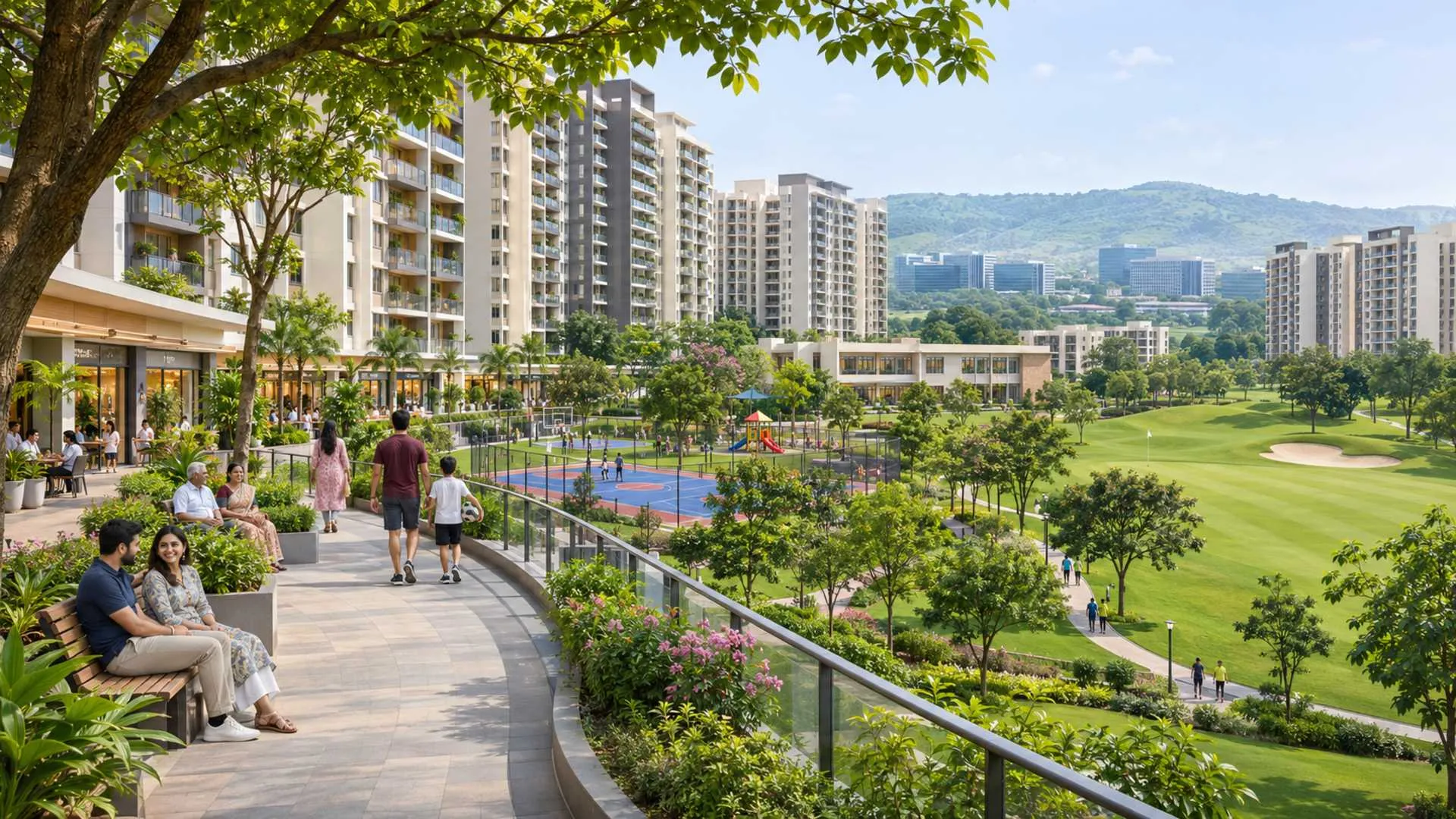
Life Republic’s township-versus-standalone guide highlights schools, shops, green spaces and recreation as components of integrated living. These can be meaningful benefits for families.
However, an amenity somewhere inside a large development is not necessarily convenient from your tower. Walk the route to the shop, school entrance and pickup point.
Confirm which facilities are operational, which belong to a future phase and which require separate payment. A school on the master plan does not guarantee admission. A clinic is not equivalent to a full-service hospital.
For a young family buying its first 2 BHK, safe pedestrian routes, usable play areas and reliable lifts may matter more than an elaborate entrance lobby.
The standalone alternative deserves the same scrutiny. A smaller building beside an established school, park and market can offer substantial convenience without owning those facilities internally.
Integrated township benefits are strongest when they remove regular journeys or improve everyday life. They are weaker when amenities remain unused while the office commute becomes longer.
Pune comparisons: match the locality and project format
For Life Republic versus a standalone Hinjewadi 2 BHK, compare the Marunji location with the exact alternative. A Phase 1 building and a home deeper into the Marunji corridor do not represent the same commute.
For Blue Ridge versus a standalone Hinjewadi Phase 1 flat, compare similar carpet areas, building ages, furnishing requirements and maintenance obligations.
An Amanora Park Town versus standalone Hadapsar comparison should examine the entire routine: workplace, school, shopping and internal travel. Comparing Magarpatta City with Kharadi or Viman Nagar introduces a location difference alongside the housing-format difference.
In Wagholi, an Ivy Estate versus standalone 2 BHK shortlist should use current quotations and verified floor plans from the same surrounding market.
Developer names also require accurate classification. Saheel Luxton in Wakad should be assessed on its approved layout and amenity specifications, rather than assumed to be a basic standalone alternative. Its official material advertises an extensive amenity offering.
Similarly, assess the particular Mantra Properties project in Kharadi or Shubh Developers project in Mundhwa before labelling its format or affordability.
ARV New Town is marketed by ARV as a 15-acre township, so comparing it with Ivy Estate is not automatically a standalone-versus-township exercise. It also introduces a south-Pune versus Wagholi location comparison.
Rental yield, resale and the first-time buyer’s decision
Do township flats appreciate more than standalone apartments over ten years? There is no universal winner established by the supplied material.
Entry price, employment access, competing supply, construction quality and maintenance affect both. A recognised township can attract tenants, but a higher purchase price can offset a rental premium.
Consider another illustration:
| Calculation | Standalone 2 BHK | Township 2 BHK |
|---|---|---|
| Assumed purchase price | ₹70 lakh | ₹84 lakh |
| Assumed monthly rent | ₹25,000 | ₹30,000 |
| Annual rent divided by purchase price | Approximately 4.29% | Approximately 4.29% |
Although the rents are 20% higher, so are your costs. This will mean that you receive the same returns on the purchase price above. However, when factoring in the true costs of purchase, vacancy, upkeep, repairs and taxes, you could make a difference in the returns you keep.
Obtaining a mortgage for your home can be a tricky process. Approval and release of funds come down to assessing the borrower and the property for legal and technical requirements backed by HDFC Bank’s loan-process guidance.
For first-time buyers looking at a 70-80 lakh budget, pick a home that will leave you with some savings for emergencies, will fit your family comfortably and will have low ongoing costs. Ensure you check the MahaRERA registration, ownership, approvals, possession documents and construction status of the property.
A good 2 BHK will have a good location, usable space and low running costs. Use RealtyConnect.tech to look into both township and standalone properties.