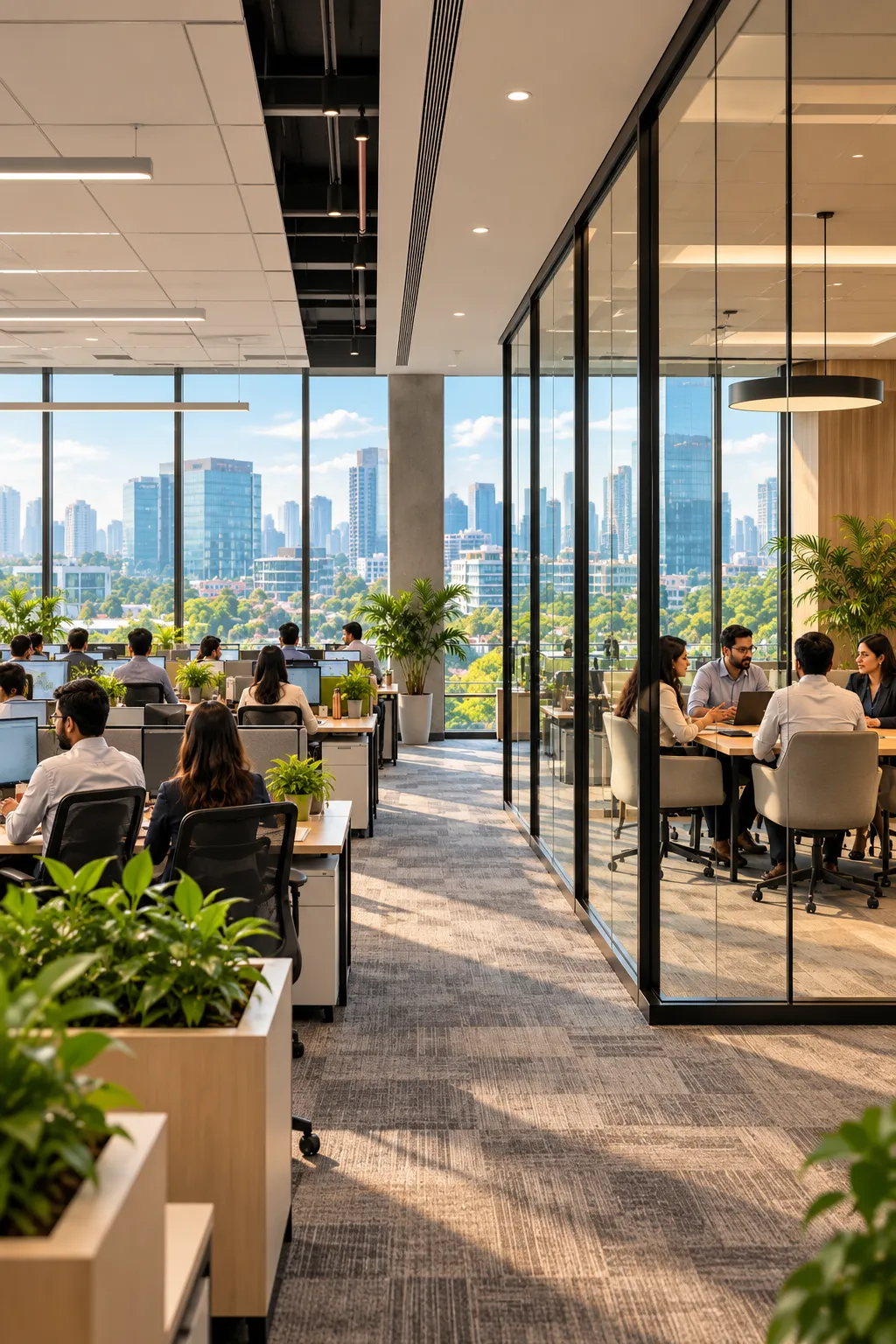


Green Offices Set to Dominate India’s Commercial Real Estate
Green Offices Set to Dominate India's Commercial Market
SHARE:
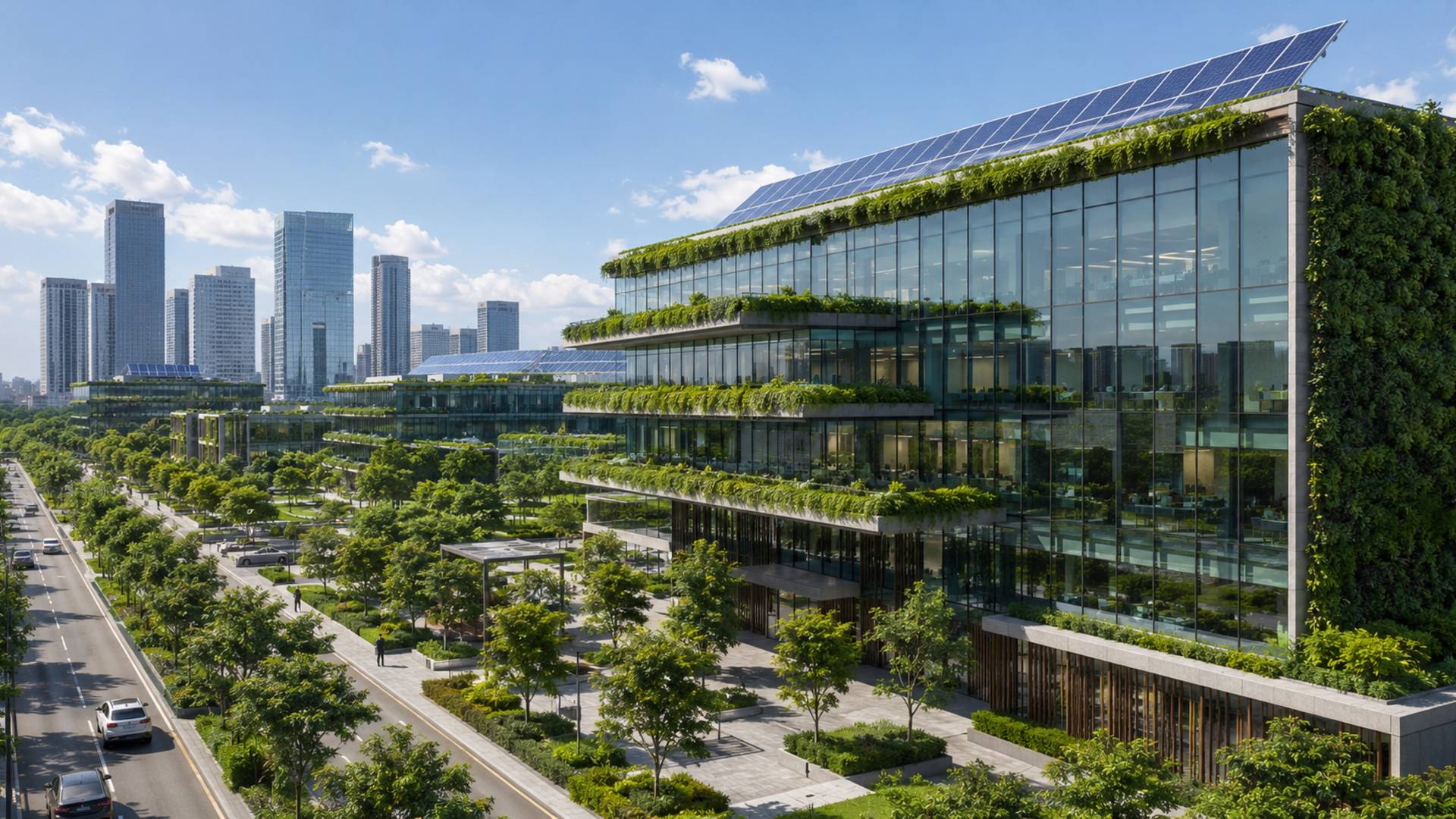
Why is India’s green office stock racing toward 75% penetration by 2026?
India’s green office stock to reach 70-75% in 2026 on the back of ESG mandates, tenant demand and sustainability-focused investment. Green buildings will constitute 80-85% of India’s office leasing in 2026, with certified assets emerging as the preferred choice for occupiers and investors alike.
The sustainability revolution is happening in India’s commercial real estate market. ESG mandates are pushing demand for green offices in 2026, reshaping leasing decisions in major business hubs. What started as a niche trend has become a mainstream requirement.
Colliers India Office Outlook 2026 estimates office demand at 70-75 million sq ft this year, while new supply could reach 60-65 million sq ft. Meanwhile, the trend of India’s flight to quality green certified offices 2026 is gaining pace as multinational occupiers increasingly prioritize sustainable workplaces.
ESG Compliance Is Changing Leasing Preferences
The green certified office market in India, 503 MSF 2026 milestone highlights how rapidly sustainability has penetrated commercial real estate. Data cited by Commercial Design India shows India’s certified office stock has already crossed 503 million sq ft.
A major catalyst is the SEBI BRSR Core ESG mandatory FY 2026-27 top 500 companies framework, which is pushing corporations to strengthen sustainability reporting and value-chain compliance. As a result, green-certified assets are becoming a strategic necessity rather than an optional upgrade.
Industry reports from Colliers, CBRE, JLL, and Cushman & Wakefield indicate that nearly 80% new Grade A office supply green certified in India now incorporates standards such as IGBC, LEED, WELL, and GRIHA certifications.

Green Buildings Command a Premium
Sustainability is also translating into stronger financial performance. According to insights highlighted by CNBC-TV18, a green office 20% rental premium in India in 2026 is increasingly achievable in prime office districts.
Occupiers are willing to pay more for energy-efficient, wellness-focused, and ESG-compliant buildings that help meet corporate sustainability goals. This explains why 80-85% India office leasing green buildings 2026 is concentrated in certified assets.
Among leading markets, Hyderabad 75% Bengaluru 73% green office penetration are setting the pace, while Mumbai, Delhi NCR, Chennai, and Pune continue to expand their green office footprint.
The Future Is Green
The push for net-zero 2070 carbon-neutral energy-efficient smart building goals in India further strengthens the case for sustainable offices. Some of the major institutional portfolios that already boast of high levels of green certification are Mindspace, Embassy and Brookfield REIT.
The message is getting through: companies want greener workplaces, investors want ESG-compliant assets and developers are responding with sustainable supply.
As ESG compliance green building India commercial real estate standards get stricter, green-certified offices are moving out of the premium category and are fast becoming the industry benchmark.
“The next big opportunity for investors, developers and occupiers is sustainable real estate.” The green office revolution is here and the early adopters will benefit the most.
FAQs:
1. Should I invest in green office spaces in India right now?
For long-term investors, green office assets are becoming increasingly attractive. Strong occupier demand, ESG compliance requirements, and higher leasing preference for certified buildings are supporting rental growth and asset appreciation. Green offices are also better positioned to attract institutional and REIT capital.
2. What makes a green office certified and why does it matter?
A green office is certified under standards such as IGBC, LEED, WELL, or GRIHA. These buildings focus on energy efficiency, water conservation, indoor air quality, and sustainability. Certification matters because it lowers operating costs, improves employee well-being, and helps companies meet ESG goals.
3. How much premium do tenants pay for green office spaces?
Green-certified offices in prime business districts can command rental premiums of up to 20% compared to conventional buildings. Tenants are willing to pay more for efficient, healthier, and ESG-compliant workspaces that support corporate sustainability commitments.
4. Will non-green office buildings become obsolete in India by 2027?
Not entirely, but they may face growing challenges. As ESG mandates strengthen and occupiers increasingly prefer sustainable assets, older non-certified buildings could experience slower leasing, higher vacancy levels, and pressure to undergo retrofitting or upgrades to remain competitive.
5. Which Indian cities lead green office building adoption?
Hyderabad currently leads with around 75% green office penetration, followed by Bengaluru at 73%. Other major markets such as Delhi NCR, Mumbai, Chennai, and Pune are also witnessing rapid growth in green-certified office stock as developers focus on sustainability-led commercial projects.