


How to Become a Landlord in Pune: Complete 2026 Guide
Learn how to become a landlord in Pune in 2026, from setting rent and screening tenants to registration
SHARE:
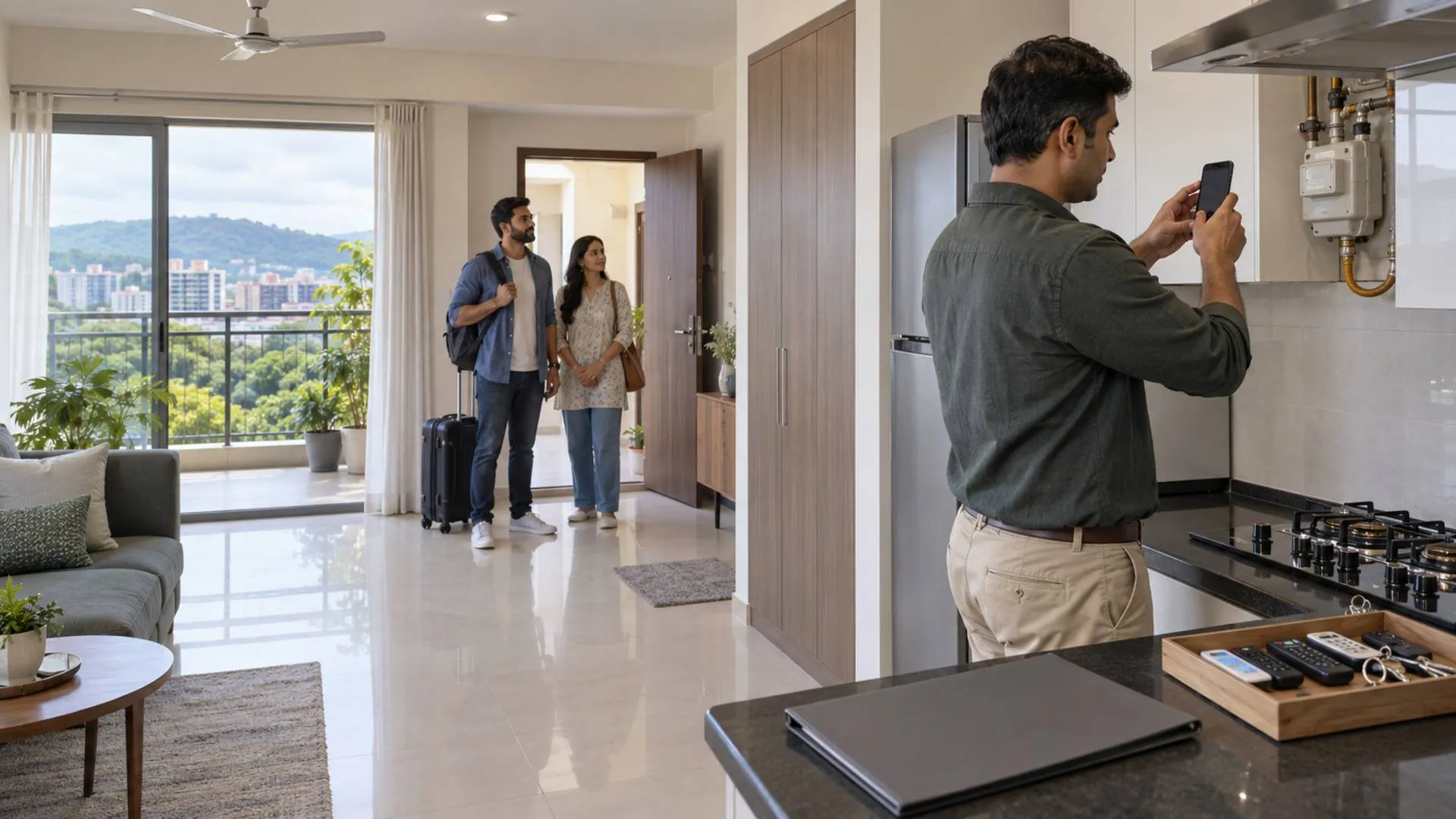
Owning a rental property in Pune can be a regular source of income, but handing over the keys is the easy part. The real work begins before a tenant moves in. It’s pricing the home correctly, documenting the condition, screening the applicant, registering the agreement and creating a paper trail for every payment.
“There is a sharp divide in demand between IT-led locations like Hinjawadi and Kharadi, established areas like Baner and Viman Nagar and neighborhoods dotted across Pune and Pimpri-Chinchwad. Furnished and semi-furnished homes also attract different tenants and maintenance loads.
How to become a landlord in Pune Step by Step 2026, or this guide is generic information and not a substitute for advice from a property lawyer or chartered accountant on a specific transaction.
What documents should I collect from tenants before renting out my flat in Pune?
Before giving possession, a Pune landlord should collect government-issued photo identification, PAN, permanent-address proof, recent photographs, employment or business details, emergency contacts, references and the names of every proposed occupant. Where relevant, obtain passport, visa and registration details from foreign nationals. Keep the registered leave-and-license agreement, tenant-information acknowledgment, payment records and a signed inventory with dated photographs. Collect only necessary data, obtain consent and store it securely.
Income documents such as salary slips, an employment letter, or bank statements can help assess affordability, but request them proportionately and with the applicant’s consent. Verification is not permission to discriminate unlawfully or circulate personal documents through informal broker groups.
Step 1: Prepare the flat as a rental product
Begin by confirming that you have the legal right to license the property. Keep the purchase agreement, Index II, property-tax receipts, society records and loan information organised. If the flat is jointly owned, every owner should approve the arrangement and sign where required. A lender’s terms should also be checked if the property is mortgaged.
Inspect plumbing, electrical points, locks, appliances, seepage, balconies and safety grills. Service included appliances before possession. A clean, functional flat generally rents faster than one carrying ambitious rent but obvious repairs.
Decide whether the unit will be bare, semi-furnished or fully furnished. Semi-furnished homes, often with wardrobes, modular kitchen fittings, lights, fans and geysers, can attract longer-term tenants without exposing the owner to the replacement cost of a complete appliance package. Furnishing may improve rent, but only if the additional annual income reasonably covers depreciation, repairs and vacancy.
Create an inventory listing every fixture, key, remote, appliance, meter reading and existing defect. Attach date-stamped photographs or a video walkthrough and have both parties acknowledge the record. This becomes crucial if a dispute later arises over damage versus normal wear.
Step 2: Set rent using evidence, not expectation
Compare genuinely similar homes, not every 2BHK for rent in Pune within the same pin code. Match RERA carpet area or usable area, building age, furnishing, parking, floor, view, amenities, possession condition and walking or driving distance from employment hubs.
Hinjawadi demand responds strongly to IT-campus access and company transport. Baner tenants may prioritise social infrastructure and west Pune connectivity. Kharadi, Viman Nagar and Koregaon Park attract distinct corporate, student and expatriate profiles.
Ask two or three brokers for recently closed rents, review live listings and distinguish asking prices from completed deals. Then calculate the net yield:
Net rental yield = (annual rent − vacancy, maintenance, tax, insurance and recurring owner expenses) ÷ total property cost × 100.
Pricing slightly below an unrealistic market ask can be more profitable if it reduces vacancy. One empty month equals an 8.3% loss of annual rent before other costs.
Step 3: Screen the tenant without cutting corners
A tenant document checklist Pune landlords use should verify identity, affordability, intended use and occupancy. Speak directly with the applicant rather than relying only on a broker. Confirm who will live in the flat, workplace location, expected tenancy duration, pets, vehicles and any work-from-home or commercial activity.
With written consent, contact an employer or previous landlord. Review income against rent, avoid collecting excessive personal information and document every adult occupant, not merely the person transferring the deposit. Screening reduces risk; the agreement and payment trail remain essential.
Step 4: Use a registered leave-and-license agreement
In Maharashtra, residential properties are commonly occupied under a leave-and-license agreement rather than a conventional lease. A licence grants permission to use the premises for a defined period under agreed conditions; it is not simply interchangeable with a lease, which can create a different legal interest. The document’s substance matters more than its title, so unusual or long-term arrangements deserve legal drafting.
Registration is not optional. Section 55 of the Maharashtra Rent Control Act, 1999 requires agreements for leave and licence or letting to be written and registered. It places responsibility for registration on the landlord. Without a written registered agreement, the tenant’s version of the terms may prevail unless proved otherwise; contravention can attract the statutory penalty stated in the Act.
The popular “11-month agreement does not need registration” belief is unsafe in Maharashtra. Section 55 still applies, and a notarised document is not a substitute for registration.
The agreement should clearly state:
- parties, property description, term, rent, deposit and payment date;
- permitted occupants and residential use;
- maintenance, utilities, repairs and society charges;
- rent escalation, notice, renewal and early-exit conditions;
- lock-in period, if any, drafted with enforceable consequences;
- inventory, damage, painting and deposit-refund rules; and
- restrictions concerning sub-licensing, alterations and unlawful use.
Use the Maharashtra Department of Registration and Stamps Leave and License 2.0 portal or an authorised registration route. The government calculator asks for the licence period, refundable and non-refundable deposits, rent, escalation and whether the property is urban or rural. Do not assume stamp duty is a flat ₹100. Generate the current calculation for the actual transaction and retain the official receipt and registered digital copy.
Guides from NoBroker describe the workflow, but the state portal and registered instrument remain authoritative. Verify the registration number instead of accepting an edited PDF.
Step 5: Submit tenant information to the correct police jurisdiction
Landlords should not treat police reporting as an optional society formality. Pune-region police have taken action against owners who failed to provide tenant information. The correct route depends on whether the property falls under Pune City Police, Pimpri-Chinchwad Police or Pune Rural Police.
The Pune Rural Police tenant-information portal, for example, asks for owner, property, tenant, workplace and reference details. For other jurisdictions, use the current official police portal or the local police station’s prescribed process. Preserve the acknowledgment.
Online registration may transmit tenant details through integrated systems, but confirm the police-station mapping and acknowledgment. This is especially important near reorganised jurisdictions and the Pune–PCMC boundary.
Step 6: Handle the security deposit transparently
There is no general two-month statutory cap on residential security deposits under Maharashtra’s current rent-control framework. The frequently quoted two-month ceiling comes from the central Model Tenancy Act; it does not automatically become Maharashtra law without state adoption. The deposit in Pune is therefore primarily negotiated and should be recorded in the registered agreement.
State the exact amount, payment method, permitted deductions and refund deadline. Keep the money traceable through banking channels and issue receipts. Never describe advance rent, a non-refundable charge and a refundable deposit as though they were the same thing, because stamp-duty treatment and refund obligations may differ.
A landlord may deduct amounts authorised by the agreement for unpaid rent, utilities, society charges assigned to the tenant, or documented damage beyond normal wear. Maintenance cannot be deducted arbitrarily merely because the tenant is moving out. Provide an itemised statement, supporting bills and the balance refund within the agreed period. Faded paint from ordinary use is different from broken furniture or unauthorised alterations.
Step 7: Clarify society charges, repairs and access
Inform the cooperative housing society and complete its tenant-intimation, identity, move-in and vehicle procedures. Obtain a society NOC where the society’s applicable process requires it, but do not confuse society paperwork with government registration or police compliance.
The agreement should divide routine consumables, minor repairs, major structural work, property tax, society maintenance and special levies. Owners commonly retain responsibility for structural defects and major capital repairs, while occupants pay utilities and agreed user-linked charges. Ambiguous clauses create disputes, especially when a society increases maintenance mid-term.
A landlord does not gain unrestricted entry rights. Include a reasonable inspection clause, give notice except during emergencies and respect privacy. Never cut utilities, change locks, or remove possessions to force payment or departure; use lawful notices and proceedings.
Step 8: Manage rent, tax and records like a business
Collect rent through bank transfer and issue a receipt or digital acknowledgment. Maintain a monthly ledger for rent, maintenance, repairs, deposit movements and vacancy. Inspect periodically with notice and respond quickly to leaks or safety issues; unresolved repairs can become both a tenant-retention problem and an asset-damage problem.
Rental income is generally reported under “Income from House Property.” The supplied ₹2.4 lakh Section 194-I threshold is outdated. From April 1, 2025, the threshold became ₹6 lakh annually for covered payers; TDS on rent of land or building is generally 10%.
For certain individuals or HUFs outside Section 194-I, Section 194-IB applies when monthly rent exceeds ₹50,000; TDS is 2%, generally deducted in the final month of the financial year or tenancy. Confirm applicability with a chartered accountant.
Step 9: Plan renewal, rent increases and exit before trouble begins
Do not wait until the final week to discuss renewal. Review the tenant’s payment history, current comparable rents, property condition and planned repairs 60–90 days before expiry. Increase rent according to the registered agreement and mutual renewal terms, not an arbitrary verbal demand.
At exit, conduct a joint inspection against the original inventory, record meter readings, collect every key and obtain evidence of utility settlement. Sign a possession-handover note. Refund the deposit after authorised deductions and close the tenancy in writing.
If the tenant overstays, defaults or breaches the agreement, serve notices in the required manner and consult a lawyer. Eviction is a legal process; self-help tactics can create a larger dispute than the original default.
A Pune landlord succeeds through systems, not luck
Becoming a landlord in Pune is not simply listing a flat for rent in Pune and selecting the highest offer. It is a repeatable operating system: prepare the asset, price it realistically, verify the tenant, register the agreement, complete police reporting, document the deposit and maintain financial records.
That process protects both sides. The tenant gets clear terms and a habitable home; the owner protects the property, income and evidence needed if something goes wrong.
The best landlord guide Pune owners can follow is straightforward: never hand over possession until identity, money, registration, inventory and police acknowledgment are documented. Whether you own a 1BHK for rent in Pune, a 2BHK for rent in Pune, or a furnished house for rent that Pune families will occupy, professional management is what turns property ownership into sustainable rental income.
Planning to rent out or buy a property in Pune? Use RealtyConnect to research locations, compare properties and prepare better questions before appointing a broker, signing an agreement, or giving possession.