

India’s Green Building Revolution: How IGBC & LEED Certification Is Becoming a Homebuyer Demand Driver
Sustainability Is No Longer a Luxury Add-On; It Is Fast Becoming One of the Most Influential Factors Shaping Homebuyer Decisions…
SHARE:
A decade ago, green building certifications were largely associated with premium commercial towers and corporate sustainability goals. In 2026, the narrative has changed dramatically.
Today, IGBC and LEED-certified homes are increasingly becoming a preferred choice for Indian homebuyers, driven by rising environmental awareness, escalating utility costs and a growing focus on long-term value. What began as a niche sustainability movement has evolved into a full-fledged India Green Building Revolution 2026, reshaping how developers design, market and sell residential projects.
From Sustainability Buzzword to Homebuyer Priority
India’s real estate sector is witnessing a significant shift in buyer preferences. Modern homebuyers are no longer evaluating properties solely on location, amenities, or price. Increasingly, they are asking questions about energy efficiency, water conservation, indoor air quality and long-term operating costs.
Features attracting buyers today include:
- Rainwater harvesting systems
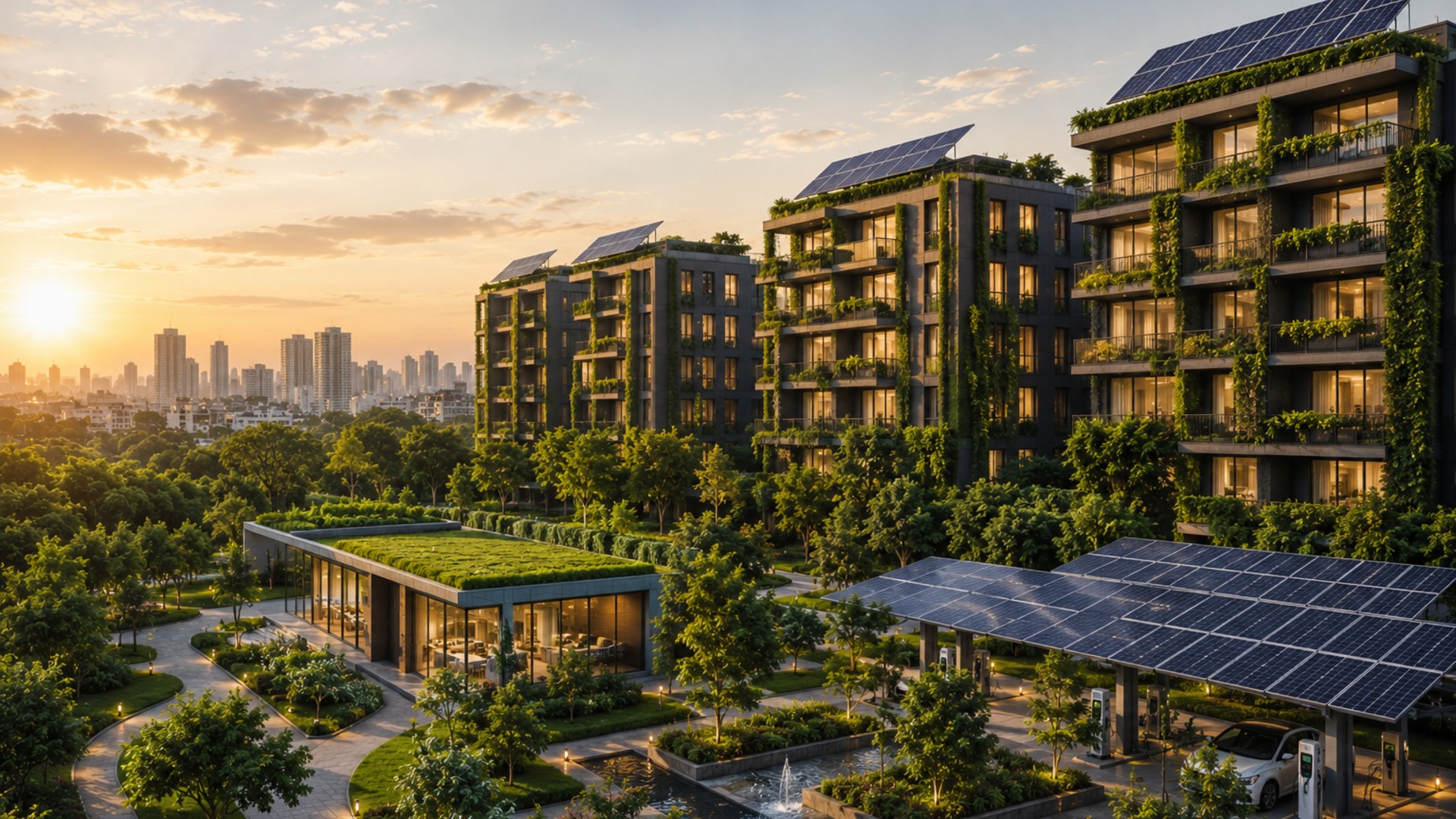
- Solar power integration
- EV charging infrastructure
- Low VOC paints and materials
- Energy-efficient lighting and appliances
- Smart water management systems
- Improved ventilation and indoor air quality
The focus has moved from owning a home to owning a future-ready home.
The Rise of IGBC and LEED in India
The two most recognised green building certification systems influencing Indian real estate are:
- IGBC (Indian Green Building Council) Certification
- LEED (Leadership in Energy and Environmental Design)
India has emerged as one of the world’s leading green building markets, with more than 19,000 IGBC-registered projects covering over 15.74 billion square feet of built-up area. Simultaneously, the country ranks among the world’s largest markets for LEED-certified developments.
The momentum is being supported by developers, policymakers, institutional investors and increasingly, end-users.
Why Homebuyers Are Willing to Pay a Premium
One of the biggest myths surrounding sustainable housing is that it costs significantly more. While certified green homes may command a modest premium, buyers are increasingly viewing the additional investment as a long-term value proposition.
Benefits often include:
- Lower electricity consumption
- Reduced water bills
- Better indoor comfort
- Healthier living environments
- Higher resale attractiveness
- Future-ready infrastructure
Industry studies have also indicated that premium green-certified projects can command stronger resale value and improved marketability compared to conventional developments.
The premium is no longer being paid for sustainability alone; it’s being paid for efficiency, wellness and long-term savings.

Green Buildings Are Becoming a Market Differentiator
Developers across India are rapidly expanding their sustainability commitments.
Leading brands are incorporating green building principles across residential portfolios through:
- Energy-efficient master planning
- Sustainable construction materials
- Water-positive initiatives
- Smart waste management systems
- Carbon reduction strategies
Many projects today are targeting IGBC Platinum, Gold, or LEED certifications as a core part of their market positioning.
In several premium residential markets, certification is increasingly being viewed as a trust marker that signals construction quality, operational efficiency and environmental responsibility.
The Bigger Picture: A Growing Green Economy
The green building market in India is expected to witness significant expansion over the coming years, supported by:
- ESG-driven investments
- Government sustainability initiatives
- Energy Conservation Building Code (ECBC) adoption
- Net-zero and carbon-neutral commitments
- Rising institutional demand for certified assets
Commercial real estate has already demonstrated strong momentum in this space, with a substantial share of institutional-grade office assets carrying green certifications.
What started in the office sector is now moving decisively into residential real estate.
Is IGBC Certification Worth the Premium for Homebuyers in 2026?
For many buyers, the answer increasingly appears to be yes.
As utility costs rise and environmental concerns gain prominence, green-certified homes offer tangible advantages that extend beyond marketing claims. They provide operational savings, healthier living conditions and stronger long-term asset positioning.
The question is no longer whether sustainable housing will become mainstream; it is how quickly the transition will happen.
The Future Is Green
India’s property market is undergoing a transformation, with sustainability shifting from a desirable add-on to a driver of demand. What was once a niche area is now turning into a significant competitive advantage for developers and a crucial factor for buyers. Homebuyers of the future will not only be keen to know where a property is located, but how sustainable it is built.
Buying a Home in 2026? Ask About the Certification
As the market shifts towards living sustainably, buyers will want to know much more beyond brochures and amenities, if that project could actually offer long-term savings, a healthy lifestyle and future value with IGBC, LEED, or any other renowned green building certification. This green revolution is changing Indian real estate, home by home.