

Monsoon Proofing Homes: Waterlogging, Seepage & Your Legal Rights
Monsoon Home Seepage: Legal Rights Under RERA Explained
SHARE:
What are your legal rights if your new home develops seepage during the monsoon?
Under RERA Section 14(3), Indian homebuyers can ask builders to rectify qualifying structural defects or workmanship-related issues reported within five years of possession. If waterlogging or structural seepage results from construction deficiencies, buyers may also seek relief through the appropriate RERA authority or consumer forums.
Every monsoon reveals the true condition of a property. A clean apartment in April can show leaking ceilings, damp walls, and flooded parking lots by July. That’s why the guide on monsoon-proofing real estate in India for 2026 has become a popular topic among buyers.
According to Ruparel Realty’s monsoon inspection checklist and advice from 99acres, the rainy season is the best time to spot hidden defects that remain unseen during dry months. For buyers, issues like waterlogging, structural seepage, and legal options for homebuyers in India are now as crucial as location and price.
Monsoon exposes what site visits often miss
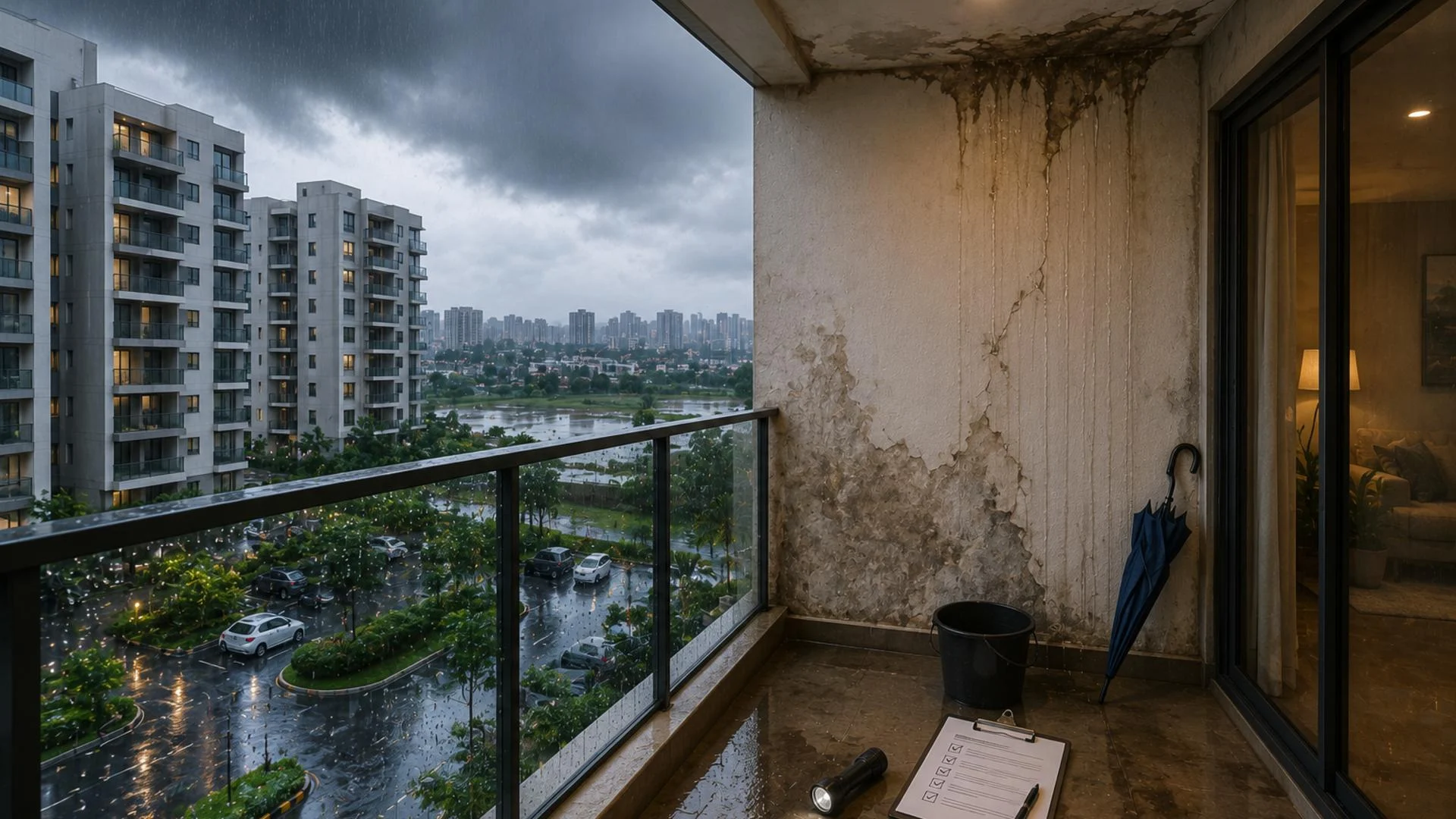
Heavy rainfall immediately reveals whether a property has reliable drainage, waterproofing and construction quality. Common warning signs include:
- Paint bubbling, white salt deposits, black mould patches and damp walls.
- Leakage from RCC roofs, balconies, terraces and external walls.
- Water accumulation around parking areas, society entrances and internal roads.
- Window seal failures and poor stormwater drainage.
Waterproofing experts, including Lock & Seal, note that many seepage complaints originate from bathroom joints, terraces and external walls where waterproofing has deteriorated. Depending on the treatment, waterproofing costs in India generally range from ₹35 to ₹700 per sq. ft., depending on the surface, material and repair complexity.
Know your legal rights before you panic
Many buyers assume every leak automatically qualifies as a structural defect. The law is more nuanced.
Under RERA Section 14(3), builders remain responsible for rectifying qualifying structural defects and workmanship-related deficiencies reported within five years of possession. If monsoon property damage legal rights Indian homebuyers 2026 are triggered by construction defects, buyers can seek rectification through the developer. If unresolved, they may file complaints before the relevant RERA authority or pursue remedies under the Consumer Protection Act, 2019.
However, normal wear and tear or maintenance-related issues may not automatically fall within the defect liability provisions.
Monsoon-proofing checklist every buyer should follow
Before finalising a purchase, inspect:
- Terrace and roof waterproofing membranes.
- Balcony slopes and drain outlets.
- Bathroom waterproofing and floor-wall joints.
- External wall cracks and sealants.
- Basement parking during heavy rainfall.
- Society stormwater disposal systems.
- Existing property insurance for water-related damage.
Experts from The Hindu Homes, OpenPlot and Pune Realty Hub also recommend checking neighbourhood roads for recurring flooding, especially during July, August and September, when monsoon conditions are at their peak.
A season that protects your investment
The waterproofing checklist for Indian homes in monsoon 2026 goes beyond just preventing damp walls. It focuses on protecting long-term property value, avoiding costly repairs, and knowing the legal options for defects during monsoon in India before making a purchase.
Smart buyers don’t shy away from the rains. They let the rains reveal the property’s condition. Planning to buy this monsoon?
Visit properties during heavy rainfall, document every issue, and check the construction quality before making one of life’s biggest investments.