

Metro Corridors Are Unlocking Real Estate Value in Pune & Mumbai
Metro Corridors Boost Property Values in Pune & Mumbai
SHARE:
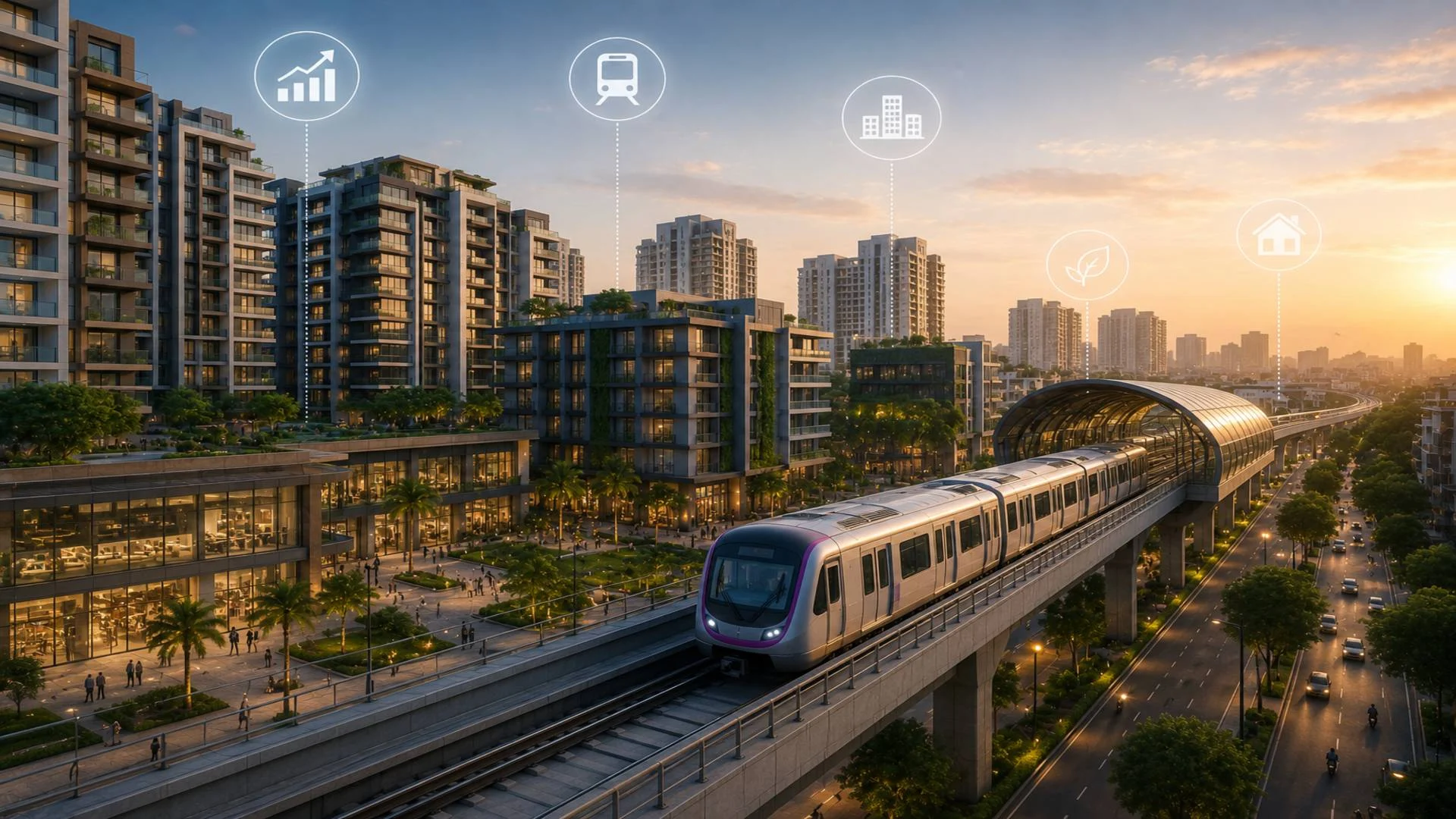
What is Transit-Oriented Development (TOD) and why is it boosting property values?
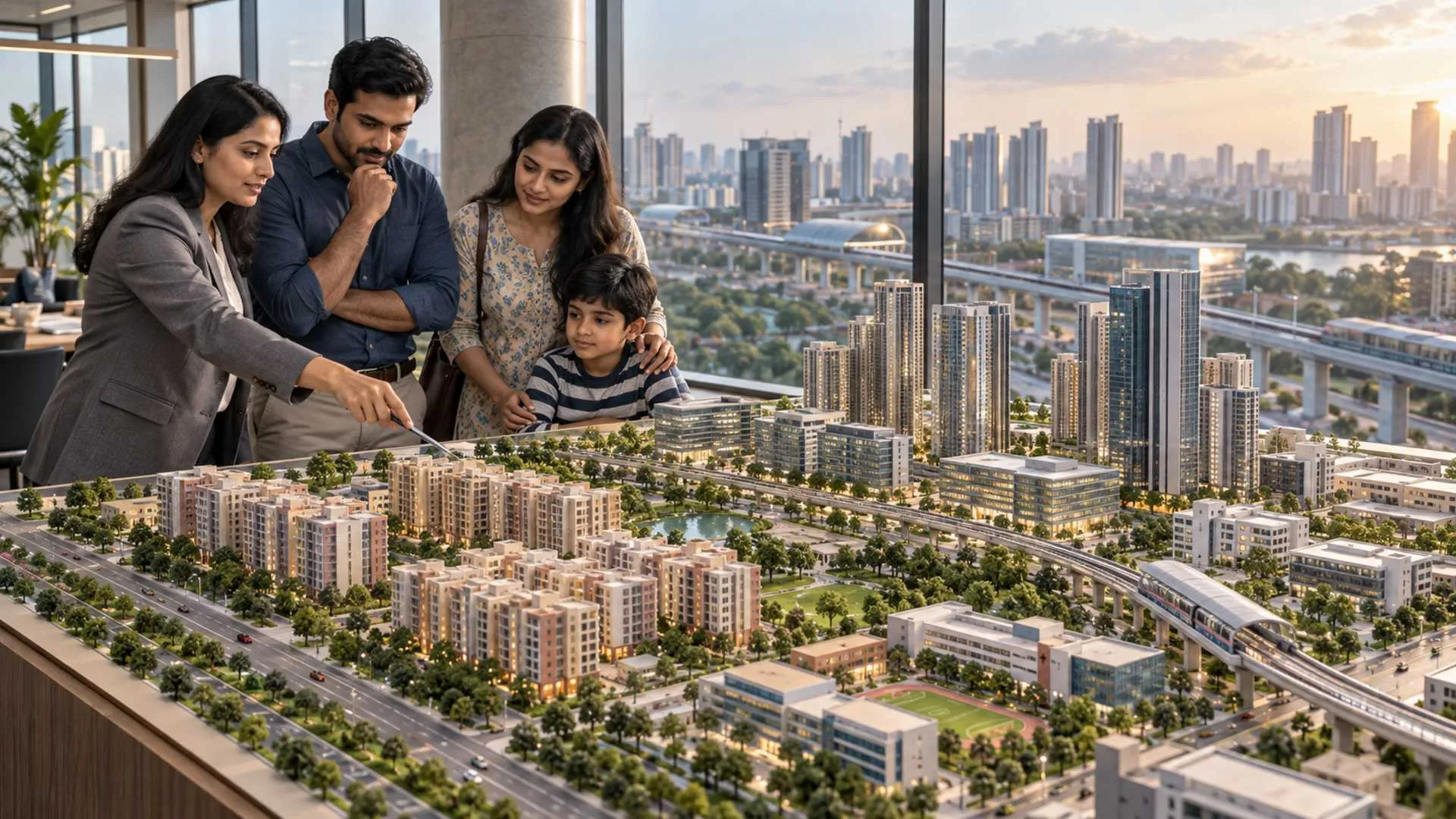
Transit-Oriented Development (TOD) is an urban planning model that promotes high-density residential, commercial and mixed-use development around metro stations. With India’s TOD policy allowing up to 4.0 FSI in designated zones, properties within walking distance of metro corridors are witnessing stronger demand, faster appreciation and improved rental potential, making TOD one of the biggest real estate growth drivers in Pune and Mumbai in 2026.
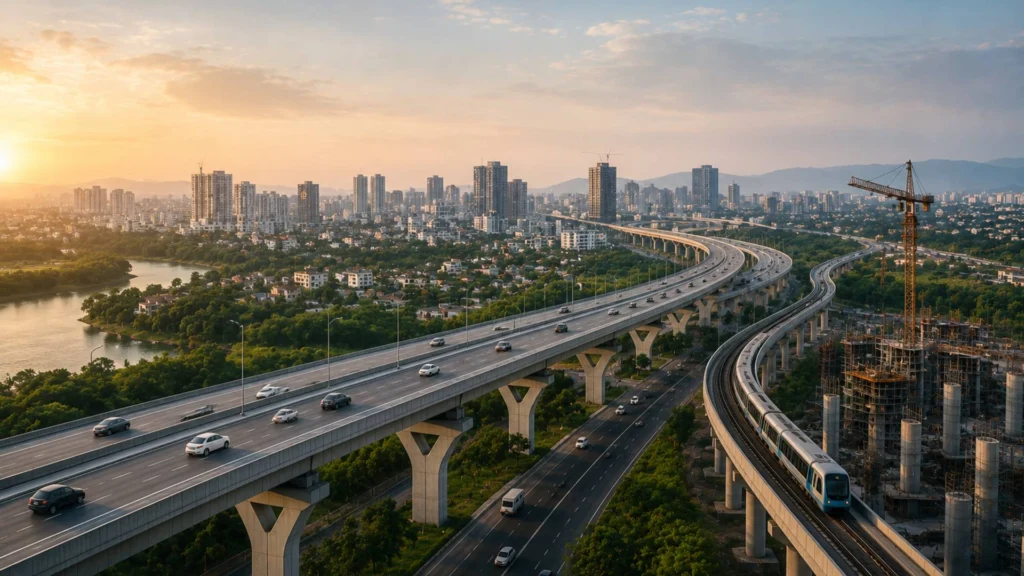
India’s biggest real estate story in 2026 focuses on connectivity rather than just new launches. As Transit Oriented Development (TOD) in Pune and Mumbai gains traction, metro corridors are unlocking billions in land value. They are turning previously overlooked suburbs into attractive investment areas.
According to CBRE, TOD real estate in India has a potential of 106 million square feet. CBRE can create nearly 106 million square feet of development opportunities in major cities. Their report estimates that Mumbai has a TOD potential of 20 million square feet, while Delhi-NCR has 32 million square feet, demonstrating how metro-led growth is changing urban development.
Why Metro Corridors Are Becoming Growth Engines
Research from Godrej Properties, Pride Purple Properties and ADB shows that properties within 500m of a metro station experience 20-30% appreciation and outperform similar developments farther away because buyers increasingly value shorter commutes and walk-to-work lifestyles.
The new TOD policy 4.0 FSI near metro stations in India also allows denser mixed-use projects, encouraging developers to combine residential, office, retail, and public spaces around transit hubs rather than creating isolated housing clusters.
The result? Metro corridors are unlocking real estate value in Pune and Mumbai faster than conventional highway-led growth.
Pune’s TOD Story Is Accelerating
Pune is rapidly emerging as one of India’s strongest TOD markets.
The operational Purple and Aqua Lines, along with Pune Metro Line 3 Hinjewadi Shivajinagar TOD corridor, are reshaping demand across IT-driven locations. Reports from Venkatesh Buildcon, Pride Purple Properties and MahaMetro suggest metro connectivity is already improving buyer confidence across western and eastern Pune.
Emerging TOD beneficiaries include:
- Hinjewadi metro station property appreciation Pune 2026
- Property near Balewadi Stadium metro station TOD Pune
- Shivajinagar metro hub property value TOD impact Pune
- Kharadi metro extension TOD property boost East Pune
- Tathawade Punawale metro connected property appreciation
- Katraj Nigdi metro Phase 2 extension property impact Pune
Combined with the Ring Road and IT expansion, TOD reshaping urban development in Pune and Mumbai is expected to strengthen long-term residential demand.
Mumbai’s $60 Billion Metro Transformation
Few cities illustrate TOD better than Mumbai.
With Mumbai Metro 150 km $60 billion infrastructure 2026, including Mumbai Metro Line 3 BKC Line 4 Wadala Kasarvadavali Coastal Road, the city is creating multiple high-density transit hubs that are changing investment patterns.
According to Shelaji Group and CBRE, the strongest opportunities are emerging around:
- Property near BKC Metro Line 3 station TOD Mumbai
- Andheri SEEPZ metro station property appreciation Mumbai
- Wadala Kasarvadavali Metro Line 4 TOD property impact
- Dahisar Mira Road Metro Line 9 value unlocking
- Kanjurmarg Metro Lines 4 6 14 triple junction TOD
- Ghatkopar metro hub eastern corridor property appreciation
These corridors support mixed-use residential commercial retail FSI TDR walking distance planning, creating self-sufficient neighbourhoods rather than standalone housing projects.
Why Investors Are Watching TOD
Experts from Colliers, JLL, Knight Frank India, and CBRE believe that property near metro stations in Pune and Mumbai will see more appreciation than locations without access. Buyers are prioritizing accessibility over distance. For investors wondering what Transit Oriented Development is and how it increases property value, the explanation lies in stronger rental demand, better living conditions, and long-term growth from infrastructure.
As metro networks grow, TOD is evolving from a planning idea into India’s plan for future urban development.
Stay connected with RealtyConnect for the latest updates on metro infrastructure, TOD opportunities, and expert insights into the fastest-growing real estate areas in Pune, Mumbai, and India.