

India’s Office Retrofit Gold Rush: ₹425 Billion Opportunity Awaits
India’s Office Retrofit Gold Rush: ₹425 Billion Opportunity
SHARE:
Why are India’s ageing office buildings becoming the next big commercial real estate opportunity?
India’s ageing office stock retrofitting opportunity 2026 is emerging as one of the country’s largest commercial real estate plays with nearly 350 MSF of office stock over a decade old. In the Indian market, occupiers are demanding increased ESG-compliant, tech-enabled, green certified workplaces and it is thought to be a ₹425 billion upgrade by the experts.
The Indian commercial real estate market is experiencing an unexpected sea change. The next big opportunity isn’t being built from scratch. It’s already here.
According to CBRE, JLL, and reports cited by The Economic Times, almost half of the office inventory in India is more than a decade old. This translates into an opportunity to upgrade about 350 MSF of old office buildings in India worth ₹425 billion, creating one of the largest value-unlocking exercises the sector has
The Obsolescence Challenge Becomes an Investment Story
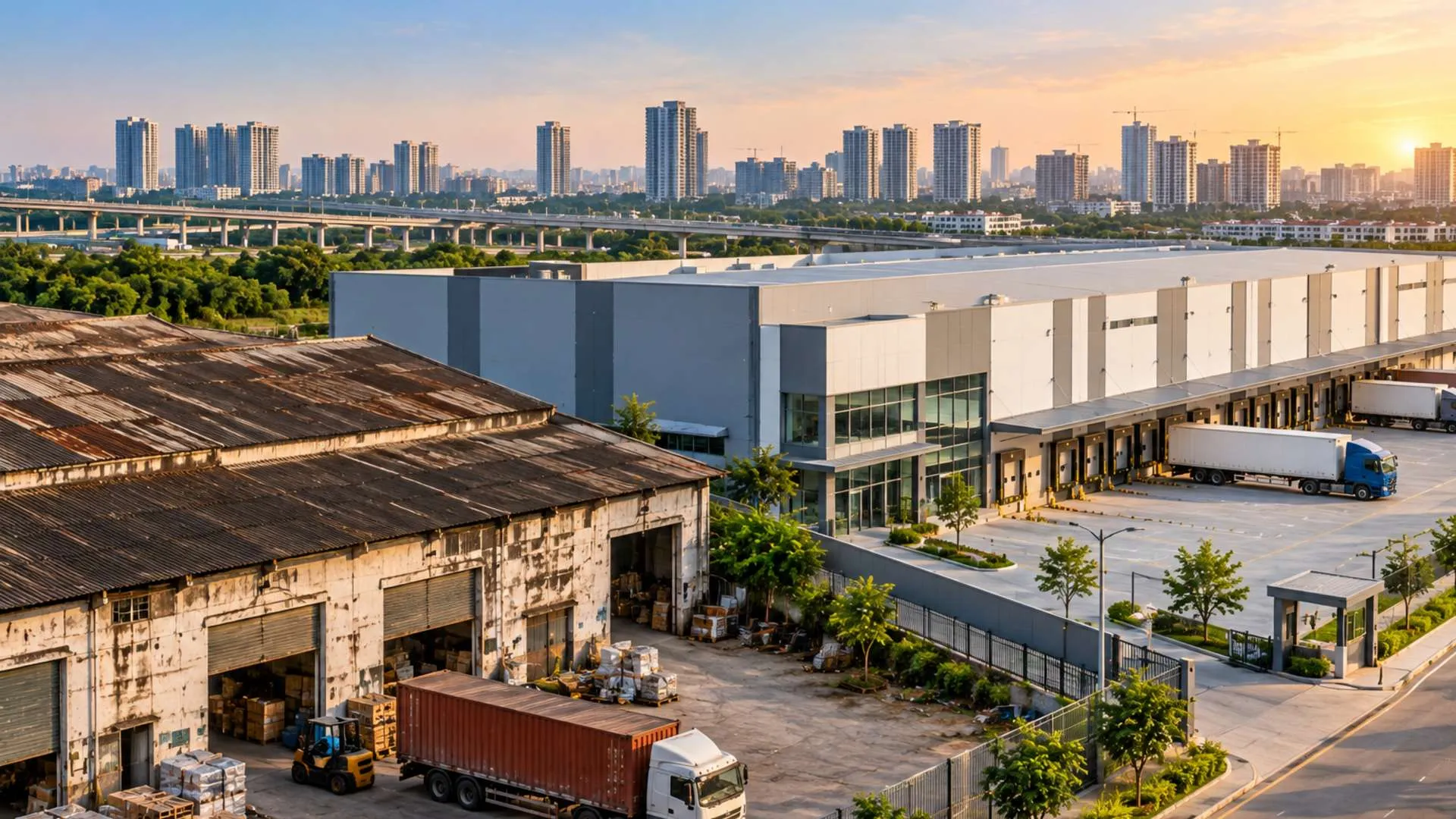
A simple reality is driving the India ageing office stock retrofitting opportunity 2026: tenants have changed faster than buildings.
Corporate occupiers today want smart infrastructure, energy-efficient systems, wellness-focused environments, and globally recognised certifications such as IGBC, LEED, and WELL. Buildings developed a decade ago were designed for a different era.
As highlighted in the CBRE office retrofit report 2026 ESG sustainability study, nearly 50% India office inventory over 10 years old requires modernisation to remain competitive in the leasing market.
The result is a growing divide between modern Grade A offices and ageing stock a phenomenon industry experts call the “flight to quality.”
Why Retrofitting Is Winning Over New Construction
One of the biggest questions investors are asking is: Is investing in retrofitting old offices more profitable than building new ones in India?
The answer increasingly appears to be yes.
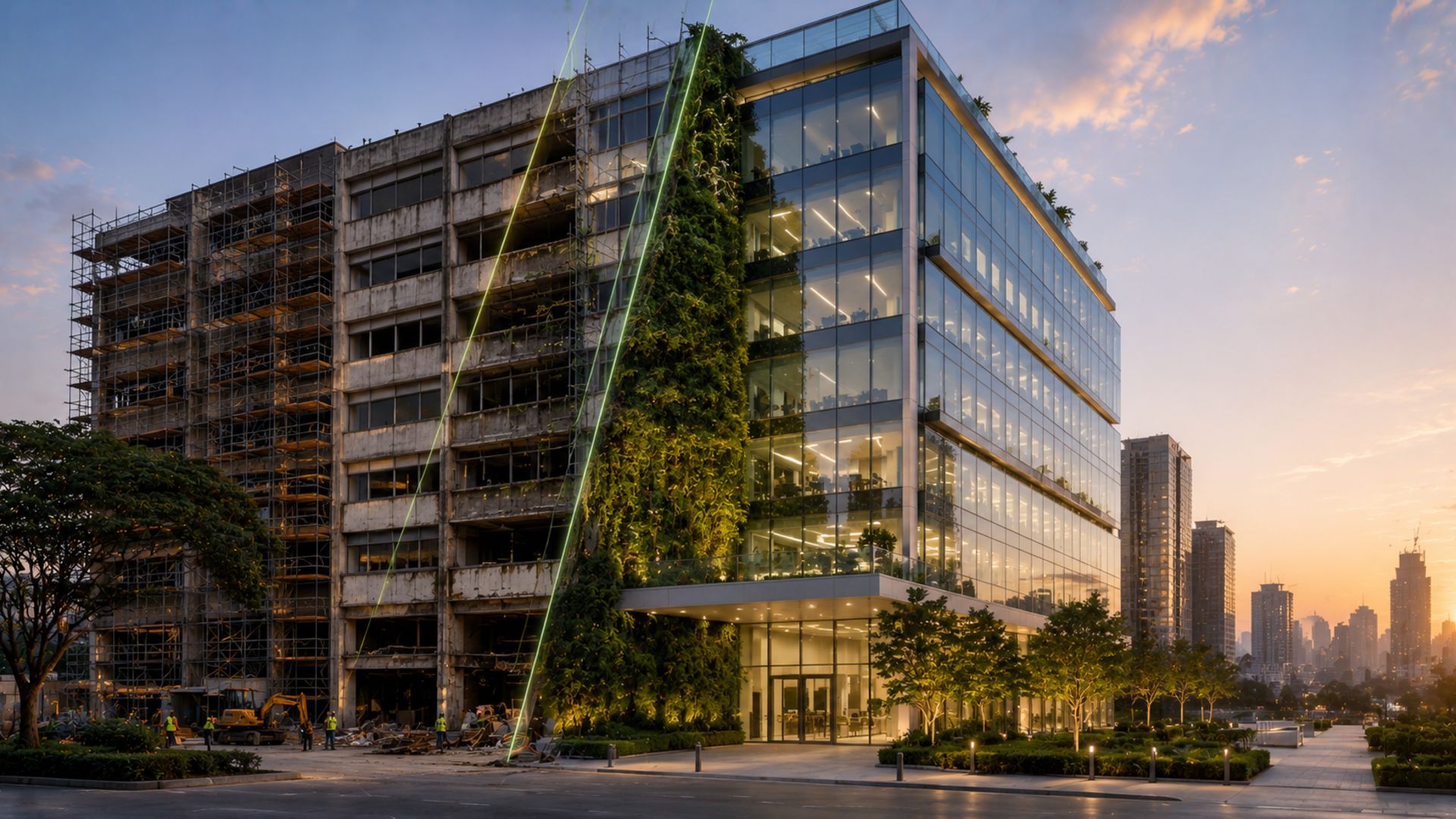
Retrofitting allows developers and asset owners to upgrade existing buildings at a fraction of the cost and time required for new developments. Energy-efficient HVAC systems, smart building technology, modern lobbies, wellness amenities, and green certifications can dramatically reposition an ageing asset.
According to CBRE and The Economic Times, retrofitted offices with a 20-40% rental premium in India are becoming a realistic possibility in prime business districts where occupiers are willing to pay more for ESG-compliant workplaces.
The value creation lies not in adding floors, but in upgrading relevance.
Bengaluru and Delhi NCR Lead the Opportunity
The biggest concentration of ageing office assets is found in India’s leading commercial markets.
Industry reports indicate that Bengaluru, Delhi and NCR 45% India’s ageing office stock is concentrated within these two regions alone, making them the epicentre of the retrofit wave.
However, the opportunity extends far beyond these markets.
Across Bengaluru, Delhi NCR, Mumbai, Chennai, Hyderabad, and Pune, the top 7 cities stock thousands of office buildings that face a critical decision: upgrade or risk obsolescence.
This is also why searches such as which Indian cities have the most ageing office stock needing retrofit and why India needs to retrofit 350 MSF of ageing office buildings are becoming increasingly relevant for investors and occupiers alike.

ESG Is No Longer Optional
A decade ago, green certifications were considered a premium feature. In 2026, they are rapidly becoming a requirement.
Industry estimates suggest that 80-90% new office supply green certified in India by 2026 will enter the market with sustainability credentials. Older assets without comparable standards risk losing tenants to newer developments.
This trend directly supports the theme of India office retrofitting green certification 2026, where upgrades are increasingly focused on reducing energy consumption, improving indoor air quality, and meeting corporate ESG mandates.
As occupiers prioritise sustainability goals, old office buildings in India upgrade of ESG REIT potential becomes a major investment theme.
The REIT Multiplier Effect
Perhaps the most overlooked aspect of the retrofit story is its connection to capital markets.
India currently has listed office REITs backed by major platforms such as Embassy REIT, Mindspace REIT, and Brookfield REIT. Reports suggest that while approximately 141 MSF is already listed through REIT structures, nearly 384 MSF of REIT-worthy office stock in India remains untapped.
For owners, retrofitting can bridge the gap between ageing assets and institutional-grade portfolios.
This explains why investors are increasingly asking: How does office retrofitting connect to REIT listing potential in India?
The Next Commercial Real Estate Boom
Investment opportunity in retrofits of Indian commercial real estate is not just about fixing up old buildings. It’s about future-proofing assets for the next decade of occupier demand.
Whether it is ESG compliance, rental growth, REIT eligibility or tenant retention, retrofitting is emerging as one of the most powerful value creation strategies in Indian real estate.
The buildings that defined India’s office boom of the 2010s could be the biggest winners of the 2020s, that is, if they evolve.
The message for investors, developers and owners of commercial property is clear: The next real estate opportunity may not be buying new land; it may be unlocking hidden value inside existing office towers before the market leaves them behind.
FAQs:
1. How much value does retrofitting add to ageing office buildings in India?
Retrofitting can significantly enhance asset value by improving occupier appeal, increasing leasing velocity, and enabling rental premiums of 20–40%, while also extending the building’s competitive lifespan in the market.
2. Is investing in retrofitted office assets better than new Grade A offices?
Retrofitted assets can offer attractive returns because they typically require lower capital investment than new developments while delivering strong rental growth potential, especially in established business districts with limited new supply.
3. What does it cost to retrofit a 10-year-old commercial building in India?
The cost varies depending on the scope of upgrades, but major retrofits involving façade improvements, HVAC modernization, smart building systems, and ESG certifications can range from a few hundred to several thousand rupees per square foot.
4. Which Indian cities have the most old office stock needing upgrades?
Bengaluru and Delhi NCR account for the largest share of ageing office stock, followed by Mumbai, Chennai, Hyderabad, and Pune, making these cities the primary markets for office retrofit opportunities.
5. How does office retrofitting connect to REIT listing potential in India?
Retrofitting helps ageing buildings meet institutional-grade standards for occupancy, sustainability, and operational efficiency, making them more attractive for inclusion in REIT portfolios and unlocking access to long-term capital.