

India’s Warehousing Revolution: How 36.9 MSF of Leasing in 2025 Is Setting Up a Record 60 MSF Year in 2026
India’s logistics story is not only about highways and warehouses. It is fast becoming one of the biggest real estate…
SHARE:
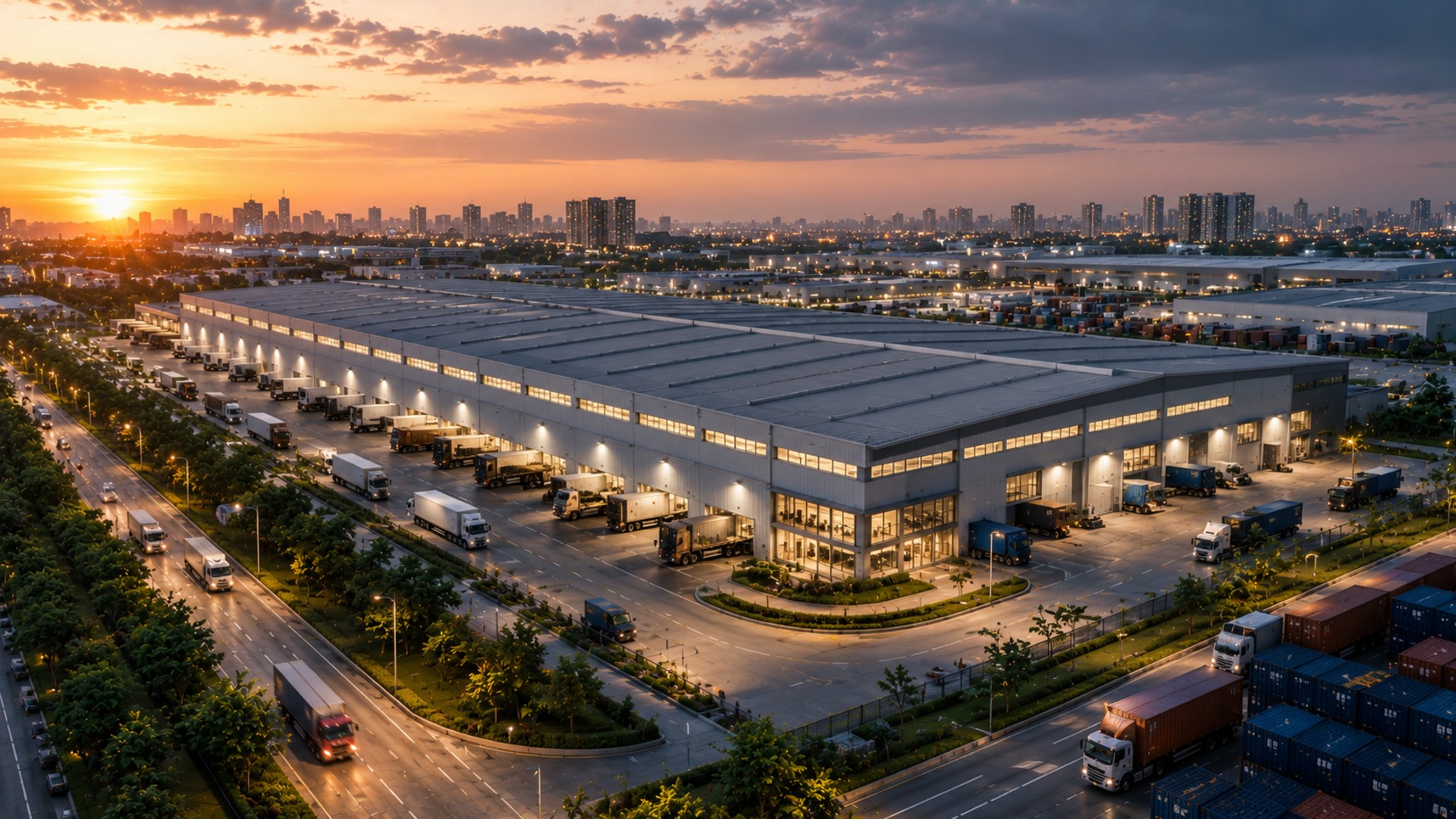
India’s industrial and logistics sector is now gearing up for what could be a landmark year after recording a historic 36.9 million sq. ft. of warehousing leasing in 2025. The country is on track to cross 60 million sq. ft. of annual leasing by 2026, according to industry estimates, cementing its position as one of the fastest-growing logistics real estate markets globally.
A rare mix of manufacturing expansion, e-commerce growth, supply-chain modernisation and increasing demand from third-party logistics operators is fuelling the India warehousing revolution, logistics real estate 2026.
The Numbers Behind the Boom
India’s warehousing sector has been on a multi-year growth trajectory, but 2025 marked a decisive breakthrough.
Key highlights include:
- India’s warehousing leasing is 36.9 MSF in 2025, with record absorption across major markets
- Nearly 16% year-on-year growth, according to industry estimates
- Large transactions above 200,000 sq. ft. contribute almost 45% of total leasing activity
- Rental growth of 5-10% across key logistics hubs
What was once considered a niche asset class is now attracting institutional investors, developers, REITs and global logistics operators.
3PL Companies Are Leading the Charge
A major driver behind the India industrial warehousing demand growth 2026 story is the rise of third-party logistics providers.
3PL firms accounted for nearly 32% of total warehousing demand, making them the largest occupier segment in the market.
These companies are expanding aggressively to serve:
- E-commerce platforms
- FMCG brands
- Manufacturing companies
- Retail chains
- D2C businesses
As delivery timelines shrink and supply chains become more sophisticated, modern Grade-A warehouses are becoming critical infrastructure.
Manufacturing Is Changing the Game
India’s push to become a global manufacturing hub is also reshaping warehouse demand.
Engineering, electronics, automotive and industrial companies are leasing larger facilities closer to production centres. Major occupiers, including companies such as Amazon, Honda, Swiggy’s logistics arm and global manufacturers, have signed large-format warehouse deals across the country.
This shift is creating demand for smarter facilities equipped with automation, cold-chain capabilities and integrated distribution networks.
NCR and Chennai Lead the Market
Geographically, the growth is concentrated in a few high-performing corridors.
Delhi NCR and Chennai together accounted for nearly 46% of India’s warehousing absorption, highlighting their importance in the national logistics network.
Other fast-growing hubs include:
- Bhiwandi (Mumbai Metropolitan Region)
- Chakan and Talegaon (Pune)
- Hoskote and Narsapura (Bengaluru)
- Oragadam (Chennai)
These locations are benefiting from expressways, freight corridors, industrial parks and proximity to major consumption centres.

The Rise of Tier-2 Logistics Hubs
While metros continue to dominate, a new wave of logistics activity is moving into emerging cities.
Improved infrastructure, lower land costs and industrial decentralisation are helping Tier-2 locations attract warehousing investments. Developers and operators are increasingly viewing these markets as the next growth frontier.
This trend is expected to accelerate as companies seek to build resilient, multi-city supply chains.
Why 2026 Could Be a Record Year
Industry experts believe the foundation laid in 2025 is setting up an even bigger year ahead.
Several factors support the India warehousing 60 MSF 2026 forecast:
- Continued growth in e-commerce
- Expansion of manufacturing under government initiatives
- Strong institutional investment inflows
- Increasing demand for Grade-A facilities
- Growth in cold storage and specialised logistics assets
Many analysts also believe India could move toward 850 million sq. ft. of warehousing stock by 2030, transforming the country’s logistics landscape.
The Real Estate Ripple Effect
The logistics boom is not only benefiting warehouse developers. Residential markets surrounding major logistics and industrial corridors are also witnessing rising demand.
Areas near Chakan, Talegaon, Bhiwandi, Oragadam and emerging logistics hubs are attracting housing, retail and commercial development, creating entirely new growth ecosystems.
The Bottom Line
India’s logistics real estate record leasing 2026 is not just a market milestone; it is a reflection of India’s economic transformation. As manufacturing, e-commerce and supply chains grow, warehousing is transitioning from a support function to a strategic real estate asset class.
The race for a 60 MSF year is already underway and if trends continue as they are, India’s warehousing revolution may just be beginning.
The message to investors, developers and landowners is unambiguous: stick with today’s logistics corridors, they are fast turning into tomorrow’s centres of economic growth.