

Flex Spaces Go Mainstream: India’s 100 MSF Office Revolution
India’s 100 MSF Flex Office Boom Reshapes Commercial Realty
SHARE:
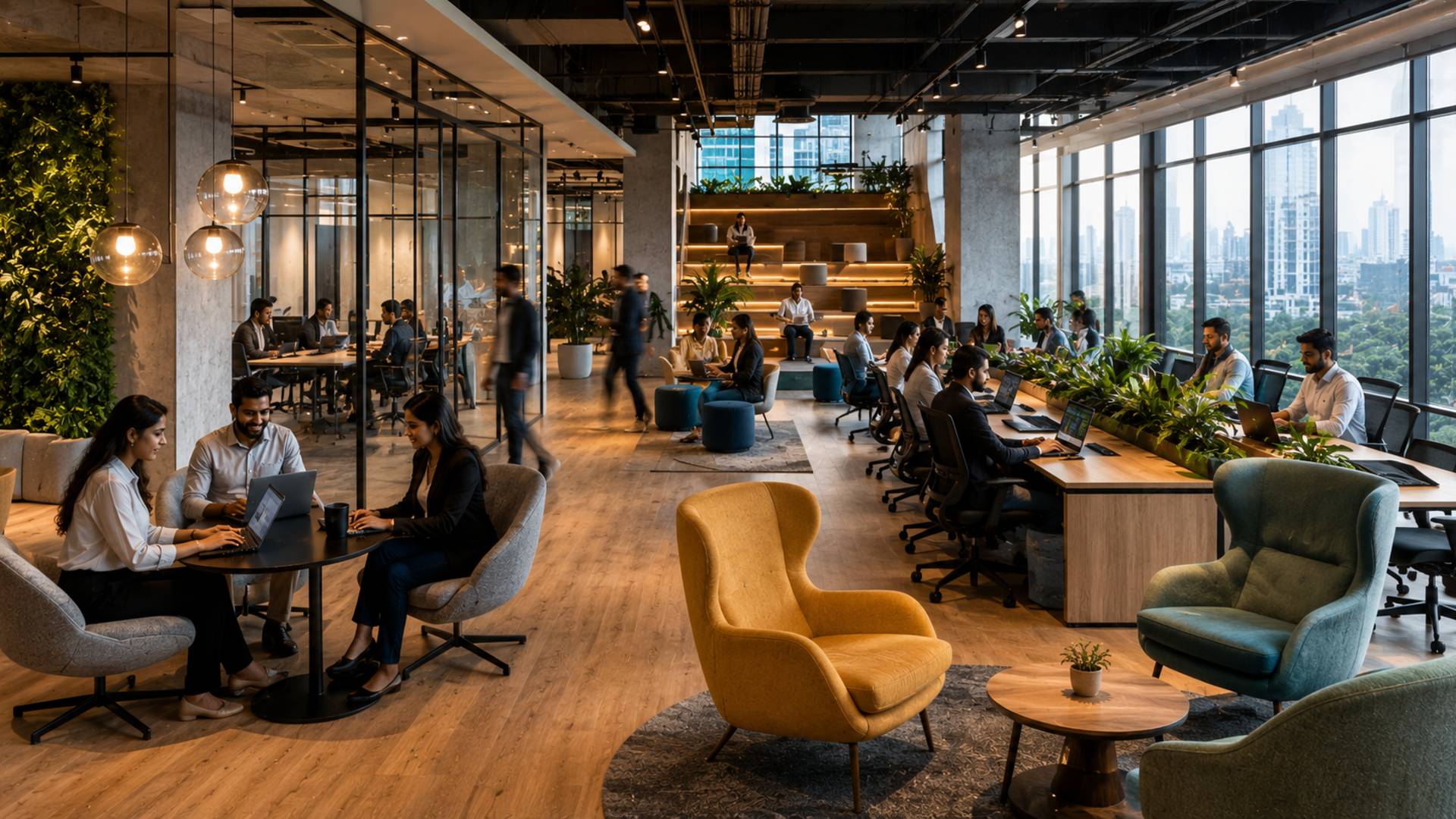
Why has India’s flex office market crossed 100 million sq ft in 2026?
India’s flex office market crossed 100 million sq ft in FY26 as hybrid work, GCC expansion, and enterprise adoption accelerated demand for managed workspaces. With GCCs accounting for 45.5% of office leasing in Q1 2026 and flex operators reporting record profits, flexible workspaces have evolved from a startup solution into a mainstream commercial real estate asset class.
Ten years ago, the coworking spaces were primarily reserved for freelancers, startups, and entrepreneurs. They are the backbone of corporate real estate strategy by 2026.
The Indian flex office market crossed the 100 million sq ft mark in FY26, a milestone few industry observers had anticipated. What was an alternative workspace model is now a critical part of enterprise leasing decisions. Flex spaces real estate mainstream India 2026 is no longer a prediction today, it is a reality.
As per Business Standard, CBRE India and Colliers, India has become the largest flex office market in APAC 2026 due to the strong combination of hybrid work, Global Capability Centre (GCC) expansion and increasing enterprise adoption.
The GCC Effect Is Reshaping Commercial Real Estate
The biggest driver behind the transformation is GCC demand.
Data highlighted by Colliers India shows that GCC 45.5% office leasing is driving flex demand in India Q1 2026, making multinational corporations the largest occupiers of premium office space.
Instead of signing long-term leases for massive headquarters, companies are increasingly choosing managed office, coworking, serviced office, and hybrid workspace enterprise solutions that offer flexibility, scalability, and lower upfront costs.
This trend explains how GCCs are driving 45% of India’s office demand into flex spaces, particularly across Bengaluru, Hyderabad, Pune, Chennai, Delhi NCR, and Mumbai.
Industry experts quoted by Economic Times Realty note that average enterprise deal sizes have doubled, while customer tenure has expanded to three to five years, signalling long-term confidence in the model.
Flex Is No Longer a Startup Story
The strongest evidence of maturity is profitability.
Several major operators posted record financial performances in FY26:
- WeWork India ₹65.9 crore, the highest quarterly profit for a flex operator
- Smartworks’ first 10 MSF portfolio 45% revenue growth
- Awfis ₹1493 crore revenue 66% PAT jump FY26
Alongside established names such as WeWork India, Smartworks, Awfis, IndiQube, myHQ, and 315Work Avenue, the sector has moved far beyond its early-stage coworking identity.
As highlighted by CRISIL Ratings, capacity across the sector is expected to continue expanding aggressively.
Can Flex Reach 145 MSF?
The answer increasingly appears to be yes.
According to CRISIL Ratings, the CRISIL flex space 140-145 MSF projection FY28 reflects annual capacity growth of 16–18% over the next two years.
The reason is simple: companies now want agility.
Hybrid work has permanently altered office utilisation patterns. Reports from Upflex and TrueConf indicate that organisations prefer workspace networks that can expand, contract, or relocate quickly without the burden of traditional long-term leasing commitments.
This explains how hybrid work, GCC expansion and enterprise adoption turned flex into mainstream real estate across India.
Which Cities Are Winning?
The biggest beneficiaries remain India’s leading commercial hubs:
- Bengaluru
- Delhi NCR
- Mumbai
- Hyderabad
- Pune
- Chennai
These Bengaluru, Delhi NCR, Mumbai, Hyderabad, Pune, Chennai flex corridors continue to attract GCCs, technology firms, consulting companies, and financial institutions.
According to CBRE India’s Flex-plosion report, demand is increasingly moving toward premium Grade-A flex centres with hospitality-style amenities, advanced technology infrastructure, and customised enterprise suites.
The result is a significant shift in how office buildings are designed, leased, and monetised.

What It Means for Investors
A key question investors are asking is: Is investing in flex office space more profitable than traditional office space in India in 2026?
While traditional office assets remain stable, flex operators are generating higher occupancy levels and extracting greater value from premium locations through diversified revenue streams.
For landlords, partnerships with flex operators can improve asset utilisation. For occupiers, flexibility reduces real estate risk.
That dynamic is turning flex into one of the fastest-growing segments of Indian commercial real estate.
The Bottom Line
In 2026, the flex office market in India crossed the 100 million sq ft mark as flexibility is no longer an option for businesses. As GCC expands, hybrid work models and enterprise adoption mean that flex spaces are no longer a niche offering but a mainstream real estate category.
If current momentum continues, India’s office future might be more about flexibility, scalability and experience-driven workplaces than ownership or long leases.
Want to keep up with India’s changing commercial real estate landscape? Stay updated on the latest trends in office spaces, GCC expansion, investment opportunities, and the future of workplace innovation with RealtyConnect.