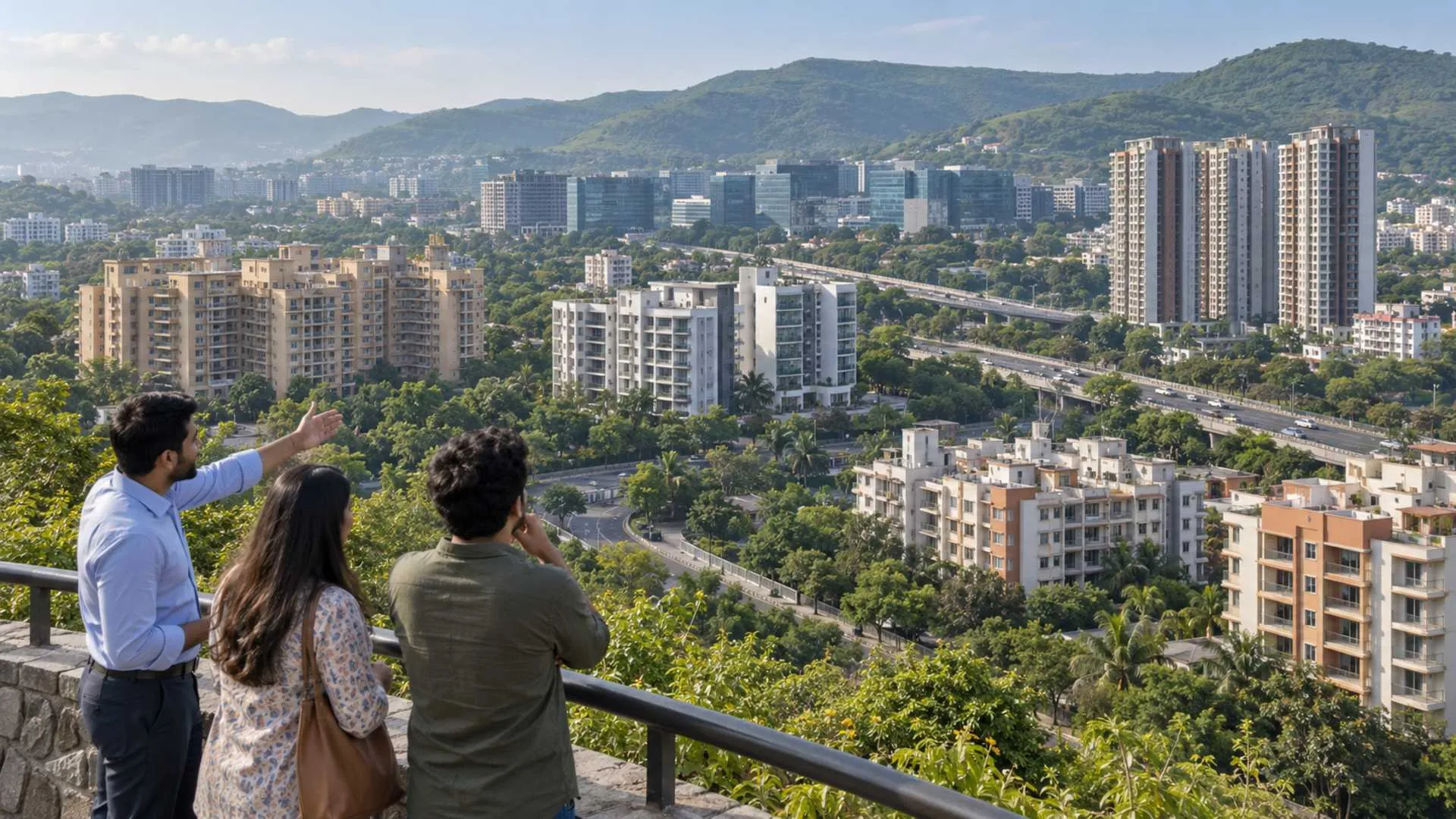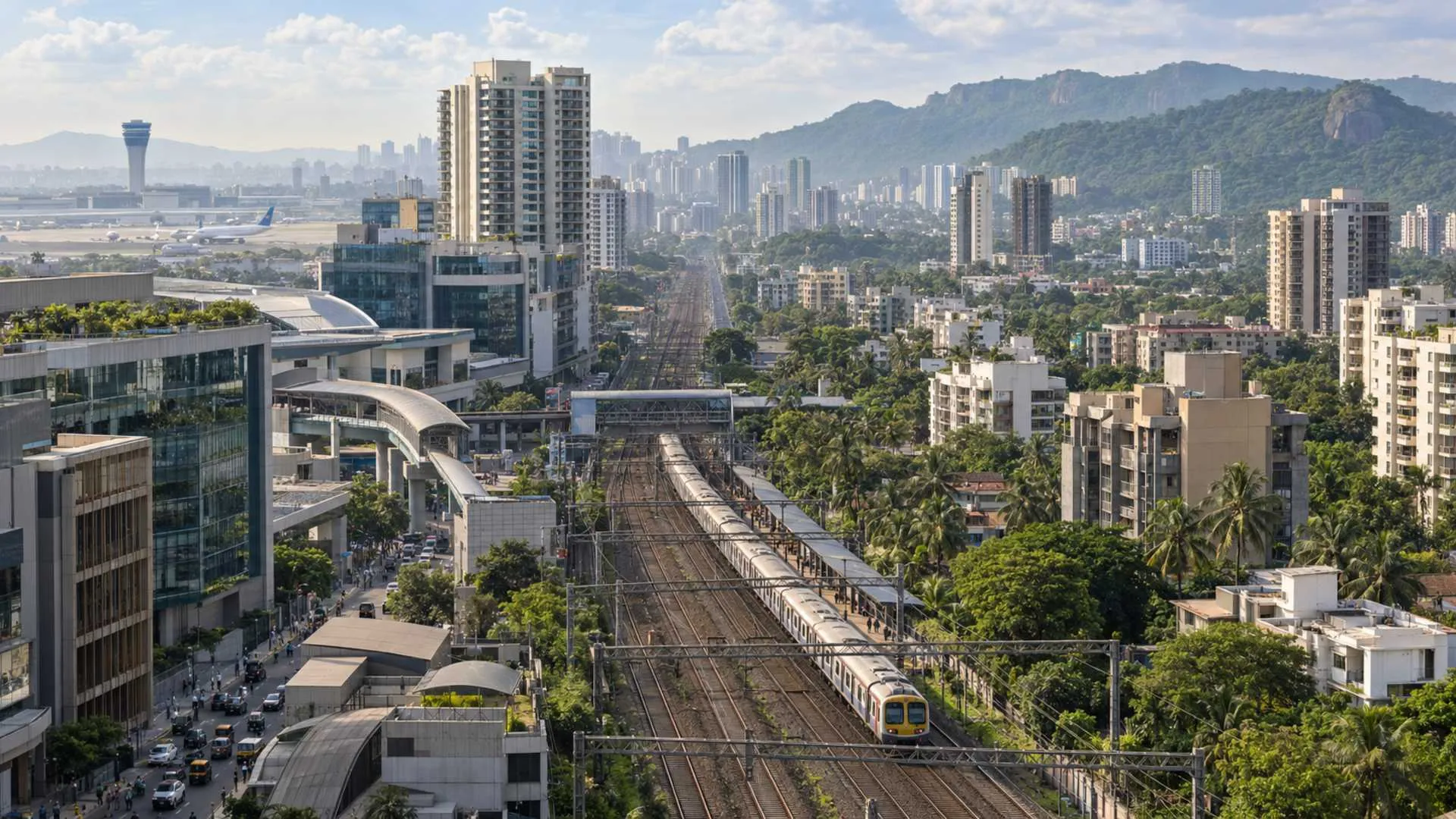


Moshi and Chakan: Where Pune’s Industrial Growth Is Creating Homes
Explore Moshi and Chakan’s 2026 real estate growth
SHARE:
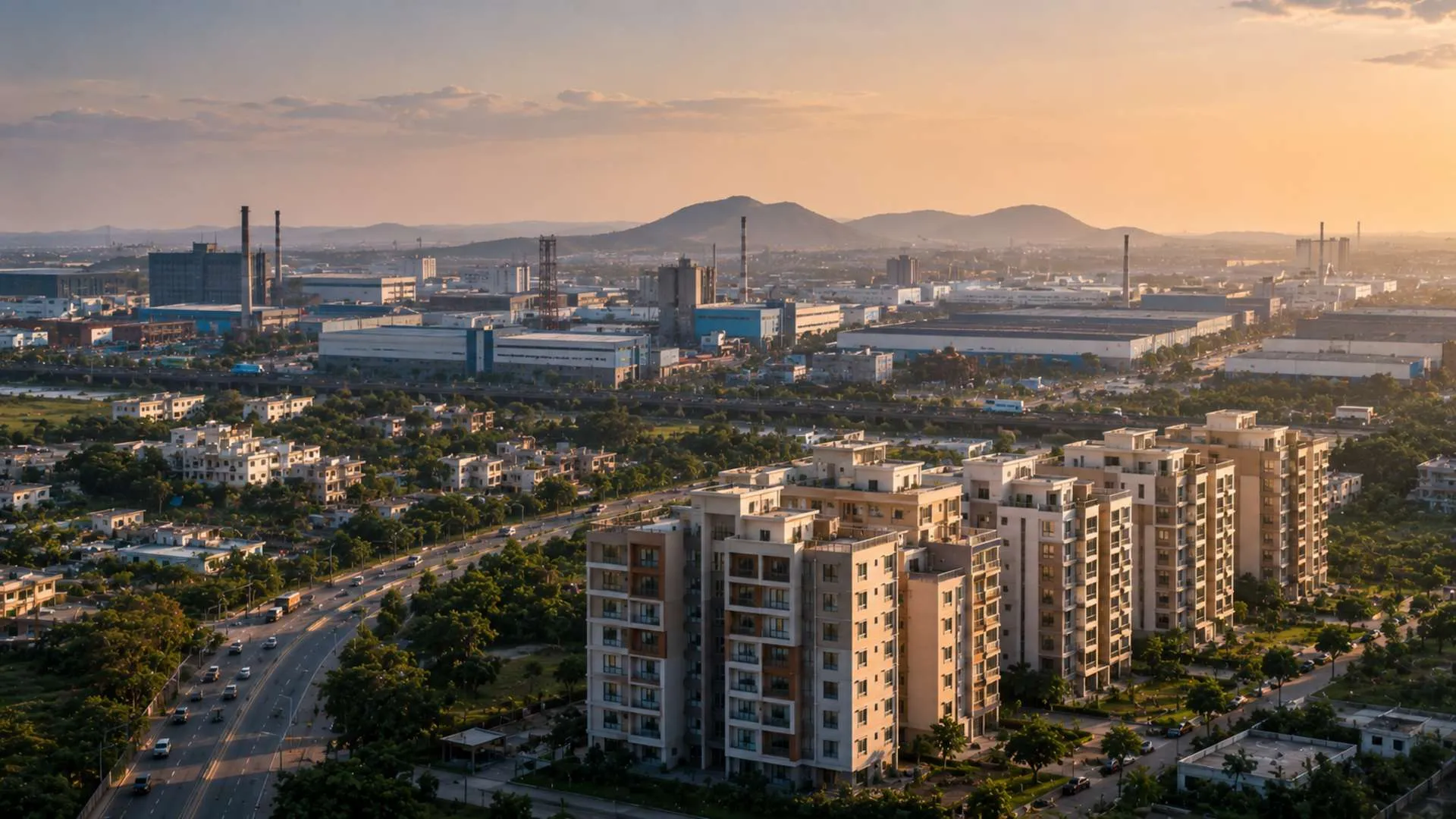
Pune’s next residential growth story may not be next to an IT park. It could start with a factory floor.
Buyers and investors are finding it harder and harder to ignore the 2026 narrative of the Moshi-Chakan-Pune industrial belt residential along the city’s northern fringe. While neighboring Moshi is emerging as a relatively affordable residential market for the workforce surrounding Chakan MIDC, Bhosari MIDC and Talawade IT Park, Chakan has grown into one of the major automotive and manufacturing clusters in India.
The relationship is simple: Chakan creates the jobs; Moshi increasingly provides the residential ecosystem around them.
For buyers looking for living near Chakan industrial belt Pune best areas, that job-home link may be among the defining Pune real estate themes of North Pune.
Is Moshi a good place to live near Chakan industrial belt in Pune?
Yes. Moshi can be a practical residential choice for professionals working around Chakan, Bhosari and Talawade because it combines comparatively affordable housing with schools, healthcare, retail and access through NH-60 and Alandi Road. Buyers should, however, evaluate peak-hour traffic, their exact workplace and planned, not operational, transport projects before purchasing.
Why Chakan’s Factories Are Becoming a Housing Story
Chakan’s scale explains why residential development around the corridor matters.
ASCC describes Chakan as a major automobile and auto-component manufacturing centre. Its 2025 overview places Volkswagen, Mercedes-Benz, Bajaj Auto, Mahindra & Mahindra and Tata Motors among companies operating in the industrial ecosystem, alongside engineering, logistics and ancillary businesses. The same source says Chakan MIDC spans around 5,000 hectares and hosts more than 750 industries.
This creates something residential investors value enormously: a deep employment catchment.
Manufacturing plants do not employ only assembly-line workers. They generate demand from engineers, plant managers, technicians, vendors, logistics employees, consultants and employees of supporting businesses.
That is why the Chakan Tata Mahindra Mercedes Bajaj industrial employment narrative is relevant to housing.
But living inside or immediately beside an industrial cluster is not automatically attractive to every household. Families often want schools, healthcare, organised housing and everyday retail alongside workplace access.
That is where Moshi enters the picture.
Moshi Is Turning Industrial Proximity Into Residential Demand
Moshi’s appeal is less about being another industrial location and more about sitting between multiple employment centres.
Aishwaryam Group describes Moshi’s evolution from an industrial-influenced location into a residential hub, citing proximity to Bhosari, Chakan and Talawade, improving connectivity and expanding social infrastructure. Its published market assessment placed average property rates around ₹4,600–₹6,700 per sq ft, although actual 2026 prices vary considerably by project, configuration and micro-location.
This helps explain why searches for Moshi residential hub Pune affordable families 2026 are gaining relevance.
Moshi also remains accessible to budget-conscious homebuyers. Kolte-Patil Developers official page for Crown on Alandi Road currently advertises compact 2BHK homes of 512–650 sq ft starting from ₹39 lakh, subject to availability and changes in pricing.
So the Moshi affordable 2BHK ₹38-48 lakh entry 2026 segment is not purely theoretical, though buyers should compare the final all-inclusive price rather than brochure prices alone.
Why families are looking at Moshi
Moshi has another advantage over a purely employment-led micro-market: daily life is increasingly catching up with residential construction.
Aishwaryam points to growing access to schools, healthcare, markets and recreational facilities. Kolte-Patil’s location information for Moshi identifies City Pride School and healthcare facilities around its Alandi Road project, illustrating the social infrastructure developing around the corridor.
That matters for the Moshi family areas City Pride Priyadarshani school zone buyer profile.
A worker may choose a home based on commute. A family chooses a neighbourhood based on what happens after the commute ends.
Connectivity Could Decide the Next Phase
North Pune’s property story is increasingly tied to infrastructure.
Moshi connects to the Pune-Nashik Highway NH-60, Spine Road and Alandi Road network. These routes link residential PCMC markets with Bhosari, Chakan and other employment centres.
Then comes the more speculative part of the story: future mass transit.
Kolte-Patil Developers Moshi project page describes a planned Purple Line extension/Moshi Metro Station and a revised corridor under study towards Chakan via Bhosari MIDC, Moshi and Alandi Phata. Because these are future proposals rather than existing services, buyers should not price a property as though the metro were already operational.
The same applies to searches such as Moshi Metro Purple Line extension 30 min central Pune and will Moshi property prices rise with metro Purple Line extension.
Improved transit could strengthen the market, but planned infrastructure should be treated as upside, not as a guaranteed investment return.
Moshi vs Chakan vs Nighoje: Where Should You Actually Live?
For someone working in the northern manufacturing belt, these three locations solve different problems.
Moshi offers the strongest residential proposition for families wanting organised housing, social infrastructure and access to multiple employment hubs rather than only Chakan.
Chakan prioritises workplace proximity. ASCC notes that the industrial area has state transport and private transport availability, but an industrial environment naturally brings heavier commercial traffic and truck movement.
That means anyone researching living in Chakan honest review, pollution, connectivity should inspect the exact neighbourhood at working-hour and late-evening conditions rather than judging the entire market from a map.
Nighoje, meanwhile, sits closer to the Chakan industrial ecosystem. ASCC identifies a MIDC fire station at Nighoje on the Talawade-Chakan Road, illustrating its position within this industrial geography.
For the Nighoje near Chakan industrial belt residential buyer, proximity may be the biggest advantage. But families should compare schools, healthcare, shopping and public transport with Moshi before deciding.
In short:
Moshi = better residential ecosystem.
Chakan = maximum industrial proximity.
Nighoje = proximity-focused emerging option.
Is Moshi Safe for Women Working in Chakan?
This question deserves a more responsible answer than a generic “yes”.
There is no reliable basis for declaring an entire locality universally safe or unsafe. For women working shifts around Chakan, the practical issue is last-mile mobility.
Before renting or buying, check the actual commute after evening shifts, street lighting around the building, availability of employer transport or app-based cabs, security within the society and activity levels around the approach road.
A home that looks conveniently close to Chakan on Google Maps may feel very different at 11 p.m.
For Moshi to be safe for women working in the Chakan industrial belt, project-level and commute-level assessment is therefore more useful than a citywide safety label.
The Investor Angle: Housing Built Around Jobs
There is another reason the Moshi Chakan property investment guide Pune 2026 deserves attention.
Rental demand around manufacturing belts behaves differently from purely speculative peripheral housing. Chakan’s industrial ecosystem brings a continuing workforce into the corridor, while Bhosari MIDC and Talawade IT Park broaden Moshi’s employment catchment.
Aishwaryam 2026 outlook describes Moshi and Chikhali as value-driven corridors supported by industrial expansion, infrastructure and first-time-buyer demand.
For landlords, that creates potential demand from:
- Manufacturing and automotive professionals
- Engineers and technical employees
- Talawade IT workers
- Vendor and ancillary-industry employees
- Young professionals seeking affordable rentals
But proximity alone does not guarantee high rental returns. Investors should compare rent against the total acquisition price, maintenance cost, vacancy risk and tenant profile.
Projects from developers operating around this broader corridor, including Aishwaryam Group and Kolte-Patil, also demonstrate how established developers are increasingly participating in Pune’s northern residential expansion. Aishwaryam says it focuses on growth corridors including Moshi and Chikhali, while Kolte-Patil currently lists Crown in Moshi.)
The Catch: Industrial Growth Brings Industrial Problems Too
This story is not without friction.
Factories, warehouses and logistics networks mean heavy vehicles. Industrial expansion can create pressure on roads, public transport and surrounding infrastructure. Buyers comparing Chakan vs Talegaon residential comparison 2026 or Moshi vs Chikhali PCMC affordable comparison 2026 should therefore consider infrastructure capacity alongside price appreciation.
Chakan’s attraction is employment density. Its challenge is ensuring urban infrastructure grows quickly enough around that employment.
For families, Moshi partly solves that problem by offering a more residential setting while remaining connected to the employment belt.
And that may ultimately be its strongest selling point.
North Pune Is Becoming More Than an Industrial Map
For decades, Chakan’s story was told through factories, automobile companies and MIDC investment. In 2026, that story increasingly has a residential chapter.
Moshi is emerging as the bridge between Pune’s industrial economy and family housing market.
Chakan supplies the employment engine. Bhosari and Talawade widen the job catchment. Moshi adds relatively affordable apartments, schools, healthcare, retail and organised residential communities. Nighoje offers another proximity-driven option for those wanting to stay closer to the industrial zone.
For working professionals asking Is Moshi a good place to live near Chakan for working professionals, the answer depends less on hype and more on one calculation: how much commute are you willing to trade for better everyday living?
For many North Pune buyers, Moshi may be finding that balance.
Before buying in the Moshi Chakan Pune industrial belt residential 2026 corridor, compare at least three projects, verify their MahaRERA details, calculate your peak-hour workplace commute and visit the neighbourhood after dark as well as during the day.
The opportunity here is not simply cheap housing near factories. It is the possibility that one of Pune’s biggest employment belts is finally developing a residential ecosystem to match.