

Mumbai Redevelopment Home Sales Overtake Fresh Launches for the First Time
Mumbai Redevelopment Sales Overtake New Launches in 2026
SHARE:
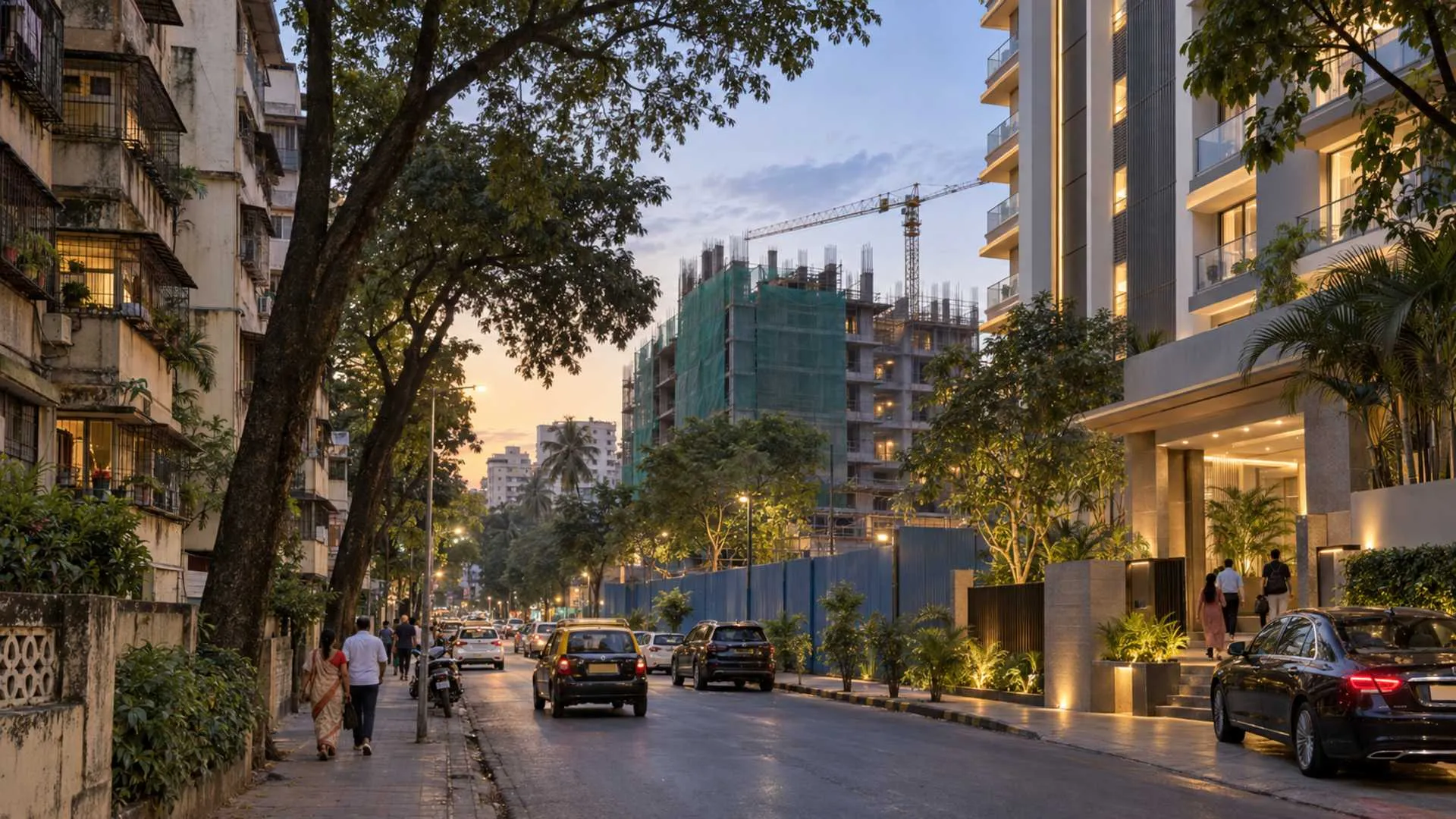
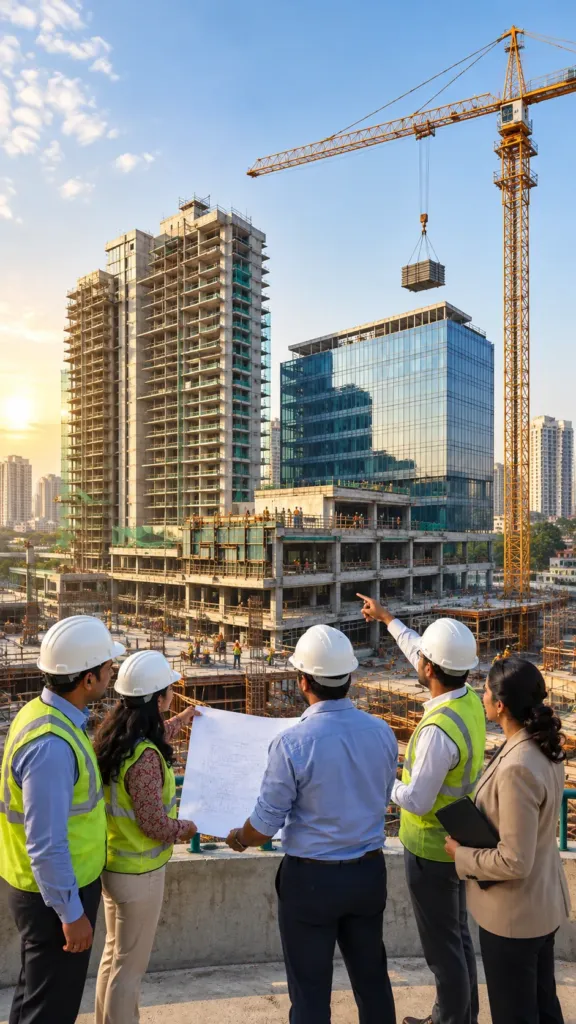
Mumbai’s redevelopment market has crossed a milestone that could redefine how the land-starved city builds its next generation of homes.
Sales from redevelopment projects have overtaken fresh redevelopment launches for the first time, indicating that buyer absorption is catching up with the surge in projects entering the market. Redevelopment’s share of Mumbai housing sales reached 15% during 2025 and the first half of 2026, up from approximately 6% between 2016 and 2021.
The findings come from the JLL–NAREDCO report, Redevelopment in Mumbai: The Inflection Point, from Land Scarcity to Systematic Urban Renewal.
The milestone does not mean redevelopment now represents more than half of all Mumbai home sales. It means sales within the redevelopment segment have moved ahead of its new launch flow while securing a 15% share of the wider market.
Why Are Mumbai Redevelopment Sales Overtaking New Launches?
Redevelopment sales are overtaking fresh launches because buyers can access newly constructed homes in established Mumbai neighbourhoods, where transport, schools, workplaces and retail already exist. At the same time, scarce vacant land, ageing buildings, higher development potential and regulatory reforms are encouraging developers to replace existing structures rather than depend on distant greenfield sites.
More than 1,000 redevelopment projects have been launched since 2020, accounting for approximately 13% of Mumbai’s overall residential supply, according to Business Standard.
Karan Singh Sodi, Senior Managing Director for Mumbai MMR, Gujarat and Alternatives at JLL India, described redevelopment as an “urban survival imperative” in a city with virtually no vacant developable land.
For buyers, this model can provide modern homes in familiar neighbourhoods without waiting five to seven years for roads, schools and commercial infrastructure to mature around peripheral developments. This helps explain why Mumbai redevelopment is becoming more popular than conventional greenfield launches in 2026.
From Ageing Buildings to a Citywide Housing Engine
Mumbai has approximately 13,500 cessed buildings requiring urgent replacement. The Western Suburbs account for 22.4% of the ageing stock, while South Mumbai represents 14.2%, the JLL–NAREDCO findings state.
Activity is already clustering in established residential belts. Borivali, Malad, Andheri, Vikhroli and Goregaon account for around 36% of redevelopment projects launched since 2020. The Western Suburbs generated between 35% and 45% of launches and sales during 2025–H1 2026.
The change is also visible in slum rehabilitation. The Times of India reported 1,202 active projects covering 321,858 hutments across 2,156 acres. That pipeline is nearly four times the acreage completed during the 30 years following the creation of the Slum Rehabilitation Authority in 1995.
Major transformation zones include the Dharavi redevelopment, the 101-acre Juhu Lane–Gilbert Hill cluster and the 420-acre Motilal Nagar scheme in Goregaon. These are different redevelopment models and should not be treated as interchangeable with private housing-society redevelopment.
How Policy Changes Are Accelerating Redevelopment
Development Control and Promotion Regulations 2034 have helped make more projects viable through floor space index and cluster-development provisions. The report notes a 51% consent threshold and FSI of up to 4.0 for eligible cluster and slum projects.
Transferable Development Rights, or TDR, can provide additional development potential, while self-redevelopment allows housing societies to lead the process instead of surrendering complete control to an external developer. More than 1,600 self-redevelopment proposals are reportedly active.
Kamlesh Thakur, President of NAREDCO Maharashtra, called the shift a watershed moment that establishes redevelopment as a central engine of Mumbai’s housing supply.
The market is also drawing greater interest from institutional developers. However, buyers comparing Lodha, Rustomjee, Godrej Properties, Oberoi Realty, Shapoorji Pallonji or another developer must verify each scheme individually instead of assuming that a large brand removes project-specific risk.
Should Buyers Choose a Redevelopment Flat or New Launch?
A redevelopment home can provide an established address, proven neighbourhood infrastructure and potentially shorter dependence on future connectivity. It is not automatically cheaper than a new launch. In prime corridors, the location premium can be substantial.
Business Standard places redevelopment-corridor values at approximately ₹1–1.15 lakh per sq ft in Worli, ₹90,000–₹95,000 in Bandra–Khar and ₹32,000–₹37,000 in the Kandivali–Borivali belt. These broad market figures are not quotations for every project.
Before buying, check:
- The project’s MahaRERA registration and revised completion date
- Society approvals, title, permissions and developer agreement
- Construction progress and financing arrangements
- Sale-component access, amenities and maintenance obligations
- Temporary accommodation commitments affecting existing residents
A redevelopment flat is not inherently safer than a conventional new launch. Delayed approvals, disputes with occupants, inadequate funding and construction interruptions remain possible.
As Rediff Money observed, stronger absorption suggests that redevelopment is evolving into a sustainable supply mechanism rather than remaining merely a policy-driven experiment. The trend has also gained attention through social-media coverage, bringing a complex urban transformation story into the mainstream buyer conversation.
Mumbai’s Next Housing Cycle Is Being Built on Existing Land
The 15% sales share is not to say that greenfield housing is gone. It demonstrates that redevelopment has become too important for buyers, developers and policymakers to treat as a niche category.
Mumbai’s future supply will increasingly come from the rebuilding of aging societies, cessed properties, slum clusters and underused urban land. Better infrastructure may further reinforce this shift, but safe execution will decide whether momentum becomes sustainable housing delivery.
Considering comparing a redevelopment flat with a traditional new launch? Before booking, check approvals, MahaRERA record, construction timeline & complete cost. Contact RealtyConnect to compare projects and guide buyers.