Rent Near Work: Madhya Pradesh’s 2026 Housing Proposal for Industrial Workers
MP Housing Policy 2026: Rent Near Work for Industrial Workers
SHARE:
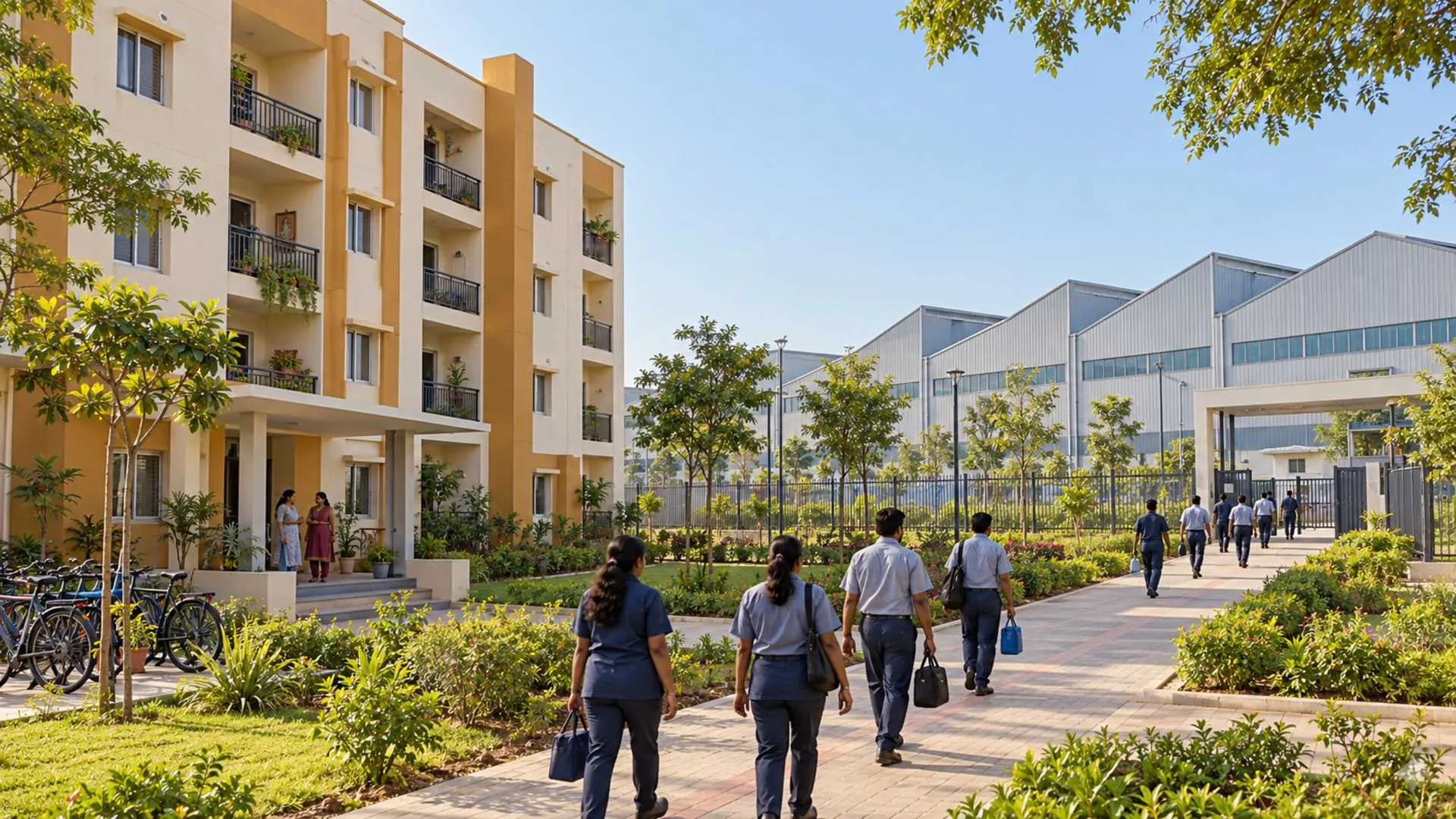


Madhya Pradesh is seeking to bring worker housing closer to the factory gate through its draft Urban Affordable Housing and Habitat Policy 2026. This policy focuses on providing affordable rental housing close to industrial clusters, healthcare facilities, educational facilities and IT parks.
As it is currently in a draft form (it was made available for public consultation on 28 th October 2026), there may be some variation to the incentives, land allocation, eligibility criteria and timelines for implementing these schemes once notified. However, this does show a significant change in how the state are looking at housing for industrial workers in India. Rather than housing being seen as a far-off option, it will now be seen as part of the employment infrastructure.
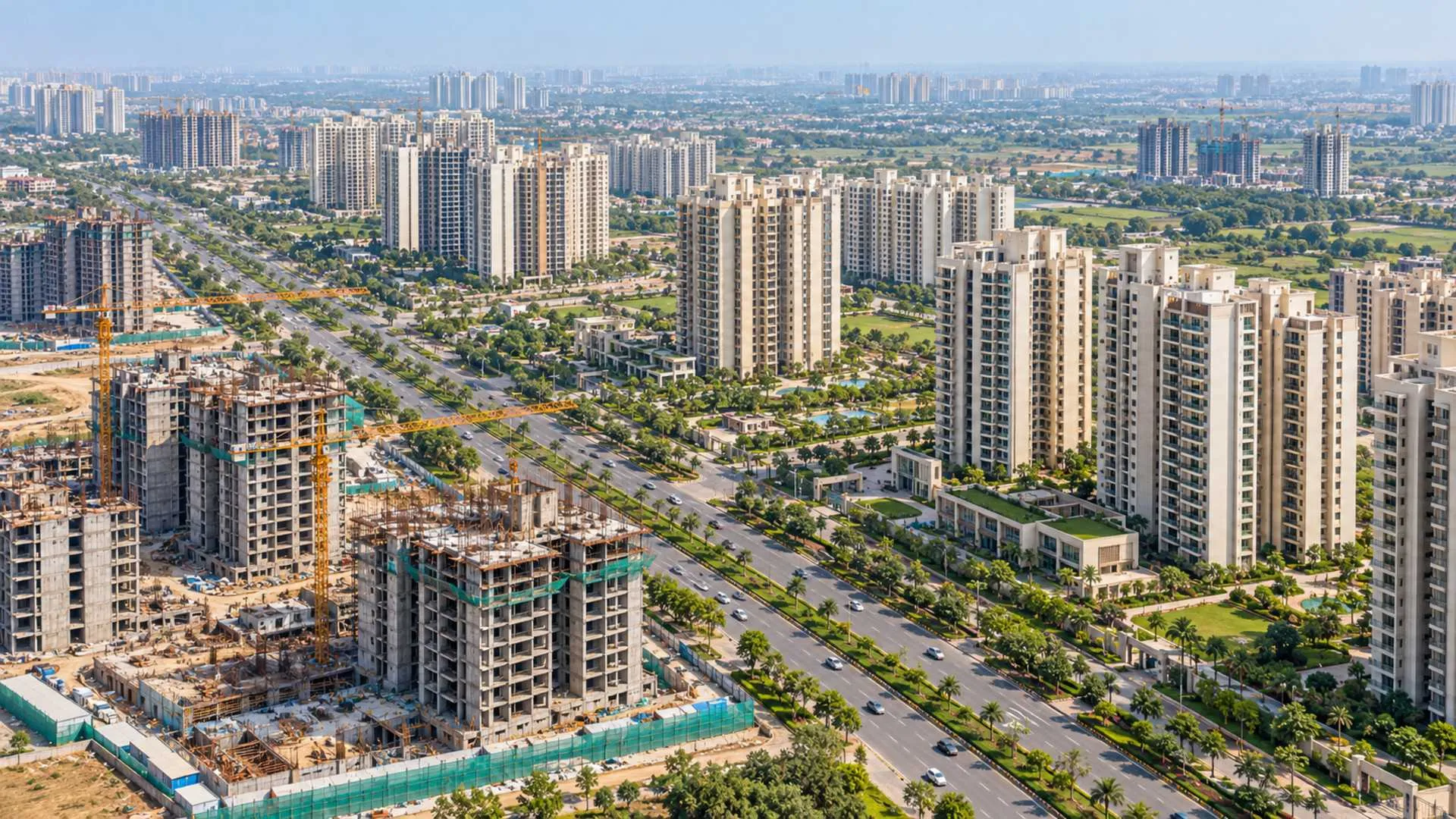
As industrial clusters (Pithampur, Mandideep, Malanpur, Vikram Udyogpuri) continue to grow, many workers have to travel long distances or rely on informal rental accommodation. If implemented well, affordable rental housing complexes with rent close to work can reduce commute costs, improve retention of workers and provide a new investment opportunity close to Madhya Pradesh industrial clusters.
What is Madhya Pradesh doing about housing for industrial workers?
Madhya Pradesh’s draft 2026 housing policy proposes affordable rental homes close to factories and other job centres, with a “Walk to Work” model, land reservations, public-private partnerships and possible rent-to-own pathways. Separate initiatives already include worker housing on industrial land, MPIDC residential proposals and working-women hostels. The draft remains under consultation.
According to Aurum PropTech, the 28-page draft targets economically weaker section households earning up to ₹3 lakh annually and low-income group households earning ₹3 lakh–₹6 lakh, or such limits as the government may finally prescribe. Intended beneficiaries include urban migrants, industrial and construction workers, working women, contractual employees and street vendors.
The draft’s most striking feature is its “Walk to Work” approach. In relevant developments, it proposes earmarking 10%–15% of residential land for affordable housing. Homes could initially be offered on long-term rent and, where the final framework permits, transferred through a rent-to-own model. The Times of India similarly described affordable rentals near workplaces as a central focus of the policy.
This is broader than a conventional housing colony. The proposal identifies land near hospitals, campuses, industrial clusters and IT parks so accommodation can serve nurses, doctors, faculty, researchers, factory workers and young professionals. A proposed BHUMI portal would display certified EWS, LIG and rental inventory, including developers, approvals, RERA numbers, prices and availability. A time-bound single-window system is also proposed to streamline clearances.
The policy’s biggest promise is not merely lower rent; it is a shorter distance between livelihood and home.
Four initiatives, one rent-near-work direction
Madhya Pradesh’s industrial housing story has several moving parts, and they should not be confused with one another.
| Initiative | Current position | Intended effect |
|---|---|---|
| Draft Urban Affordable Housing and Habitat Policy 2026 | Released for consultation | Affordable rental housing near workplaces, land support, incentives and possible rent-to-own options |
| Factory-land worker housing | Industries may develop residential blocks or dormitories within permitted industrial-land norms | Fewer approvals, shorter commutes and better workforce retention |
| MPIDC residential projects | Earlier proposals include more than 1,000 flats at Pithampur | Formal housing for workers and employees in major industrial areas |
| Working-women hostels | Large facilities are under development in industrial belts | Safer, organised accommodation closer to employment |
The MP factory land dormitories workers residential housing reform predates the new draft. Madhya Pradesh has allowed industries to create dormitories and residential complexes for employees on land allotted to manufacturing units within applicable rules. More recent reporting indicates that residential blocks may use up to 5% of allotted industrial land under the relevant norms. The measure reduces the need to pursue a completely separate housing site and can help employers provide accommodation inside an integrated industrial campus.
This matters for the Pithampur Indore industrial housing workers commute problem. Pithampur’s workforce has historically included thousands travelling from Indore and Dewas. Earlier MPIDC planning covered 1,362 flats across Pithampur’s sectors 1 and 6, including EWS, studio, 2BHK and 3BHK units, at a projected cost of ₹211 crore excluding land. The popular shorthand “MPIDC 1,000 flats Pithampur industrial workers housing” therefore refers to a project proposal larger than 1,000 units, not necessarily 1,000 completed or currently available homes.
Dainik Bhaskar has also highlighted the rental and eventual ownership direction of the state’s affordable housing thinking. Any tenant purchase option, however, will depend on the final notified policy, project structure and eligibility terms.
Women’s hostels could become an industrial-growth lever
Safe accommodation is particularly important when industrial expansion seeks a larger female workforce. Madhya Pradesh has eight approved working-women hostel proposals across Dhar, Ujjain, Raisen, Singrauli, Jhabua, Dewas, Narmadapuram and Bhind, with a reported overall allocation of ₹284 crore, not ₹248 crore.
The largest projects include a 1,775-bed hostel at Pithampur and a 1,554-bed facility at Vikram Udyogpuri in Ujjain. Other facilities have been planned for Mandideep in Raisen district and Malanpur in Bhind. This MP working women hostels industrial belts ₹284 crore programme is financed through special central assistance and is distinct from the Sakhi Niwas scheme, although both pursue safer accommodation for working women.
Under Mission Shakti, Sakhi Niwas Madhya Pradesh women workers facilities provide conveniently located accommodation for eligible working women, with a daycare component forming part of the scheme design. Parliamentary information from early 2026 recorded three functional Sakhi Niwas facilities in Madhya Pradesh, one in Bhopal and two in Indore, at that time. Applicants should therefore verify the relevant scheme, location, income rules and operational status rather than treating every industrial hostel as a Sakhi Niwas facility.
How ARH differs from ordinary affordable housing
The state proposal complements the Affordable Rental Housing vertical under PMAY-Urban 2.0. The Centre’s PMAY Urban 2.0 affordable rental housing sub-scheme dormitory framework is designed for beneficiaries who need hygienic, lower-cost accommodation but may not want or be able to buy a home.
Affordable Rental Housing, or ARH, works through two broad models. Existing government-funded vacant homes can be converted into rental housing through public agencies or public-private partnerships. Alternatively, public or private entities can construct, operate and maintain new rental homes for EWS and LIG beneficiaries, including migrant and industrial workers, working women and institutional employees.
That makes the ARHC dormitory model vs private rental market comparison important. A normal private rental is negotiated property by property and may be far from employment. An organised ARH or ARHC development is planned specifically for eligible groups, with management, basic services and workplace proximity built into the model. It is rental stock rather than an immediate ownership subsidy, although Madhya Pradesh’s separate draft introduces the possibility of rent-to-own in certain projects.
The missing legal piece: modern tenancy reform
Madhya Pradesh has also discussed a Modern Tenancy Bill modelled on the Centre’s Model Tenancy Act 2021. The proposed law is intended to clarify landlord and tenant rights, formalise agreements and create faster dispute-resolution mechanisms. As of October 30, 2026, the state Assembly’s published 2026 bill list did not establish that this tenancy bill had been passed.
It would therefore be inaccurate to say the Madhya Pradesh Modern Tenancy Bill rental housing framework is already in force or to promise when it will be enacted. Reports earlier in 2026 said it was likely to be introduced, but “likely” is not legislation. Until enactment and notification, existing applicable tenancy and property laws continue to govern rental relationships.
The same caution applies to “Model Tenancy Act states adopted 2026” lists. The central Act is a model for states and Union Territories, not a law that automatically replaced every state regime. Some jurisdictions have enacted or amended tenancy laws along similar lines, while implementation and terminology vary. Tenants and landlords must check the current law in the relevant state rather than relying on a national adoption count.
What the proposal could change for industrial real estate
For developers and investors, near-work rental housing could create a new asset class around industrial corridors. Demand may emerge for compact apartments, dormitories, managed hostels, food and convenience retail, childcare and transport-light communities. The draft also contemplates incentives such as additional floor-area ratio, higher ground coverage, stamp-duty support, rationalised property taxes and technology grants, all subject to final rules and statutory approval.
For industries, housing can become part of workforce strategy. A factory that offers safe accommodation may recruit from a wider geography, reduce absenteeism and improve retention. For cities, a shorter commute can ease pressure on roads and lower the transport cost embedded in low wages.
But proximity alone does not create dignified housing. Projects will need reliable water, sanitation, ventilation, fire safety, healthcare access, childcare, grievance mechanisms and transparent rent setting. Industrial land must also remain safe for residential occupation, with adequate separation from hazardous operations. A dormitory beside a factory is useful only when it is a liveable home, not simply a bed near a shift.
Madhya Pradesh’s proposal is significant because it connects housing policy, labour mobility and industrial development in one frame. Its success will depend on how quickly the draft becomes an enforceable policy, whether projects remain affordable after operating costs, and whether verified homes actually appear in Pithampur, Mandideep, Malanpur, Ujjain and other employment clusters.