

RERA turns 10: Supreme Court Questions Its Effectiveness
Is It Still Protecting Indian Homebuyers?
SHARE:
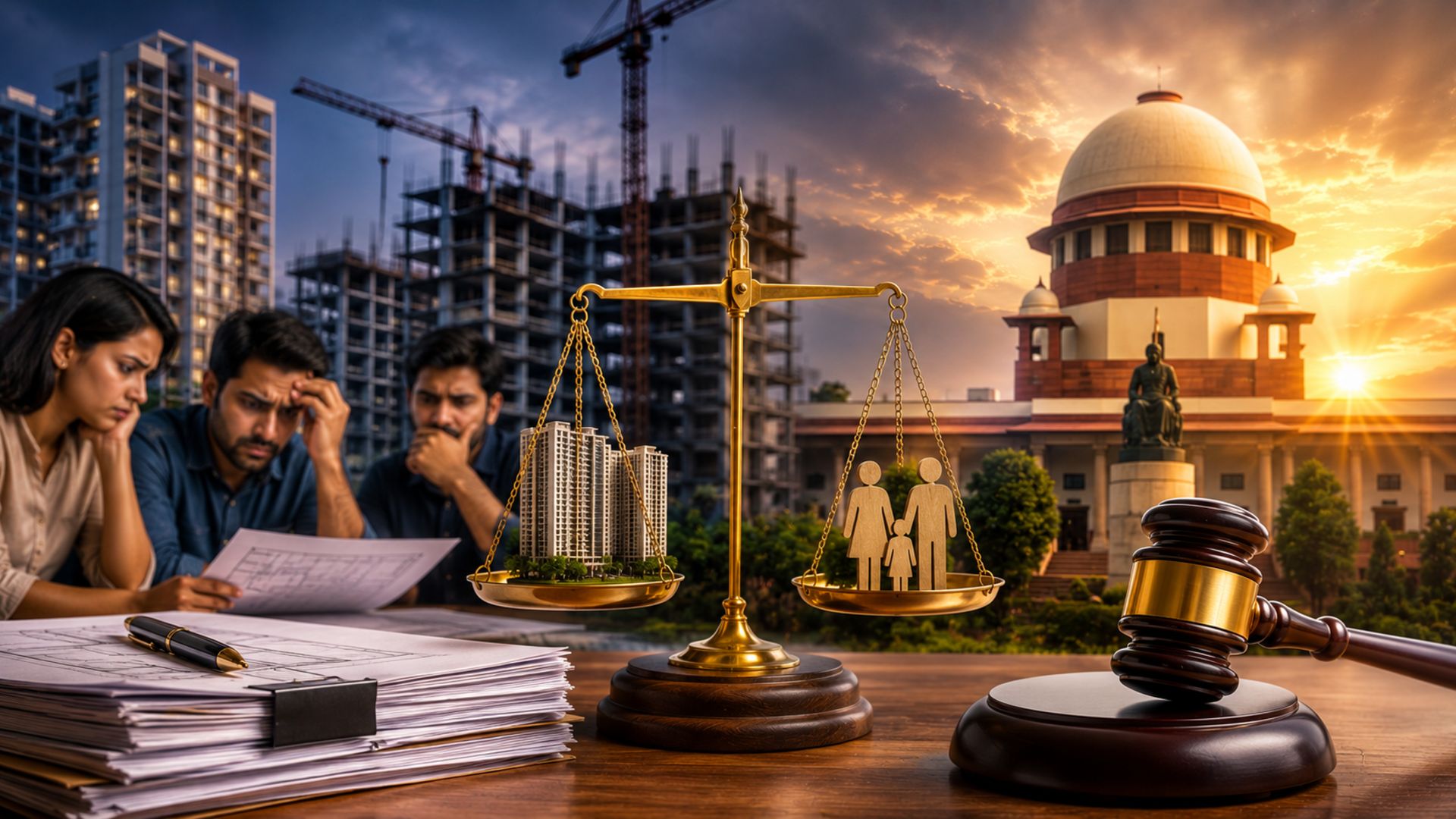
India’s real estate regulator has completed a decade, but recent Supreme Court observations have reignited a national debate. While RERA transformed transparency in property transactions, implementation gaps and delayed justice continue to frustrate many homebuyers.
As the Real Estate (Regulation and Development) Act turns a decade old, so does the conversation around RERA. By 2026, the criticism directed at India’s Supreme Court can no longer be ignored.
Some of the strongest comments on the working of the regulator came in a recent hearing related to the Himachal Pradesh RERA before a Bench headed by CJI Surya Kant and Justice Joymalya Bagchi. The reports in The Pioneer and discussions on legal platforms that the Court questioned whether many authorities had become a “rehabilitation centre for retired IAS officers” have fuelled the debate around the Supreme Court RERA rehabilitation centre for retired IAS officers.
A Landmark Law Facing Tough Questions
When the RERA Act 2016 was introduced, it promised stronger buyer protection through project registration, transparency, escrow requirements, delayed-possession compensation under Section 18, and standardized carpet-area disclosures.
Yet the Court observed that many homebuyers remain “depressed, disgusted and disappointed”, highlighting concerns linked to CJI Surya Kant RERA depressed disgusted disappointed homebuyers. The sharpest criticism came when the Bench reportedly remarked that it may be better to abolish RERA than allow ineffective functioning, bringing attention to the phrase Supreme Court better abolish RERA remark 2026.
Why the Criticism Matters
The debate is not about whether RERA changed the sector; it did.
Industry experts widely credit the law for improving accountability after crises involving projects such as Unitech, Jaypee, and Amrapali. However, according to homebuyer groups, including FPCE (Forum for People’s Collective Efforts) led by Abhay Upadhyay, the challenge lies in uneven enforcement and delayed execution of orders.
This has intensified discussions around RERA facilitating defaulting builders, the Supreme Court 2026 and RERA homebuyers protection failure, India 2026.
Not Every State Performs the Same
One of the biggest issues highlighted is the wide gap between state regulators. While MahaRERA is often cited as a benchmark for digital processes and order transparency, performance varies significantly across other states.
Reports indicate continuing state RERA implementation gaps in NE states. Ladakh has no RERA 2026, raising questions about whether a national law can succeed without uniform enforcement.
Reform or Replace?
Most stakeholders aren’t demanding abolition. Instead, the focus is on reform.
Homebuyer activists say stronger staffing, faster dispute resolution, stricter enforcement powers and more accountability are needed. This is in line with FPCE Abhay Upadhyay RERA reform, not the abolition of demand, which supports strengthening the regulator and not dismantling.
The real question for homebuyers today is not whether RERA survives its second decade but whether it evolves fast enough to deliver the protection it promised in the first place.
Before buying any property, check if the project is registered with RERA, keep a tab on the developer’s compliance history and be aware of your legal remedies. The educated buyer remains your best defense in today’s marketplace.