

Breathing Easy: How Wellness Architecture Is Redefining India’s Premium Homes
Wellness Architecture Is Redefining India's Premium Homes
SHARE:
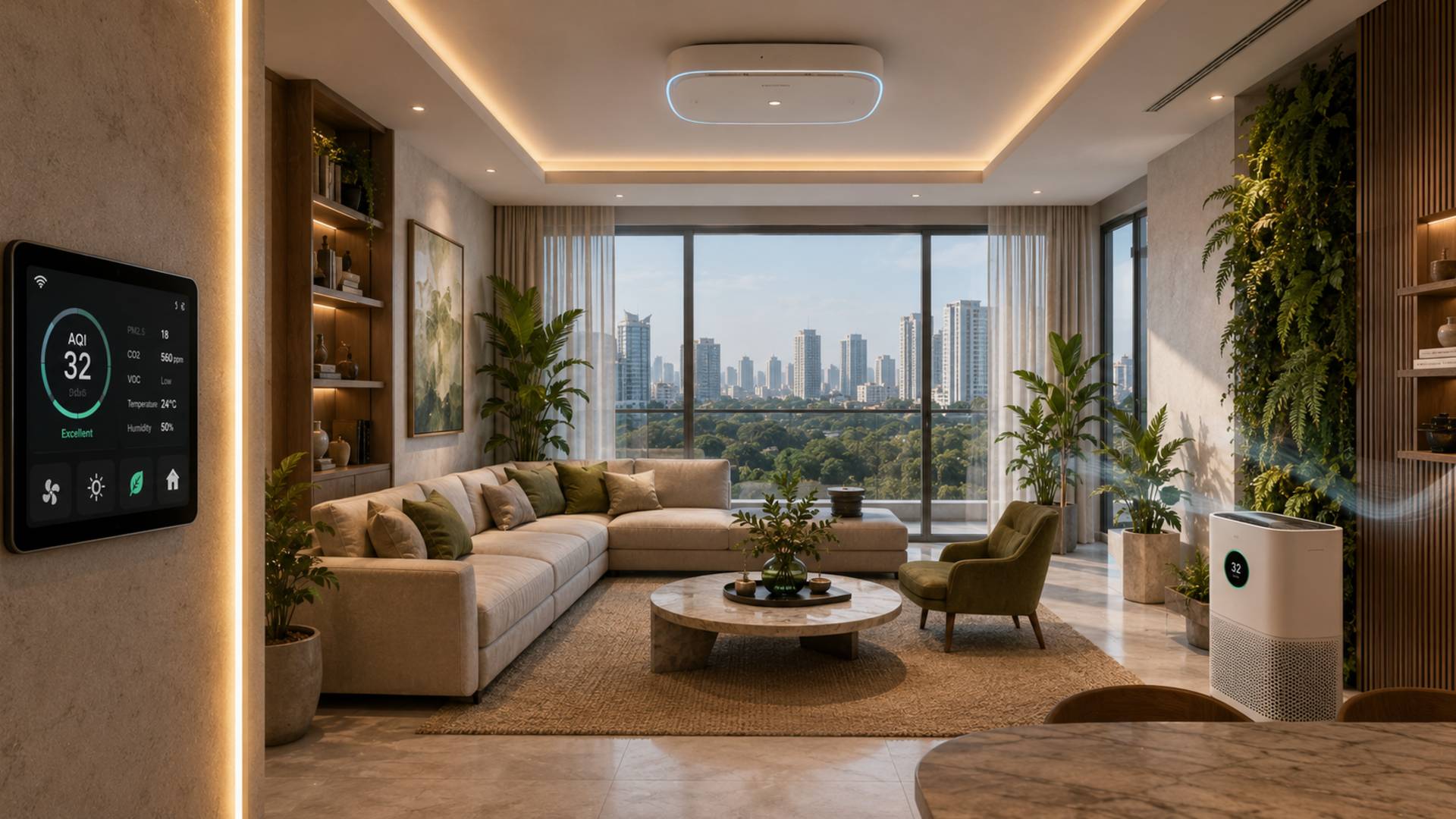
What is wellness architecture and why is it standard in Indian premium homes now?
Invisible wellness is health-driven infrastructure, air purification, circadian lighting, toxin-free paint woven into a home’s DNA so residents benefit without active management. K Raheja Corp’s newsroom says, “The luxury home of the future is an instrument for environmental comfort and longevity. Engineering is the defining differentiator now.”
The luxury home of 2026 won’t be selling square footage. It is selling survival.
In the premium corridors of India, Mumbai, Gurugram, Bengaluru, Pune, developers such as Godrej, Tata Housing, Mahindra Lifespaces and Lodha no longer compete on marble grades or lobby heights. What matters more is what they’re competing over: how well their buildings can keep the people inside safe.
This is wellness architecture in Indian homes 2026 and it is no longer a premium add-on. It’s the baseline.
Air You Can Actually Breathe
India’s cities make HEPA air purification systems non-negotiable. In Delhi-NCR, winter AQI routinely hits 350–450, levels the WHO classifies as severely hazardous. As Ahinsha Builders notes, when AQI crosses 300, risks of respiratory illness, cardiovascular stress, and long-term lung damage rise sharply.
Premium projects now layer ERV/HRV ventilation, HEPA and carbon filtration, and real-time PM2.5/AQI monitoring into smart home dashboards, producing indoor air quality that routinely outperforms outdoor levels by 80–90%.
This isn’t a feature. It’s a health shield built into your walls.
Circadian Lighting: Your Home Now Knows What Time It Is
Light governs cortisol, melatonin, and sleep. Circadian lighting systems, tunable LEDs shifting from cool white in the morning to warm amber by evening, are now standard in premium Indian apartments, as reported by Live Mint. In a country where urban professionals average under 6.5 hours of sleep, this is a genuine health intervention, not a design flourish.
Zero-VOC Paint Stacks Are the New White Walls
Standard paints off-gas VOCs (Volatile Organic Compounds) for years, linked to respiratory damage and hormonal disruption. In 2026, zero-VOC and low-VOC toxin-free paint, clay, lime, and mineral-based finishes are specified by default in premium Indian residential projects, per NoBroker’s eco-paint research. Many developers now mandate zero-VOC primer-plus-topcoat systems as part of WELL Building Standard pre-certification.

Is Wellness Architecture Worth the Extra Cost?
The Global Wellness Institute’s 2026 Architecture & Design Trends report says that in Pune, Bengaluru and Gurugram, homes with certified healthy air, circadian lighting and biophilic design command 8-15% price premiums and also get absorbed faster. Neuroarchitecture and WELL certification are not niche; they are the new quality proof.
The question isn’t whether you can afford a wellness home. And if you can afford not to live in one.
Are you prepared to buy a home that promotes wellness? Find the best WELL-certified residential projects in India, because your next home is your best health investment.