India’s $39.9 Billion Interior Design Market: Who Is Actually Spending?
India Interior Design Market 2026: Costs & Trends
SHARE:
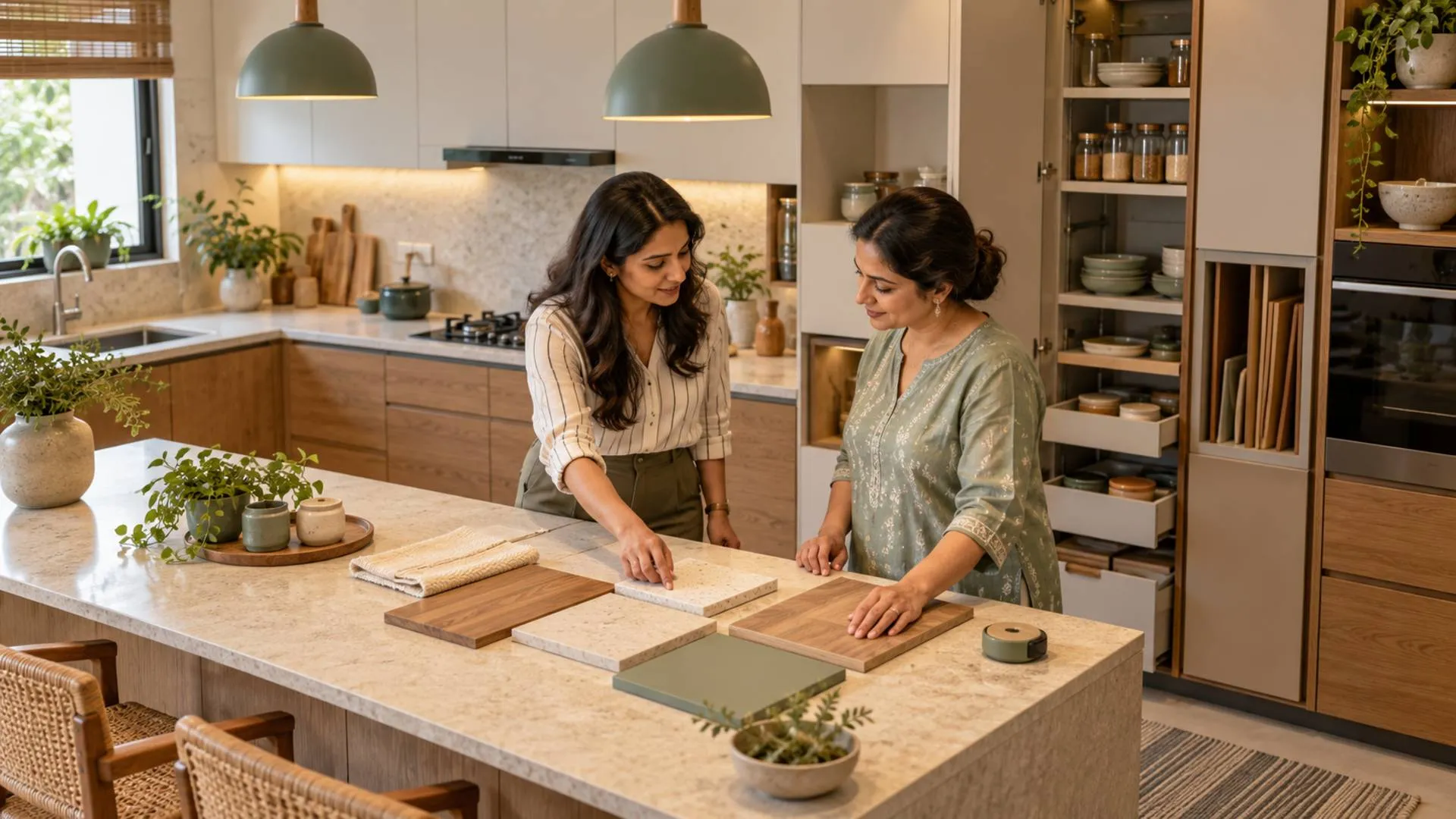
The keys arrive. Then comes the second shopping list: a modular kitchen, wardrobes, lighting, curtains, furniture and somewhere to hide everything that never appears in a sample flat.
For Indian homebuyers, the purchase increasingly continues after possession. The question is how much to spend making the space work and who should do the work.
A September 2026 market release published on PRLog estimates the India interior design market at $39.9 billion in 2026, with a projected value of $74.73 billion by 2034. These are research estimates and forecasts, rather than an official tally of expenditure.
The more revealing number concerns smaller cities. Business Today, reporting Deloitte’s September 2026 findings, says Tier-2 households spent an average of ₹3.9 lakh per home on interiors in 2025, nearly 74% of Tier-1 spending levels.
That brings the story closer to ordinary homeowners. Behind the market forecasts are families deciding whether better storage deserves more money than a statement wall, and whether a coordinated renovation is worth paying for.
How much should I budget for interior design for my new flat in India?
Start with the work your home needs and obtain itemised quotations. A 10–15% allocation of the property’s value can provide an initial reference, but it is not a compulsory spending target. Define whether your budget includes furniture, appliances, design fees, installation and taxes, and retain a contingency for changes.
That percentage comes from Business Today’s coverage of Deloitte, which reports consumers allocating around 10–15% of home value to interiors. It describes spending behaviour; it does not establish what every household needs.
A ₹1 crore apartment does not automatically require ₹15 lakh of work. Existing finishes, carpet area, material choices and the number of rooms being furnished should shape the interior design budget in India.
Who is spending and why smaller cities matter
The home interiors customer is becoming harder to describe with a single income bracket or metropolitan address.
NDTV’s May 2026 reporting identifies millennials and dual-income households as important drivers of demand, alongside the influence of social media, design content and hybrid working. Its coverage describes growing interest in personalised homes, modular kitchens, customised storage and functional layouts.
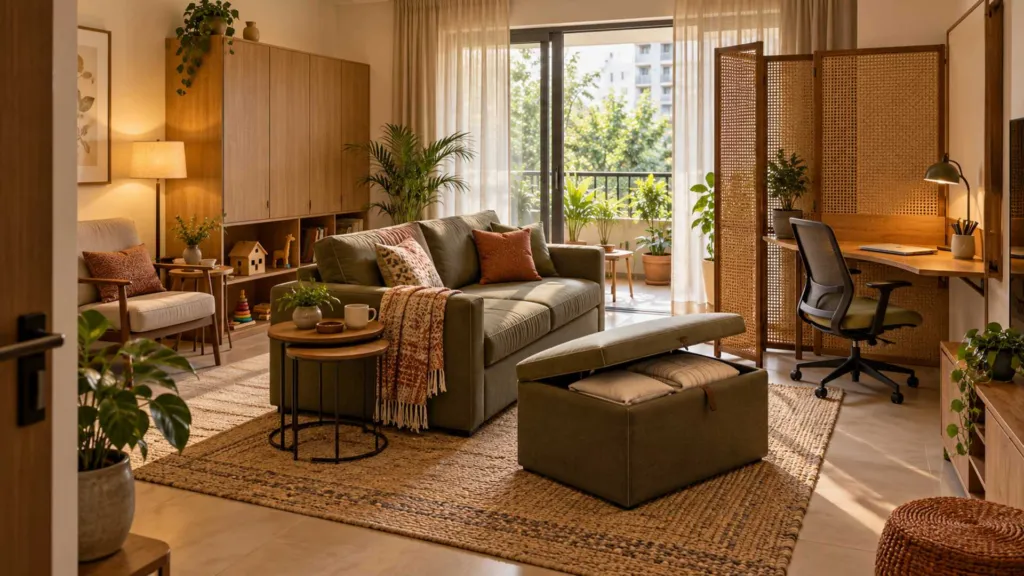
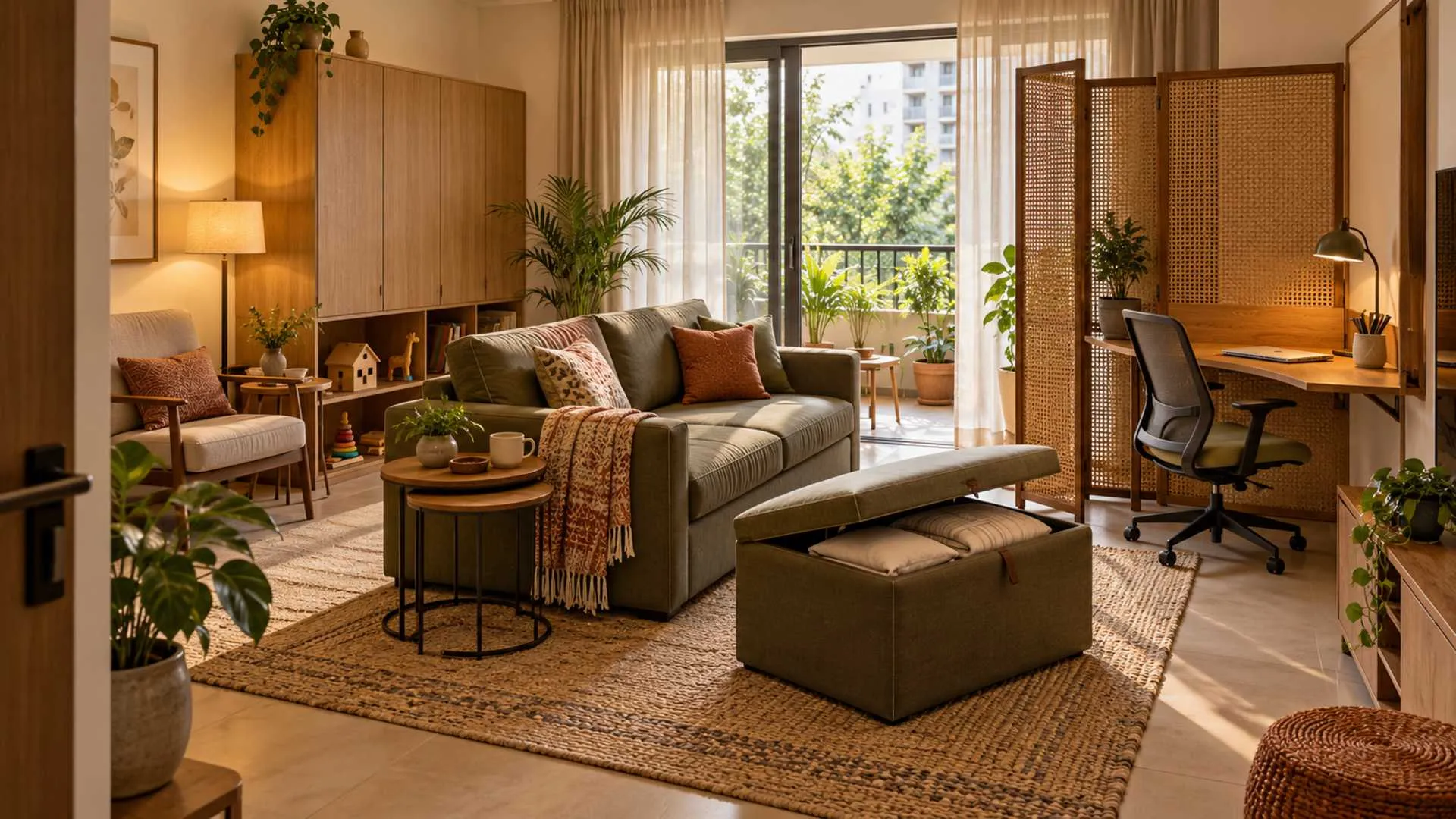
The appeal is understandable. A dining table may double as a workstation. A second bedroom may serve guests, children and office calls. Good home interior design in India needs to accommodate those overlapping uses.
Smaller-city homeowners are participating more actively. Business Today reports that Tier-2 interiors markets are growing almost twice as fast as Tier-1 markets. Its coverage also records a 62% increase in cross-category purchases, including combinations involving wall art, accents and modular products.
These findings suggest that consumers are thinking beyond individual pieces of furniture. They are considering how purchases fit together across a room or home.
However, “Tier-2 spending reaches 74% of Tier-1 levels” does not mean every household in a smaller city spends almost as much as a Mumbai family. It is an aggregate comparison, rather than a city-specific quotation or a measure of identical specifications.
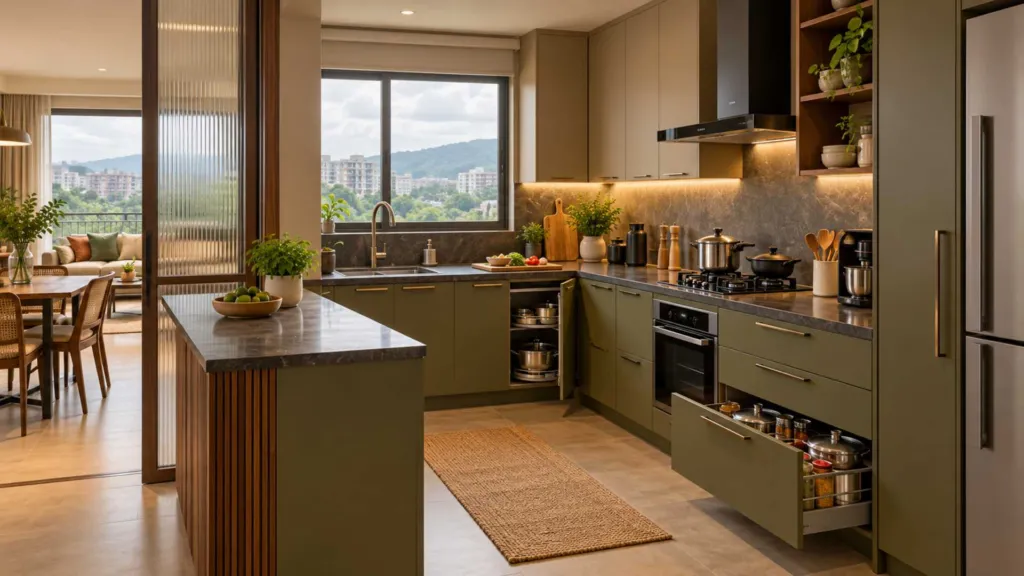
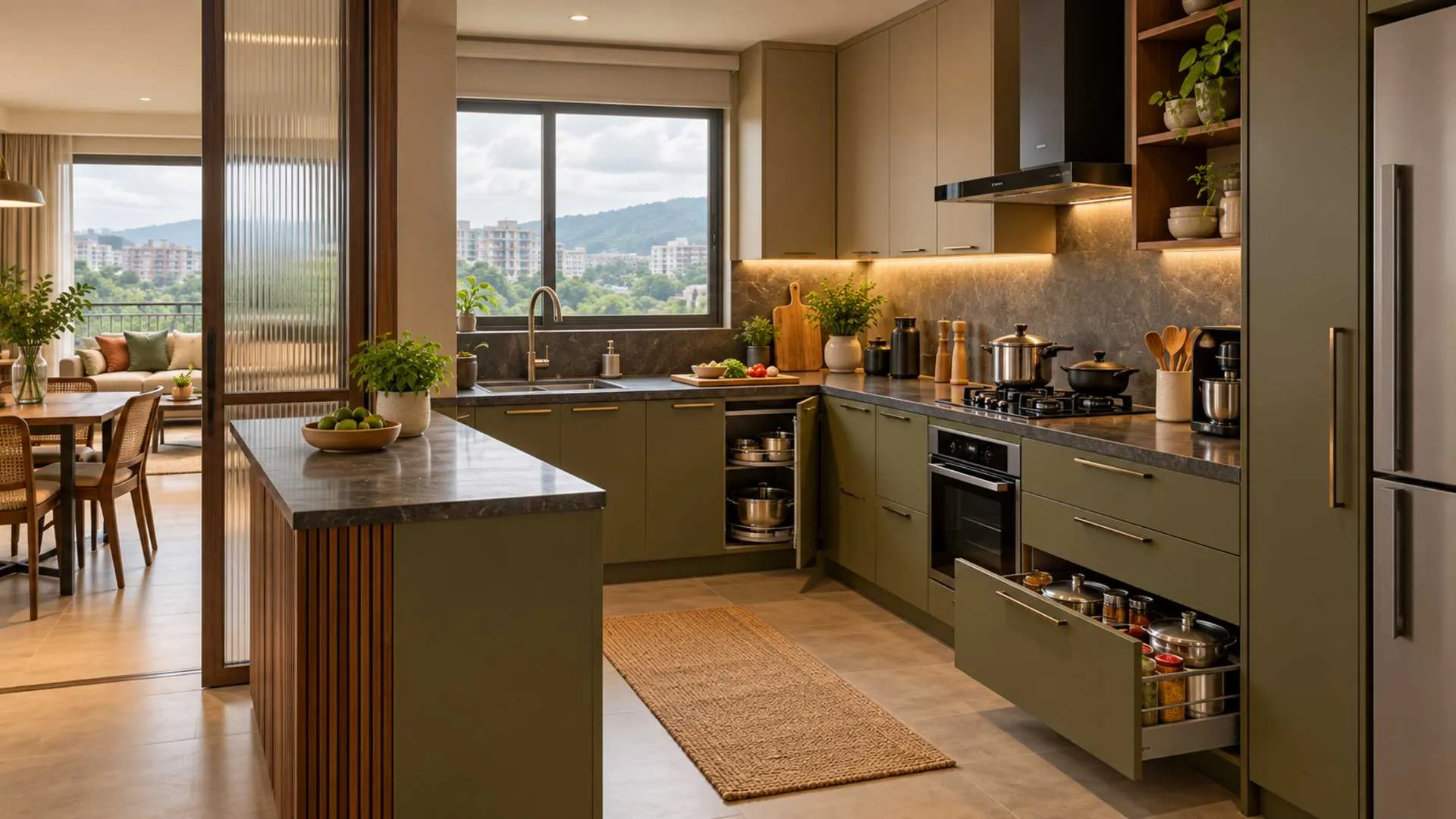
For builders, this creates a useful opportunity: show buyers how an apartment can actually be furnished. A practical kitchen layout, adequate storage and sensible electrical planning can make a home’s usefulness easier to judge than an elaborate showroom installation.
The $39.9 billion headline needs context
Market size estimates differ, sometimes substantially.
Mordor Intelligence estimates India’s interior design market at $35.48 billion in 2026, forecasting $65.01 billion by 2031 at a 12.87% compound annual growth rate. Its report includes residential and commercial work, new construction, renovation and different price tiers.
Research and Markets carries this Mordor report, so those two websites should not be counted as separate estimates independently confirming the same number.
The difference also affects the answer to “who is spending?” Mordor assigns 74.44% of 2025 revenue to commercial projects. By contrast, the research release on PRLog assigns 60% to residential demand under its market framework. These figures should remain attached to their respective studies.
The market’s direction is clearer than a single universal valuation: spending involves homes, workplaces and commercial spaces, with different reports measuring that activity differently.
Mordor identifies urbanisation, rising incomes, commercial fit-outs and housing-related demand among the growth drivers. Its analysis includes PM Awas Yojana and Smart Cities initiatives, alongside digital design tools and organised execution.
For homeowners, the practical question remains smaller: what does this particular home need?
Interior design cost in India: turn the budget into a brief
For someone buying a flat in Pune or a flat in Mumbai, interiors should enter the financial plan before possession. Leaving everything until the keys arrive makes it harder to compare providers without feeling rushed.
Applying the reported 10–15% reference produces these illustrative allocations:
| Home purchase value | At 10% | At 15% |
| ₹60 lakh | ₹6 lakh | ₹9 lakh |
| ₹80 lakh | ₹8 lakh | ₹12 lakh |
| ₹1 crore | ₹10 lakh | ₹15 lakh |
These are arithmetic examples, not quotations for complete interiors. A lower budget may work for a limited scope; a bespoke project may require considerably more.
An interior design cost breakdown should explain what is being purchased. For the kitchen, check cabinet dimensions, board specifications, shutters, hardware, countertop and installation. For wardrobes, compare internal storage arrangements alongside the external finish.
Living-room expenditure should separate fixed joinery from movable furniture, curtains, lighting and décor. Bedroom quotations should identify which beds, wardrobes and furnishings are included.
This makes interior design in Pune or interior design in Mumbai easier to compare. A cheaper total is meaningful only when the scope is comparable.
An illustrative ₹8 lakh spending plan could reserve ₹7.2 lakh for agreed work and ₹80,000 for changes. That is a planning example, not a market benchmark; renovation involving hidden repairs may need a different reserve.
Spend first on the parts you use every day. A practical modular kitchen in India, comfortable lighting and accessible storage can deserve priority over decorative features.
For a luxury flat in Pune or a premium apartment, ask the same questions at a higher specification level. Expensive finishes should serve the household’s needs rather than simply fill the available budget.
Interior designer vs local carpenter: compare responsibility, not labels
Is hiring an interior designer worth it in India? The answer depends on the complexity of the work and how much coordination the homeowner can undertake.
A skilled local carpenter may suit a clearly defined wardrobe, cabinet or furniture requirement. A designer may add value when the brief involves room planning, lighting, material coordination and several trades.
The distinction matters when comparing modular turnkey interiors with piecemeal carpentry.
| Requirement | What to evaluate |
| One defined furniture item | Craftsmanship, materials, measurements and installation |
| Coordinated interiors across rooms | Design planning, drawings and responsibility for execution |
| Kitchen plus electrical or plumbing changes | Coordination between trades and written scope |
| Bespoke bungalow, villa or farmhouse | Detailed planning, custom specifications and site supervision |
Neither arrangement guarantees good results. Review completed work, speak to previous clients and establish how defects or delays will be handled.
NDTV reports that organised providers account for approximately 15–20% of the interior design and home décor market, with the remainder served by a fragmented ecosystem. Local vendors therefore remain a substantial part of the industry.
When comparing Livspace, HomeLane, DesignCafe, or Bonito, request equivalent specifications and a clear explanation of who handles each stage. A company name alone does not establish which quotation offers the best value.
For luxury interior design in Pune involving a bungalow, villa, or farmhouse, the brief may require more custom planning. Homeowners considering Imperial Infra Design in Pune should discuss design intent, detailed scope, materials and execution responsibilities before settling the budget.
Someone searching for a premium interior designer in Koregaon Park or Baner should also examine whether the portfolio reflects their preferred way of living.
The best interior designer for your home is the one whose work, process and responsibilities match your brief.
Tell your designer the budget and define what it covers
Should you tell your interior designer your budget? Yes. A clear spending ceiling gives the design process a useful boundary.
State both the preferred allocation and the maximum you can manage. Explain whether appliances, loose furniture, taxes and professional fees sit inside that amount.
Then ask for options. Which elements are essential? Which finishes can be substituted? What can be completed later without undoing earlier work?
Before approving a home renovation in India in 2026, check:
- An itemised scope and material specifications.
- Drawings, measurements and storage layouts.
- Payment milestones and change-order procedures.
- Installation responsibilities, handover and warranty terms.
This is how a homeowner can get better value from an interior designer: make decisions visible before they become purchases.
India’s interior design market may carry a $39.9 billion estimate, but the most consequential number for a buyer is the budget attached to their own home.
Plan the essentials, compare equivalent quotations and choose a team that makes its commitments clear. For more home-planning insights, property updates and design-led ideas, explore RealtyConnect’s AI-powered platform before planning your next move.