

How to Design Compact Rental Homes Today’s Tenants Actually Want
SHARE:
A small rental house is no longer a stopgap or a tight squeeze. Renters are living, working and entertaining in the same apartment, so every square foot needs to do more than one thing.
The 500–1,000 sq ft category is especially important. Data from recent rental search activity shows that homes in this size segment form a significant part of tenant demand across India. But landlords looking for reliable tenants need more than fresh paint and an empty room.
The best compact rental home design includes usable storage, flexible furniture, natural light, a functional kitchen and a dedicated work corner, without over-personalising the interiors.
What Do Tenants Actually Want in a Compact Rental Flat in India?
Most tenants want a clean, well-lit and low-maintenance home with practical storage, a usable kitchen, reliable electrical points and enough flexibility to work from home. Neutral finishes, modular furniture and good ventilation make a 500–1,000 sq ft flat feel larger while allowing tenants to personalise it.
This does not mean landlords need to create an expensive show apartment. Compact rental furnishing investment delivers better value when it solves everyday problems: Where will suitcases go? Can two people work without taking over the dining table? Is there space for a washing machine? Can the tenant move furniture around?
Make One Room Perform Two Jobs
Space planning begins with circulation. Oversized furniture, deep television units and unnecessary partitions can make even an 800 sq ft apartment difficult to navigate.
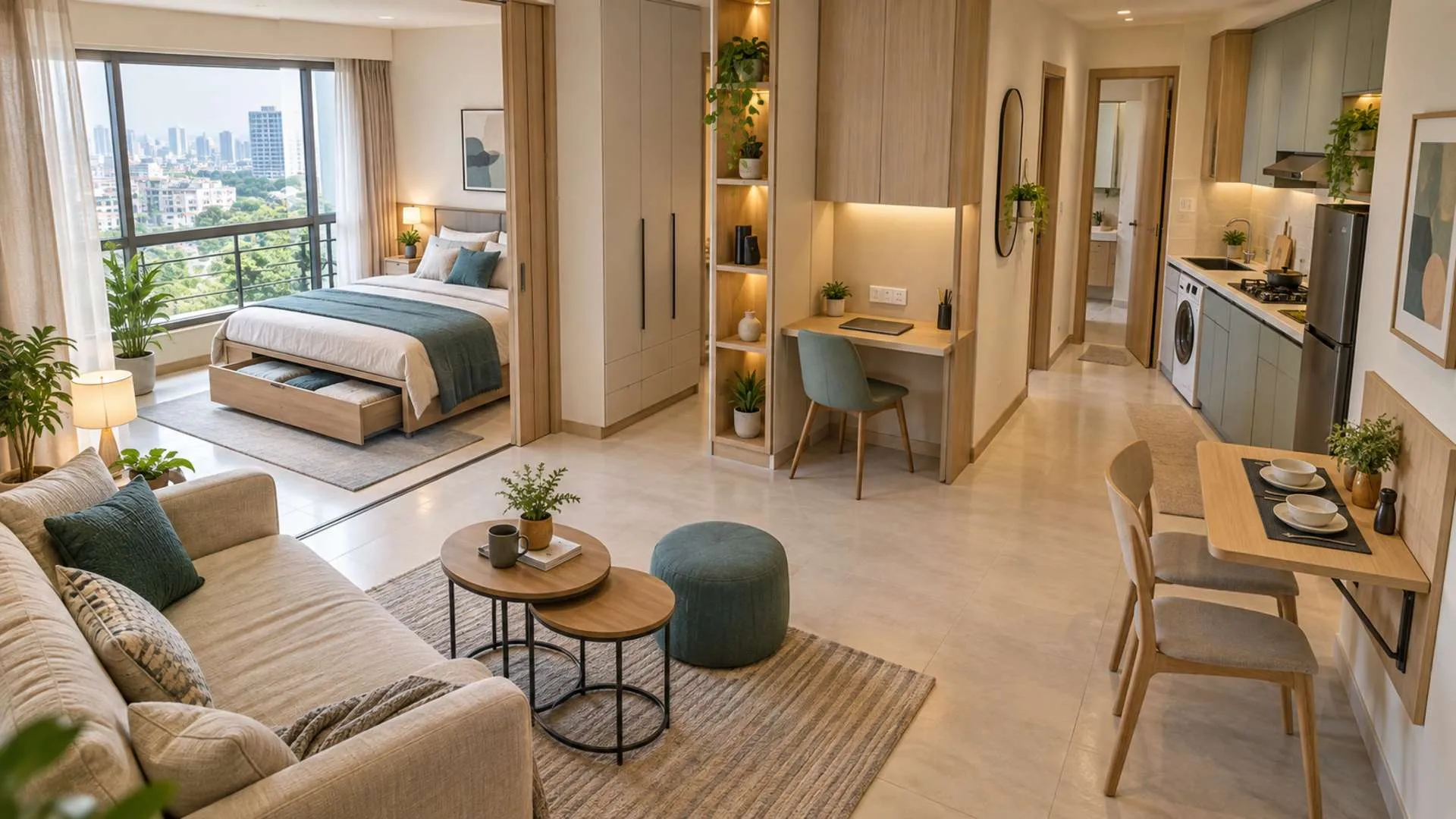
RoomSketcher recommends multipurpose spaces and furniture to create a functional home under 1,000 sq ft. A dining table can double as a workstation, while a sofa bed can turn the living room into occasional guest accommodation.
For an efficient small rental flat design, landlords can consider:
- A foldable or compact dining table
- A study ledge with accessible charging points
- Beds with hydraulic or drawer storage
- Sliding wardrobe shutters
- Nesting tables or movable side tables
A small home feels spacious when movement is effortless, not simply when it contains less furniture.
Build Storage Into the Empty Corners
In a compact rental, storage often matters more than decorative features. Full-height wardrobes, overhead kitchen cabinets and lofts above passages can accommodate seasonal items without reducing floor space.
For a 1BHK interior design in Mumbai or Pune, vertical storage is particularly useful because tenants may have limited utility or balcony space. Closed storage also makes the apartment appear calmer during property photographs and site visits.
New Leaf Designs highlights renter-friendly solutions that improve utility without requiring permanent structural changes. The principle works for landlords too: choose additions that are durable, repairable and easy to reuse between tenancies.
Semi-Furnished or Fully Furnished: Which Works Better?
A semi-furnished rental often gives tenants the flexibility to bring their own bed, sofa and appliances while reducing the landlord’s replacement burden. Recent rental-market data has also indicated a strong preference for semi-furnished homes.
A practical semi-furnished package may include:
- Modular kitchen cabinets and a chimney provision
- Wardrobes in the bedrooms
- Lights, fans and curtain rods
- Geysers and washing-machine connections
- A compact WFH desk or study ledge
Fully furnished homes can command a higher asking rent in corporate and short-stay markets, but the gross premium is not the same as profit. Owners must account for appliance depreciation, repairs, furniture replacement and longer handover inventories.
Before furnishing, compare the additional annual rent with the complete cost of the upgrade, not just the advertised rent of a nearby property.
Let Light and Neutrality Do the Heavy Lifting
Light colours, consistent flooring and minimal visual clutter can make rooms feel connected. Mirrors can also increase the perception of depth. Livspace recommends mirrors, suitable lighting, curtains and removable finishes as simple ways to improve a rented home.
Architectural Digest India similarly discusses reversible, renter-friendly upgrades. Removable wallpaper, rugs and plug-in lighting allow tenants to add personality without permanently changing the property.
Landlords should prioritise cross-ventilation, unobstructed windows and layered lighting before decorative installations. These fundamentals matter in a flat in Mumbai, a flat in Pune or a compact rental in Bengaluru.
Design for Occupancy, Not Just Photographs
A well-designed rental flat may attract more enquiries and reduce vacancy, but no renovation automatically guarantees higher rent. Location, building quality, maintenance and access to employment hubs remain decisive.
Before spending, owners should inspect competing listings in Andheri, Goregaon, Hinjawadi, Kharadi, Wakad, Whitefield or the relevant micro-market. The most profitable upgrade is usually the one that removes a tenant’s practical objection.
For better occupancy, design the apartment around daily life: storage that holds real belongings, a kitchen that supports regular cooking and a work corner that does not consume the bedroom.

FAQs:
 Practical Vastu Tips for Modern Indian Home Interiors in 2026