Eleven Emerging Cities Beat India’s Metros With 63% Property Growth
Explore 11 emerging Indian cities where property prices rose 63% from 2021 to 2026
SHARE:
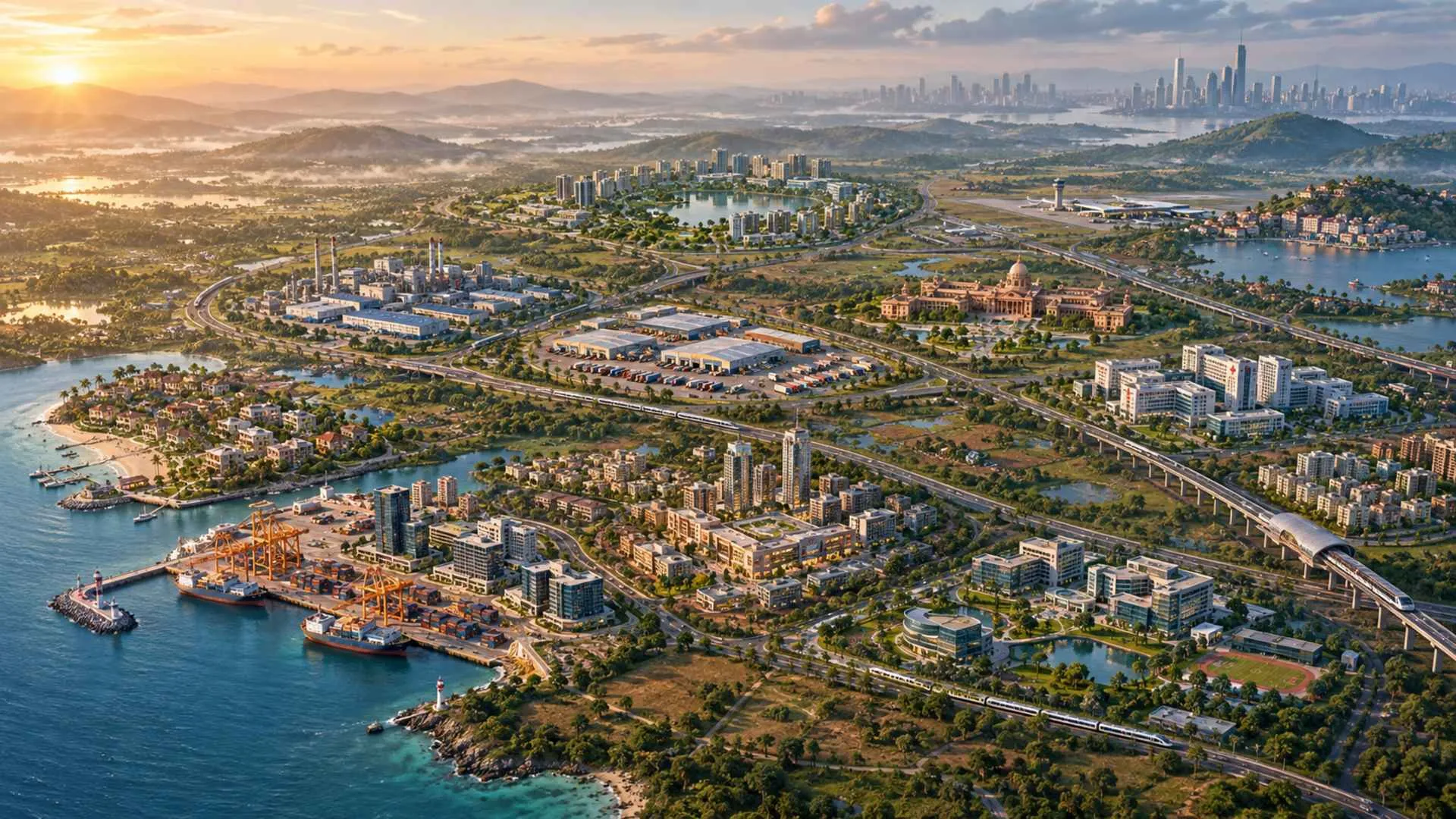
The next property boom in India might not be limited to Mumbai, Bengaluru or the Delhi-NCR region.
In the 11 emerging Indian housing markets, the residential price level rose on average by 63% from 2021 to 2026, as compared with the 42 per cent increase seen in the country’s eight biggest real-estate markets. This result is from the CII–Knight Frank India report India’s Next Real Estate Markets, which was released on 18 September 2026.
The eleven markets are Bhopal, Bhubaneswar, the Chandigarh Tricity, Goa, Indore, Jaipur, Kochi, Lucknow, Nagpur, Visakhapatnam and Coimbatore.
The same cities also had an average residential price compound annual growth rate of 8% between 2016 and 2026, which was twice the 4% compound annual growth rate seen in Mumbai, Delhi-NCR, Bengaluru, Hyderabad, Chennai, Pune, Ahmedabad and Kolkata.
The headline doesn’t indicate that each of the cities had an appreciation of exactly 63 per cent; instead, it shows the combined or average performance across the various markets. Previous appreciation does not ensure that prices will increase at the same rate over the next five years.
Which 11 Indian Cities Outpaced Metros With 63% Price Growth?
Bhopal, Bhubaneswar, Chandigarh Tricity, Goa, Indore, Jaipur, Kochi, Lucknow, Nagpur, Visakhapatnam and Coimbatore collectively recorded 63% residential property-price growth between 2021 and 2026. By comparison, India’s eight major real-estate markets rose 42%. Their growth is being supported by improving connectivity, employment, local enterprise, consumption, organised retail and logistics, not affordability alone.
According to Fortune India, residential prices across these emerging cities currently range from approximately ₹4,500 to ₹13,500 per sq ft. Goa occupies the highest band, while Nagpur and Visakhapatnam remain among the lower-priced markets in the group.
That wide range makes one point clear: “Tier-II property” is no longer a single low-cost asset class. Goa’s lifestyle market, Chandigarh Tricity’s planned urban ecosystem and Lucknow’s expanding capital-city market behave very differently from industrial Nagpur or technology-oriented Coimbatore.
Property Prices Across India’s Emerging Real-Estate Markets
Goa leads the group with a reported residential range of ₹11,500–₹13,500 per sq ft. The market is shaped by tourism, second homes, limited high-quality land and demand from buyers outside the state. However, Goa property investment in 2026 requires close scrutiny of land title, zoning, local regulations, seasonal rental demand and project-level liquidity.
Chandigarh Tricity follows at approximately ₹7,500–₹10,500 per sq ft. Its market extends beyond Chandigarh into Mohali and Panchkula, so buyers must not treat the entire Tricity as one uniform investment zone.
Jaipur and Kochi occupy the ₹7,000–₹9,000-per-sq-ft band. Jaipur combines tourism, administration, industrial expansion and improved highway connectivity. Kochi benefits from port-led commerce, technology employment, remittances and NRI demand, but apartment supply and neighbourhood-level performance vary considerably.
Bhubaneswar is reported at approximately ₹6,550–₹8,550 per sq ft, while Lucknow sits around ₹6,500–₹8,500 per sq ft. Both are state capitals with expanding infrastructure, organised retail and formal residential development.
Coimbatore falls within the broader mid-tier category, commonly associated with industrial, manufacturing, education and healthcare demand. Indore is reported at approximately ₹5,500–₹7,500 per sq ft, while Bhopal falls around ₹5,000–₹7,000 per sq ft.
Nagpur and Visakhapatnam offer the lowest reported band at ₹4,500–₹6,500 per sq ft. Their entry costs may appear attractive, but successful investment depends on choosing the correct employment and infrastructure corridor rather than simply selecting the cheapest city.
The report does not establish a universal price for every neighbourhood. These figures are city-level ranges and should not replace micro-market valuations, registered transaction evidence or individual project comparisons.
Why Are Tier-II Cities Outpacing Major Metros?
Affordability is only part of the explanation. Prices in smaller cities have increased because the economic activity supporting housing demand is becoming more geographically distributed.
The CII–Knight Frank analysis points to stronger MSME ecosystems, expanding services, available talent and global capability centres widening India’s employment map. Improved highways, airports and urban transport have also made several non-metro cities more accessible to companies and households.
Infrastructure spending has become a larger part of public capital expenditure, rising from 39% in FY2015 to 55% in FY2026. According to The New Indian Express, the government’s three-year public-private partnership pipeline contains 852 projects with a combined estimated value of ₹17 lakh crore.
But infrastructure cannot create a durable property market on its own.
As Knight Frank India Chairman and Managing Director Shishir Baijal observed in the report, cities must convert connectivity into sustained economic activity. Employment, enterprise, consumption, population growth and sufficient urban capacity are necessary to create deeper real-estate markets.
A new expressway may generate interest; jobs and liveability determine whether people remain, rent homes and create resale demand.
The 11 Cities: What Is Driving Each Market?
Indore and Bhopal
Indore benefits from a diversified commercial and industrial base, educational institutions and development along the Super Corridor. Investors considering a flat in Indore should examine actual employment access, neighbourhood occupancy and available supply rather than buying only because a project is advertised near a proposed development.
Bhopal combines state-government employment, education and relatively affordable housing. Its ₹5,000–₹7,000-per-sq-ft reported range can provide a lower entry point, but resale depth may differ sharply by locality.
Lucknow and Jaipur
Lucknow has attracted large developers and new commercial and retail investment. Its government, education, healthcare and service-sector base gives it broader end-user demand than a purely speculative corridor.
Jaipur benefits from tourism, manufacturing, administration and its location within the Delhi–Mumbai economic geography. Tonk Road, Jagatpura, Ajmer Road and selected peripheral corridors have different development profiles, making local due diligence essential.
Bhubaneswar, Kochi and Visakhapatnam
Bhubaneswar’s institutional base, technology sector and planned development strengthen its residential case. The city was also among six emerging markets that collectively contributed substantially to Tier-II warehousing activity.
Kochi combines port infrastructure, technology employment, tourism and overseas-Indian demand. Buyers must distinguish between end-user neighbourhoods and high-supply investor markets.
Visakhapatnam offers a port-led economy, industrial activity and a comparatively lower reported residential price range. Yet coastal conditions, development regulations and the distance from established employment centres can affect individual properties.
Chandigarh Tricity and Goa
Chandigarh Tricity is already a premium emerging market. The investment question is not whether Chandigarh is desirable, but whether a project in Chandigarh, Mohali or Panchkula is correctly priced for its location and supply.
Goa is the most expensive market in the list and behaves partly as a lifestyle and second-home destination. Rental projections can be seasonal, and operating a holiday home involves management, maintenance and local compliance costs.
Nagpur and Coimbatore
Nagpur’s geographic position, logistics importance, industrial corridors and multimodal connectivity support its long-term narrative. Investors should differentiate occupied residential areas from land-led speculative zones around distant infrastructure.
Coimbatore has a strong manufacturing, textile, healthcare and education economy. Its housing demand is relatively end-user-led, though the performance of a flat in Coimbatore will depend on access to employment clusters and established social infrastructure.
Housing Is Not the Only Tier-II Growth Story
Commercial activity is expanding alongside residential prices.
The selected Tier-II markets recorded 11.2 million sq ft of warehousing leasing in 2025, broadly stable against 11.4 million sq ft in 2024. Lucknow, Jaipur, Nagpur, Indore, Coimbatore and Bhubaneswar collectively accounted for 5.3 million sq ft—almost half the warehousing transactions recorded across key Tier-II markets.
Organised retail is spreading too. India had 134 million sq ft of organised shopping-centre stock across 32 cities in 2025, including 36 million sq ft across 24 Tier-II cities. Ten of the 11 emerging markets represented around 60% of that Tier-II stock, according to Fortune India.
This matters because housing markets become more resilient when demand is supported by multiple economic activities rather than speculative apartment launches alone.
Is Tier-II Property Better Than Metro Real Estate?
The 63% versus 42% comparison is important, but it does not prove that every Tier-II property is a better investment than a metro home.
Metro markets generally offer larger employment bases, deeper rental pools and stronger resale liquidity. Emerging cities can offer lower entry prices and faster percentage growth, but they may also carry greater vacancy, developer, oversupply and exit risks.
A ₹60 lakh property that rises by 10% has gained ₹6 lakh. A ₹2 crore metro property rising by 6% has gained ₹12 lakh. Percentage appreciation should therefore be assessed alongside absolute gains, rental income, taxes, transaction costs and resale time.
Buyers must also recognise a base effect. A lower-priced market can record a higher percentage increase from a smaller starting point. That growth may be genuine, but it does not automatically imply greater liquidity or a better risk-adjusted return.
Where Should You Buy Before Prices Rise Further?
There is no single answer. The best city depends on the investor’s objective.
Someone prioritising lower entry cost may examine Nagpur, Visakhapatnam, Bhopal or selected Indore corridors. Buyers seeking a stronger combination of lifestyle and economic activity may consider Jaipur, Kochi, Lucknow or Coimbatore. Goa and Chandigarh Tricity may appeal to premium investors, but their higher entry prices reduce the affordability advantage normally associated with emerging cities.
Before buying property in India’s Tier-II markets, investigate:
- Local employment growth and tenant demand
- Completed infrastructure rather than announcements alone
- Unsold inventory and upcoming project supply
- Registered transaction prices
- Developer delivery history and RERA compliance
- Rental yield after maintenance and vacancy
- Expected resale time and buyer depth
Remote investors should appoint an independent lawyer and avoid relying exclusively on a developer’s channel partner or virtual presentation.
Is It Too Late to Invest in Indore or Lucknow?
Not necessarily, but the easy phase of broad-based rerating may be passing.
After five years of strong growth, investors must become more selective. An occupied project near a genuine employment district may still offer value, while a distant plot marketed using a future expressway can remain illiquid for years.
The better question is not, “Has this city already risen?” It is, “Can household incomes, employment and infrastructure support the next phase of prices?”
Past appreciation attracts attention; future cash flow and end-user demand determine investment quality.
The Final Word
The CII–Knight Frank report confirms a major shift in Indian real estate in 2026: growth is spreading beyond the eight largest metros.
The 63% increase across 11 emerging cities, against 42% in the top markets, shows that smaller urban centres are becoming important destinations for developers, homebuyers and institutional capital. Their average 8% residential price CAGR over the decade also demonstrates that this is more than a one-year trend.
Yet the next stage will not reward every city, corridor or project equally. The winners will be locations that translate infrastructure into employment, population growth, consumption and liveable urban development.