Pune Housing Market Q3 2026: Supply Jumps 47%, Sales Lag
Pune Housing Market Q3 2026: Launches Rise 47%
SHARE:
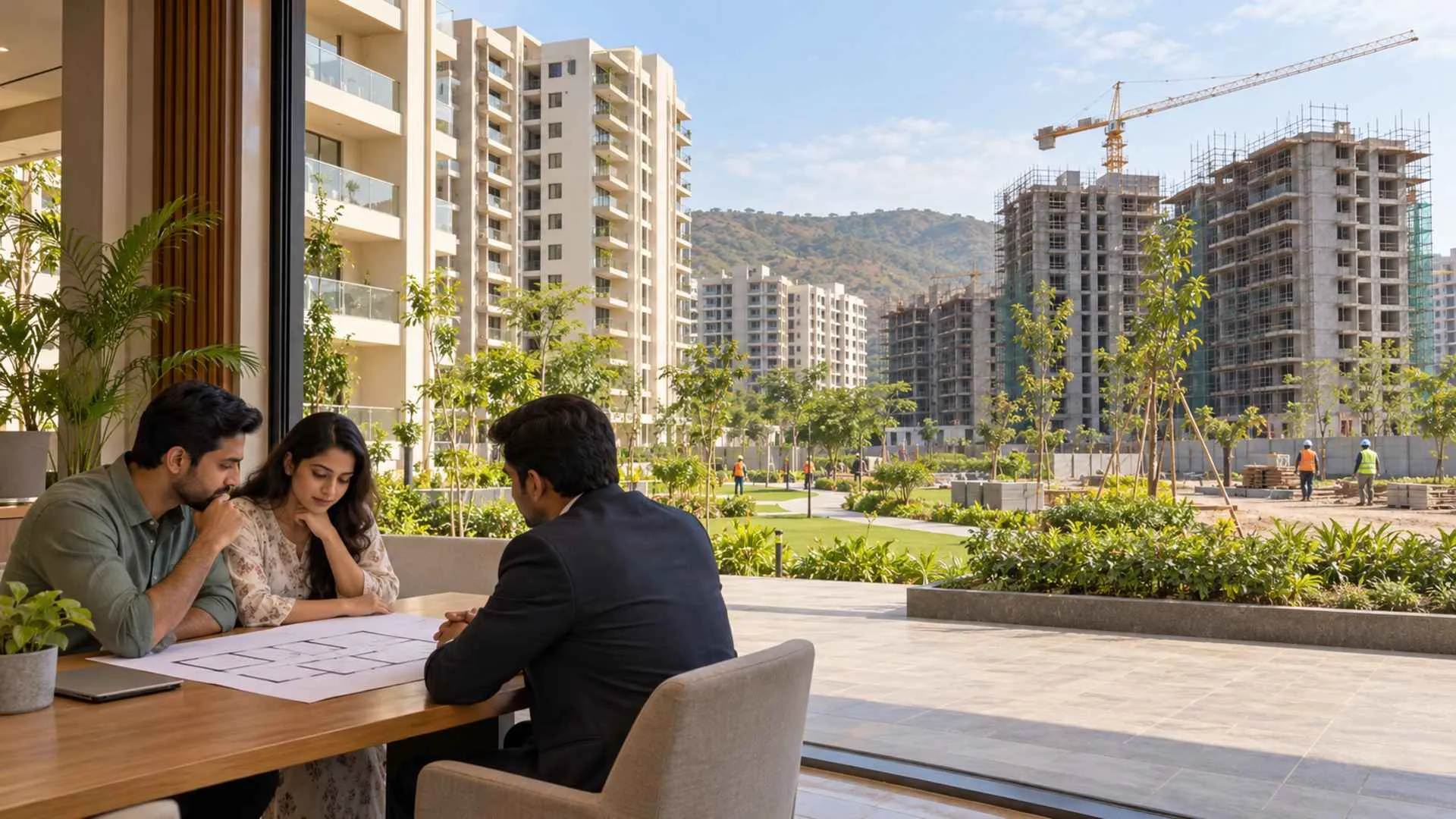
Pune witnessed the launch of thousands of homes during the quarter ended September 2026, compared to fewer purchases during the same period last year.
New launches shot up from the previous quarter, but sales were lower than the same period last year. First-time buyers looking to invest during the holiday season may wonder if the increase in supply means improved value for their money.
Possibly, but there is nuance to the numbers. While 47% more homes were launched this quarter than the previous one, the year-on-year sales decline shows a slower recovery than the overall market. Put another way: Pune’s housing market appears to be returning to normal after a challenging quarter, but only gradually.
More options are opening up, but whether they represent good value depends on the project, location and buyer’s budget.
Why did Pune housing launches jump 47% in Q3 2026 when sales are still falling?
Pune’s launches rose 47% against Q2 2026, while sales fell 6% against Q3 2025, two different comparisons. Supply recovered from a lower quarterly base but remained below last year. Earlier project planning and festive-season expectations help explain continued launches, while employment concerns, affordability and selective buying help explain weaker annual sales. The figures suggest an uneven recovery rather than proving a city-wide oversupply crisis.
The figures behind Pune’s supply-sales gap
NDTV Profit, citing ANAROCK Research, reported approximately 18,730 new launches in Pune during Q3 2026. The Times of India reported 15,690 home sales for the same period.
| Pune housing indicator | Reported figure | Comparison |
| Q3 2026 new launches | 18,730 homes | July–September |
| Q2 2026 new launches | 12,730 homes | Launches rose approximately 47% quarterly |
| Q3 2025 new launches | 19,375 homes | Launches fell approximately 3% annually |
| Q3 2026 housing sales | 15,690 homes | July–September |
| Q3 2025 housing sales | 16,620 homes | Sales fell approximately 6% annually |
| Launches minus sales in Q3 2026 | 3,040 homes | Calculation from the reported totals |
The important distinction is that new supply did not surge above last year’s level. It rebounded against the preceding quarter.
Sales also improved sequentially. BeyondWalls’ Q2 buyer guide reported 13,090 sales in April–June. Compared with that figure, Q3 sales were approximately 20% higher, based on a calculation using the reported totals.
Pune sold more homes than in Q2, but fewer than in Q3 last year. That is a recovery with unfinished business.
Why developers are launching while buyers remain cautious
Residential supply cannot respond instantly to a change in buyer sentiment. Land acquisition, approvals, design and financing precede a launch. A project reaching the market today may reflect decisions made when demand appeared stronger.
BeyondWalls makes this point in its Q2 analysis: development pipelines extend across quarters, creating a lag between planning and changing buyer confidence. The explanation helps make sense of Pune’s latest rebound, although it does not establish the reason behind every Q3 launch.
The festive season offers another commercial reason to prepare inventory. Developers need homes available when prospective purchasers begin comparing offers and visiting sites. However, launching a project is an expression of confidence; selling it requires the product and price to match actual demand.
The demand-side pressures are more specific. In its Pune report, The Times of India cited industry concerns about slower employment conditions and geopolitical uncertainty. It also reported that buyers were scrutinising location, connectivity, project quality and long-term value more carefully.
A buyer may like an apartment yet hesitate over the loan commitment. Another may reject a lower-priced home because its daily journey is difficult. These decisions can hold back sales even when the city has substantial underlying housing needs.
The implication for developers is clear: adding inventory alone will not close the gap. A practical floor plan, credible delivery schedule and realistic price have to work together.
The budget mix matters as much as the launch count
NDTV Profit reported that more than 51% of Pune’s Q3 supply was priced between ₹80 lakh and ₹1.5 crore.
That concentration matters for anyone searching for an affordable flat in Pune. A larger launch pipeline does not necessarily expand the selection within a ₹50 lakh or ₹60 lakh budget.
Nor does the ticket price reveal whether a property offers a comfortable 2 BHK or a compact 3 BHK. Buyers should examine carpet area, bedroom dimensions, storage, ventilation and the space left after furniture is installed.
A home that fits the loan eligibility calculation may still fail the household’s daily needs. Conversely, a simpler apartment with a useful layout and manageable commute can offer better value than a more elaborate development.
Does this make Pune a buyer’s market?
The figures create a reason to compare more carefully and negotiate more confidently. They do not establish equal bargaining power across Pune.
A developer with several similar units available may be more flexible than one selling a scarce configuration in a sought-after building. Construction stage, remaining inventory and the seller’s cash requirements can also influence negotiations.
Buyer leverage exists at the level of the deal, not automatically across the city.
For a new-launch flat in Pune, request a written quotation and compare it with similar homes nearby. Ask whether the seller can improve the total price, payment schedule, or included specifications.
Festive offers deserve the same scrutiny. A promotional benefit has value only when it reduces a cost you would otherwise incur. An expensive package of extras can distract from an inflated apartment price.
For an under-construction flat, include the cost of renting elsewhere until possession. For a ready-to-move flat, include repairs and any outstanding society charges. These comparisons make an apparent bargain easier to assess.
The 3,040-home gap is not Pune’s unsold inventory
Subtracting sales from launches produces a quarterly difference. It does not identify the number of newly launched homes left unsold, because buyers also purchase properties introduced in earlier periods.
It is also not the city’s total unsold housing stock. That requires the opening inventory and subsequent additions, sales and relevant adjustments.
The supplied reports checked do not establish a verified Pune-specific end-Q3 inventory total. Publishing one by treating the launch-sales difference as inventory would misrepresent the data.
The same discipline applies to QTS, or quarters to sell. This measures how many quarters it would take to absorb unsold stock at a stated sales pace. It is expressed in quarters, not months, and depends on the calculation method.
A city-wide absorption measure cannot tell buyers how quickly one building’s remaining apartments will sell.
Why ANAROCK and PropEquity tell different stories
Pune’s Q3 coverage contains another potential source of confusion: two research providers report different totals.
Synergy Infracon’s article, citing PropEquity, reports Pune sales of 17,860 homes, down 16% annually, within a nine-city assessment. ANAROCK’s seven-city reporting puts Pune at 15,690 sales and a 6% decline.
These figures should remain attached to their respective providers. Different coverage and tracking approaches can produce different estimates; they should not be averaged or combined into one series.
For the wider market, The Times of India’s seven-city review reports ANAROCK sales growth of 3% annually. Within that assessment, Hyderabad grew 15%, Bengaluru 12% and MMR 5%. Pune moved in the opposite direction.
India’s housing market is moving at different speeds. A national recovery does not guarantee stronger demand in every Pune neighbourhood.
What to watch before buying in Q4
The October interest-rate decision adds a development that occurred after the quarter ended.
The RBI’s October 7 statement confirms a 25-basis-point repo-rate increase to 5.5% and a shift to calibrated tightening. This cannot explain July–September sales, but it introduces a borrowing-cost consideration for Q4 purchasers.
Higher financing costs could restrain some buyers, although the eventual impact on Pune sales remains uncertain. Applicants should obtain updated lender quotations and test affordability beyond the initial EMI.
The supplied city-level reports also do not establish which Pune micro-markets contributed the most Q3 launches. Hinjewadi, Kharadi, Wakad, Mundhwa and Undri should therefore be assessed through specific projects rather than assumed rankings.
Similarly, names in a buyer’s shortlist, Luxton by Saheel, Shubh Developers’ projects, Mantra Melange or ARV New Town, require project-level verification. Their inclusion in a search does not prove a Q3 launch or a festive discount.
Before booking, compare:
- Total acquisition cost and usable carpet area.
- Current commute, water arrangements and access roads.
- Construction progress, possession commitments and project documentation.
- Available competing homes and written offer terms.
The Pune housing market Q3 2026 gives buyers more reason to ask questions and less reason to rush. Stronger quarterly activity is encouraging, but annual sales weakness keeps pricing and product suitability under scrutiny.
For developers, the festive season is an opportunity to convert attention into purchases. For buyers, it is an opportunity to choose carefully.

FAQs:
 RBI Raises Repo Rate to 5.5%: What Happens to Home Loans?