

How to Verify RERA Registration Before Buying Property in India
SHARE:
A glossy brochure can display a RERA number. A sales representative can call a project “RERA approved.” Neither statement is enough to establish that the registration is genuine, current, or applicable to the phase being sold.
Homebuyers must confirm the number on the relevant state RERA website and compare the portal record with the developer’s promises. A five-minute search can reveal an expired completion date, missing quarterly updates, changed plans, or even a registration belonging to another project.
RERA registration creates a disclosure and accountability framework, but it is not a government guarantee of construction quality, title clearance, timely possession, or investment returns.
How Do You Verify RERA Registration Before Buying Property?
Visit the official RERA website of the state where the project is located, open the registered-project search, and enter the project name, promoter name, or registration number. Match the project address, phase, promoter, carpet area, approved plans and completion date with the brochure and agreement. Then check the registration status, quarterly updates, complaints, extensions and uploaded documents before paying a booking amount.
This is the essential answer to “property RERA registered hai ya nahi kaise check karein?” The verification must happen on an official government portal, not only on a developer website, property portal, or social-media advertisement.
MahaRERA Verification: A Step-by-Step Guide for Buyers
For projects in Mumbai, Pune, Thane, or Nashik, begin at the current MahaRERA website. The older maharera.mahaonline.gov.in domain may still appear in legacy pages or redirect to specific services, but buyers should start from the authority’s official homepage.
Follow these steps:
- Open the Registered Real Estate Projects or project-search section.
- Search using the exact MahaRERA number, project name, promoter or PIN code.
- Select the correct project and phase from the results.
- Open “View Details” and download the registration certificate.
- Compare every important field with the brochure, cost sheet and draft agreement.
- Review extensions, quarterly progress reports and any non-compliance classification.
- Save copies or screenshots of the records available on the date of verification.
The official MahaRERA project-search page allows searches across registered and revoked projects. It also links to the certificate, original application, project details and QR code where available.
A guide published by Madhuvan Group similarly recommends reviewing approvals, submitted documents, timelines and project commitments and retaining copies before finalising a purchase.
Do not stop when the project name appears. Confirm that the exact tower or phase offered to you is covered by that registration.
What Is a RERA Number, and How Do You Read It?
A RERA registration number is the unique identifier issued to a registered project by a state or Union Territory authority. Advertisements for covered projects should carry the applicable project registration number.
Maharashtra numbers commonly begin with “P,” followed by digits. The prefix varies by jurisdiction. For example, official MahaRERA records show P521 for Pune district, P518 for Mumbai Suburban and P519 for Mumbai City projects. P519 is therefore not a Pune prefix, and P518 should not be described as covering every Mumbai property.
A valid-looking format alone proves nothing. Search the complete number and check whether the resulting project name, promoter and location match the property being marketed.
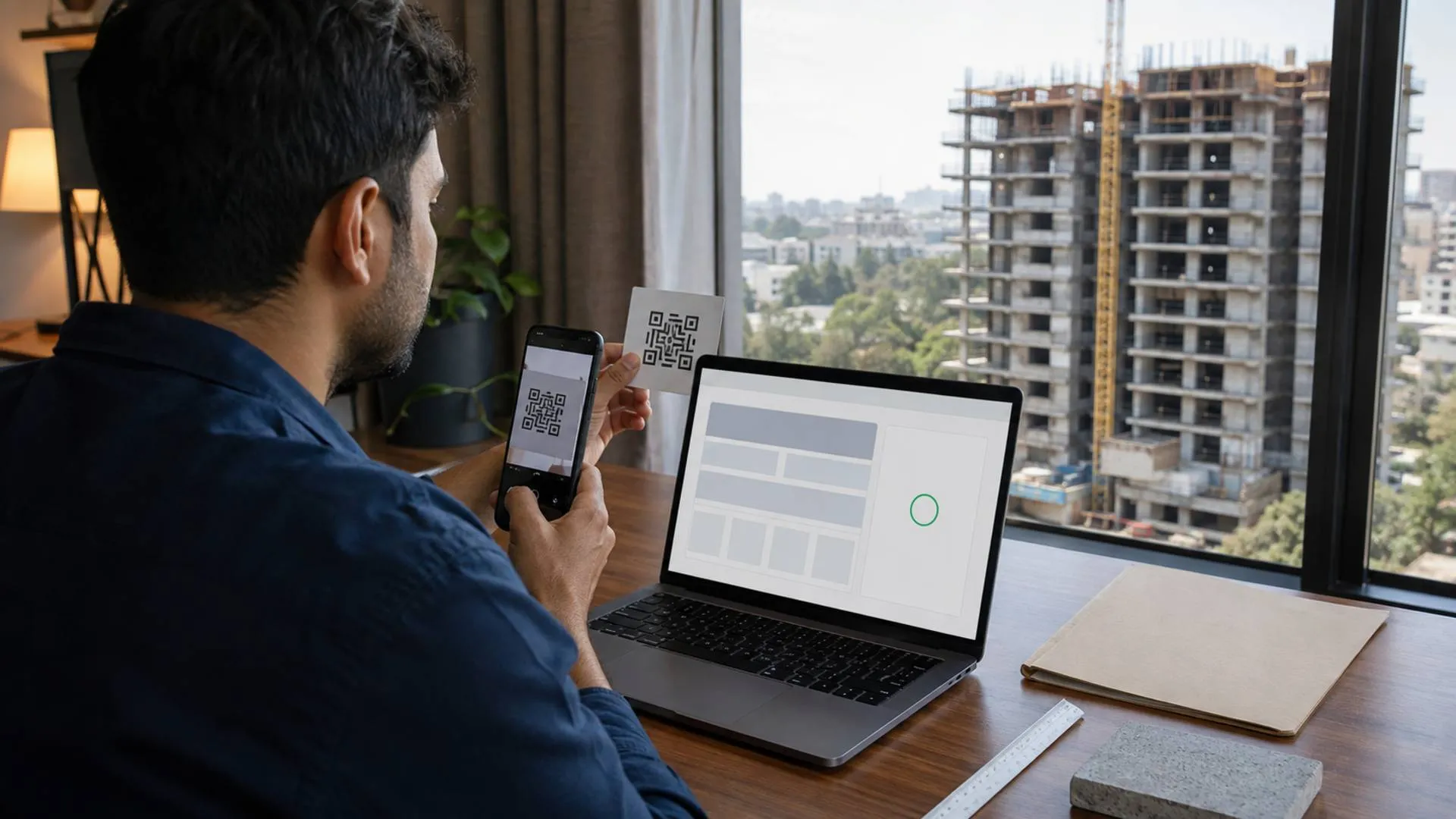
MahaRERA also requires promoters to display a project QR code in specified advertisements. Scanning it may accelerate verification, but buyers should still examine the full portal record.
Which Details Should Match Before You Book?
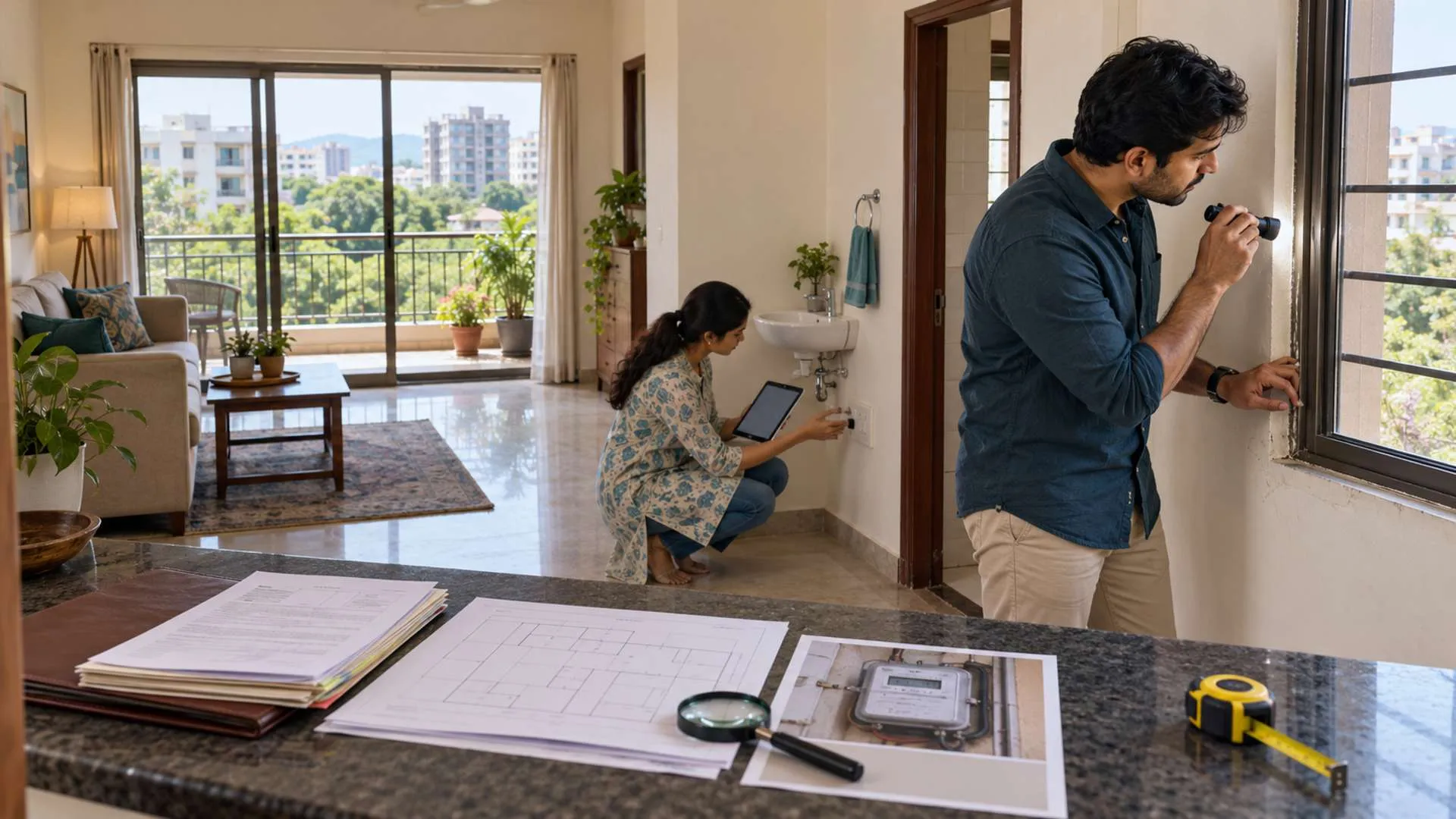
A reliable RERA registration check buyer guide for India in 2026 goes beyond the registration certificate. Compare the following:
- Promoter’s legal name and registered address
- Project name, phase, tower and survey or plot details
- Sanctioned layout and building plans
- Number and type of apartments
- RERA carpet area of the selected unit
- Declared project completion date
- Approvals and commencement permissions uploaded
- Encumbrances, litigations and disclosed land interests
- Real estate agents authorised for the project
- Amenities and common areas promised to buyers
The portal’s carpet area should match the draft agreement and cost sheet. If the salesperson quotes only built-up or saleable area, request the RERA carpet area in writing.
Nirman Developers advises Pune buyers to verify the registration number, possession timeline, sanctioned plans and developer disclosures rather than treating registration as a formality.
Also search for the promoter’s other projects. Their completion records, extension history and pending complaints may reveal more than a marketing presentation.
What Do Active, Lapsed, Revoked and Deregistered Mean?
A project’s status can materially alter buyer risk.
An active or registered project has a current registration, but buyers must still examine updates and approvals. A renewed or extended project has received additional time; check why the extension was required and whether construction now matches the revised schedule.
A lapsed project has crossed its registered completion date without a valid extension reflected on the portal. It should not automatically be treated as safe merely because it once had a number.
A revoked project has had its registration revoked by the authority. An abeyance or non-compliance listing may indicate issues such as missing quarterly progress reports, bank-account compliance concerns, or another regulatory order. A deregistered or withdrawn project is no longer proceeding under its original registration and requires close scrutiny.
If a project shows a lapsed, revoked, abeyance, or deregistered status, do not pay simply because the developer promises that renewal is “under process.” Seek documentary clarification and independent legal advice.
Quarterly Reports Can Expose the Real Construction Story
Registration is only the beginning. The MahaRERA guidance for promoters states that promoters must provide quarterly, annual and completion updates.
Quarterly progress reports can show construction status, bookings, approvals and other project developments. Compare them with site photographs and physical progress. A project claiming rapid construction while carrying outdated portal information deserves further questioning.
Under Section 4 of the RERA Act, 70% of amounts realised from allottees must be deposited in a separate scheduled-bank account to cover land and construction costs, with withdrawals linked to the percentage of completion and supported by professional certification.
Homebuyers do not ordinarily receive direct access to bank statements. They can, however, review the financial and progress disclosures made available by the authority and ask the promoter for clarification where updates are inconsistent.
Form A contains the promoter’s application details. Form B is the promoter’s declaration or affidavit; it is not the chartered accountant’s financial certificate. Buyers should avoid online guides that confuse these forms.
Can a Builder Take Money Before RERA Registration?
Section 3 of the Real Estate (Regulation and Development) Act, 2016 generally prohibits a promoter from advertising, marketing, booking, selling or inviting purchases in a project that requires registration until it is registered.
The Act contains exemptions, including projects where the proposed land area does not exceed 500 square metres or the number of apartments does not exceed eight, inclusive of all phases. State-specific rules and the project’s facts must still be examined.
For a covered, unregistered project, a demand for an expression-of-interest amount, token or booking payment is a major warning sign. Ask for the registration number and verify it independently.
Section 13 creates a separate protection: a promoter cannot accept more than 10% of the apartment, plot or building cost as an advance or application fee without first entering into a written agreement for sale and registering it under applicable law.
The RERA Filing checklist reinforces the need to inspect title-related information, sanctioned plans, carpet area, specifications and payment terms before booking.
How to Check RERA Registration Outside Maharashtra
RERA is administered through state and Union Territory authorities. Use the authority responsible for the project’s physical location:
- Karnataka RERA for Bengaluru projects
- UP RERA for Noida and other projects in Uttar Pradesh
- Haryana RERA for Gurugram projects
- Tamil Nadu RERA for Chennai projects
- Delhi RERA for properties within the National Capital Territory
Gurugram is in Haryana, so it should not be searched on UP RERA. A developer’s head office location also does not decide the regulator; the project location does.
NRIs can perform the same online verification from abroad. They should download all records and appoint an independent Indian property lawyer before signing through a power of attorney or transferring funds.
What Should You Do If the Registration Cannot Be Verified?
First, recheck spelling, promoter name, phase and number. If the project remains missing, ask the promoter to provide the registration certificate and applicable exemption in writing.
For suspected non-registration in Maharashtra, use MahaRERA’s Inform Non-Registration facility. For disputes involving a registered project, buyers can use the authority’s complaint mechanism and review existing project-wise or promoter-wise complaints. Filing charges and timelines should be confirmed on the official portal when submitting because procedures can change.
Do not assume every complaint proves wrongdoing; read the orders and current status. Equally, the absence of complaints does not replace title and approval due diligence.
The Final Buyer Check Before Paying
RERA has made project information easier to access, but the protection works only when buyers use it. Verify the registration, tower, status, completion date, carpet area, plans, quarterly updates and promoter history. Then have the title documents and agreement reviewed independently.
Adani Realty’s MahaRERA guide also advises buyers to search by project or promoter and review the location, project type and possession date.
A RERA number should begin your investigation; not end it.
Before paying any token amount, open the official portal yourself and save the project record. If the salesperson’s promise is absent from the portal, sanctioned plan, or draft agreement, treat it as unverified.
Planning to book a home? Complete the RERA verification, obtain an independent legal review and insist that every material promise appears in the registered agreement for sale.