


India’s ₹10,000 Crore Bet on Student Housing
India’s ₹10,000 Crore Student Housing Investment Boom
SHARE:
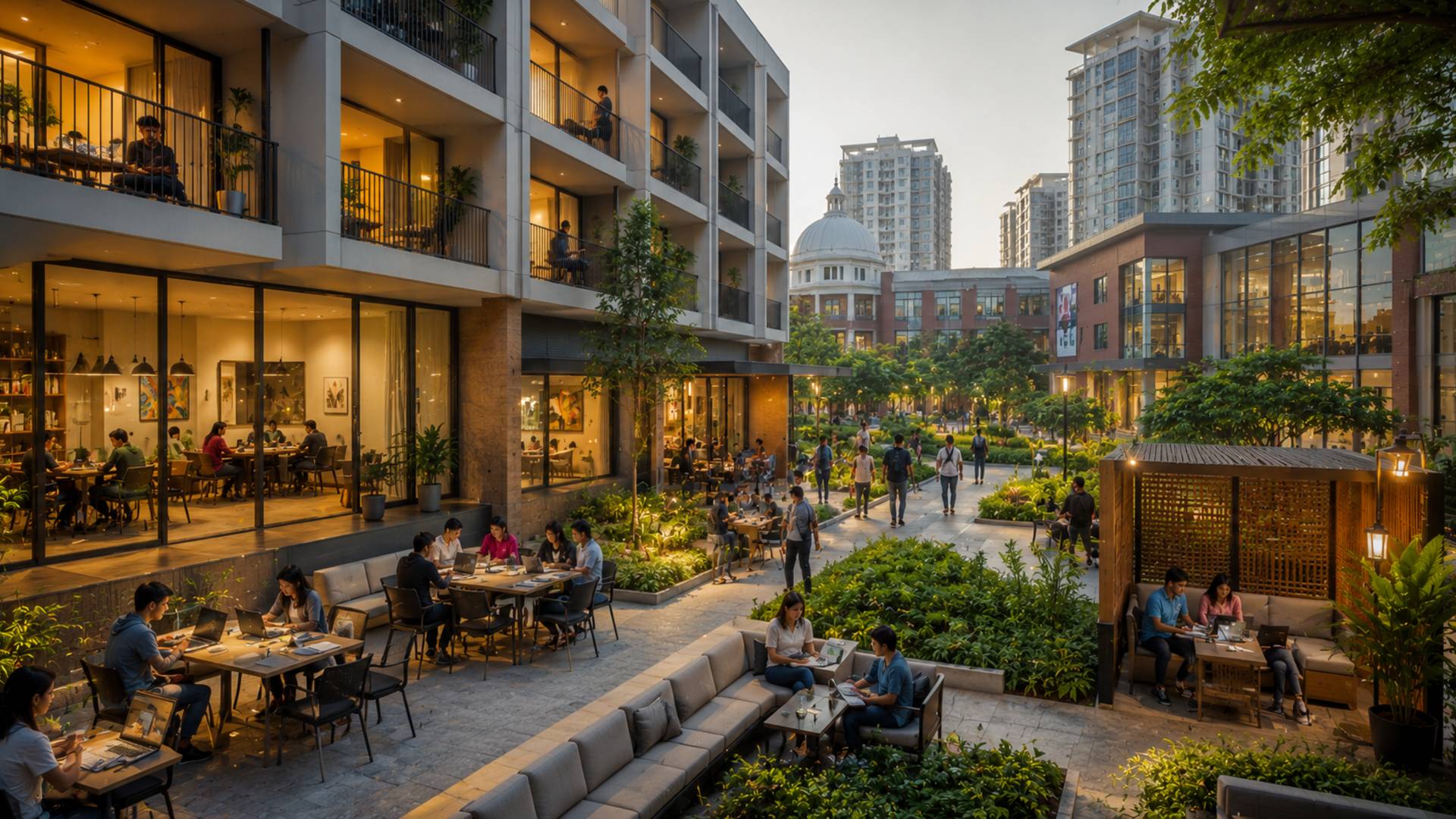
Why is India’s student housing suddenly attracting ₹10,000 crore in investment?
India’s student housing boom is being driven by an 8 million-bed shortage, rising student migration, foreign universities entering India, and the rapid growth of PBSA (Purpose-Built Student Accommodation). With less than 5% of demand currently served by organised operators, investors see student housing as one of the country’s fastest-growing real estate asset classes.
Five years ago, student housing was a non-issue in Indian real estate. India student housing boom ₹10000 crore investment 2026 has become a major story for institutional investors and one of the hottest investment themes in 2026.
The reason is simple: demand has exploded and supply is critically low.
According to CBRE, the India student accommodation market growth 2026 is being driven by a shortage of nearly 8 million beds, making investment opportunity in student housing India 8 million bed gap one of the largest untapped segments in the country. India already has more than 43 million students, and estimates say the figure could be 92 million by 2036.
The PBSA Revolution Has Begun
At the centre of this shift is PBSA purpose built student accommodation India 2026.
Unlike traditional hostels and PGs, PBSAs offer professionally managed living spaces with security, housekeeping, study areas, community events, gyms, cafes and digital services. What began as a niche concept has now evolved into India student housing new asset class institutional capital is actively pursuing.
Industry leaders such as Stanza Living, Zolo, NestAway, Your-Space, Placio and Vita Student are expanding aggressively across major education hubs.
According to Economic Times Realty, India PBSA has less than 5% demand met massive gap by 2026, highlighting the enormous room for organised operators to grow.
Why Investors Are Rushing In
The answer to “why institutional investors are betting on India PBSA student housing market” lies in economics.
Student housing rentals are witnessing 10-15% YoY growth in India, supported by consistent occupancy and recurring demand from students. Unlike residential real estate, which can experience cyclical slowdowns, student accommodation benefits from annual academic intake cycles.
Recent reports cited by The Times of India show Indian real estate attracted over $1.2 billion in private equity investments in early 2026, with alternative assets such as student housing increasingly entering institutional portfolios.
For many investors asking, “Is student housing a better real estate investment than residential in India 2026?”, the combination of strong yields, high occupancy and limited organised supply makes the sector difficult to ignore.

Foreign Universities Add a New Growth Layer
The next catalyst could be international education.
Under NEP 2020, India has opened the doors for global institutions. Universities such as Coventry University, University of Liverpool, and Western Sydney University have announced India plans, creating fresh demand for quality accommodation.
This directly answers the growing query: “Will foreign universities opening in India drive more student housing demand?”
The answer appears to be yes.
As international campuses emerge, developers are expected to create integrated education districts and university townships. Analysts estimate a broader $113 billion campus opportunity, further strengthening the student housing ecosystem.
From Basic PGs to Luxury Living
Perhaps the biggest surprise is the premiumisation trend.
A recent Times of India report highlighted luxury student residences featuring wellness centres, co-working lounges, gaming zones, juice bars and even jacuzzi facilities. Meanwhile, Outlook Business reported rapid growth plans from operators targeting premium student segments.
The result is a market that increasingly resembles hospitality rather than traditional hostel accommodation.
Cities such as Pune, Bengaluru, Hyderabad, Chennai, and Delhi NCR have emerged as the country’s most active student housing corridors, driven by university clusters and employment opportunities.
A New Asset Class Comes of Age
The question is no longer “what is PBSA and why is it India fastest growing real estate asset class?”
The real question is how soon supply can catch up.
India’s student housing boom is turning an asset class that was almost non-existent five years ago into one of real estate’s most compelling growth stories, driven by an 8-million-bed gap, increasing student mobility, foreign university campuses and institutional capital flooding into the sector.
The race is already underway for developers, operators and investors. The next decade will not be about office towers or luxury apartments, but about the buildings that will house India’s future workforce.
Looking for more data-driven insights on emerging real estate opportunities? Follow RealtyConnect for the latest trends, investment stories and sector deep-dives shaping India’s property landscape.