Old Warehouses, New Standards: Why Developers Are Pursuing Infill Logistics
Infill Logistics in India 2026: Why Developers Are Investing
SHARE:
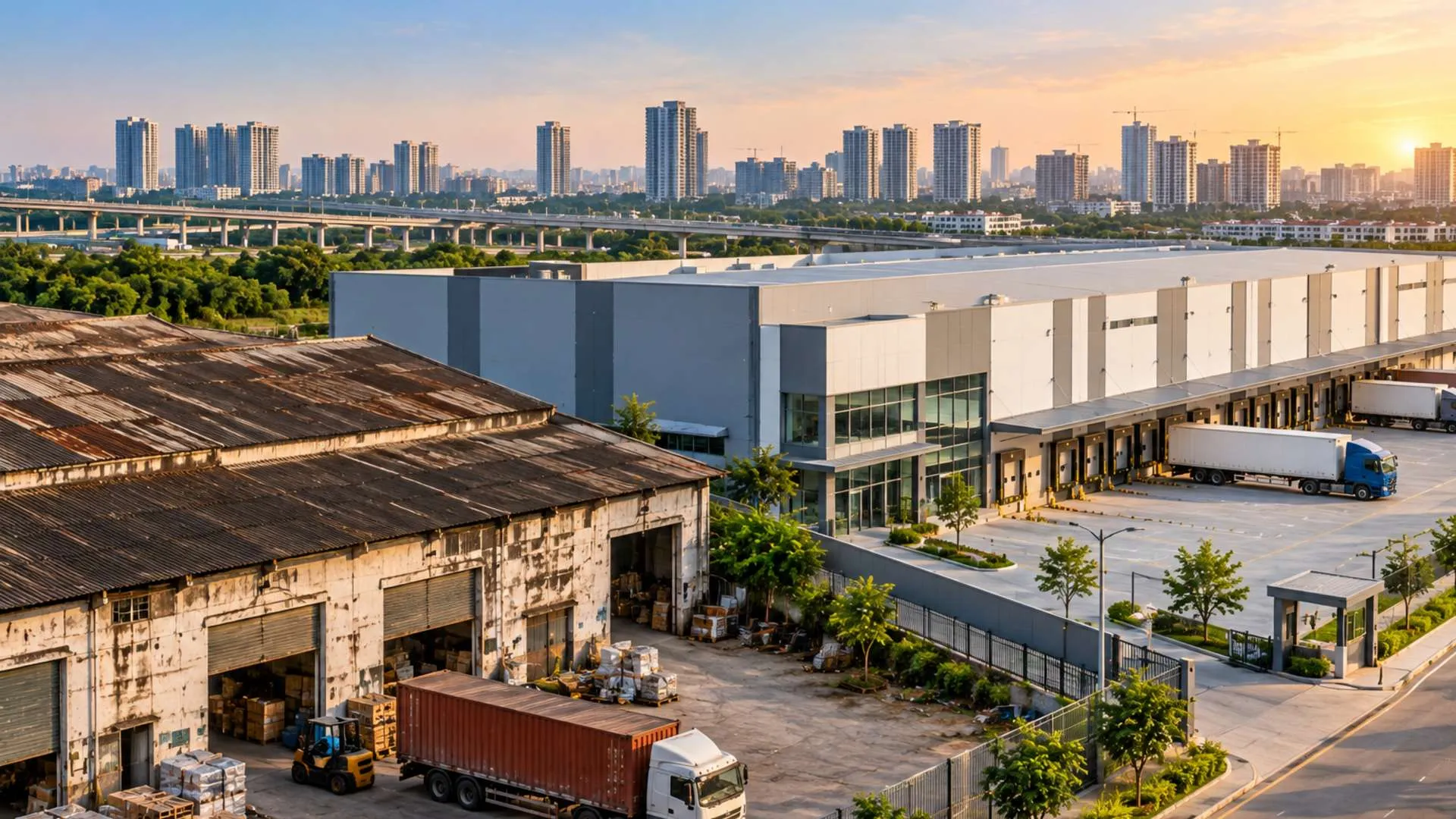
An ageing warehouse can have an advantage that a new building struggles to replicate: an address close to its customers.
Its roof may need work. Its electrical capacity may be inadequate. Yet the surrounding city has grown, placing households, shops and delivery routes within reach. For a logistics developer, that combination creates a question worth investigating: can an outdated property become a modern distribution facility?
That is the appeal of infill logistics in India in 2026. Developers are assessing established urban locations where better buildings and professional management could meet changing occupier requirements.
The challenge is substantial. A valuable location does not automatically make an old warehouse suitable for modern operations.
The opportunity lies in combining a hard-to-replace address with a facility that tenants can actually use.
Why are developers turning old urban warehouses into new logistics facilities in India?
Developers are pursuing urban warehouse redevelopment because proximity to consumers can support faster deliveries and more efficient distribution. Older sites may offer established locations where new land is difficult to assemble. Upgrading power, loading facilities, safety, technology and environmental performance can improve their usefulness, provided redevelopment costs and access constraints remain commercially workable.
Why the Address Is Becoming More Valuable
A warehouse is part of a transport network. Its usefulness depends on where goods arrive from, where they go next and how reliably they move.
Transport Corporation of India’s warehousing analysis describes demand for facilities tailored to different industries, supported by automation, warehouse management systems and connections to urban and industrial centres.
For last-mile delivery in India, distance to customers can therefore matter alongside the rent per square foot.
Alpaca Real Estate’s infill research makes this argument in the US context: transportation can represent a much larger operating expense than facility leasing. Its American cost ratios and rental-growth figures should not be treated as Indian benchmarks, but the operational question travels well: can a better location improve the overall distribution cost?
Quick commerce adds urgency to that question. Puravankara’s logistics outlook describes the need for distribution points closer to customers as delivery expectations become faster.
However, a neighbourhood dark store and a larger urban replenishment warehouse perform different jobs. A dark store prepares local orders; another facility may replenish several such locations.
Quick commerce changes the warehouse network, rather than turning every warehouse into a ten-minute delivery outlet.
The Horizon–CWC Example: Established Sites, Institutional Development
One example predates the current year.
In its September 2, 2024 announcement, Horizon Industrial Parks, owned and managed by Blackstone Real Estate funds, said it had been selected to manage 13 Central Warehousing Corporation last-mile logistics assets.
The announcement described a 45-year partnership, approximately 2.4 million sq ft of development potential and an expected investment commitment of around ₹700 crore. Most assets were concentrated across NCR, Chennai, Mumbai, Pune and Bengaluru, near residential areas and city centres.
This is a redevelopment proposition built around existing locations. It should not be presented as a newly announced 2026 transaction or evidence that every facility has already been completed.
For developers and public-sector landowners, the model illustrates how established assets can attract capital and operating expertise. Its performance ultimately depends on delivery, leasing and the usefulness of each location.
A national portfolio also requires local decisions. An access solution suitable for one city may not work at another site.
New Standards Mean More Than a Fresh Roof
Modernisation must begin with the intended tenant.
Link Logistics’ guide to modern warehouse features identifies clear height, electrical capacity, dock arrangements, column spacing and technology infrastructure as important considerations. It also explains that some structural limitations cannot be resolved through ordinary tenant improvements. Its specifications reflect North American operations, rather than a universal Indian standard.
For an Indian urban redevelopment, the assessment should connect the building to its proposed operation.
| Existing-site issue | Question for the developer |
| Limited electrical capacity | Can the site support the intended equipment and charging requirements? |
| Restricted loading space | Can vehicles enter, manoeuvre and unload efficiently? |
| Unsuitable floors or structure | What strengthening or replacement is required? |
| Inflexible internal layout | Can goods, staff and equipment move safely? |
| Ageing services | What must be upgraded before occupation? |
This framework helps distinguish a feasible retrofit from a site requiring substantial reconstruction.
CBRE Investment Management’s modern-logistics analysis likewise links building performance to occupier productivity, power requirements, automation and sustainability. Its international examples explain design considerations; they are not India-specific rental forecasts.
The commercial test is straightforward: what can the upgraded property enable that its existing condition cannot?
Urban Infill and Peripheral Logistics Parks Have Different Roles
In-city logistics facilities do not remove the need for large peripheral parks. They serve different points in the supply chain.
An urban facility may prioritise proximity to delivery destinations. A regional or manufacturing-linked park may require larger plots, expansion space and efficient movement between factories and distribution networks.
Welspun One’s projects illustrate why these categories need care.
Its earlier Thane announcement described a warehousing-led mixed-use development with an outlay of approximately ₹600 crore, reported by Moneycontrol. The report dates to 2023; it should not be used alone to confirm current completion or specifications.
Separately, Welspun One’s December 2025 Talegaon announcement outlined a planned ₹550 crore, approximately 1.2 million sq ft development on 46 acres. The company explicitly described it as a first-mile logistics asset serving movement from factories into distribution networks.
Calling Talegaon an urban infill project would blur that distinction.
For anyone comparing warehouse property near Mumbai and Pune, identify the facility’s job before comparing its rent, size or investment potential.
Sustainability Helps Protect Competitiveness
Environmental performance is becoming part of the warehouse specification.
CIJ. World’s India analysis highlights energy and water efficiency, renewable power and operating expenditure. Crucially, it finds insufficient evidence for a consistent nationwide rental premium simply because a warehouse holds environmental certification.
That makes the investment argument more practical. A more efficient building may help an occupier manage expenses and meet procurement requirements. Its value should be assessed through measurable performance.
For an old warehouse, investigate the cost and feasibility of those upgrades. Installing solar equipment, for example, requires an appropriate roof and technical assessment.
A green label cannot compensate for poor access, unsuitable space or an unworkable redevelopment budget.
Where the Investment Case Can Break Down
Infill logistics can attract institutional capital while remaining difficult to execute.
Before acquiring or committing land, assess:
- Title or concession rights, permitted use and relevant approvals.
- Structural condition, site history and any remediation requirements.
- Vehicle access, operating restrictions and neighbourhood impacts.
- Upgrade expenditure, construction downtime and realistic leasing assumptions.
These are investigation priorities, not findings about any named project.
A useful financial comparison includes the complete development cost, achievable net income and the expense of keeping the property competitive. Compare retrofit and reconstruction options rather than assuming reuse is always cheaper.
The supplied references do not establish a standard return for infill logistics assets in India. Nor do they prove that neighbouring residential prices automatically rise after warehouse redevelopment.
For landowners, becoming a warehouse developer also means accepting development and leasing responsibilities. An experienced partner may contribute expertise, but partnership terms still require careful assessment.
Infill logistics is attracting developers because an old address can support a new operating model. Success depends on turning that location advantage into dependable performance.

FAQs:
 India’s Office Leasing Hits Records, Yet Occupancy Growth Slows: Why?