Are Entire Luxury Towers India’s Next Big UHNI Trophy Asset?
₹711 Crore Mumbai Tower Deal: India’s UHNI Luxury Trend
SHARE:
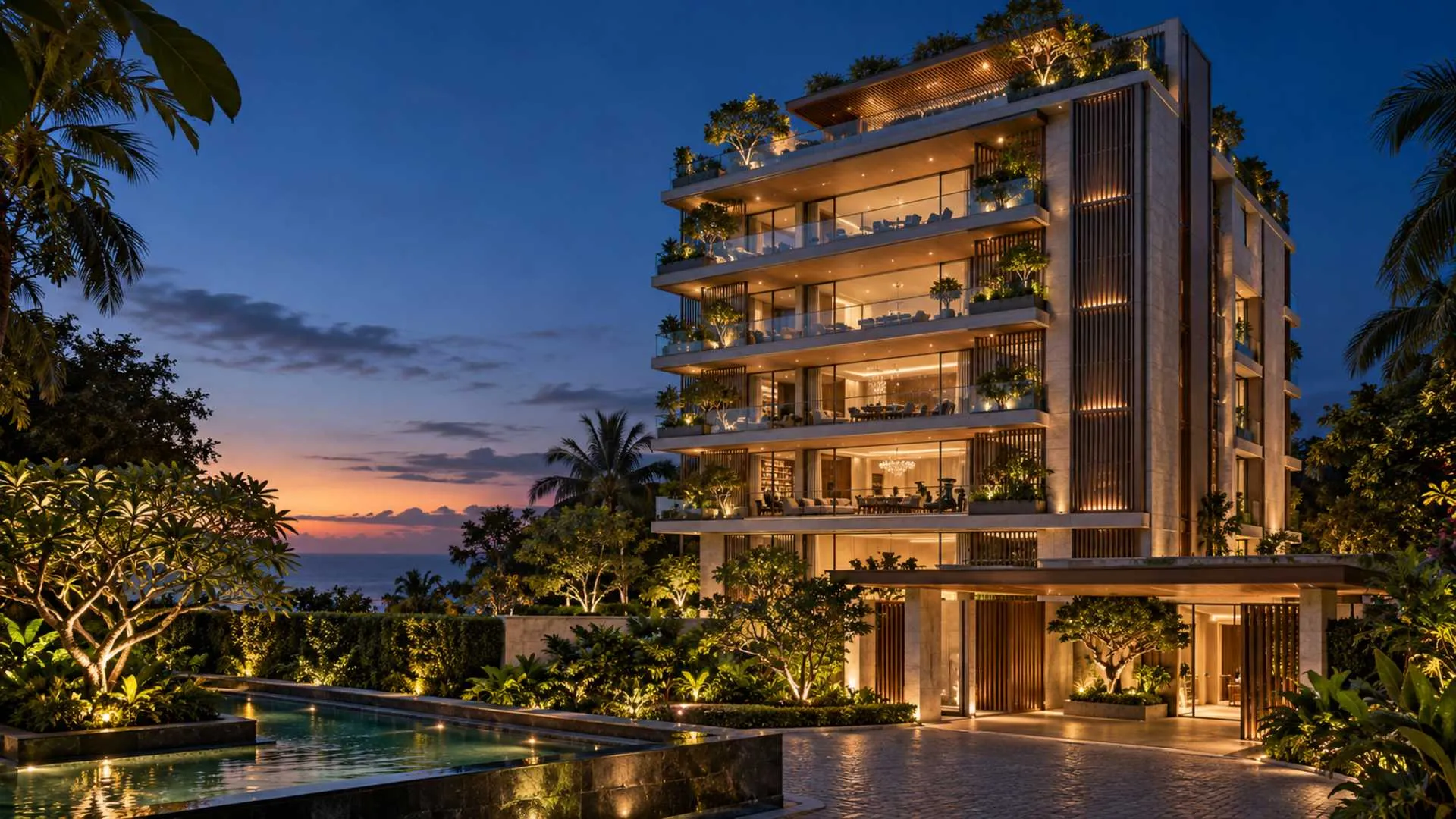
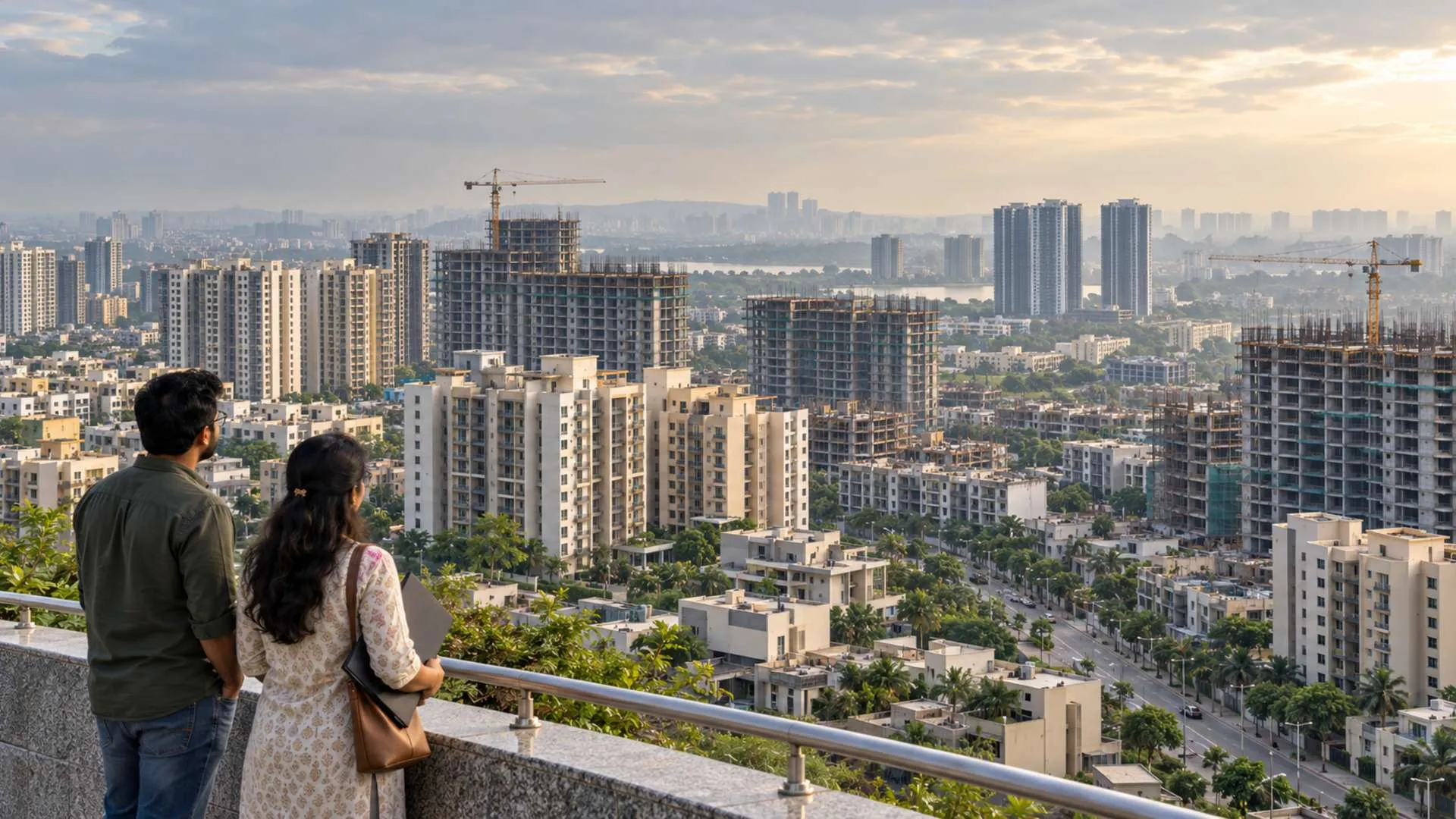
For years, the penthouse represented the summit of Indian luxury housing. Then came the private flor, the duplex and the purchase of adjacent apartments for a multi-generational family. Mumbai has now produced an even more dramatic trophy asset: an entire residential tower intended for one buyer.
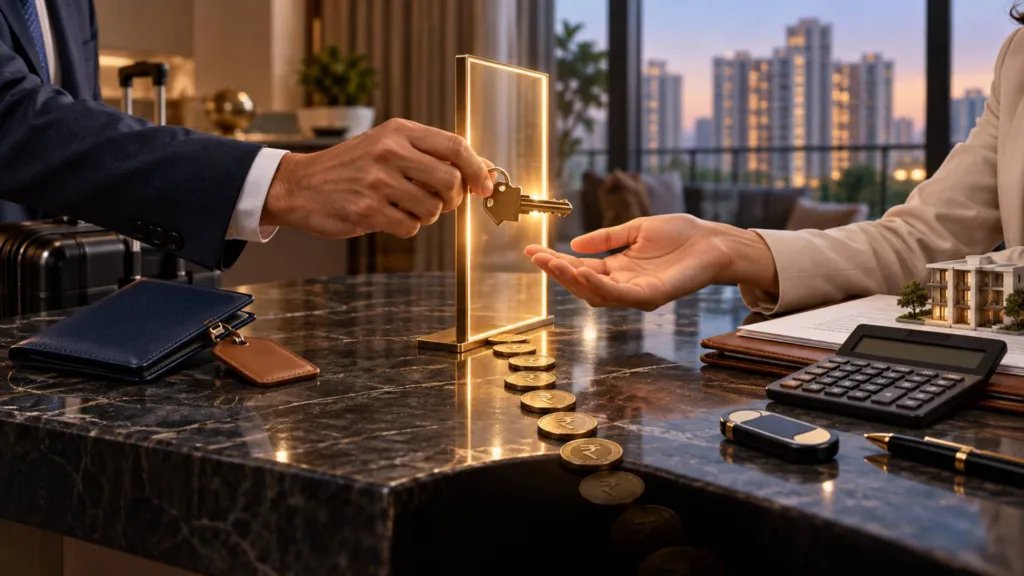
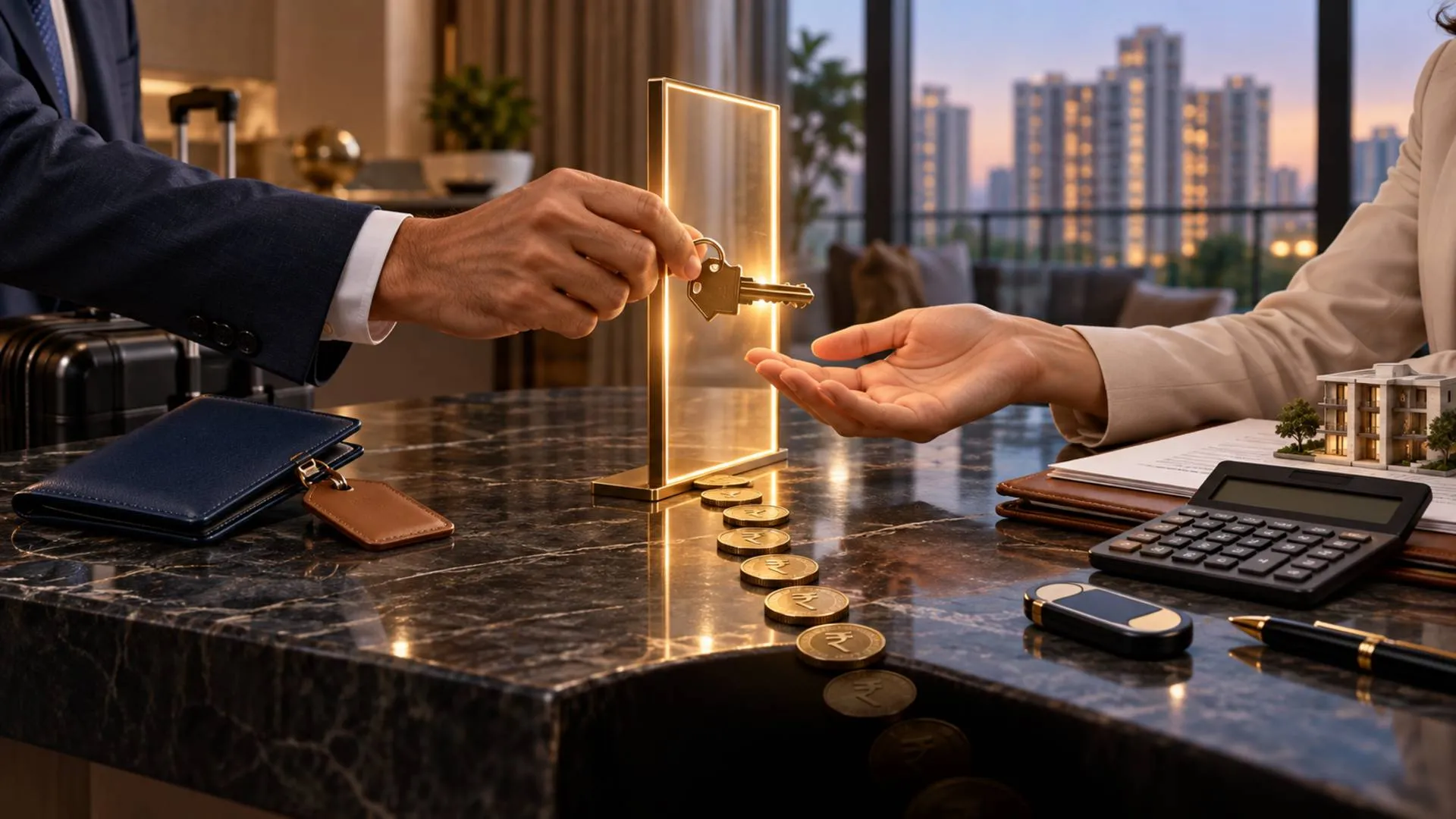
Embassy Developments has signed a memorandum of understanding to sell a complete tower at Embassy Terazza in Juhu to Dinesh Thakkar, founder, chairman and managing director of Angel One, for approximately ₹711 crore, including taxes, registration and associated transaction costs. Embassy has described it as India’s largest single residential unit transaction.
The numbers are designed to stop the scroll. The G+7 tower has approximately 63,000 sq ft of RERA carpet area and forms part of a five-tower development on Juhu Tara Road. At a rough transaction-level calculation, the deal works out near ₹1.13 lakh per sq ft of carpet area, although the all-inclusive price and bespoke nature of the asset make ordinary apartment comparisons imperfect.
The purchase raises an irresistible question for real estate India 2026: are entire towers replacing penthouses as the ultimate UHNI property India status symbol, or is this a spectacular one-off?
Is buying an entire luxury tower a new UHNI trend in India?
Buying an entire luxury tower is an emerging ultra-luxury format in India, but it is not yet a broad market trend. The ₹711 crore Embassy Terazza transaction shows that a small group of buyers may pay for exceptional privacy, control and multi-generational space. A more established pattern is wealthy families buying multiple apartments, adjacent units or entire floors in one project. Full-tower purchases will likely remain rare because they require extraordinary wealth, suitable low-density inventory and complex long-term management.
Why one buyer wanted more than a penthouse
Hindustan Times reported that India’s wealthiest buyers are looking beyond individual trophy apartments toward larger, more exclusive formats. The Economic Times has separately documented wealthy Indians buying multiple homes in the same project, often to keep several generations together while preserving independence.
An entire tower extends that logic. It can provide privacy from the lobby upward, control over how family members occupy different floors, more freedom for bespoke interiors and a stronger sense of physical security. It can also function as a legacy home designed to remain within a family rather than as a conventional investment property purchase in Mumbai.
The Embassy Terazza transaction appears to be driven by precisely this combination of scale, privacy and personal use. Reports say the residence will be customised for the buyer’s family and named “Angelus”. The project’s low-density format, sea and city views and Juhu location make it closer to a vertical private estate than a stack of unrelated flats.
The tower is not simply a bigger luxury flat in Mumbai. Its value proposition is ownership of the entire residential experience.
A trend, but not necessarily the trend headlines suggest
The ₹711 crore deal is compelling evidence of what is possible at the top of the market. It is not evidence that dozens of Indian UHNIs are about to buy whole towers.
The more meaningful trend is the consolidation of space. Buyers are acquiring adjacent units, whole floors or several residences in one development. The Economic Times reported that multi-home purchases allow wealthy families to remain close while retaining privacy. Another reported transaction involved a Delhi-NCR industrialist acquiring four apartments at DLF’s The Dahlias for around ₹380 crore with plans to combine them.
Whole-tower buying is the extreme edge of this behaviour. It requires a developer willing to sell a suitable building to one purchaser, a low-density design that can be adapted to private use and a buyer able to accept enormous acquisition and carrying costs. Most luxury projects are financed and planned around multiple sales, making an exclusive sale commercially unusual.
There is also a definitional problem. “UHNI” does not have one universal rupee threshold. Global wealth reports frequently use investable assets or net worth expressed in US dollars, while Indian firms may apply different cut-offs. The commonly circulated ₹50 crore-plus description is therefore a convenient shorthand, not a statutory qualification.
How much wealth does a buyer actually need?
Salary alone is the wrong measure for a ₹20 crore, ₹100 crore or ₹711 crore home. At this level, buyers are usually evaluated through total net worth, business income, liquidity, investment assets, existing debt and the proportion of wealth concentrated in one property.
A buyer considering a ₹20–₹35 crore ultra-luxury apartment Mumbai purchase would normally need far more than the purchase price in total wealth if the acquisition is to remain financially comfortable. Stamp duty, registration, GST where applicable, interiors, parking, staffing, insurance, security and annual maintenance can add substantially to the commitment.
Financing may be available against high income or assets, but taking the maximum possible loan is not automatically sensible. For a trophy home that does not generate meaningful cash flow, debt servicing must be supported by income and liquid wealth outside the property.
For an entire tower, the arithmetic enters a different universe. Even a billionaire must consider the opportunity cost of placing hundreds of crores in a single, illiquid asset. The realistic affordability test is not “Can I buy it?” but “Can I own, operate and hold it without the property controlling my balance sheet?”
What is the real price of ultra-luxury Mumbai?
There is no single ultra-luxury apartment price range Mumbai 2026 buyers can apply across the city. Premium 3BHK and 4BHK homes may begin in the ₹10 crore-plus bracket in some developments, while rare sea-facing apartments, duplexes, penthouses and private floors can cross ₹20–₹35 crore and extend into triple-digit crore transactions.
Location is only one variable. The developer, RERA carpet area, frontage, view, floor, density, privacy, parking, services and ability to customise can change value dramatically. A luxury flat in Mumbai quoted below ₹1 lakh per sq ft is not automatically inferior to a deal above that mark, because the calculation basis and asset format may differ.
The Embassy Terazza benchmark is particularly difficult to generalise. Its ₹711 crore figure reportedly includes taxes and transaction costs and covers an entire customisable tower. It should not be treated as the prevailing Juhu apartment rate.
Embassy Terazza and Godrej Marine Lines reveal different things
The two announcements have appeared close together and both signal confidence in Mumbai luxury real estate, but they are fundamentally different.
Embassy Terazza is a specific MoU to sell an entire Juhu tower to one buyer. Godrej Properties’ Marine Lines announcement concerns a 2.5-acre luxury housing development with estimated revenue potential of around ₹6,000 crore. Godrej has entered into a development agreement involving MICL and Shreepati Group; there is no announcement that one UHNI is buying the whole project or tower.
What the Marine Lines development does show is continued developer appetite for South Mumbai’s scarcity-led premium market. Along with high-value activity in Worli, Malabar Hill and Juhu, it suggests that branded developers believe demand exists for larger, highly serviced homes in locations with limited new supply.
Is an entire tower a good investment?
As a pure income investment, an entire luxury tower is difficult to justify through rent alone. Gross rental yields in ultra-premium markets are often modest relative to the capital committed, while maintenance, staffing and vacancy can reduce net income further. No fixed 2%–3% yield or 15%–20% appreciation should be assumed without property-specific evidence.
The case is instead built around personal utility, privacy, scarcity, wealth preservation and long-term appreciation. Those benefits can be real, but liquidity risk is equally real. The buyer pool for a ₹711 crore customised residence is exceptionally small, and resale may take time even in a strong market.
Owning every floor also concentrates exposure in one building and one micro-market. Customisation that creates value for the original family may not appeal equally to a future buyer. Legal structure, common areas, fire and building compliance, maintenance responsibility, insurance and succession planning require expert advice.
Could Delhi NCR, Bengaluru or Hyderabad be next?
Hindustan Times has raised the possibility that Delhi NCR could produce the next whole-tower transaction. The region has large luxury formats, business-family wealth and projects capable of combining adjacent homes. Bengaluru and Hyderabad also have expanding pools of founders, technology wealth and demand for privacy-led housing.
Yet Mumbai has unusual ingredients: extreme land scarcity, sea-facing locations, a deep business and entertainment elite and a long history of record residential deals. Elsewhere, the UHNIs equivalent may be a large bungalow, farmhouse, branded villa or several apartments rather than an entire vertical building.
Globally, UHNIs regularly acquire penthouses, compound estates, branded residences and multiple units within one scheme in cities such as Dubai, Singapore, London and New York. India’s behaviour is therefore converging with global wealth patterns, but the full-tower format remains a rare local expression of the universal desire for control and privacy.
The verdict: a powerful signal, not a mass movement
The Embassy Terazza transaction could well serve as a benchmark for India’s luxury real estate period, but a single example is not enough to show that the market can be replicated. The clear long-term trend is that the extremely wealthy are seeking more space, fewer neighbours, improved security, and houses which can accommodate several generations without having to give up privacy.
The trend in India regarding the purchase of an entire luxury tower could see its number of searches rise in 2026, but real transactions will still only take place within an extremely narrow circle. If you want the latest market information and expert comparisons of top-end property opportunities in Mumbai, you should go to RealtyConnect. The penthouse hasn’t vanished; instead, India’s richest buyers have realised that the very best penthouse might in fact be the entire building.