

Affordable, Spacious and Ready: What Indian Homebuyers Want in 2026
What Indian Homebuyers Want in 2026
SHARE:
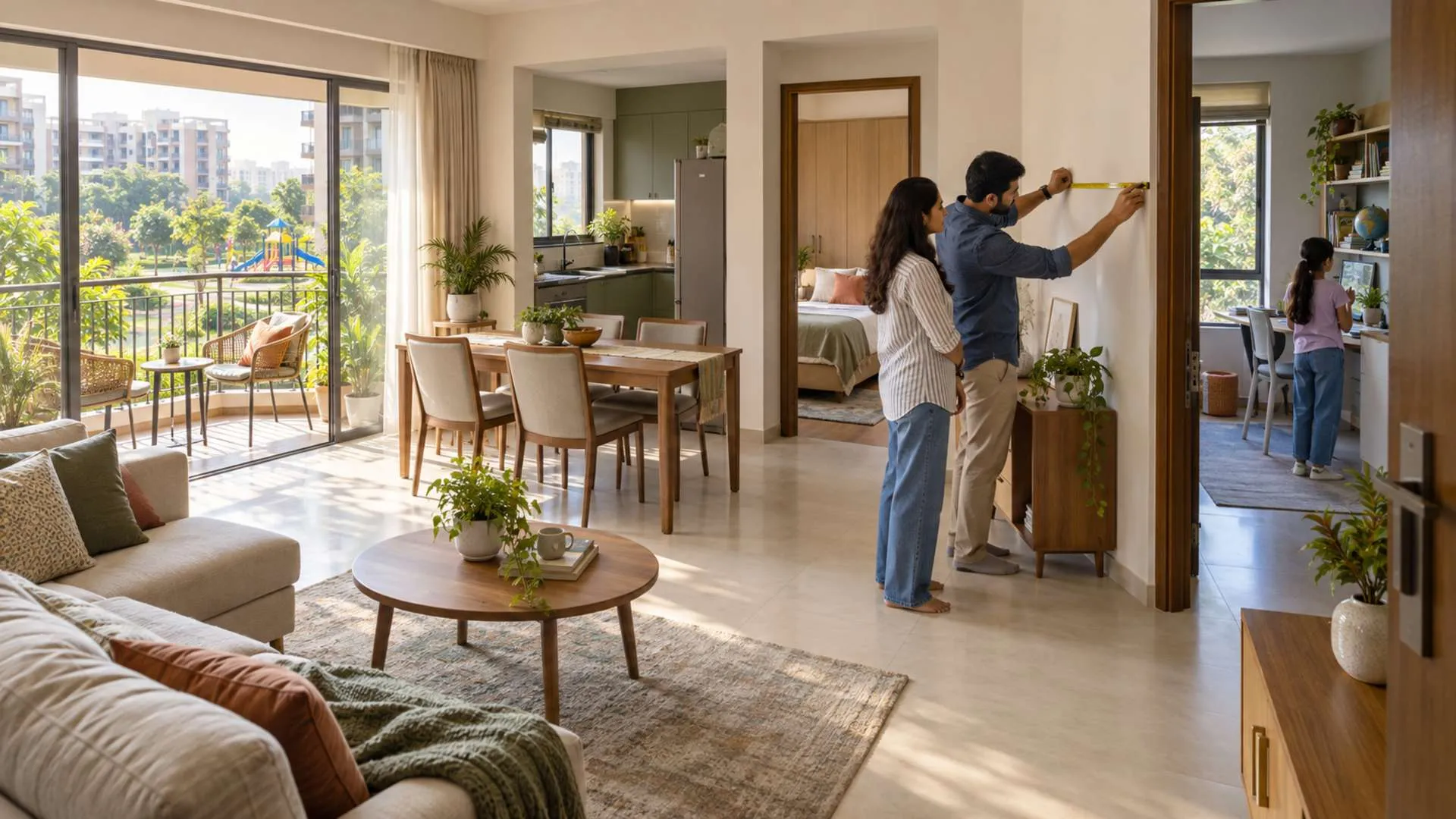
Indian homebuyers have not lost enthusiasm for owning a home, but are growing more difficult to please
The winning home in 2026 is not the cheapest on a portal, nor is it automatically the largest apartment in a glossy launch. Buyers today are looking for a workable combination: a price they can afford to finance, enough space to change their needs, dependable possession and a location that will not make daily life a marathon.
That finding is derived from the Colliers Homebuying Sentiment Survey 2026, which gathered responses from around 1,800 people across more than 30 established and emerging residential markets. Nearly half said they would be willing to purchase a home within two years, while 54% felt external volatility would have a relatively limited impact on Indian real estate.
The optimism comes with conditions. Today’s buyer may still be interested in a new home, but would not be willing to accept a weak value proposition, uncertain delivery, or an impractical layout just to get in the market.
What do Indian homebuyers actually want in 2026?
Indian homebuyers primarily want affordability, usable space and possession certainty. Colliers found that 46% preferred homes priced from ₹50 lakh to ₹1.5 crore, 62% favoured 2BHK and 3BHK apartments, and more than 60% chose ready-to-move or near-completion properties. Buyers also prioritised connectivity, security, open spaces and flexible payment plans. About half expected to purchase within two years.
The findings turn “affordable, spacious and ready” into more than a marketing slogan. They describe a buyer trying to balance aspiration with risk.
Affordability now means value, not merely a low price
According to Colliers India, 31% of respondents identified affordability and pricing as their main concern. Anxiety about job security and income visibility followed, showing why even optimistic families may delay a purchase if the EMI feels exposed to one income shock.
The survey’s preferred band is equally revealing: 46% chose properties priced between ₹50 lakh and ₹1.5 crore. That is a broad range, but it captures the core of urban end-user demand across numerous cities. It also indicates that an affordable home India 2026 buyer is not necessarily seeking the lowest absolute ticket. Buyers may stretch for better space, quality or connectivity when the improvement feels proportionate.
Colliers said 65% considered attractive pricing and flexible payment plans critical to an immediate purchase. For developers, this means a temporary discount cannot rescue a mismatched product. Construction-linked schedules, transparent charges, manageable booking amounts and credible finance options matter alongside the headline rate.
The message for anyone following a first home buyer India guide is simple: affordability must be measured through the full monthly and upfront burden. The agreement price is only one component. Stamp duty, registration, GST where applicable, maintenance deposits, parking, interiors and loan interest can change what a household can safely afford.
Space is back, but every city defines it differently
Colliers found that 62% of respondents preferred either a 2BHK or 3BHK. Around 75–80% placed unit size and layout, as well as connectivity and social infrastructure, among their top considerations. The preference is therefore not just for more square feet. It is for right-sized space in a liveable location.
Another large survey sharpens the picture. India Today, reporting ANAROCK’s H1 2026 consumer sentiment study of 8,320 respondents in 14 cities, said 48% preferred a 3BHK and 38% chose a 2BHK. The 3BHK preference reached 47% in Pune, 46% in Bengaluru and 52% in Hyderabad, but was lower in the Mumbai Metropolitan Region at 39%.
That difference explains the city split. Bengaluru and Hyderabad can support stronger interest in larger homes, while Mumbai homebuyer preferences remain more compact and efficiency-led because high land and apartment prices place greater pressure on each square foot. A well-planned 2BHK flat in Mumbai may satisfy a family better than an awkwardly configured “3BHK” with tiny rooms.
Pune sits between these extremes. A buyer searching for a 2BHK flat in Pune or a 3BHK flat in Pune often weighs an established but costlier neighbourhood against a larger home in a peripheral corridor. The decision is not simply Baner versus a distant suburb; it is daily travel, schools, healthcare, future infrastructure and how much carpet area remains after paying for the location.
How much space should ₹1 crore buy?
There is no honest national answer. ₹1 crore can purchase a compact unit in one Mumbai micro-market and a substantially larger apartment in Pune, Bengaluru, Hyderabad or a satellite location. Even within one city, ready status, building age, floor, amenities and distance from an employment hub alter the result.
Buyers should calculate the effective cost per square foot of RERA carpet area, not compare one project’s carpet rate with another project’s super built-up rate. Begin with the all-in budget, subtract statutory charges and essential interiors, then divide the remaining property value by verified carpet area. Finally, test the actual plan for storage, furniture movement, natural light and room usability.
Ready and near-completion homes win on certainty
More than 60% of Colliers respondents preferred ready-to-move or near-completion homes. A more detailed split reported by Rediff Money placed completed apartments at 31%, near-completion homes at 30%, under-construction properties at 20% and newly launched projects at 19%.
This preference reflects practical advantages. A buyer can inspect the light, view, construction quality, neighbouring development and actual commute. Possession uncertainty falls, rent and pre-EMI overlap may reduce, and a completed property with the required completion or occupancy certificate generally does not attract GST on the sale.
Ready does not mean risk-free. Buyers still need to verify title, encumbrances, approved plans, occupancy certificate, society records, maintenance dues and the physical condition of the apartment. A ready to move flat Pune or ready to move flat Mumbai may also cost more upfront than a comparable early-stage launch because construction and delivery risks have already been reduced.
Age creates a notable divide. Colliers found that around half of buyers under 30 were comfortable taking construction risk, often because early-stage pricing could be lower. Among respondents above 30, only 36% were willing to accept such risk. Older buyers may have tighter timelines around children, rent, retirement or relocation; younger buyers may have a longer holding period but still need to scrutinise the developer and MahaRERA record.
Interestingly, ANAROCK’s separate survey showed stronger interest in new launches than ready homes. This is not necessarily a contradiction. The two surveys used different samples, questions and market coverage. Together, they show that India contains multiple buyer groups: one rewards possession certainty, while another will accept construction risk for pricing, choice and potential appreciation.
Amenities buyers will actually use
The gated-society arms race once focused on the longest amenity list. Buyers in 2026 appear more practical. Colliers found security and safety systems ranked highly, followed by green and open areas and community or lifestyle zones.
The priority order points towards everyday usefulness:
- controlled access, surveillance, fire safety and reliable building management;
- shaded green space, play areas and walkable internal paths;
- multipurpose community rooms rather than rarely used novelty facilities;
- dependable power, water, lifts, parking and waste management; and
- fitness and wellness areas, particularly important to buyers under 30.
Younger respondents’ preference for fitness and wellness amenities was nearly twice the overall average, according to Colliers. Yet developers must still price amenities responsibly. A large clubhouse can make a brochure persuasive, but it also raises maintenance and replacement costs over the ownership period.
Is 2026 a good time to buy a house in India?
The survey shows intent, not a universal buying signal. Half of prospective buyers planning to purchase within two years suggests demand remains resilient, and festive-season momentum may help convert some of that intent. But the best time to buy a house in India depends on household finances and the specific property, not national optimism alone.
A buyer is better positioned when the emergency fund remains intact after the down payment, total EMI obligations are manageable, income is reasonably visible and the home is likely to serve the family for several years. The property should also pass legal, regulatory and physical due diligence.
Waiting can be sensible when the buyer is relying on uncertain bonuses, has no buffer for possession delays or must compromise heavily on location and layout. Buying can be sensible when the budget is stable, the project is verified and the home solves a genuine long-term need.
The 2026 buyer is aspirational, but no longer unquestioning
More than half of Colliers respondents planned to buy for self-use, confirming that India’s market remains strongly end-user-led. At the same time, 16% were considering second or vacation homes, giving developers another lifestyle-oriented demand pool.
The larger takeaway is that buyers have not abandoned aspiration. They have refined it. A new home India 2026 buyer may want a 3BHK, greenery, a gym and modern security, but will ask harder questions about the EMI, carpet area, possession date and commute.
The projects most likely to convert demand into sales will not necessarily be the cheapest or most luxurious. They will be the ones that align price, usable space, financing flexibility, connectivity and delivery confidence.
For families beginning a property search in India in 2026, the right sequence is budget first, location second, legal verification third and amenities last. Compare a flat in Pune, a flat in Mumbai, or another city on all-in cost and daily usefulness, not the sample-flat feeling alone.

FAQs:
 Why 2BHK Homes Now Capture 46% of India’s Rental Demand