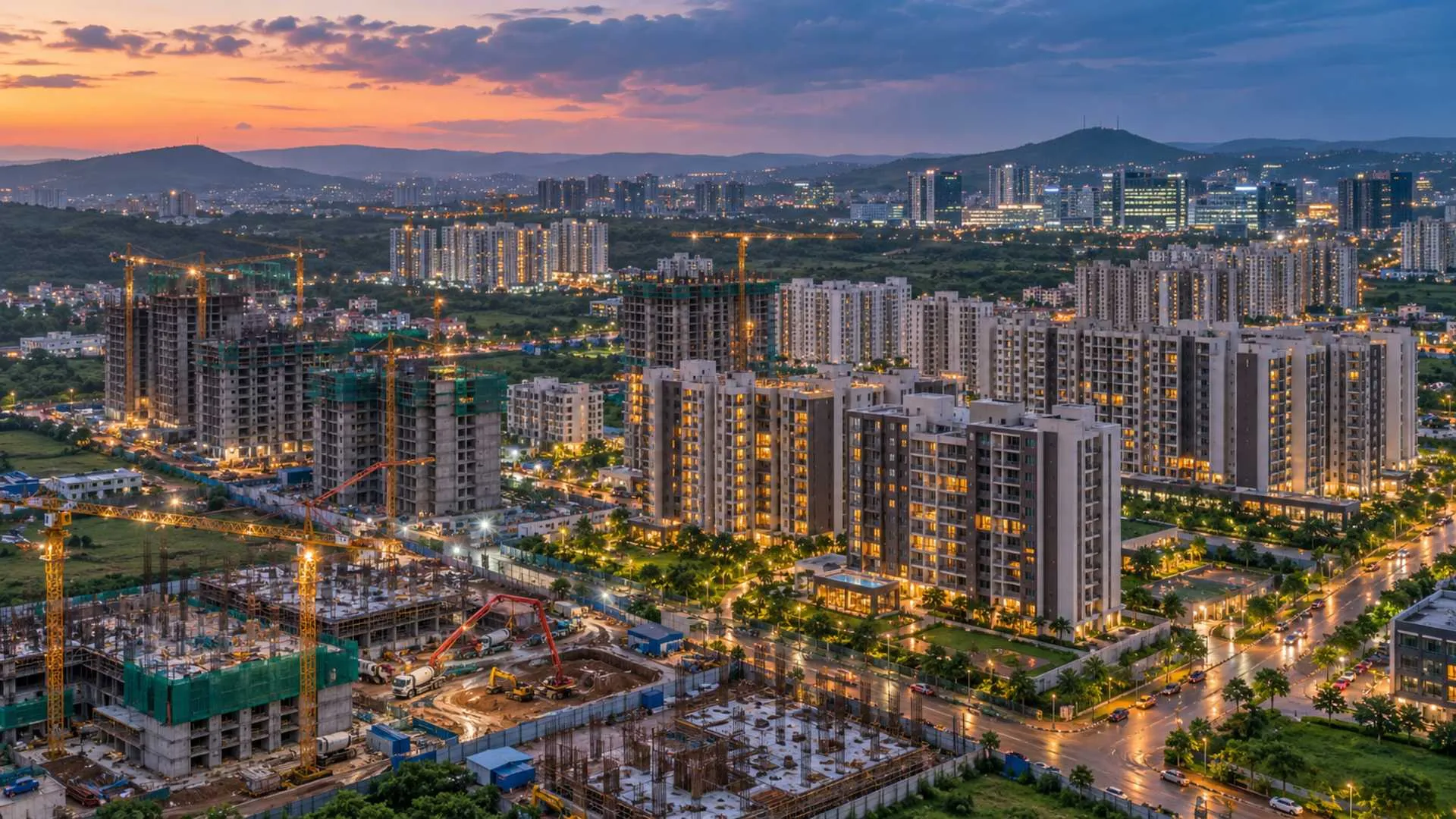


Will Indian Homes Soon Carry Mobile and Internet Connectivity Ratings?
TRAI Property Connectivity Ratings: What Homebuyers Need to Know
SHARE:
For many years, property advertisements have highlighted aspects such as sunlight, security, parking facilities and access to the clubhouse. India’s next feature to influence sales decisions might be one that is not so obvious: whether a video call functions in the bedroom and if the mobile signal reaches the basement.
On the 25th of September 2026, the Telecom Regulatory Authority of India launched its Digital Connectivity Rating Platform, enabling consumers to look up information on the rating of properties for mobile, internet and Wi-Fi performance. Instead of being just a vaguely worded promise from builders, digital connectivity can now be a searchable and verifiable attribute of a property.
For anyone who is carrying out a property search in India, whether they are looking for a flat in Pune, a flat in Mumbai, a 2BHK flat in Pune or a 2BHK flat in Mumbai, a change of this kind is important. A house might have a pleasant kitchen and a convenient location, but it could still fail to satisfy residents if the thick walls prevent 5G signals, fibre connection does not reach the individual units, or Wi-Fi doesn’t work in the common areas.
Can I check a property’s connectivity rating before buying in India?
Yes, if the property has completed TRAI’s Digital Connectivity Rating process. Buyers and tenants can use the DCR Platform to search a rated property by name, certificate ID, or location, view its published rating and open its digitally signed certificate. A QR code allows the certificate to be authenticated. Properties not yet assessed will not automatically appear with a rating, so buyers should still conduct their own signal and broadband checks.
The official TRAI launch release says the platform covers constructed and under-construction properties. It brings property managers, registered Digital Connectivity Rating Agencies, or DCRAs, and consumers into one workflow. Owners or managers apply; an authorised DCRA performs the assessment; and the certificate and rating are published through the platform.
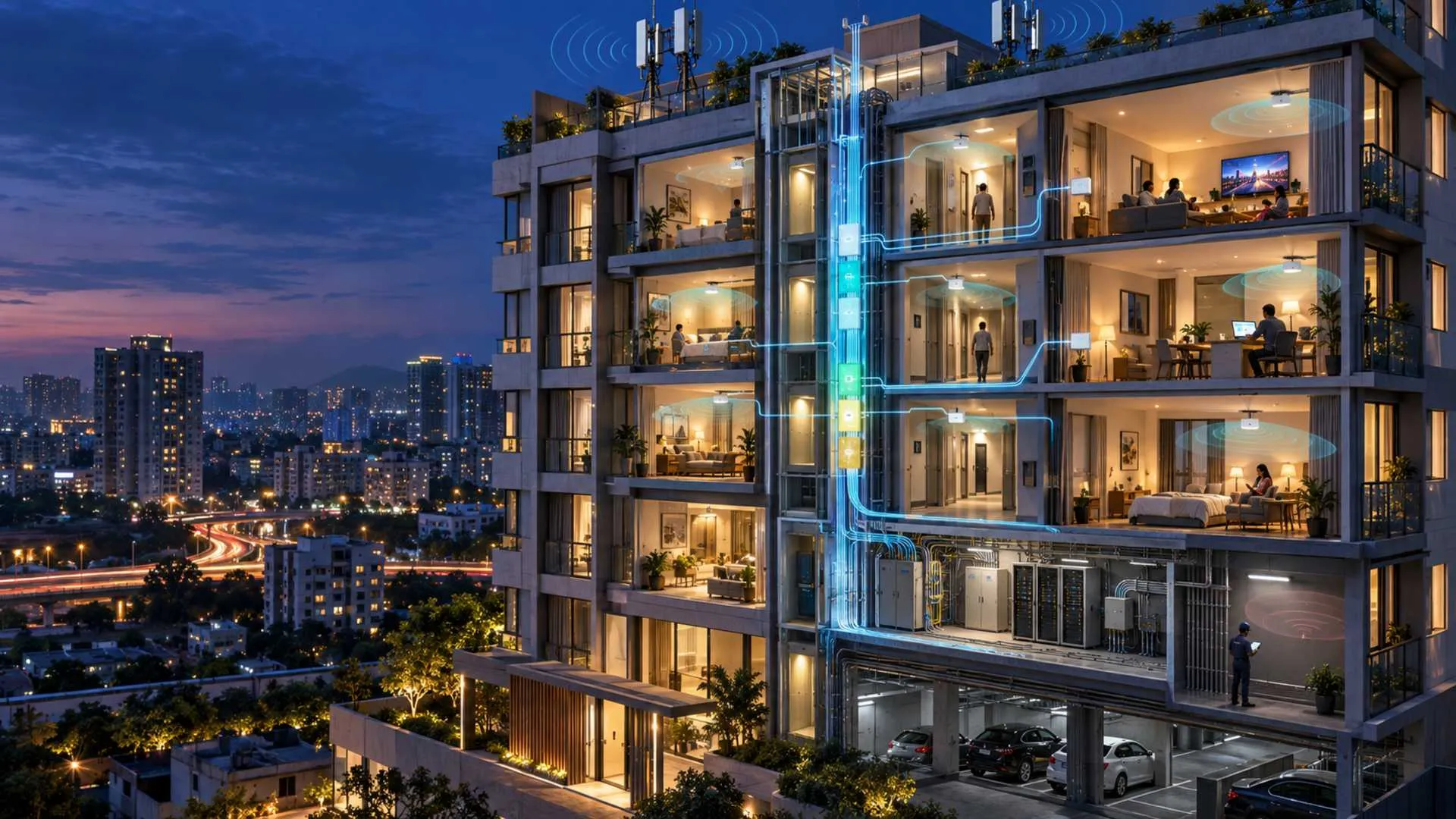
Moneycontrol reports that the system measures fibre readiness, mobile network availability, in-building solutions and Wi-Fi infrastructure. The New Indian Express adds that authorised assessors use a dedicated mobile application to record in-building measurements, with results synchronised to the main platform. In other words, a rating is not simply an internet speed test that home India buyers can run beside the sales desk. It examines the property’s supporting digital infrastructure and actual service environment.
Why a connectivity label could change homebuying
The timing is no accident. Around 70% to 80% of mobile data is consumed indoors, according to reporting on the TRAI launch. Work-from-home calls, telemedicine, streaming, app-based security, smart appliances and online learning have turned connectivity into household infrastructure. For many buyers, the best internet for home in India is no longer a lifestyle upgrade; it is part of whether the home functions.
This problem is especially visible in dense cities. A property in Mumbai may receive excellent outdoor 5G but weak mobile signal in the home in India because of coated glass, concrete cores, or high-rise geometry. A property in Pune near Hinjewadi or Kharadi may sit beside an IT corridor yet have limited fibre-provider choice inside the society. The new property connectivity rating India buying home guide 2026 framework is designed to replace assumptions with comparable evidence.
TRAI Chairman Anil Kumar Lahoti said searchable ratings and verifiable certificates would give consumers credible information while encouraging property managers to plan digital infrastructure at the correct development stage. The Hindu BusinessLine, The Economic Times and ETV Bharat also highlighted the platform’s consumer role: making cellphone, broadband and Wi-Fi connectivity visible before a purchase or lease decision.
The 2026 amendment makes the scale more precise. Some coverage describes a “TRAI nine-star connectivity rating property homes 2026,” but that wording is misleading. The system remains a one-to-five-star framework; half-star steps expand it from five possible rating levels to nine. A 3.5-star property and a 4-star property can therefore be distinguished without inventing a nine-star maximum.
Under-construction projects also receive staged visibility. A DCRA may evaluate approved infrastructure designs and issue a “Designed For” certificate. After construction and installation of an in-building solution, it can issue an “Installation Completed For” certificate. A final rating comes only after connectivity services are operational. That distinction matters: a provisional connectivity certificate is evidence of planned or installed infrastructure, not proof of the final resident experience.
Will ratings influence property value?
The platform is too new to support a defensible claim that a particular star score adds a fixed percentage to Mumbai or Pune prices. Ratings are also not automatically mandatory across every Indian building. Nevertheless, the market logic is strong. A fibre-ready flat with reliable indoor coverage and multiple service-provider options reduces uncertainty for residents, tenants and employers. A poorly connected building creates recurring complaints that cosmetic renovation cannot solve.
For a new flat Pune 2026 buyer or someone considering a ready-to-move flat in Pune, connectivity may become part of due diligence alongside water supply, title documents, maintenance and RERA registration. Builders could use a high rating as a sales differentiator. Existing societies may commission an optional digital connectivity audit, identify weak zones and improve ducts, risers, equipment rooms, Wi-Fi infrastructure or in-building coverage before seeking a formal rating.
The resale effect will probably emerge unevenly. A strong TRAI connectivity rating for a Pune Hinjewadi Kharadi IT flat may matter more to technology professionals and corporate tenants. A property connectivity rating for a Mumbai flat before buying in 2026 could be particularly useful where towers have basements, podiums and lift cores that interrupt signals. In Bengaluru’s Whitefield and in Gurugram or Noida, where hybrid work supports rental demand, transparent connectivity can become a practical tie-breaker between otherwise similar homes.
That does not mean buyers should chase a badge blindly. A building-wide score cannot promise identical performance in every room, on every floor or with every telecom operator. Network conditions also change. The smartest approach combines the published certificate with an on-site internet speed check that home India buyers conduct at the time of inspection.
The buyer’s new pre-booking test
Before paying a token, search the TRAI DCR Platform using the project name, certificate ID, or location. If a record appears, check whether it is a design-stage certificate, installation certificate, or final rating. Verify the QR code and review the certificate instead of relying on a brochure screenshot.
During the site visit, test calls and mobile data with more than one network in the living room, bedrooms, kitchen, balcony, parking level and lift lobby. Ask the society or developer which fibre providers are live, whether residents can choose among them, whether optical fibre reaches each floor or apartment, and where routers can be placed. For WiFi coverage in Indian homes, room layout and router position matter almost as much as the advertised broadband plan.
The speed required depends on household behaviour. A single light user may be comfortable around 50 Mbps, while a family handling simultaneous 4K streaming, cloud backups, gaming and video meetings may prefer 100–300 Mbps or more. Consistency, latency, upload speed and backup options matter alongside headline download speed. Fibre broadband in Pune and Mumbai will usually offer more stable capacity than relying only on 5G home internet in India 2026, while fixed wireless can be a valuable backup. Jio, Airtel and BSNL home internet availability should be verified at the exact building, not inferred from neighbourhood coverage.
A rating that could become as familiar as an amenity list
TRAI’s platform does not guarantee that every home will soon display a connectivity label. Adoption depends on property managers applying for assessment, DCRAs completing evaluations and buyers beginning to demand the information. The New Indian Express reported only a small initial group of registered properties and managers at launch, underlining that this is the start of the system rather than universal coverage.
Even so, the direction is clear. The home connectivity rating mobile WiFi fibre India 2026 conversation moves digital access closer to the status of power, water and lift reliability. For developers, designing fibre pathways and neutral in-building systems early is usually easier than retrofitting them after possession. For buyers, the TRAI Digital Connectivity Rating Platform property 2026 framework adds a new question to every walkthrough: not merely “Which broadband is available?” but “Can you prove how well this building is connected?”
Before you buy a flat in Pune or buy a flat in Mumbai, treat connectivity as infrastructure, not a complimentary service. Search for the certificate, test the actual unit and compare provider choices. To explore property options and ask smarter pre-booking questions, visit RealtyConnect.