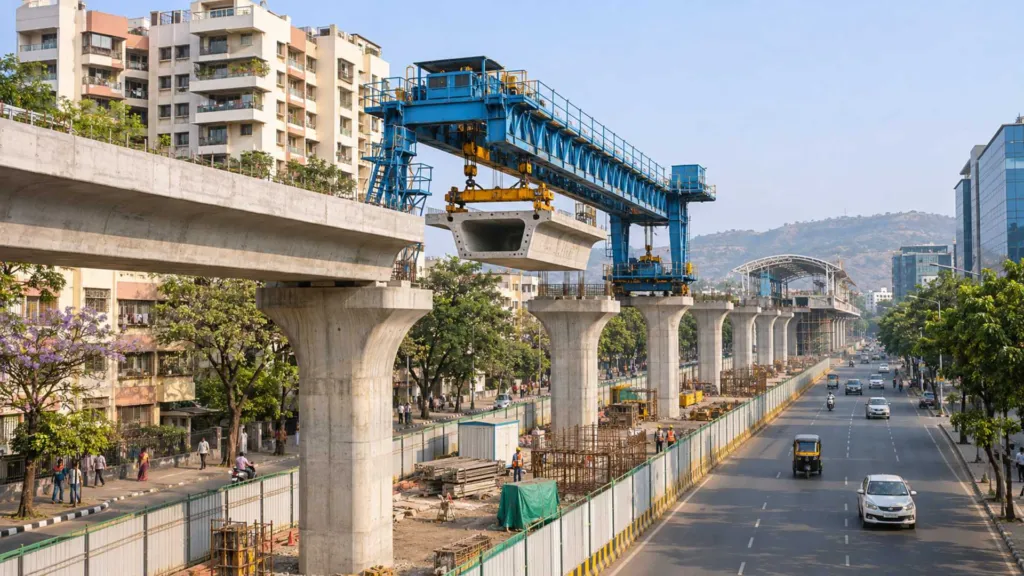


Could Your Neighbourhood Become a Quick-Commerce Logistics Hub by 2030?
Dark Stores Near Your Home: Buyer Checks for 2030
SHARE:
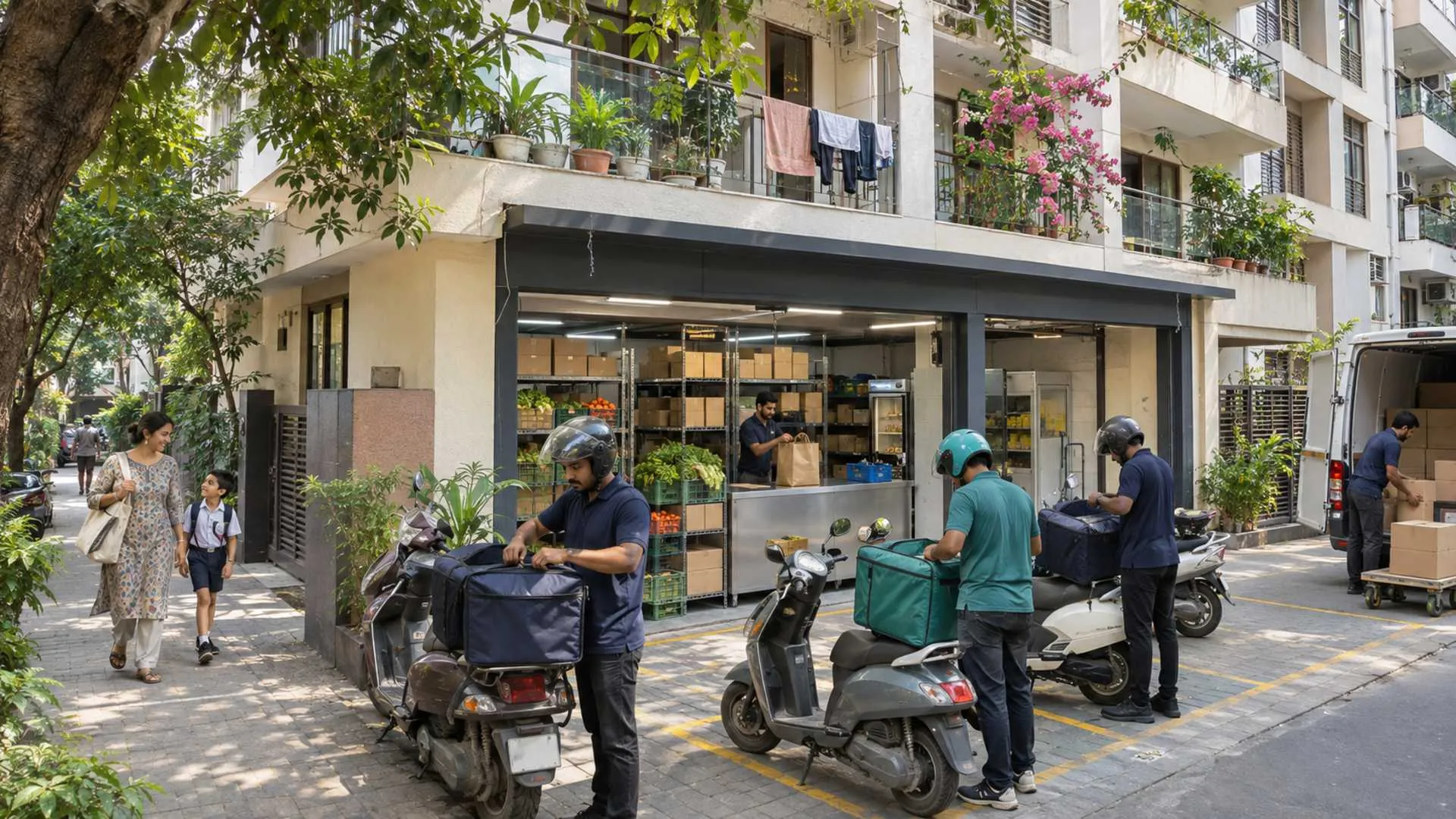


The next tenant below your apartment could be a warehouse serving thousands of nearby households. India’s quick-commerce network already occupies approximately 27 million sqft across 7,800 dark stores, according to CBRE. By 2030, dark stores and larger replenishment hubs could together require 75 million sqft. For residents, that means a trade-off: convenient deliveries alongside possible loading activity, noise and crowded entrances. For homebuyers, checking nearby logistics operations is becoming another part of neighbourhood due diligence. This guide explains the scale, rental economics, permissions and practical checks behind that shift.
Could quick-commerce dark stores change residential neighbourhoods and property values by 2030?
Yes, selected neighbourhoods could absorb more delivery infrastructure as quick commerce expands. CBRE projects over 12,000 dark stores by 2030, supported by larger mother hubs. Commercial landlords may benefit from leasing demand, while nearby residents could experience parking, loading and noise pressures. Residential property values will depend on site management, legal use and local demand, not dark-store proximity alone.
7,800 Dark Stores in 2026, 12,000+ by 2030: The Numbers
A dark store is a local fulfilment facility serving online orders rather than conventional walk-in shopping. Its location close to customers makes rapid deliveries possible.
CBRE’s 75 million sqft urban logistics demand forecast for 2030 includes two distinct property types: approximately 42 million sqft of dark stores and 33 million sqft of peripheral mother hubs. It does not mean 75 million sqft of residential ground floors will become warehouses.
Table 1: India’s dark-store network and logistics requirement
| Metric | 2025 reference | 2026 reference | 2030 projection |
|---|---|---|---|
| Dark stores | Approximately 2,525 | Approximately 7,800 | 12,000+ |
| Dark-store space | Approximately 13 million sqft | Approximately 27 million sqft | Approximately 42 million sqft |
| Mother-hub space | Not compared here | Not compared here | Approximately 33 million sqft |
| Combined future requirement | — | — | Approximately 75 million sqft |
| Geographic reach | 100+ smaller cities, alongside metros | 100+ cities | Further smaller-city expansion |
Operator snapshot
| Operator | Approximate stores in CBRE’s June 2026 snapshot |
|---|---|
| Blinkit | 2,400 |
| Zepto | 1,200 |
| Swiggy Instamart | 1,200 |
| Bigbasket | 900 |
| JioMart | 600 |
| Flipkart Minutes | 1,000 |
| Amazon Now | 500 |
A Blinkit, Zepto or Swiggy Instamart dark store therefore represents part of a substantial property network. The neighbourhood question is where that network can fit without overwhelming existing streets.
How Dark Stores Are Reshaping Ground-Floor Economics
For landlords, proximity to customers can turn an ordinary commercial unit into a valuable fulfilment address.
The ground-floor rent increase of 25–35% associated with dark-store demand needs context: Financial Express reported such estimates for contested markets in 2025. They are not a uniform 2026 increase across residential buildings. The reporting also described some deals at substantial premiums, alongside shorter lease commitments and changing deposits.
Table 2: Published dark-store rental indications
| City | Indicative monthly rent, ₹/sqft |
|---|---|
| Delhi | 150–250 |
| Mumbai | 80–150 |
| Bengaluru | 60–100 |
| Chennai | 40–80 |
| Hyderabad | 40–80 |
| Pune | 40–80 |
| Kolkata | 40–80 |
The commercial gain can come with a neighbouring loss. In Delhi’s Sant Nagar, ThePrint reported parking spillover and brokers describing difficulties attracting tenants to smaller adjoining premises.
A higher rent downstairs does not establish a higher resale value upstairs. Landlords should compare net income after fit-out obligations, repairs, compliance costs and possible vacancy, not simply the offered monthly rent.
What Residents Complain About: Traffic, Parking and Noise
Delivery rider traffic and parking congestion in residential areas become visible when the site lacks space for its own operations.
A dark store needs somewhere for riders to wait, vehicles to load, packaging to accumulate and replenishment trucks to stop. Without internal provision, those activities can spill onto footpaths, neighbouring entrances and shared parking.
ThePrint’s Sant Nagar reporting documented motorcycles occupying adjoining parking areas and repeated complaints about their return after intervention. These are site-specific observations, not evidence that every delivery operation creates the same problems.
Responsibility should focus on operating arrangements rather than treating riders as the problem. Platforms, operators and landlords need designated waiting areas, safe loading and clear access rules.
For residents, the important questions are concrete: Can an ambulance reach the entrance? Is the pavement usable? Does unloading disturb bedrooms? Are waste and refrigeration equipment managed within the premises?
Are Dark Stores Legal in Residential Areas? Check the Actual Permissions
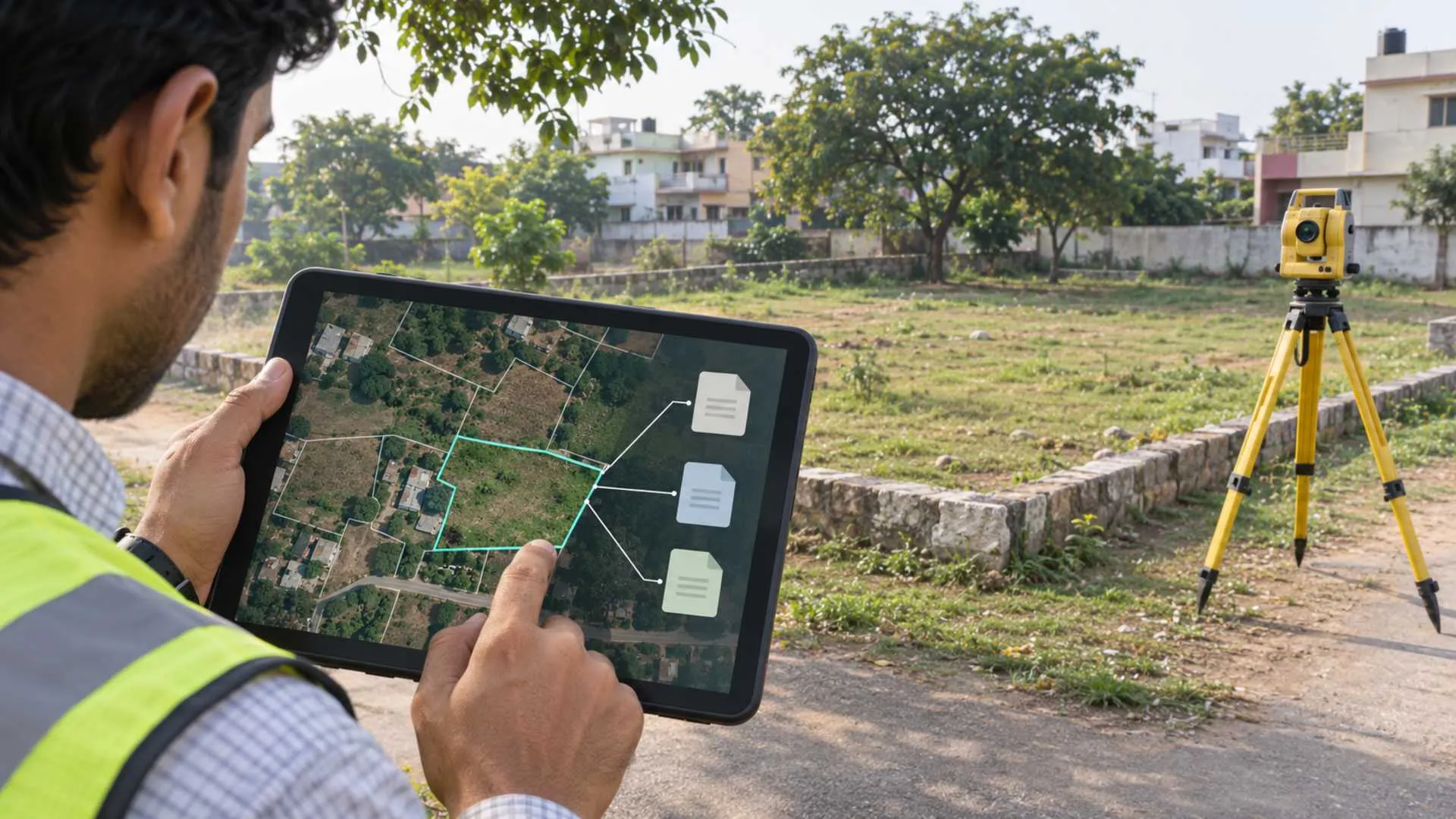
There is no reliable nationwide yes-or-no answer to dark-store zoning law in a residential area in India. The position depends on the property’s permitted use, sanctioned plans, operational classification and applicable licences.
Importantly, Bengaluru’s RMP 2031 should not be cited as an operative blanket prohibition. BDA’s own change-of-land-use guidance identifies RMP 2015 as the governing plan, while court records discuss the withdrawal of the provisional 2031 plan.
Table 3: City-by-city permission checks
| City | Documents or authorities to check | Question to resolve |
|---|---|---|
| Delhi | DDA plan provisions, MCD permissions, sanctioned use | Is this activity permitted at this address? |
| Bengaluru | BDA zoning and relevant municipal approvals | Is the proposed use compatible with the property? |
| Mumbai | Applicable DCPR provisions, sanctioned plans, fire permissions | Is storage permitted in the particular premises? |
| Pune | PMC or relevant planning authority approvals | Does actual use match approved use? |
| Hyderabad | Relevant planning and municipal permissions | Are use, loading and access arrangements compliant? |
| Chennai | CMDA/local planning and building approvals | Does the approved occupancy cover the operation? |
| Noida | Noida Authority permissions and building approvals | Is the activity allowed in this unit and sector? |
| Kolkata | Applicable municipal and planning approvals | Are storage and building use authorised? |
Enforcement grounds also matter. In June 2025, The Indian Express reported a Baner–Balewadi dark-store closure ordered by Maharashtra’s FDA over licensing and storage issues. That should not be relabelled as a blanket PMC zoning ban.
For an RWA or housing society dark-store complaint, document the actual obstruction, noise, or suspected permission breach and approach the relevant authority. Society consent and municipal permission answer different questions; neither automatically substitutes for the other.
The Homebuyer’s Dark-Store Checklist
Homebuyer neighbourhood due diligence should include dark stores, particularly where a building contains commercial units, basements or substantial ground-floor space.
Before buying:
- Visit at different times. Include an evening and a replenishment period identified through observation or residents.
- Inspect neighbouring buildings. Delivery activity can affect your entrance even when the store is elsewhere.
- Check approved use. Review sanctioned plans, occupancy documentation and society rules.
- Ask about proposed tenants. Find out whether the developer retains commercial premises for leasing.
- Examine loading and parking. Look for facilities inside the site rather than reliance on public space.
- Speak to residents. Ask about recurring noise, blocked access and complaint handling.
- Test the apartment itself. Assess loading noise from bedrooms and balconies, not only the lobby.
For dark-store property value impact on residential homes, compare actual transactions and rental demand in similar buildings. A nearby store alone does not prove a price discount or premium.
The Other Side: Can Dark-Store Proximity Help Homebuyers?
Quick delivery is a genuine convenience, particularly for households managing work, childcare or limited mobility.
PedalStart explains the basic model: compact local facilities shorten the delivery distance. That makes service coverage an understandable lifestyle consideration.
But coverage is different from having dispatch activity beneath your bedroom. A properly managed facility farther along a suitable commercial road may offer convenience without concentrating movement at your building entrance.
There is no universal “safe” distance of 500 metres. Road layout, vehicle access, operating hours and sound transmission matter more than a single radius.
The desirable amenity is reliable delivery, not an unmanaged loading bay outside the gate.
What Comes Next: Regulation, Purpose-Built Stores and the 2030 Neighbourhood
Delhi’s Master Plan 2047 has been notified, according to DDA. However, residents should check its actual provisions and applicable permissions rather than assume it creates blanket approval or prohibition for dark stores.
Internationally, Amsterdam illustrates a more targeted response than a simple citywide ban: its planning framework restricts automatic establishment across much of the city and provides a permit-based assessment route.
Purpose-built facilities could provide better loading, storage and rider arrangements. Savills identifies specialised layouts, temperature-controlled storage and automation-ready infrastructure as future requirements. Meanwhile, The Tribune’s CBRE coverage highlights franchise models, shared facilities and kirana partnerships as expansion options.
Larger mother hubs support replenishment; they do not remove the need for local dispatch sites. Planning must accommodate both.
By 2030, more neighbourhoods could become quick-commerce logistics nodes, but their liveability will depend on how those operations are designed and managed. Before buying, look beyond the flat to the activity around it. Visit RealtyConnect.tech to compare neighbourhoods and prepare a property checklist that includes commercial use, delivery access and residential comfort.