Pune Metro Phase 2: Routes, Costs and Property Impact Explained
Pune Metro Phase 2 — Costs, Routes & Buyer Guide
SHARE:
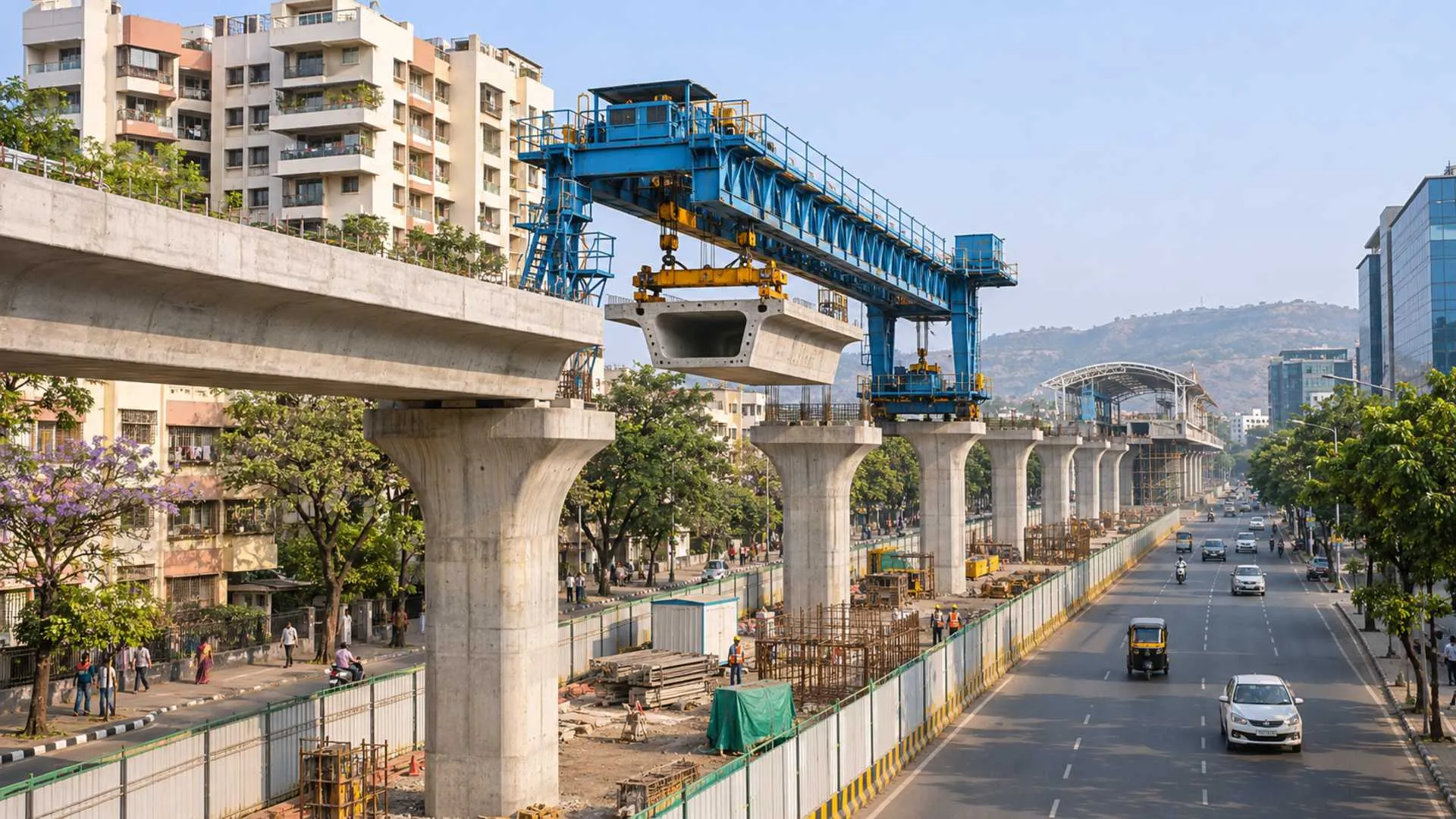


The 13,500 crore Pune Metro Phase 2 has thrown up a new dilemma for potential buyers looking to invest. The second phase of the Pune metro rail project will add 44.39 km of four corridors (Lines 2A, 2B, 4 and 4A) and 41 elevated stations to provide improved connectivity to areas like Wagholi and Chandani Chowk. This will connect key areas like Khadakwasla, Swargate, Hadapsar, Kharadi and Warje. With the foundation stone being laid on November 3, 2026, buyers know what the expansion plans are. However, buyers need to find homes that make sense in terms of future connectivity.
What Are the Routes and Stations of Pune Metro Phase 2?
The Pune Metro Phase 2 routes, stations and property impact in 2026 centre on two different improvements: extending the existing Aqua Line and creating a new cross-city connection.
According to Maha Metro’s official corridor pages, Lines 2A and 2B extend the Vanaz–Ramwadi route. Lines 4 and 4A introduce additional connections across the southern, eastern and western parts of Pune.
| Corridor | Approved route | Length | Stations | Key residential catchment |
|---|---|---|---|---|
| Line 2A | Vanaz–Chandani Chowk | 1.12 km | 2 | Kothrud and Chandani Chowk/Bavdhan approaches |
| Line 2B | Ramwadi–Wagholi/Vitthalwadi | 11.63 km | 11 | Nagar Road, Kharadi approaches and Wagholi |
| Line 4 | Khadakwasla–Swargate–Hadapsar–Kharadi | 25.52 km | 22 | Sinhagad Road, Hadapsar and Magarpatta |
| Line 4A | Nal Stop–Warje–Manik Baug | 6.12 km | 6 | Warje and adjoining residential neighbourhoods |
| Total | Four corridors | Approximately 44.39 km | 41 | South, east and west Pune |
Source: Maha Metro. Lengths are rounded; all four corridors are planned as elevated routes.
What are Pune Metro Phase 2’s routes, stations and property implications?
Pune Metro Phase 2 comprises Lines 2A, 2B, 4 and 4A, covering approximately 44.39 km with 41 elevated stations at an estimated ₹13,500 crore. It extends the Aqua Line towards Chandani Chowk and Wagholi and adds Khadakwasla–Kharadi and Nal Stop–Manik Baug connections. Homes with convenient station access could attract stronger buyer and tenant interest, but appreciation will depend on construction progress, local supply, pricing and last-mile connectivity.
Line 4 and Line 4A: Where Will the New Connections Run?
The Pune Metro Line 4 Khadakwasla-to-Kharadi route is the longest corridor in this package. Its significance lies in connecting residential neighbourhoods along Sinhagad Road with central Pune and eastern employment centres.
For readers seeking the Pune Metro Line 4 stations list through Swargate, Hadapsar, Magarpatta and Kharadi, an earlier DPR-based list published by The Indian Express identifies these 22 stops, travelling eastwards:
Khadakwasla, Dalvewadi, Nanded City, Dhayari Phata, Manik Baug, Hingane Chowk, Rajaram Bridge, P. L. Deshpande Udyan, Dandekar Pool, Swargate North, Seven Loves Chowk, PCB, Race Course, Fatima Nagar, Ramtekdi, Hadapsar, Magarpatta South, Magarpatta Main, Magarpatta North, Hadapsar Railway Station, Sai Nath Nagar Chowk and Kharadi Chowk. Treat these as DPR-stage names and verify the latest approved alignment before assessing a particular property.
The Pune Metro Line 4A Warje–Nal Stop–Manik Baug route provides a connecting spur. For buyers evaluating Sinhagad Road, Warje and Hadapsar metro connectivity, interchange access matters as much as distance to a single station.
| Interchange location | Planned connection |
|---|---|
| Swargate | Line 4 with the Purple Line |
| Nal Stop | Line 4A with the Aqua Line |
| Kharadi Bypass | Integration with the east–west corridor |
| Hadapsar Railway Station | Connection with the railway network |
These links are identified in the Press Information Bureau’s approval announcement. A property’s practical advantage will depend on the eventual station entrances, pedestrian access and interchange arrangements.
What Is the Total Cost and When Will Phase 2 Open?
The headline Pune Metro Phase 2 cost of approximately ₹13,500 crore combines two separately approved packages.
| Package | Union Cabinet approval | Approved estimated cost | Completion period stated at approval |
|---|---|---|---|
| Lines 2A and 2B | June 25, 2025 | ₹3,626.24 crore | Four years |
| Lines 4 and 4A | November 26, 2025 | ₹9,857.85 crore | Five years |
| Combined | Two approval stages | ₹13,484.09 crore | Subject to execution schedules |
The combined figure rounds to the ₹13,500 crore used in the November 2026 foundation-stone announcement. Funding involves the Union government, Maharashtra government and external bilateral or multilateral agencies.
The Pune Metro Phase 2 completion timeline needs careful interpretation. The original approval periods point broadly towards 2029 for Lines 2A/2B and 2030 for Lines 4/4A. However, Free Press Journal’s November 3, 2026 report describes a five-year completion target for the expansion, potentially extending the horizon towards 2031.
Buyers should therefore avoid treating “operational by 2030” as a guaranteed possession-date benefit. A foundation ceremony also does not establish that every station site has reached the same construction stage.
Property Prices Along the Corridors: Where Is Entry More Affordable?
For anyone comparing the best areas to buy a flat in Pune in 2026, the emerging Metro map offers a useful shortlist. It does not replace a neighbourhood-level price check.
The figures below are Housing.com’s displayed locality averages, rather than registered transaction prices or a uniform RERA-carpet-area index.
| Locality | Displayed average price/sqft | Relevant corridor consideration |
|---|---|---|
| Dhayari | ₹6,608 | Access to the Line 4 catchment |
| Wagholi | ₹7,044 | Line 2B extension from Ramwadi |
| Warje | ₹9,889 | Line 4A connectivity |
| Hadapsar | ₹10,570 | Line 4 and eastern employment access |
| Kharadi | ₹11,495 | Eastern employment hub and planned network integration |
Source: Housing.com price-trend pages reviewed for this article. Listing composition and area definitions vary; these are comparison indicators, not project quotations.
The Khadakwasla-versus-Kharadi property comparison should also account for differences in employment access, neighbourhood maturity and housing supply. A cheaper purchase can involve a longer present-day commute.
For buyers searching for flats near Pune Metro Phase 2 stations in south Pune’s Dhayari–Khadakwasla belt, investigate the actual route to the proposed station. Similarly, Wagholi property near the Line 2B extension from Ramwadi needs a last-mile check: a locality name alone says little about walking distance.
With a ₹70-lakh or ₹1-crore ceiling, compare the full acquisition cost, including applicable taxes, registration, parking and maintenance deposits. A lower advertised rate is useful only when the usable space and total payable amount also work.
How Much Could Property Prices Rise Near Phase 2 Stations?
There is no verified, station-by-station forecast establishing how much Pune Metro Phase 2 property prices will rise by 2030.
The frequently quoted 20–30% cumulative appreciation should therefore be treated as a scenario requiring supporting evidence, rather than an assured return. Metro access can improve a home’s convenience, but employment growth, new supply, construction quality and the purchase price also influence its eventual value.
PropertyNivesh, in its November 2026 assessment, makes a useful distinction: the expansion could strengthen interest in served neighbourhoods, while some anticipated benefits may already be reflected in asking prices. It also highlights construction disruption and the importance of station access.
For an illustrative ₹80-lakh purchase, 20% appreciation produces a ₹96-lakh value before transaction and holding costs. That arithmetic is straightforward; whether the market delivers it is uncertain.
The metro corridor real estate appreciation story is strongest when transport solves a specific problem. A shorter, dependable journey to work can matter more than a promotional claim that a project is “near the upcoming Metro.”
Phase 1 vs Phase 2: What Changes for Buyers?
The central difference in a Pune Metro Phase 1 versus Phase 2 comparison is network reach. Lines 2A and 2B extend the existing east–west corridor, while Lines 4 and 4A add connections across previously underserved catchments.
This strengthens the case for examining east Pune metro expansion towards Wagholi and Kharadi, alongside the south Pune Khadakwasla–Dhayari property belt. It does not establish that these markets will repeat a particular Phase 1 appreciation percentage.
The same distinction applies to developer comparisons. Buyers considering Mantra Properties in Kharadi, Shubh Developers in Mundhwa or ARV Group’s Undri projects should request a project-specific station-access assessment. Undri should not be described as directly served merely because it lies in south Pune.
Likewise, Kolte-Patil Life Republic and Saheel Properties’ Wakad projects belong in a wider western-Pune comparison; their locations should not be presented as direct frontage on the four Phase 2 routes without alignment evidence.
Developer reputation, MahaRERA registration and a convenient station approach are separate checks. All three deserve attention.
Should You Buy Near a Phase 2 Station in 2026?
For end-users, the strongest purchase is a home that suits today’s budget, commute and family needs, with future Metro access adding value.
Before booking, verify the latest alignment, compare nearby resale transactions, inspect the walking route and check the project’s registered completion date. Ask how the household would manage if the Metro opens later than expected.
For investors, assess realistic rent, competing supply and the cost of holding the property through construction. Pune infrastructure investment can support property growth, but it cannot rescue an overpriced purchase.

FAQs:
 Pune Metro Line 3: Homes Near Maan-to-Balewadi Stations in 2026