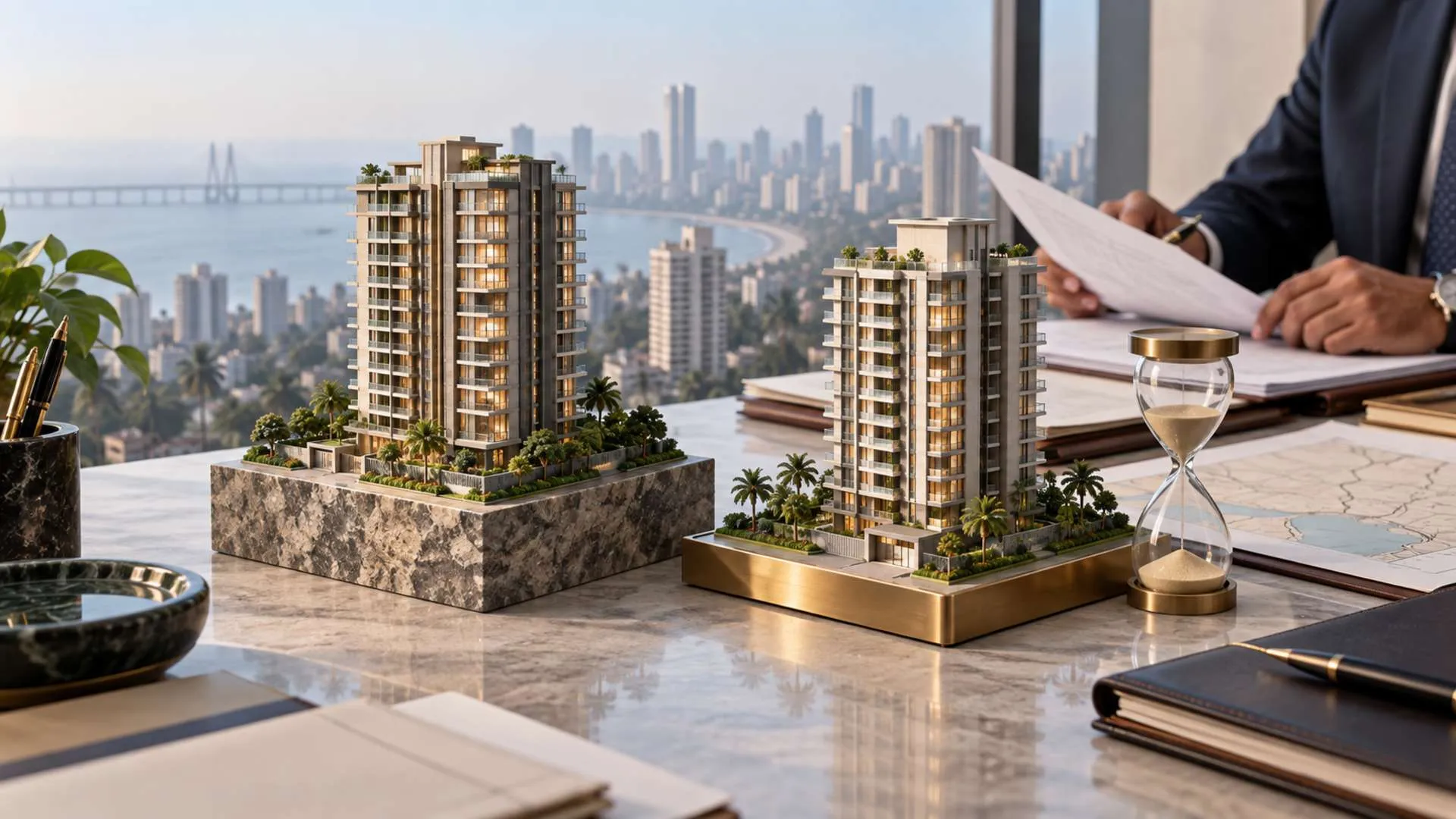


Buying a Resale Flat in Pune: Complete Process Guide 2026
Learn how to buy a resale flat in Pune in 2026.
SHARE:
A flat that has been resold in Pune is able to provide something that is often lacking in new developments: an established neighbourhood, a fully completed house, evidence of good construction work, and ready occupation. Before making a decision, buyers can look at the actual view, talk to the residents, and work out the cost of any renovations they may need.
It does not follow that a flat that is ready to move into can be purchased right away, since earlier mortgages, incomplete transfers of title, the absence of building approvals, or unpaid society fees can turn a promising opportunity into a prolonged dispute.
No matter whether the property in question is a resale flat in Kharadi, Baner, Wakad, Hinjawadi, Viman Nagar or Koregaon Park, the procedure must start with the documents and not with the token payment.
The safest course of action is to check the seller, the title, the approvals, the mortgage and the dues first; then negotiate the commercial terms; and only after the legal and financial conditions have been met should the stamp duty be paid and the sale deed be registered.
What Documents Should I Check Before Buying a Resale Flat in Pune?
Before buying a resale flat in Pune, check the seller’s registered sale deed, complete ownership chain, Index II records, sanctioned building plan, Completion or Occupancy Certificate, society share certificate, property-tax receipts, maintenance statement and utility dues. Also investigate mortgages, court disputes, acquisition notices and third-party claims through an independent property lawyer.
If the seller purchased the home from a developer, examine the original agreement for sale, possession letter and allotment-related documents. If it has changed hands multiple times, every intervening registered transfer should form an unbroken title chain.
PNB Housing Finance recommends reviewing the ownership history, 20 to 30 years where applicable, along with the building plan, Occupancy Certificate, tax receipts and outstanding liabilities.
Do not rely only on photocopies, a broker’s assurance, or the fact that a bank previously financed the flat. Ask to inspect the originals and match names, areas, parking rights and document numbers across the records.
The Step-by-Step Process for Buying a Resale Flat in Pune
1. Inspect the Flat, Building and Neighbourhood
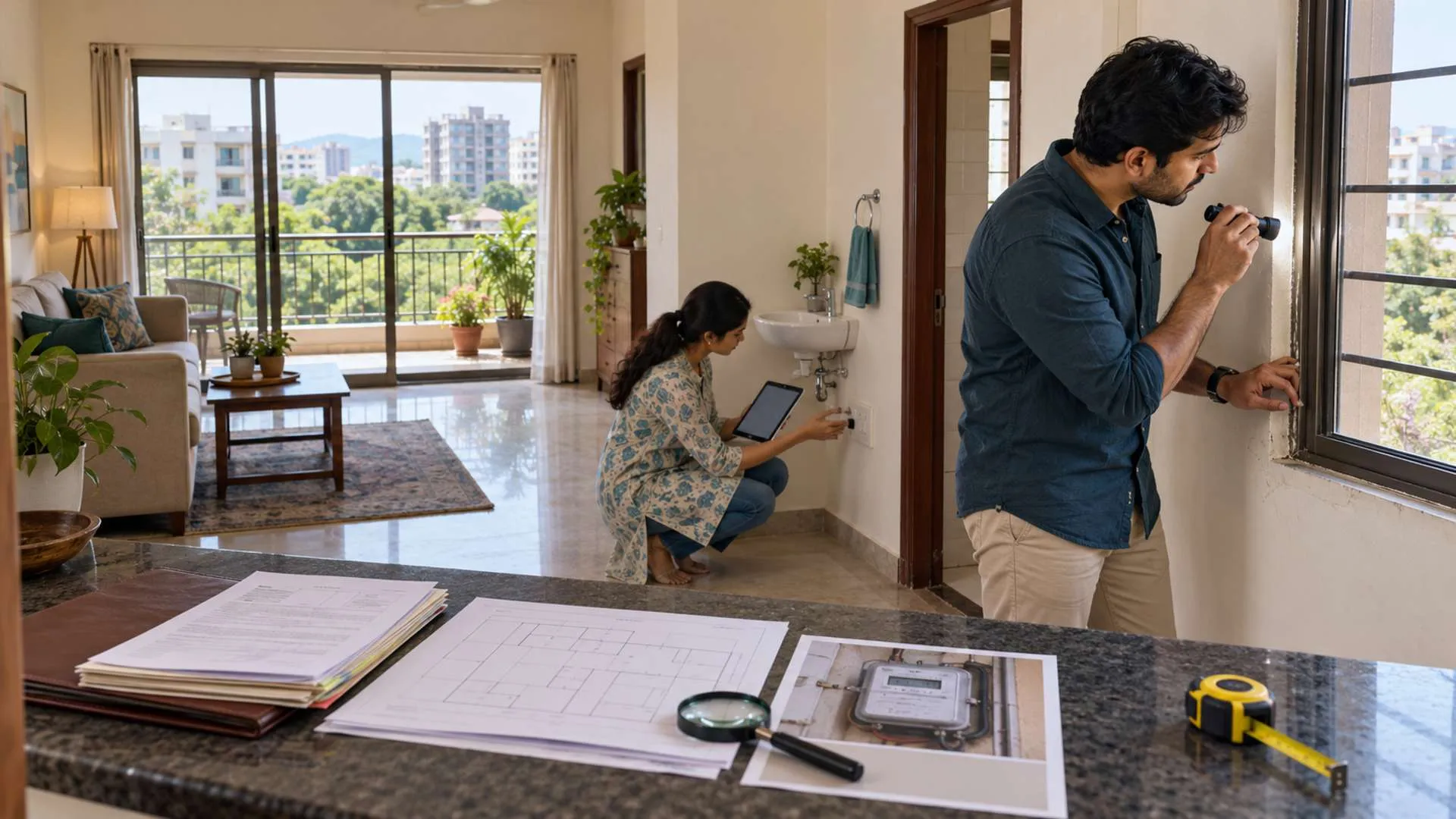
Begin with the physical property. Verify the carpet area against the agreement, examine seepage and cracks, test plumbing and electrical points, and inspect windows, doors, lifts and parking.
A monsoon visit can reveal water ingress, drainage problems and basement flooding that may not appear during the dry season. Speak privately with residents about water supply, maintenance, redevelopment discussions, structural repairs and disputes within the society.
A resale flat versus new launch decision should also account for renovation. Older homes may provide larger rooms in established locations, but rewiring, waterproofing, plumbing and kitchen replacement can materially increase the final cost.
2. Confirm the Seller’s Identity and Authority
Match the seller’s identity with the registered title documents, society records and tax receipts. If there are joint owners, all owners must participate in the transaction or act through a valid, adequately stamped and legally acceptable Power of Attorney.
Where an owner has died, verify the succession documents, will, probate requirements where applicable, legal-heir position and transmission in the society records. For an NRI seller, obtain specialist advice on the Power of Attorney, repatriation documents and tax deduction under the applicable income-tax provisions.
3. Commission an Independent Title Search
A title search is more than downloading one Index II. It examines how ownership moved from the original landholder or developer to the present seller and whether those transfers were properly stamped and registered.
Legal Assure identifies confirmation of the seller’s title and verification of the original builder documents as early steps in a resale transaction.
In Maharashtra, registered-document information may be available through the Department of Registration and Stamps’ systems. Nevertheless, an Index II or online search should not be treated as a complete guarantee against every encumbrance. A property lawyer should examine registered records, revenue or property-card entries, litigation and other applicable searches.
A “30-year title check” is a common due-diligence benchmark, but the appropriate search period depends on the property’s history. Older, inherited, leasehold, or redeveloped properties may require a wider investigation.
4. Verify the OC, CC and Sanctioned Plans
The Occupancy Certificate, or OC, indicates that the competent authority has permitted occupation of the completed building or relevant portion. A Completion Certificate and sanctioned plans help establish whether the construction followed approved permissions.
For Pune properties, the issuing authority could be the Pune Municipal Corporation, Pimpri-Chinchwad Municipal Corporation, PMRDA, or another competent planning authority, depending on the location and approval history.
Do not verify the OC by merely checking whether the seller possesses a scanned copy. Match its number, date, building or wing, floors and property description with authority records. If online information is incomplete, obtain certified confirmation or conduct verification through the relevant building-permission department.
The MahaRERA possession-stage guidance is also useful when checking a registered project’s disclosed completion and possession records. However, not every old resale property falls within the same MahaRERA disclosure framework.
A flat without a valid OC can create problems with finance, occupation, resale and essential services. Seek legal advice before proceeding merely because the asking price is lower.
5. Check Society Records and Outstanding Dues
Ask the cooperative housing society or apartment association for the share certificate, maintenance ledger, details of major repair contributions and information about pending disputes or notices.
A society NOC is frequently requested in resale practice and may be required by a lender or under property-specific procedures. However, it should not be described as a universal statutory precondition for every sale registration.
The more important checks are whether the seller is recognised in the society records, shares have been properly issued or transferred, dues are cleared and the flat is not subject to an undisclosed claim.
Also confirm whether parking is legally documented or merely allotted for use. A seller cannot necessarily transfer ownership of a common parking area simply by mentioning it in a broker’s quotation.
6. Handle an Existing Home Loan Carefully
A mortgaged resale property can be purchased, but the lender’s charge must be released through a controlled payment process.
Ask for the seller’s latest loan statement, foreclosure amount, list of original documents held by the bank and written instructions for closing the loan. The buyer or the buyer’s lender may pay the outstanding amount directly to the seller’s bank rather than routing it through the seller.
After repayment, obtain the bank’s loan-closure letter or NOC, original title documents and confirmation that its registered charge has been released where applicable.
Never pay the full consideration while the original papers remain with the seller’s lender without a documented closure and release mechanism.
7. Negotiate the Price and Sign a Detailed Agreement
Price negotiation should consider recent comparable transactions, building age, floor, view, parking, renovation, society condition and outstanding capital expenditure. Asking prices on property portals are not the same as registered transaction values.
Before paying a token, use a written document that clearly makes the transaction conditional on satisfactory title, loan approval, mortgage release and production of specified records. It should state what happens to the token if the seller cannot establish clear and marketable title.
The final agreement or sale deed should accurately record the consideration, payment schedule, possession date, flat area, fixtures, parking arrangement, tax responsibilities, default consequences and delivery of original documents.
8. Calculate Stamp Duty, Registration and Tax Compliance
Stamp duty applies to resale property and is generally calculated on the higher of the agreement value or the applicable ready-reckoner value. Registration charges also apply.
Although “7% stamp duty and 1% registration” is frequently used as an indicative search phrase, it should not be presented as a universal Pune rate. The payable amount can vary with municipal levies, purchaser eligibility, government concessions, property type, consideration and statutory caps.
Use the official Maharashtra Registration and Stamps fee calculator and obtain a transaction-specific calculation before execution.
Where the seller is a resident and the statutory conditions are met, the buyer may also have to deduct tax at source on the property consideration. Transactions involving NRI sellers follow different rules and require professional tax advice.
GST is generally not charged merely because a completed flat is being resold, but stamp duty, registration, brokerage, legal fees, loan expenses and renovation must still be included in the acquisition budget.
9. Register the Sale and Complete the Handover
Pay the applicable stamp duty, schedule registration at the jurisdictional Sub-Registrar office and ensure that all required parties and witnesses attend with valid identification. After execution, preserve the registered sale deed and Index II.
At possession, record meter readings and collect the keys, original documents, society papers, tax receipts, warranties and no-dues confirmations. A written possession or handover note should list the fixtures retained in the flat.
The final stage includes updating society membership, electricity records, property-tax records, nominations and other applicable accounts in the buyer’s name.
Is a Resale Flat in Pune Worth Buying in 2026?
A resale apartment can be valuable for buyers who want an established location, immediate use and greater visibility over the finished product. A ready-to-move flat in Pune can also remove construction-delay uncertainty.
Yet the purchase price is only one part of the decision. Buyers must add renovation, society repairs, legal verification, brokerage, stamp duty, registration and possible mortgage-closure expenses.
The best resale property Pune buyers can find is not simply the cheapest second-hand flat. It is a home with a defensible title, valid approvals, manageable repair costs and a transaction structure that protects the buyer before money changes hands.