

Pune Rental Yields Compared: Which Neighborhood Delivers More in 2026?
Pune Rental Yield 2026: Which Neighborhood Offers the Best ROI?
SHARE:
The rental market in Pune is no longer tied to a single employment district. Technology parks at Hinjawadi and Kharadi, corporate offices around Magarpatta, PCMC industrial economy and education hubs across the city create a number of distinct tenant catchments.
It’s an attractive but sometimes confusing question for investors: Which neighborhood gets the most rent for its purchase price?
Market estimates published in the literature vary widely. Some peg Pune’s highest residential yields at nearly 5.5%, while others cite local averages nearer 3-4%. Thus, claims of regular 5.5-7.5% yields in Hinjawadi or Kharadi need to be cross-checked with the price and achievable rent of the exact apartment.
A high monthly rent does not necessarily create a high rental yield if the property’s acquisition price is equally high.
Which Pune Neighborhood Gives the Highest Rental Yield in 2026?
Hinjawadi, Kharadi and selected Hadapsar properties are among Pune’s strongest residential rental markets in 2026. A realistic gross yield for a well-priced apartment is commonly around 3.5–5%, although individual properties can fall outside this range. Hinjawadi often leads because of its lower entry price, while Kharadi attracts higher-paying tenants near EON IT Park and the World Trade Center.
There is no permanent city-wide winner. The result changes according to apartment size, purchase price, furnishing, vacancy and distance from the employment hub.
Rental Yield Comparison Across Pune Neighborhoods
Rental yield is calculated by dividing annual rent by the complete purchase price and multiplying by 100. A ₹1 crore apartment rented for ₹30,000 a month generates a gross annual yield of 3.6%.
That calculation does not deduct maintenance, property tax, repairs, brokerage or vacancy. According to Roomii’s Pune locality analysis, net yield can be around one to 1.5 percentage points below the headline gross yield after such costs.
Indicative residential ranges reported by the reference sources include:
| Pune neighborhood | Indicative gross yield | Typical 2BHK rent |
| Hinjawadi | 3.5–5.5% | ₹20,000–₹35,000 |
| Kharadi | 3.8–5.2% | ₹28,000–₹42,000 |
| Wakad | 3.5–4.8% | ₹20,000–₹32,000 |
| Baner–Balewadi | 3–4.5% | ₹28,000–₹45,000 |
| Viman Nagar | 3–4% | ₹25,000–₹38,000 |
| Hadapsar–Magarpatta | 3–5% | Varies by township and furnishing |
| Koregaon Park | 2–3.5% | ₹50,000–₹80,000 |
These are directional asking ranges, not assured transaction values. Even within one neighborhood, gated-community amenities, building age and distance from offices can materially change rent.
Hinjawadi or Kharadi: Which Pays More?
Hinjawadi benefits from direct demand generated by Rajiv Gandhi Infotech Park across Phases 1, 2 and 3. Its relatively accessible acquisition prices can help the rent-to-price ratio, particularly for compact 1BHK and 2BHK homes close to major offices.
SHP Realty’s comparison estimates Hinjawadi yields at 4.8–5.5%, with 2BHK rents around ₹20,000–₹27,000. These upper-end yields are more likely when an investor buys at an attractive price and avoids prolonged vacancy.
Kharadi can command higher rent because EON IT Park, World Trade Center and other corporate campuses attract experienced professionals and relocating employees. The same SHP Realty analysis places Kharadi’s indicative yield at 4.5–5.2%, while other sources provide lower estimates.
Apna Vaastu’s Baner-versus-Kharadi analysis places typical Kharadi yields at approximately 4–5%. Its example of a ₹95 lakh home earning ₹40,000 monthly actually produces a gross yield of about 5.05%, not 4.4%.
Hinjawadi may suit cash-flow-focused investors; Kharadi may suit buyers seeking premium tenants alongside rent and appreciation.
Baner, Wakad and Viman Nagar Tell Different Stories
Baner’s lifestyle appeal, restaurants and connectivity to Balewadi and Aundh support tenant stability. However, premium acquisition prices can compress yields. Reported estimates vary from approximately 2% to 4.5%, demonstrating why investors must calculate returns apartment by apartment.
Wakad serves two demand pools: Hinjawadi technology employees and professionals working across PCMC. Rents may be lower than in Baner or Kharadi, but the entry price can produce a competitive 3.5–4.8% gross yield.
Viman Nagar attracts corporate employees, students and frequent travellers because of its airport proximity and established social infrastructure. Indicative yields are commonly around 3–4%. Aundh offers a similarly established family market, usually prioritising stability over maximum yield.
Koregaon Park and Kalyani Nagar generate some of Pune’s highest absolute rents, particularly for large or furnished homes. Their high capital values mean percentage yields may remain moderate. Luxury homes such as Shubh Tristar in Koregaon Park Annexe should therefore be evaluated for tenant profile and capital appreciation, not rent alone.
Can Affordable Pune Areas Generate Better Returns?
Emerging areas can produce higher yields when purchase prices remain low and rental demand is already established.
Tathawade and Punawale benefit from Hinjawadi access, while Ravet serves residents working across PCMC and the western IT corridor. Moshi and Chikhali provide affordable entry near industrial employment. Wagholi draws tenants connected to Kharadi, although commuting conditions vary within the locality.
Undri and Pisoli attract families seeking larger homes near schools at lower rents than central Pune. Their performance depends heavily on road access and the project’s immediate surroundings.
SOBHA’s rental-demand guide lists indicative yields of about 4% for Ravet, Tathawade, Undri and Pisoli. These figures should not be combined with unrelated capital-appreciation claims such as a 14–15% CAGR.
Projects including Saheel iTrend Vesta, Saheel Luxton, Mantra Melange, ARV New Town and other developments require their own yield calculations. A brand name or location cannot determine the return without a verified purchase price, carpet area, possession status and comparable rent.
Does a 1BHK or 2BHK Give Better Rental Yield?
A 1BHK can produce a stronger percentage yield because rent per square foot is often higher and the acquisition price is lower. It may work well near IT parks, colleges and employment hubs with demand from single professionals.
A 2BHK attracts couples, shared tenants and families, creating a wider tenant pool and potentially longer stays. It also carries higher maintenance and acquisition costs.
Furnishing can lift the rent of an IT-corridor apartment. Roomii estimates a 10–20% premium for furnished homes in relevant micro-markets—not a guaranteed 25–35%. Investors should compare the additional rent with furniture costs, damage and replacement.
Short-term rentals can generate higher nightly revenue but involve fluctuating occupancy, active management and society restrictions. They should not be treated as passive equivalents to a long-term registered tenancy.
What Is a Good Rental Yield in Pune?
A gross residential yield of around 3–4% is reasonable, while a verified yield above 4% can be attractive for a well-located apartment with dependable tenants. Net yield matters more than the advertised number.
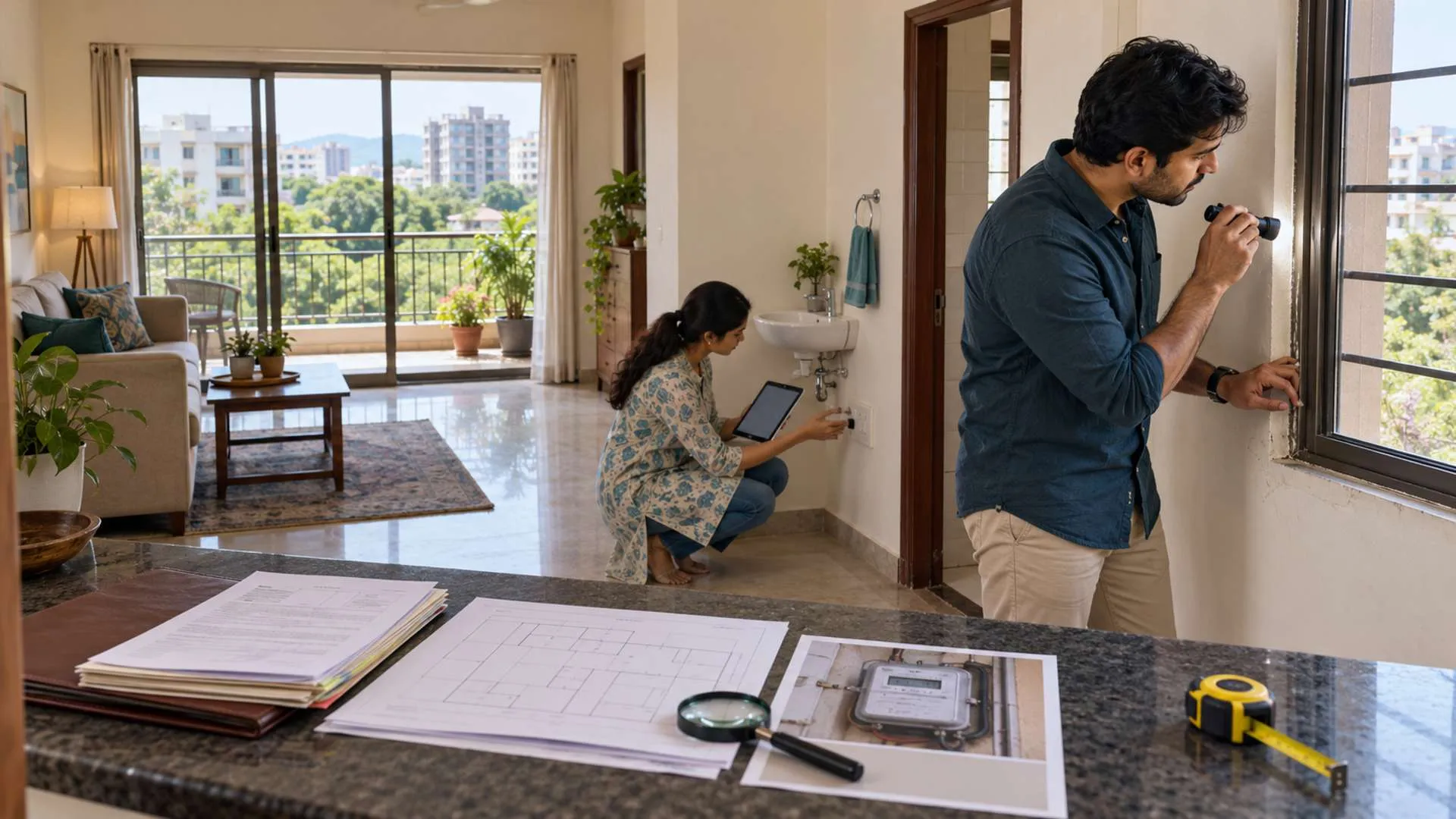
Before purchasing, calculate yield using the all-inclusive acquisition cost and a conservative rent. Deduct at least one month of potential vacancy, annual maintenance, repairs, property tax and management expenses.
The best rental-yield property in Pune is rarely the apartment with the highest rent. It is the one bought at the right price, near genuine tenant demand, with manageable ownership costs.