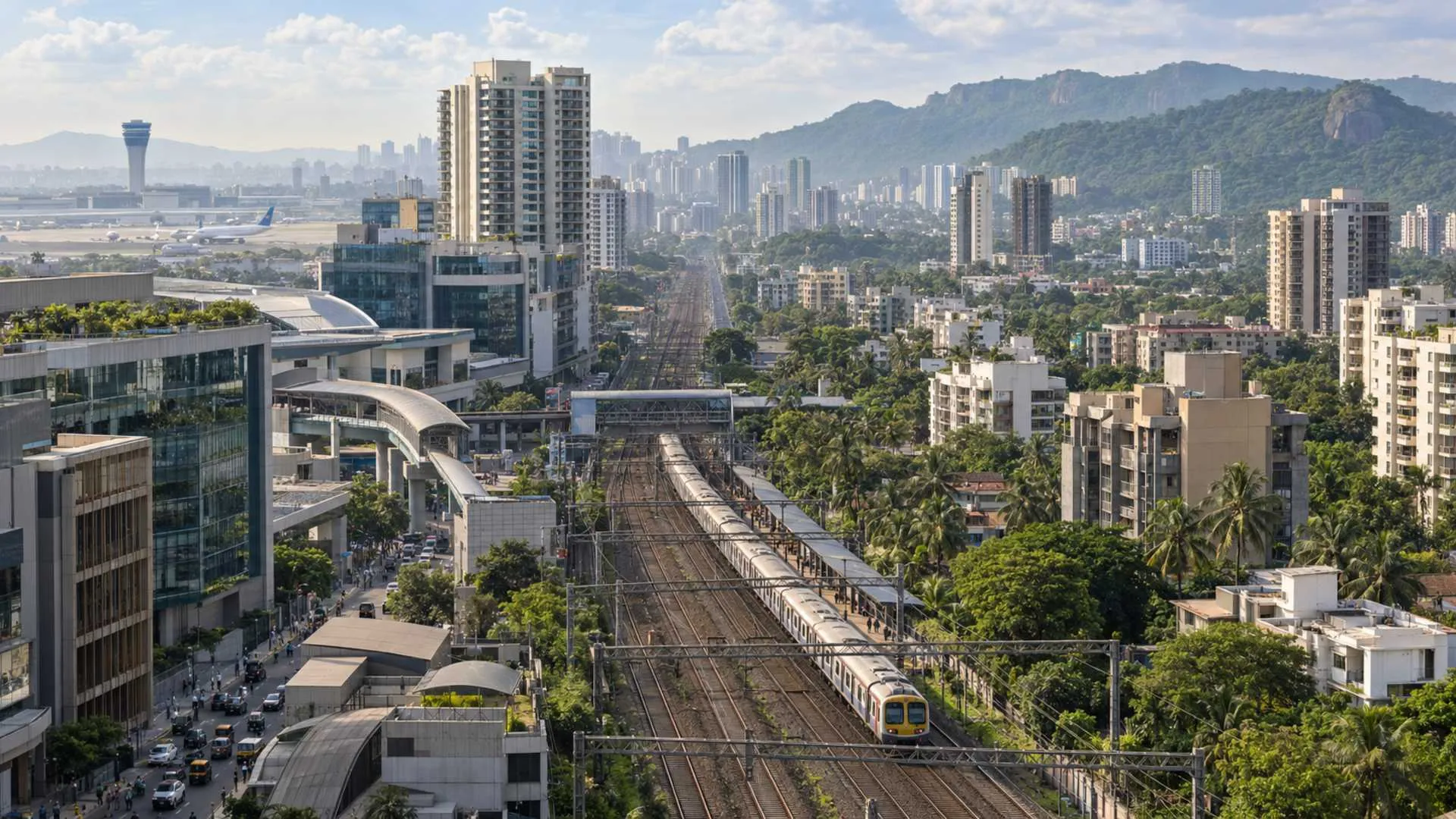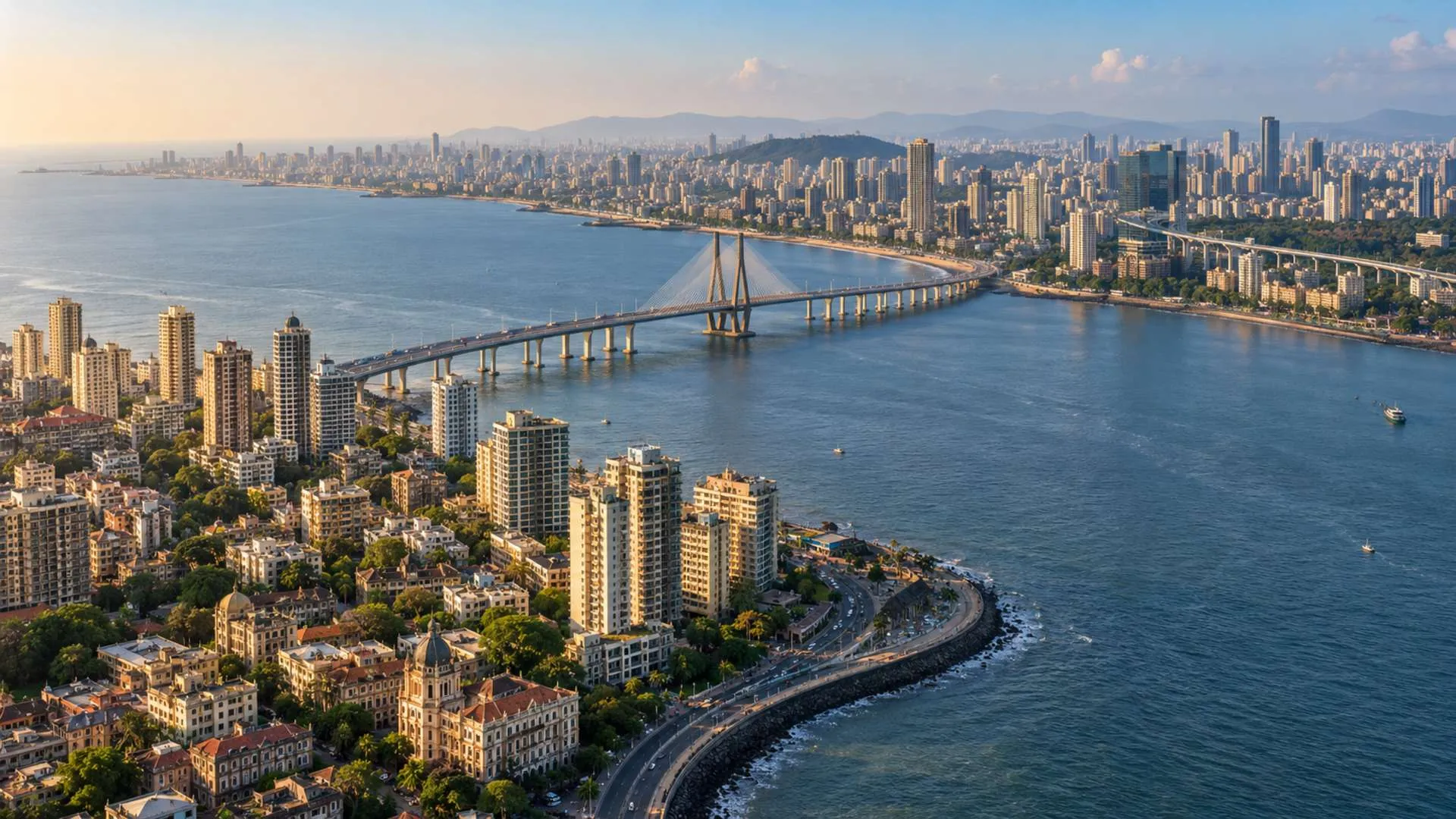


Pune vs Mumbai Property Prices: Which City Is More Affordable?
Compare Pune vs Mumbai property prices in 2026
SHARE:

Mumbai and Pune are linked by an expressway, but their housing markets are in very different price zones. Land in Mumbai is expensive because it is scarce, it offers high-income jobs and it gives access to India’s financial capital. Pune has more spacious homes at lower entry prices and demand supported by technology, manufacturing and education.
Pune vs Mumbai property price comparison for 2026 is a clear winner for affordability, but a more complex investment decision.
Pune recorded 44,265 home sales worth ₹37,048 crore in H1 2026, with the average transacted home price pegged at ₹84 lakh. Mumbai has more depth, scarcity and prestige, but a similar 2BHK can demand a lot more capital.
You have more space and a lighter EMI in Pune, or the scarcity value and larger employment economy in Mumbai.
Is a 2BHK Flat in Pune Cheaper Than Mumbai in 2026?
Yes. A typical 2BHK in Pune may cost approximately ₹45–90 lakh across affordable and mid-market corridors, while comparable Mumbai options can range from around ₹1.8 crore to more than ₹3 crore in established suburbs. Prices vary sharply by locality, carpet area and project stage, but Pune usually gives buyers considerably more space for the same budget.
The comparison changes if “Mumbai” includes Thane, Mira Road, Kalyan or Navi Mumbai. These MMR markets can offer homes below core Mumbai prices, although commute time and municipal jurisdiction must be considered.
What the Latest Price Data Reveals
According to the CRE Matrix–CREDAI Pune H1 2026 report, Pune’s average residential transaction rate reached ₹10,543 per sq ft, up 20% from H1 2022. The average home value increased 38% over the same period to ₹84 lakh.
Pune Central was the city’s most expensive broad micro-market at approximately ₹16,000 per sq ft. Baner, Wakad, Hinjawadi and Balewadi continued to anchor the north-western corridor, while Kharadi and Viman Nagar helped Pune North-East record a 54% rise in average home value from H1 2022.
Mumbai averages require careful reading because some datasets cover the municipal city while others cover the entire Mumbai Metropolitan Region. One 2026 comparison by Synergy Infracon places the MMR average at ₹15,120 per sq ft, with much higher rates in prime Mumbai.
SOBHA’s Mumbai-versus-Pune guide cites an earlier MMR average of ₹17,100 per sq ft from Q2 2025. These figures should not be treated as contradictory without checking their dates, project coverage and calculation methods.
City-wide averages are useful for direction, but a Baner-Andheri or Kharadi-Powai comparison is far more relevant to an actual buyer.
How Much Salary Is Needed to Buy a Home?
A realistic salary calculation begins with the loan, not the property headline. Assume a buyer contributes 20% as a down payment and borrows 80% for 20 years at an illustrative interest rate of 8.5%.
For a ₹1 crore home, an ₹80 lakh loan would create an EMI of roughly ₹69,000. If housing EMIs are limited to 40% of take-home pay, the household would require approximately ₹1.72 lakh in monthly net income, excluding other debts.
For Pune’s ₹84 lakh average transacted home, a 20% down payment would leave a ₹67.2 lakh loan. The indicative EMI would be around ₹58,000, requiring about ₹1.45 lakh in monthly take-home income under the same 40% rule.
A ₹1.47 crore Mumbai home financed at 80% would produce an indicative EMI above ₹1 lakh, implying monthly take-home income of approximately ₹2.5 lakh. A larger down payment can reduce this requirement considerably.
Therefore, claims that ₹75,000 is sufficient for a typical Pune home or ₹1.57 lakh for a Mumbai home are possible only under different assumptions, such as a cheaper property, joint income, longer tenure, or a substantially larger down payment.
Bank eligibility answers whether a lender may approve the loan. Affordability answers whether the buyer can live comfortably after paying it.
What Does the Same Budget Buy?
A ₹1.2 crore budget can enter several established Pune markets, including parts of Wakad, Hinjawadi, Kharadi, Hadapsar and PCMC. Depending on the project, it may secure a spacious 2BHK or even a compact 3BHK.
In Mumbai city, the same budget is unlikely to buy a conventional 2BHK in Andheri, Goregaon, Powai or most established western suburbs. Buyers may need to consider a compact 1BHK, an older resale property, or locations farther north and east.
For Mumbai-linked buyers, Mira Road, Kalyan, Thane and Navi Mumbai widen the search. The key comparison then becomes Pune affordability versus an MMR commute, rather than Pune versus South Mumbai.
Pune-versus-Mumbai cost data also indicates materially lower rents in Pune. Its community-sourced May 2026 estimates place a city-centre 2BHK at ₹35,000 per month in Pune and ₹1.1 lakh in Mumbai. These are broad estimates rather than guaranteed market quotations, but they illustrate the housing-cost divide.
Stamp Duty and the Real Purchase Cost
Stamp duty cannot be calculated from the city name alone. The effective Maharashtra rate depends on location, buyer profile, local cess and the rules applicable on the registration date.
Some 2026 market guides describe an effective rate of approximately 6% for male buyers in Mumbai and 7% in Pune because of additional local levies, with a one-percentage-point concession for qualifying female ownership. Buyers must confirm the current rate through Maharashtra’s official registration system before budgeting.
The total purchase cost may also include registration fees, GST on eligible under-construction homes, parking, maintenance deposits, floor-rise charges and loan expenses.
On a ₹1 crore property, even a one-percentage-point difference represents ₹1 lakh. However, Mumbai’s higher base property value will usually have a much greater effect on the total outlay than the duty-rate difference.
Which City Offers Better Investment Value?
Mumbai benefits from land scarcity, large employment clusters, redevelopment and deep end-user demand. It can suit buyers seeking capital preservation, premium addresses and long-term liquidity. Its weakness is a high acquisition price that often compresses rental yield.
Pune typically offers a lower entry ticket and potentially stronger percentage rental yield near IT corridors. DLF’s market comparison places Pune yields broadly around 3–4%, compared with approximately 2–3% in premium Mumbai neighbourhoods. Actual yield must be calculated from the achievable annual rent and complete acquisition cost.
Pune is not automatically the stronger appreciation market. New supply can restrain prices in individual corridors, while Mumbai’s scarcity can support values despite lower rental returns.
Choose Mumbai if your career, family and daily life are firmly tied to the city and the EMI remains comfortable. Choose Pune if space, lower acquisition cost and rental yield carry greater weight.
For most first-time buyers comparing similar-quality homes, Pune delivers better affordability in 2026. For buyers with deeper capital seeking scarcity and metropolitan access, Mumbai retains its premium.
Before booking, compare RERA carpet area, all-inclusive cost, actual commute and EMI stress, not merely the advertised price. To evaluate verified options across Pune, Mumbai and the wider MMR, connect with RealtyConnect.