

Infrastructure Is Reshaping India’s Property Appreciation
How Infrastructure Drives Property Appreciation in India
SHARE:
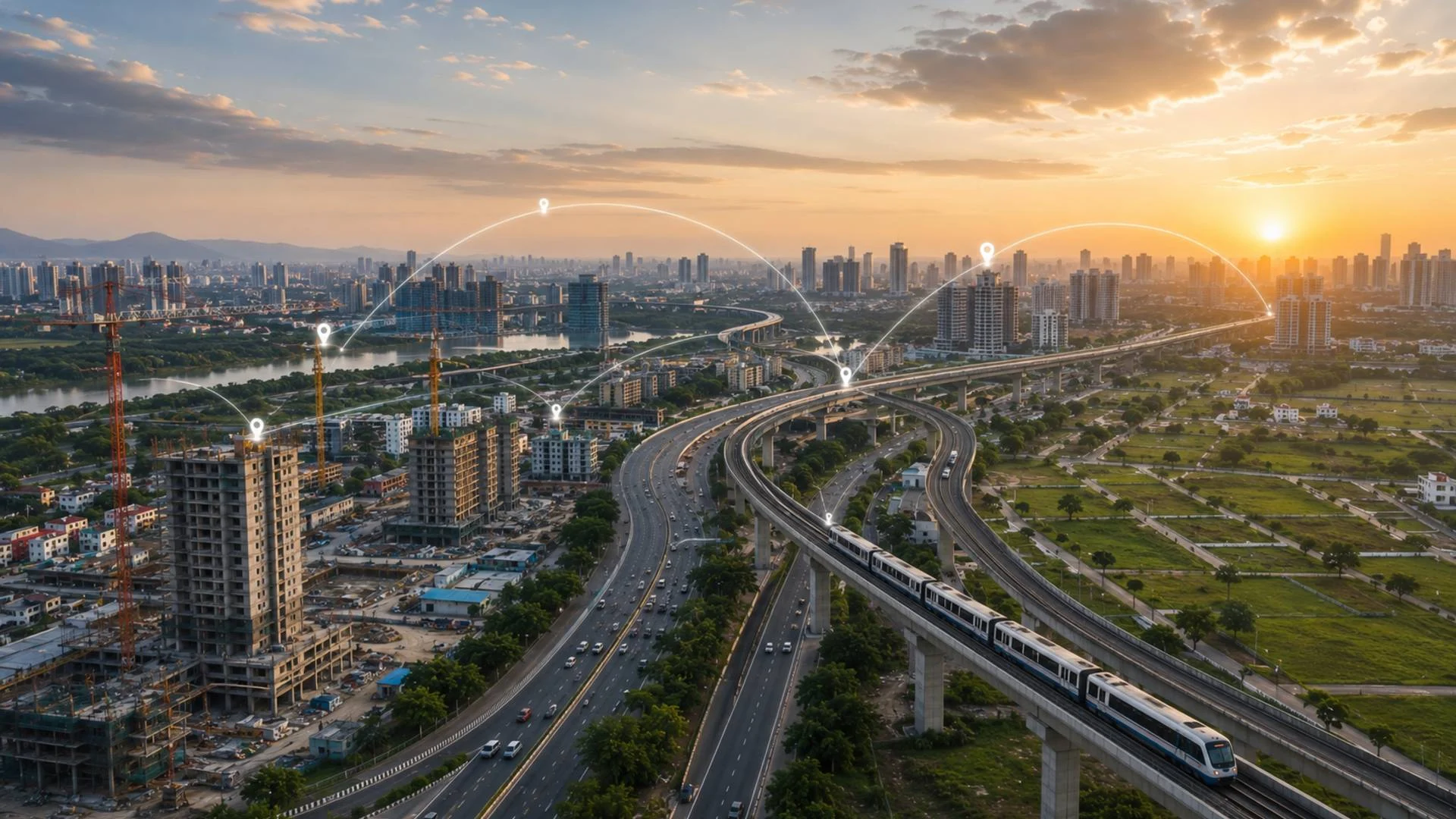
A road under construction may not look like an investment opportunity. A Metro pillar rising above traffic may seem like another public project. Yet, for seasoned real estate investors, these are often the earliest signs of tomorrow’s property hotspots. The infrastructure is the biggest driver of property appreciation in India; 2026 is no longer just a market prediction. It is becoming the biggest factor influencing where buyers choose to invest.
As India’s connectivity network expands, how infrastructure impacts property prices in India 2026 has become one of the most searched questions among homebuyers and investors.
Why Infrastructure Has Become the New Growth Engine
Property appreciation today is increasingly linked to connectivity rather than just location. According to Godrej Properties and Ratnaakar, infrastructure projects improve accessibility, reduce travel time and encourage commercial development, all of which strengthen residential demand.
This trend is driving infrastructure-led property appreciation in India real estate, with buyers actively tracking upcoming highways, Metro lines and Ring Roads before purchasing.
Metro, Highways and Ring Roads Are Changing Buyer Behaviour
One of the strongest growth triggers is improved mobility. As highlighted by Classic Group and Housiey, metro, highway and Ring Road property appreciation in India has consistently outperformed areas without major infrastructure upgrades.
Industry observations suggest that metro station 15-20% immediate property appreciation in India is becoming increasingly common as Metro stations become operational and commercial activity follows.
Similarly, Ring Road: 20-30% property appreciation 3-5 years India has been observed across several developing corridors where new road networks unlock previously underdeveloped land.
Connectivity Creates More Than Convenience
The biggest benefit of infrastructure is not simply shorter travel time. It creates entirely new residential ecosystems.
According to Venkatesh Buildcon and KS Group India, a commute time reduction of 20-30 minutes often becomes a deciding factor for both end users and investors. Better connectivity attracts offices, schools, hospitals, retail centres and hospitality projects, creating sustained demand.
This explains why infrastructure drives property prices in India 2026 across both metro cities and rapidly growing Tier 2 destinations.
The Biggest Winners Have Stacked Infrastructure
Experts increasingly refer to “stacked infrastructure” as the strongest appreciation catalyst.
When multiple infrastructure projects converge, property values tend to grow faster. LiveHomes and Divya Sparsh Group explain that stacked infrastructure- rail, highway and airport maximises appreciation and drives stronger long-term demand because buyers benefit from several connectivity advantages instead of just one.
Examples include:
- Pune Ring Road and Metro Line 3
- Mumbai Trans Harbour Link and Coastal Road
- Delhi Mumbai Expressway
- Bengaluru STRR
- Hyderabad Metro Phase 2
These projects are reshaping investment patterns across India’s fastest-growing corridors.
Government Investment Is Supporting Long-Term Growth
Infrastructure spending continues to remain one of the strongest drivers of real estate confidence.
According to industry reports referenced by REMI Education and The Times of India, the government’s ₹12.2 lakh crore capex infrastructure property impact in India is expected to improve connectivity, logistics and urban development across multiple states.
Research published in the International Journal of Scientific Advances and Technology (IJSAT) also highlights the direct relationship between infrastructure investment and long-term real estate appreciation.
Where Smart Buyers Are Investing
Today’s experienced investors are not simply buying in popular locations. They are identifying projects before infrastructure becomes operational.
Many experts recommend focusing on:
- Upcoming Metro stations.
- Ring Road corridors.
- Expressways and industrial corridors.
- Transit Oriented Development zones within 500 metres to 1 kilometre of Metro stations.
- Areas supported by airports and multimodal transport networks.
As noted by Godrej Properties, CBRE, JLL, Knight Frank and Colliers, early investments near planned infrastructure have historically generated stronger appreciation than purchases made after projects are completed.

Conclusion
Infrastructure has evolved from being a supporting factor to becoming the foundation of real estate appreciation. Buyers who understand connectivity trends today are positioning themselves for tomorrow’s highest-growth markets. Whether it is a Metro corridor, Ring Road, expressway, or airport project, investing before infrastructure is fully operational often offers the greatest upside.
Stay ahead of India’s evolving real estate market with the latest infrastructure updates, property trends and investment insights at www.realtyconnect.tech and make smarter investment decisions before the next growth corridor becomes tomorrow’s premium destination.