

Could Airports Become India’s Next Major Business and Entertainment Districts?
Airport Cities in India: Buyer Checks & Real Facts
SHARE:
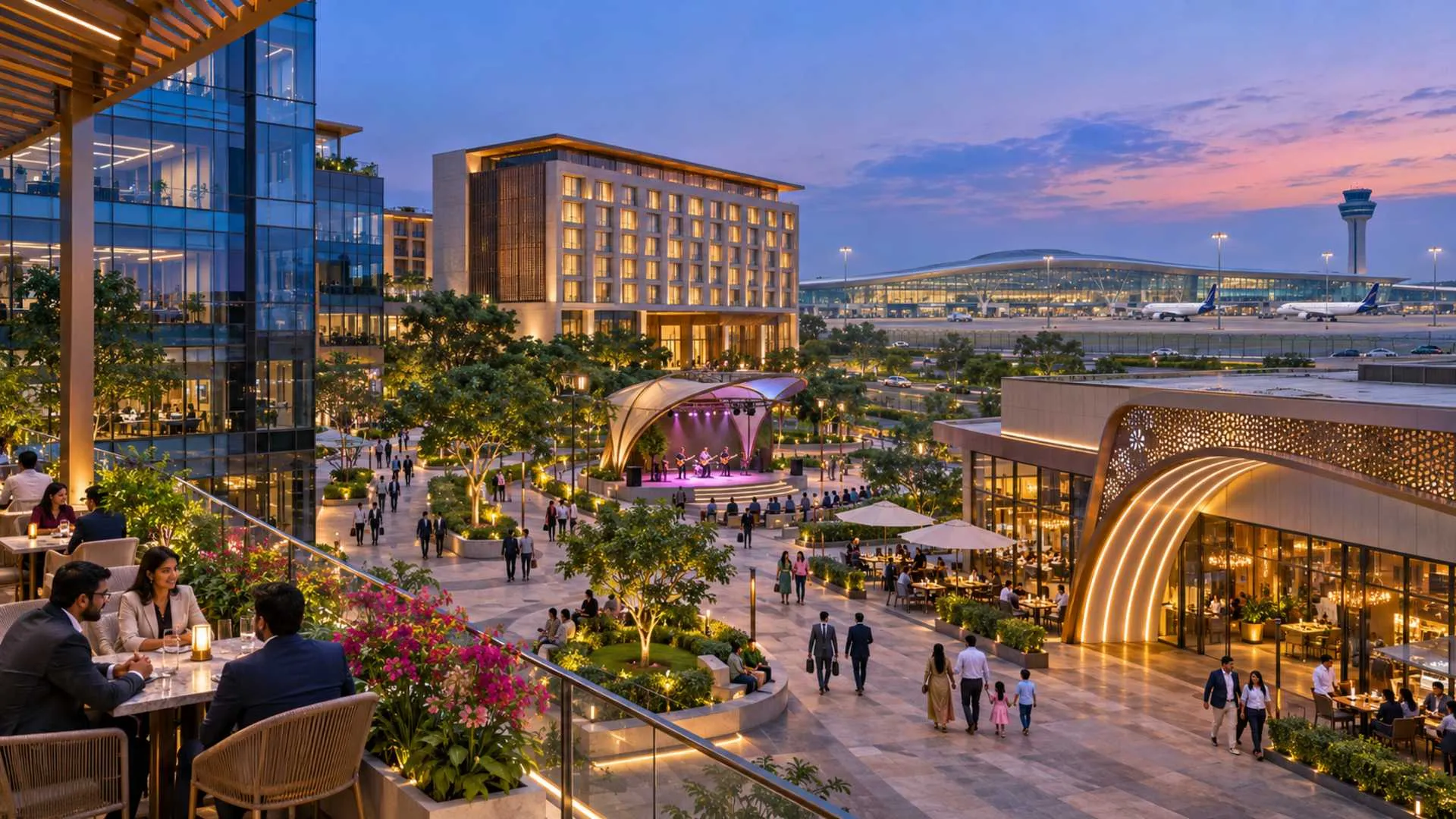


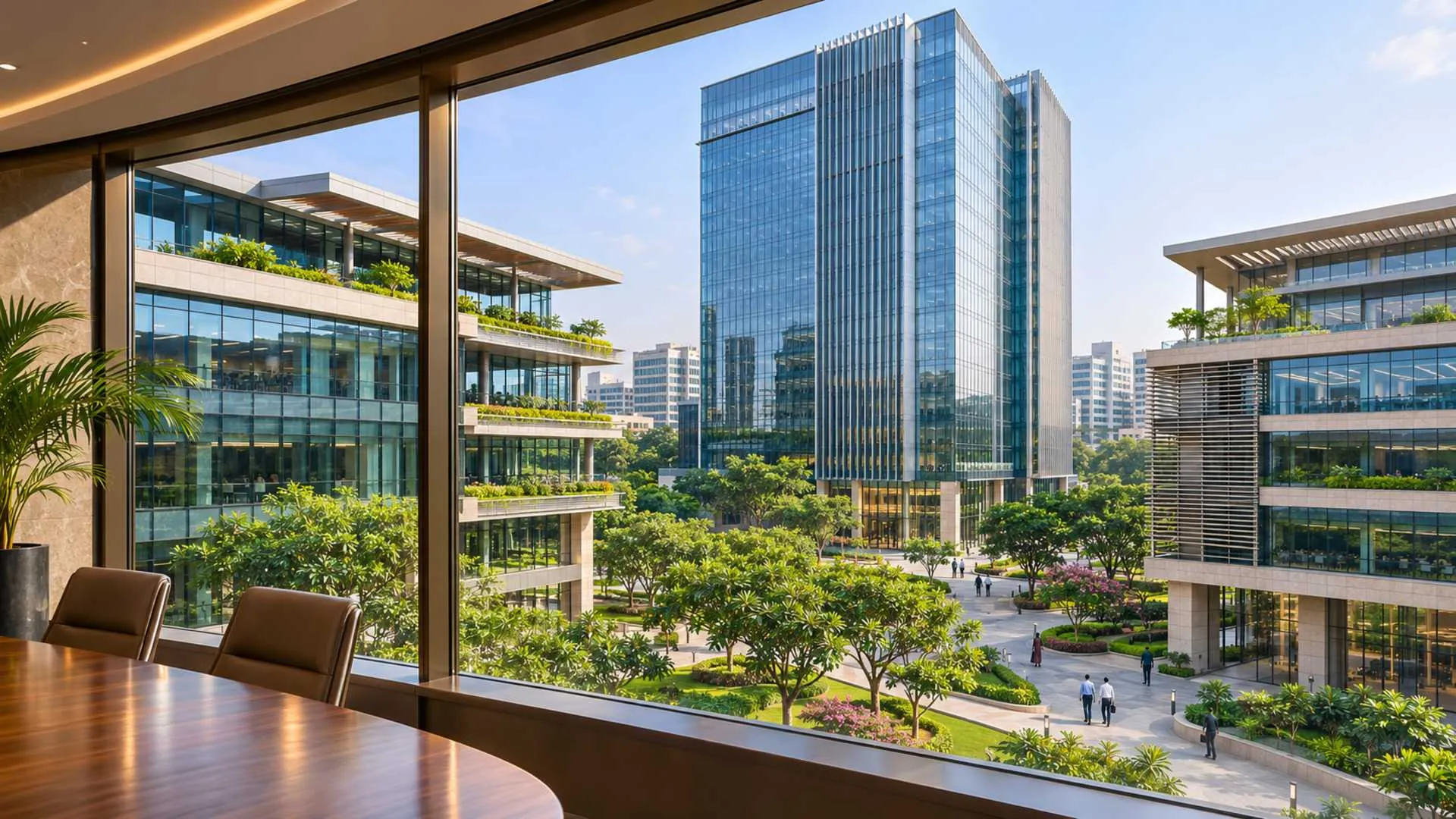
Airports are becoming hubs for business. These developments incorporate business, hotels, retail, conferences and leisure. In June 2026, Adani announced investments of over 20,000 crores in phase one of its six airport developments. Delhi Aerocity is an example. However, the value that businesses and real estate investors get out of these hub developments depends on them being functional and accessible for business throughout the week, with employment opportunities, consumer demand and reasons to visit.
Could Airports Become Business and Entertainment Districts in India?
Yes. India’s airport-city model combines aviation access with offices, hotels, retail, dining, conventions and leisure facilities. Delhi Aerocity offers an established example, while other locations are developing or planning their own versions. Their success depends on attracting businesses and local visitors alongside passengers, supported by reliable surface transport.
What Is an Airport City and How Is an Aerotropolis Different?
An airport city brings commercial activity into the airport’s wider estate and surroundings. An aerotropolis describes a broader pattern of urban development organised around an airport, potentially extending into business, logistics and residential corridors.
In its August 2026 article, Colliers describes aviation infrastructure as an anchor for an ecosystem of business, technology, hospitality, logistics and mixed-use development. The airport becomes an organising force for economic activity rather than functioning solely as a transport facility.
The distinction matters for real estate. An office within a planned airport district and a housing project advertised as “near the airport” are different propositions. They may have different access routes, infrastructure and development timelines.
For readers following airport-led development in India, the important question is where the proposed economic activity will actually occur.
Adani’s ₹20,000-Crore Plan Shows the Scale of the Ambition
Adani Airport City Limited’s announcement of 25 June 2026 outlines development across Mumbai, Navi Mumbai, Ahmedabad, Lucknow, Jaipur and Guwahati.
| Announced measure | First-phase programme |
|---|---|
| Investment | More than ₹20,000 crore |
| Planned development | Approximately 22 million sq ft |
| Overall land bank | More than 655 acres across six airports |
| Investment concentration | Nearly 70% planned for Mumbai and Navi Mumbai |
| Proposed uses | Hospitality, business, retail, entertainment and conventions |
The proposed destinations are intended to serve travellers, businesses and local communities. That last group is central to the entertainment proposition: a district needs reasons for city residents to visit even when they are not flying.
The commercial test will be whether each phase attracts enough activity to support the next. A hotel, office block and shopping destination may reinforce one another, but their opening dates and customer demand must align.
An announced investment establishes ambition. Open buildings and sustained footfall establish a district.
Delhi and Bengaluru Reveal Two Stages of the Airport-City Story
Delhi Aerocity demonstrates that an airport-linked address can become a destination beyond passenger travel.
GMR’s Aerocity information describes a district exceeding 230 acres, with more than 4,000 hotel rooms and a mix of offices, food and beverage outlets, and retail. It brings business, hospitality and social activity into the same area.
Expansion continues alongside that operating base. GMR Airports’ FY2025–26 annual report records projects at different stages, including commissioned office development and further construction. This is a useful reminder that even an established airport city evolves building by building.
Bengaluru illustrates the wider development ambition. IHCL’s hotel-signing announcement describes Bengaluru Airport City’s planned combination of business, medical and biotech parks, hospitality, retail, convention facilities and entertainment. Its agreement for a 775-room hotel complex is evidence of a hospitality partnership; the announcement alone should not be read as confirmation that the hotels are operational.
Together, the examples show why airport-city comparisons need careful labelling. Existing facilities, construction projects and long-term master plans should not be presented as equivalent.
Why Entertainment Could Become an Important Part of the Mix
Offices give people a reason to arrive for work. Restaurants, shopping and events can give them reasons to remain afterward, or visit on another day.
That creates a plausible business case for entertainment within an airport district. Conference delegates need places to eat and meet. Hotels benefit when visitors have activities nearby. Local audiences can support venues beyond the travelling population.
India already has a concrete example of this direction. PVR’s February 2023 stock-exchange disclosure announced a five-screen multiplex at Chennai’s Aerohub, describing it as the country’s first multiplex within an airport complex. The launch demonstrates how entertainment has entered airport development, rather than remaining a general master-plan idea.
However, the ability to attract local visitors is the decisive test. Operators should make access arrangements, parking charges and opening hours clear. A venue that is difficult to reach may struggle to convert airport proximity into repeat visits.
The strongest entertainment districts will need to work as city destinations in their own right.
Offices, Hotels and Logistics Need Different Kinds of Connectivity
The airport-city opportunity is not one uniform property market.
A corporate office may value domestic and international travel access, but employees still need a practical daily commute. A hotel depends on its own combination of passenger, corporate, convention and leisure demand.
Logistics has another requirement: moving goods efficiently between cargo facilities, warehouses and production locations.
CIJ.World’s October 2026 analysis identifies pharmaceuticals, electronics, perishables, manufacturing and e-commerce among the activities that can support airport-related logistics demand. It also emphasises the importance of links with expressways and industrial corridors.
For businesses choosing space, “minutes from the terminal” is therefore only one measure. Test the actual route used by employees, customers, or goods.
A district designed to serve several sectors must accommodate their different movements. The passenger entrance, office commute and freight route are not interchangeable.
What Does Airport-Led Development Mean for Nearby Housing?
The residential opportunity follows employment and everyday accessibility.
Airport districts can support jobs across hospitality, offices, logistics, maintenance and services. Housing within practical commuting distance may benefit as those activities become established.
CIJ.World treats residential growth as a secondary effect of the airport economy, rather than assuming housing demand appears automatically when an airport is announced. It also cautions that weak traffic, limited cargo activity or poor surface connectivity can constrain surrounding development.
For homebuyers, that suggests a more useful approach than buying solely on an airport-distance claim.
Ask which employers are operating, how people reach them and whether the surrounding neighbourhood already supports daily life. A future business district may be relevant to a long-term decision, but schools, shops and the current commute still matter.
Airport proximity creates a location story; occupied workplaces help establish a housing-demand story.
What Property Buyers Should Check Before Following the Airport Buzz
Airport-linked development deserves the same scrutiny as any major infrastructure-led property purchase. Start with these questions:
- Development stage: Is the nearby project announced, under construction, or operational?
- Actual access: What is the journey to the terminal, workplace and city centre?
- Demand: Which businesses, hotels or institutions are already functioning?
- Daily living: Are essential services available without depending on future phases?
- Location conditions: What do site visits reveal about noise, traffic and access at different hours?
- Documents: Have the property’s title, permissions and applicable restrictions been checked independently?
Also separate rental demand from visitor demand. More people using an airport does not establish how many will rent homes in a particular neighbourhood.
Visit on a working day and an evening. An attractive master plan cannot show you a congested junction or the experience of reaching your own building.
Could Airport Cities Change India’s Real Estate Map?
Selected airports could become substantial business and entertainment districts. The direction is visible in Adani’s announced programme, Delhi’s established mixed-use environment and Bengaluru’s broader development plans.
The winners will need to combine flight connectivity with the less glamorous essentials of successful urban places: convenient access, functioning infrastructure, occupied buildings and public spaces people want to use.
The airport city becomes convincing when people choose to work, meet or spend an evening there without needing a boarding pass. Before making a property decision around that promise, compare what is operating with what remains planned.