

More Than One in Three Home Deals: Why Consider Resale?
Resale Flat vs New Launch: The ₹40 Lakh Difference
SHARE:
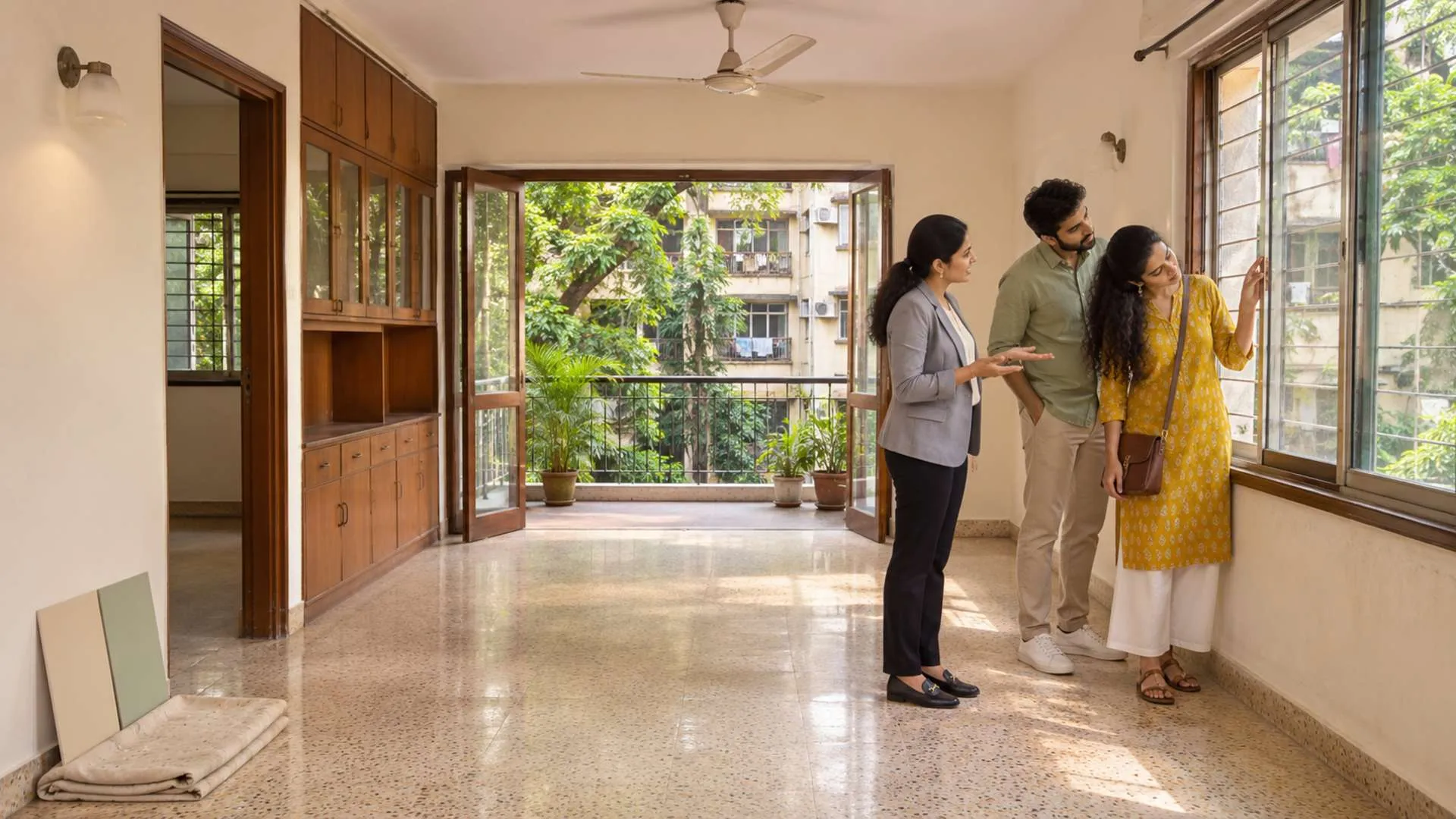


In certain markets, you may find ‘off plan’ homes. In FY25, off plan units made up 43% of residential units registered in the Square Yards tracked markets. Buying these can offer multiple advantages. Compared to new units in India in 2026, buyers can be assured of quality of build, a known community and could move into the property quicker. However, potential renovation works, bank valuations and legal checks may affect how attractive they are. The best purchase will be the one to come out on top when all costs are taken into consideration.
Is a resale flat cheaper overall than a new launch?
A completed resale flat can cost less than a comparable new launch after adding renovation and transaction expenses. It generally avoids GST on the property sale and can reduce rent paid while awaiting possession. However, compare equivalent areas, building condition, financing, outstanding dues and repair liabilities before deciding.
43% of Tracked Home Transactions Are Resale: What Changed?
New launches dominate advertising. Existing homes account for a substantial share of actual transactions.
Square Yards’ FY25 research recorded approximately 5.44 lakh residential registrations across its tracked markets, compared with 3.07 lakh in FY19. Secondary transactions reached 2.33 lakh, rising approximately 91% from 1.22 lakh.
The secondary market’s share increased from 38% to 43%, while primary transactions retained 57%.
These figures cover specified markets, including Bengaluru, Hyderabad, Pune, Mumbai, Thane, Navi Mumbai and Noida–Greater Noida and include apartments, plots and villas. They are not a census of every Indian home sale.
The implication is straightforward: resale deserves a place on the shortlist, alongside developer inventory.
New Homes Command a Premium: Where the Gap Widens
A new-home premium of 22–23% over resale in Mumbai and Pune makes the comparison worth investigating.
Business Today’s March 2026 coverage of 1 Finance Magazine research, using data through December 2025, reported the following differences:
| Market | Reported new-home premium over resale |
|---|---|
| Greater Mumbai | 23% |
| South Mumbai | Approximately 46% |
| Mumbai western suburbs | Approximately 44% |
| Mumbai eastern suburbs | Approximately 30% |
| Thane | 8% |
| Pune | 22% |
| Pune Central | Up to 50% |
These are market-level comparisons, not discounts guaranteed for identical flats. Newer inventory may offer different locations, specifications and amenities.
There is also a mathematical distinction: a new flat priced 23% above resale makes resale approximately 18.7% cheaper than new, rather than 23% cheaper.
A resale flat 10–20% cheaper per sqft than a new launch can therefore be plausible, but the individual property must justify the comparison. Check registered transactions and use the same area measurement.
The Financial Advantage: Completed Homes, GST and Earlier Occupation
The shorthand “resale flat zero GST vs 5% under-construction” needs qualification.
A completed property sale generally falls outside GST, subject to the statutory conditions. Under the prevailing residential construction framework, non-affordable apartments generally attract an effective 5% rate, while qualifying affordable apartments attract 1%.
A completed new apartment can also qualify for no GST on its sale. TOI Homes makes this distinction in its comparison of builder-owned ready-to-move inventory and resale properties. GST savings are therefore primarily relevant when comparing completed resale with taxable under-construction purchases.
Earlier occupation is another advantage. However, resale flat immediate possession in 6–10 weeks versus 12–36 months for construction is a planning assumption, not a guaranteed timetable. Seller relocation, mortgage release, registration and renovation can delay moving in.
Visit during working hours and evenings. An existing neighbourhood lets you inspect water supply, traffic, noise and maintenance rather than rely entirely on promised infrastructure.
Renovation Costs: Add Them Before Calling Resale Cheaper
A lower asking price can lose its appeal when bathrooms, wiring and waterproofing need replacement.
NoBroker’s renovation guide lists broad tiers spanning ₹500–₹2,500 per sqft. Applying those rates consistently produces the following arithmetic:
| Renovation level | Indicative rate | 1,000 sqft | 1,500 sqft |
|---|---|---|---|
| Basic refresh | ₹500–₹800/sqft | ₹5–₹8 lakh | ₹7.5–₹12 lakh |
| Mid-range upgrade | ₹1,000–₹1,500/sqft | ₹10–₹15 lakh | ₹15–₹22.5 lakh |
| Premium remodel | ₹1,800–₹2,500/sqft | ₹18–₹25 lakh | ₹27–₹37.5 lakh |
The resale flat renovation cost of ₹500–₹2,500 per sqft is a starting allowance, not a fixed tariff. A cosmetic refresh and a complete services replacement are different projects.
Obtain itemised quotations for demolition, disposal, plumbing, electrical work, waterproofing and finishes. Check society restrictions and include a contingency for concealed defects.
Fresh paint should never substitute for an inspection.
Home Loans for Resale Flats: Watch the Valuation Gap
Banks finance resale homes, but the agreed purchase price does not automatically determine the sanctioned loan.
ICICI Bank explains that a resale property’s appraisal can fall below the price negotiated between buyer and seller, requiring additional buyer funds or renegotiation.
For example, assume an ₹80 lakh purchase, a ₹70 lakh accepted valuation and an applicable 80% loan-to-value limit. The resulting loan would be ₹56 lakh, leaving ₹24 lakh payable from the buyer’s resources before transaction expenses.
The phrase “resale flat home loan LTV 75–90% bank valuation” describes a range, not an entitlement. RBI’s framework differentiates maximum LTV by loan size; actual lending also depends on repayment capacity and property acceptability. Stamp duty and registration are generally excluded from financed property cost, subject to a limited exception.
Compare written offers. Do not assume either identical rates or an automatic resale surcharge, and confirm the proposed tenure for an older building.
Resale Flat Due Diligence: Documents Before Deposits
A resale flat due diligence checklist should cover the title deed, encumbrance certificate and society NOC where required, alongside approvals and payment records.
Ask an independent property lawyer to examine:
- Ownership: original acquisition documents, subsequent registered transfers and the seller’s authority.
- Encumbrances: registration searches, existing mortgages and the lender’s release procedure.
- Approvals: sanctioned plans and applicable completion or occupancy certificates.
- Society records: membership or share certificate, dues, transfer requirements and planned major expenditure.
- Liabilities: property tax arrears, litigation, notices and unauthorised alterations.
Bank of Baroda’s home-loan checklist includes the chain of old agreements, title clearance, approved plans, applicable occupancy documents and valuation reports.
An encumbrance certificate alone does not establish a dispute-free title. Your lawyer should determine the appropriate search period and additional enquiries.
Commission an engineer’s inspection where condition, age or visible defects warrant it.
For RERA’s five-year defect liability on resale flat transfers, ownership change does not restart the original possession-based clock. Section 14(3) provides for covered defects to be reported within five years of handover and rectified without further charge within 30 days. RERA’s definition of allottee includes subsequent purchasers. Preserve the original possession evidence and have remaining rights assessed.
Total Cost Comparison: When Resale Wins and When New Does
Consider two hypothetical 1,500 sqft apartments using an identical area basis. These figures demonstrate a method, not current quotations.
| Cost component | New launch | Completed resale |
|---|---|---|
| Assumed price per sqft | ₹10,500 | ₹8,500 |
| Base price | ₹157.50 lakh | ₹127.50 lakh |
| Applicable purchase GST assumed | ₹7.875 lakh | ₹0 |
| Stamp duty and registration allowance: 5% | ₹7.875 lakh | ₹6.375 lakh |
| Interiors or renovation allowance | ₹13.50 lakh | ₹18 lakh |
| Rent while awaiting occupation | ₹6 lakh: 30 months | ₹0.40 lakh: two months |
| Comparison subtotal | ₹192.75 lakh | ₹152.275 lakh |
Illustrative assumptions only. Actual statutory charges vary. Financing interest, brokerage, maintenance overlap and other transaction-specific expenses require separate calculation.
Here, resale saves approximately ₹40.5 lakh, even after a higher renovation allowance. Including stamp duty is essential: leaving it out understates both budgets.
New can still win when its layout, accessibility, operating efficiency or location meets needs unavailable in existing inventory. Completed builder stock also deserves comparison.
For a resale flat vs new flat India 2026 decision, compare total expenditure, cash required upfront and the date you can realistically occupy—not simply the headline rate.