

Buying Property in Pune 2026: The Complete Homebuyer’s Guide
SHARE:

Buying a home in Pune in 2026 is no longer simply about choosing between a 2 BHK and 3 BHK.
The city now boasts distinct property markets, from IT-led Hinjawadi and Kharadi to established Baner and Viman Nagar, fast-growing Wakad and more affordable pockets on the periphery such as Moshi and Chikhali. Factor in home loans, MahaRERA verification, stamp duty, GST, registration and legal due diligence and a ₹1 crore home can quickly become a much bigger financial decision than its brochure price suggests.
Hence, this definitive guide to buying property in Pune 2026 starts with one rule: decide what you can afford comfortably before deciding where you want to live.
Likewise, Belvalkar’s 2026 buyer guide insists that location, legal verification, financing and property inspection all need to be considered before finalizing a purchase. (Belvalkar)
How Much Does It Cost to Buy a Flat in Pune Including All Charges?
A Pune homebuyer should budget beyond the advertised property price for stamp duty, registration, applicable GST on under-construction property, maintenance deposits, parking or amenity charges where applicable, legal fees, loan costs and other project-specific expenses. Depending on the property and transaction, the total cash requirement can be materially higher than the quoted base price, so buyers should request an all-inclusive cost sheet before paying a token.
The commonly searched Pune property total costs 8-12% above base price can work as a planning reference in some transactions, but it is not a fixed government formula.
Esbee Realty’s July 2026 buying guide says the homebuying process has three broad stages: deciding what to buy, verifying and negotiating the property, and completing the legal transaction. It cites stamp duty at around 6–7% of property value, while noting the need for registration and subsequent mutation formalities. (Esbee Realty)
This is why buyers searching Pune stamp duty 6-7% registration charges 2026 should calculate the actual transaction costs before setting their final budget.
Step 1: Set a Budget That Includes the Costs Nobody Advertises
The first mistake buyers make is asking, “What property can I buy for ₹80 lakh?”
The better question is: “How much can I spend after keeping emergency savings and accounting for every acquisition cost?”
Your budget should consider:
- Down payment and home-loan eligibility
- Stamp duty and registration
- Applicable GST
- Legal and documentation expenses
- Loan processing and related charges
- Maintenance or corpus deposits
- Parking and amenity charges, if separately applicable
- Interiors, appliances and moving costs
This is where hidden costs like buying property, Pune stamp duty and registration GST become more than an SEO phrase.
For under-construction residential property, the commonly applicable GST rate is 5% without input tax credit for non-affordable residential housing, subject to the applicable tax rules and property classification. Ready-to-move homes with the requisite completion status generally have a different GST treatment, so buyers should confirm the tax position for the specific unit before purchase.
In other words, anyone searching GST on under construction flat Pune 2026 5% should first establish whether that rate actually applies to the property.
The same caution applies to Pune stamp duty registration charges 2026 calculator, Pune property registration cost women discount 5%, and Pune ready reckoner rate 2026 circle rate check. Maharashtra transaction costs can depend on property value, location, buyer profile and prevailing government rules.
Never build a ₹1 crore decision around a percentage copied from a property advertisement. Check the current IGR Maharashtra rules for your transaction.
Step 2: How Much Down Payment Do You Actually Need?
The question of how much down payment I need to buy a flat in Pune depends primarily on the property’s value, lender and sanctioned loan-to-value ratio.
A buyer should not assume the bank will finance the entire acquisition cost. The loan generally covers only part of the eligible property value, while stamp duty, registration and several other expenses may need to come from the buyer’s own funds.
The keyword CIBIL 750 home loan pre-approval 80% LTV Pune buyer captures three useful concepts: creditworthiness, pre-approval and loan-to-value. But an 80% loan or a particular interest rate is not guaranteed.
As of July 21, 2026, the Reserve Bank of India listed the policy repo rate at 5.25%. (Reserve Bank of India)
The search phrase Pune home loan 7.1-9.5% repo rate 5.25% 2026 should therefore be split into two parts: the repo rate is an RBI policy rate, while the actual home-loan rate depends on the lender and borrower profile.
Get loan pre-approval before falling in love with a property. It gives you a realistic budget and makes negotiations more disciplined.
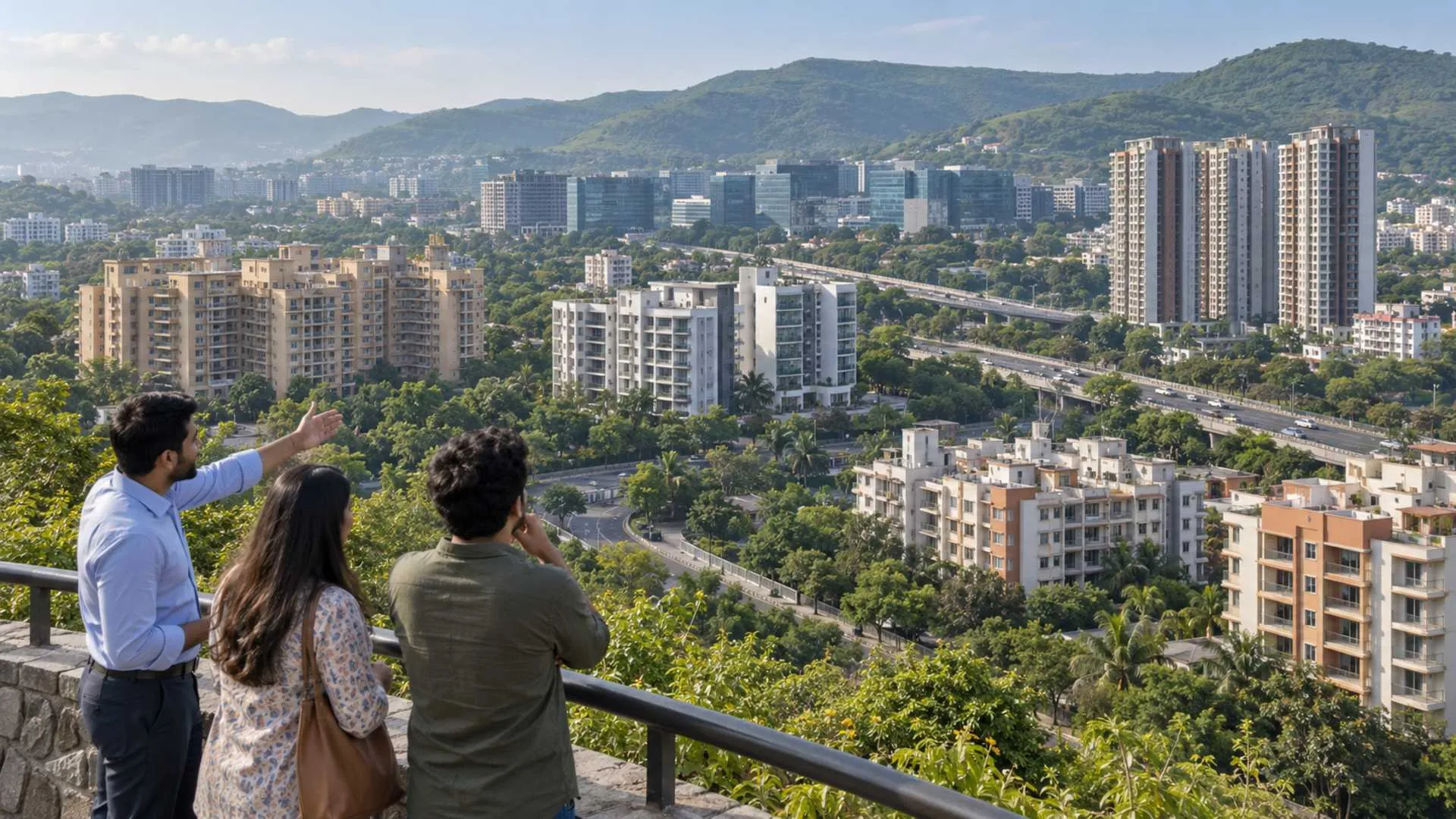
Step 3: Choose Your Pune Micro-Market Around Your Life
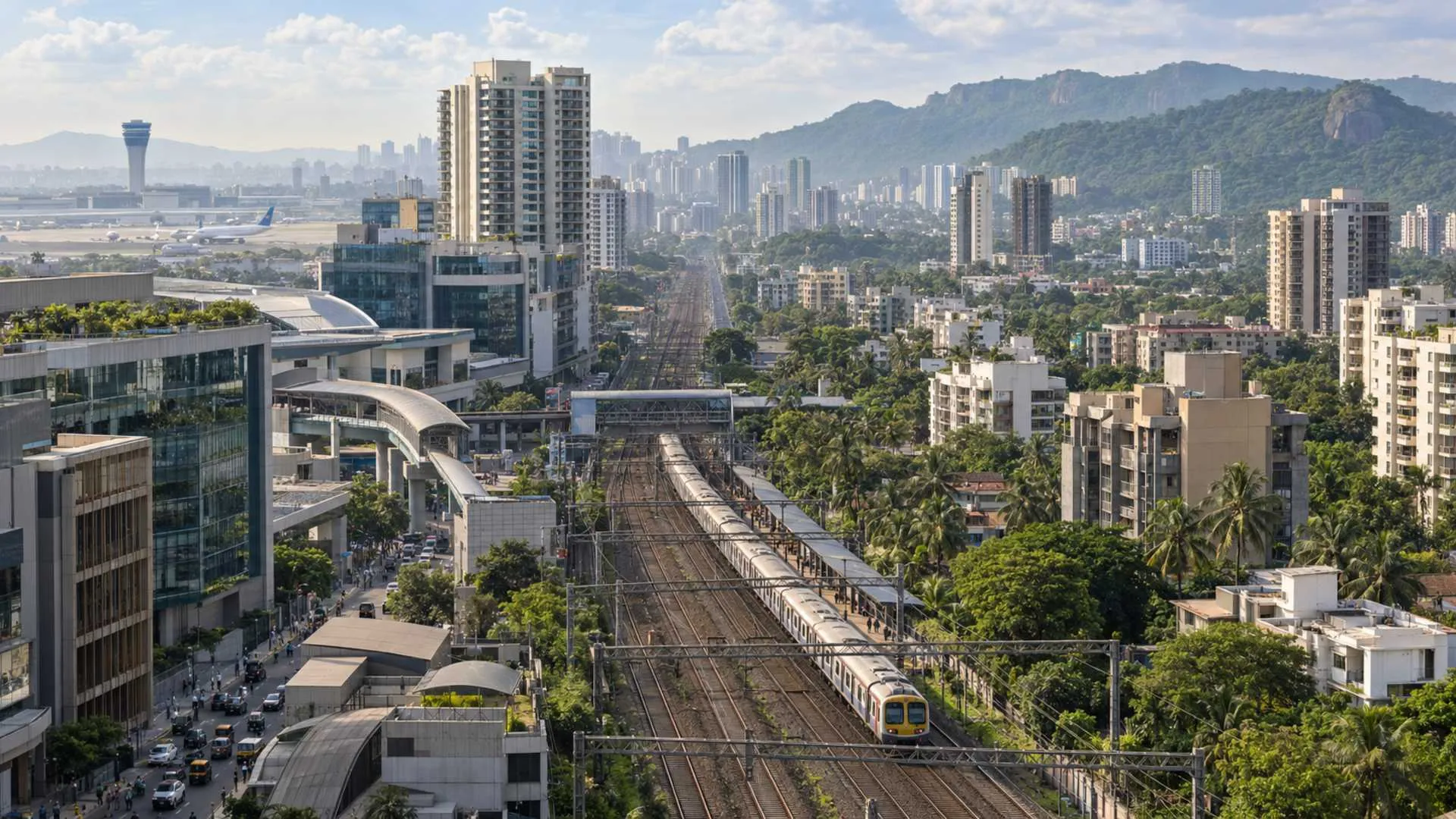
Pune is not one property market.
A buying flat in Hinjawadi complete guide 2026 looks very different from a buying property in Kharadi step-by-step guide because the employment hubs, infrastructure, price points and regulatory considerations differ.
LegiScore divides Pune into multiple property zones, including the West Pune IT corridor around Hinjawadi, Wakad, Baner and Balewadi; East Pune’s Kharadi-Hadapsar belt; premium eastern areas such as Kalyani Nagar and Viman Nagar; and peripheral growth markets. It also stresses that properties can fall under different authorities, including PMC, PCMC, PMRDA and Gram Panchayat jurisdictions. (LegiScore)
For buyers in 2026, the shortlist broadly looks like this:
Hinjawadi: Attractive for IT employees who want to reduce commuting and participate in West Pune’s employment-led residential market.
Kharadi: A strong choice for professionals working around East Pune’s EON-WTC commercial ecosystem and buyers seeking a more premium IT-led market.
Baner-Wakad: The first home buyer guide for Baner-Wakad, Pune in 2026 is increasingly about paying for mature social infrastructure, established residential demand and access to West Pune’s employment corridors.
Viman Nagar-Kalyani Nagar: A property buying checklist for Viman Nagar, Kalyani Nagar should place extra emphasis on the property’s age, title chain, society records, redevelopment considerations and exact jurisdiction.
Moshi-Chikhali: The affordable flat buying guide Moshi Chikhali Pune appeals to buyers willing to trade centrality for a lower entry price and longer-term development potential.
The right locality is rarely the one with the loudest appreciation forecast. It is the one where your commute, monthly EMI, family needs and expected holding period make sense simultaneously.
Step 4: Check MahaRERA Before You Check the Sample Flat
For under-construction and applicable registered projects, the MahaRERA verification Pune property buying checklist should be one of the first steps, not something buyers do after paying a booking amount.
Search for the project’s registration details and compare the official information with what the salesperson has promised.
For anyone asking how to check MahaRERA registration for a Pune project, examine the registered project details, promoter information, declared completion timeline, approvals and other available disclosures.
And do not confuse registration with a guarantee of investment quality.
MahaRERA registration means a project is within the regulatory framework where registration is required; it does not mean buyers can skip independent legal, financial or construction due diligence.
Likewise, the keyword MahaRERA registration fee Pune developer verification mixes two separate issues. A buyer’s real priority is verifying the developer and project registration, not merely knowing what registration fee the developer paid.
Searches such as Pune RERA complaint filed how many projects 2026 can provide additional context, but complaints must be interpreted carefully. Check their nature and status rather than judging a developer solely by a raw number.
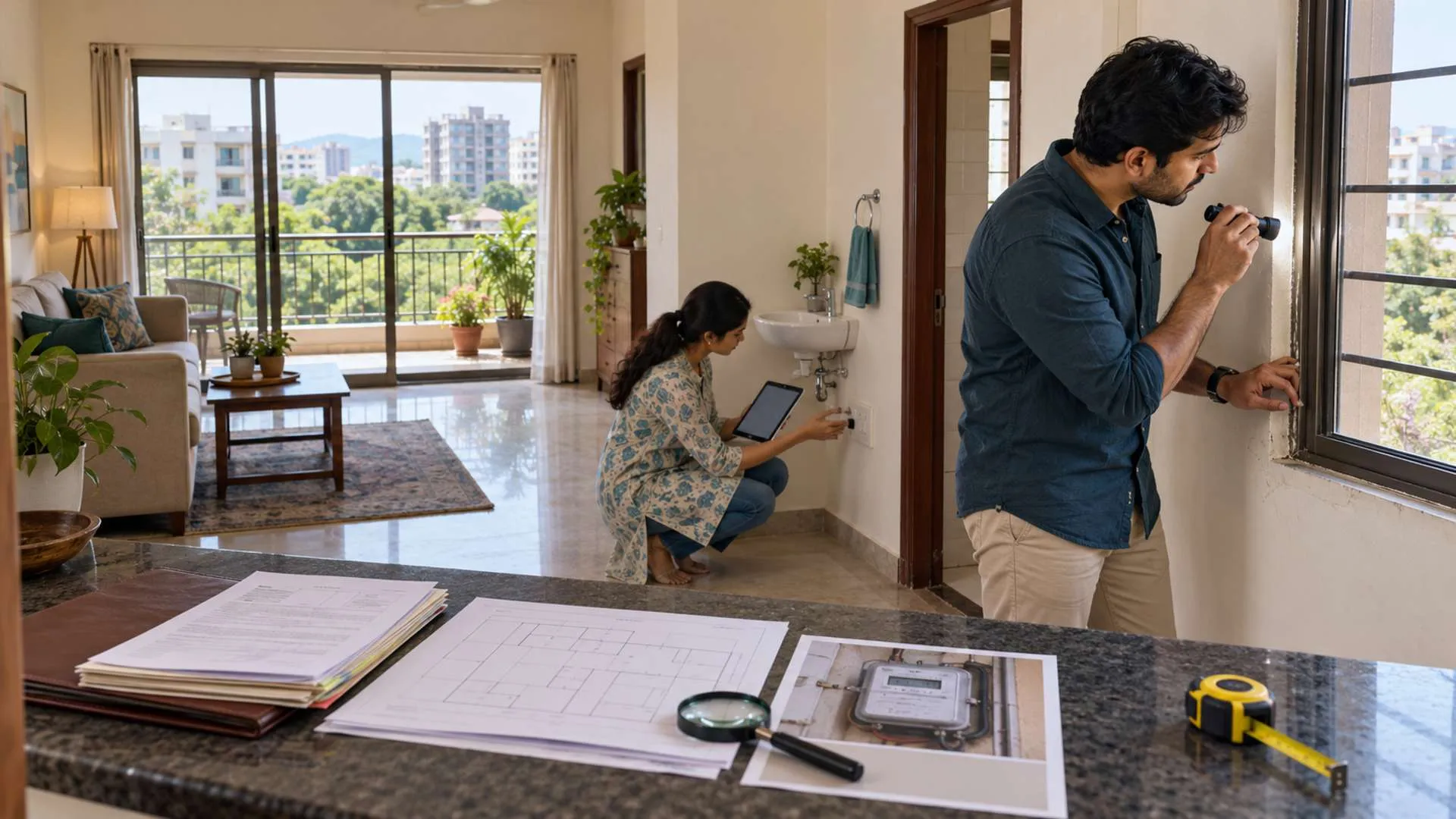
Step 5: Do Legal Due Diligence Before Paying Serious Money
This may be the least exciting part of buying a home. It can also be the part that saves the most money.
Belvalkar recommends verifying title, ownership and potential legal disputes before purchasing. (Belvalkar)
LegiScore goes further, recommending a document trail that can include the sale deed or agreement, previous title documents, recent 7/12 extract where applicable, 8A extract, property-tax receipts, Encumbrance Certificate, sanctioned building plan, Occupancy or Completion Certificate, applicable NA conversion documentation and society records for resale flats. (LegiScore)
Think of the MahaRERA registration, OC, EC, title deed, sale agreement and Pune keyword as five separate questions:
Who owns the property?
The title documents should establish legal ownership and the seller’s right to transfer it.
Is the property encumbered?
The encumbrance certificate Pune property check online is intended to help identify registered transactions, mortgages, or other recorded interests. LegiScore recommends examining a sufficiently long title and encumbrance history rather than looking only at recent years. (LegiScore)
Was the building legally approved?
Match sanctioned plans and approvals to the actual property.
Can it legally be occupied?
The question of how to check OC for a resale flat in Pune in 2026 is critical. Ask for the Occupancy Certificate where applicable and independently verify it with the relevant authority.
Does the agreement match the sales pitch?
Promises about carpet area, parking, possession, amenities and payment schedules should exist in legally relevant documents, not only WhatsApp messages or brochures.
This is why the buying a flat in Pune process legal checklist 2026 should include an independent property lawyer.
Step 6: Verify the Developer, Not Just the Project
A spectacular sample apartment tells you how a developer can market.
It does not tell you how that developer delivers.
To verify a developer’s track record in Pune before buying, investigate previously completed projects. Speak with residents. Look at possession history, construction quality, maintenance experience and whether promised amenities were actually delivered.
Check regulatory disclosures and litigation where relevant.
For under-construction property, pay particular attention to whether construction progress appears consistent with the promised possession schedule.
The best-looking project at launch is not necessarily the best-performing project five years later.
That distinction becomes especially important when comparing an established builder’s more expensive property with a lesser-known developer offering a large discount.
Step 7: Understand the Registration Process
Once legal verification, financing and negotiation are complete, the transaction enters its formal stage.
The IGR Maharashtra GRAS stamp duty SRO registration Pune process covers important parts of Maharashtra’s registration ecosystem. Buyers should use current official procedures for calculating and paying applicable duties and completing registration at the relevant Sub-Registrar Office.
Esbee Realty notes that stamp duty payment, registration of the sale deed and post-purchase mutation are part of the final transaction stage. It estimates that a ready-to-move purchase may take around four to eight weeks after the buyer has finalised the property, with financing potentially extending the process. (Esbee Realty)
The complete step by step process buying flat Pune 2026 can therefore be reduced to a practical sequence:
- Set the all-inclusive budget and obtain financing clarity.
- Shortlist the locality and project.
- Verify MahaRERA and developer history.
- Conduct title and legal due diligence.
- Inspect the property and negotiate the final cost sheet.
- Review and execute the agreement.
- Pay applicable stamp duty and registration charges.
- Complete registration, possession and post-purchase formalities.
Do not reverse Steps 3 and 5 just because a salesperson says the preferred unit will be gone tomorrow.
Step 8: Should I Buy a Flat in Pune or Keep Renting in 2026?
There is no universal answer to should I buy flat in Pune or keep renting in 2026.
Buying becomes more compelling when you expect to stay in the same part of Pune for several years, have stable income, can make the down payment without emptying your emergency fund and are comfortable with the EMI.
Renting can remain the smarter choice if your job location may change, you need flexibility, the EMI would strain your monthly cash flow, or you would be buying mainly because of fear that prices will rise.
This is the heart of a buy vs rent Pune 2026 decision guide: rent is not automatically wasted money, and an owned home is not automatically a profitable investment.
Buying gives stability and an asset. Renting buys flexibility and limits your exposure to a large leveraged commitment.
Step 9: Understand Home-Loan Tax Benefits Carefully
The familiar Section 80C 24B tax benefit home loan deduction in India remains relevant, but the tax regime matters.
For Assessment Year 2026-27, the Income Tax Department states that under the applicable old-regime provisions, eligible housing-loan principal can form part of the combined ₹1.5 lakh Section 80C deduction, while Section 24(b) can allow up to ₹2 lakh of interest deduction for qualifying self-occupied property, subject to statutory conditions. (Income Tax Department)
Do not buy a house primarily for a tax deduction. Tax benefits can reduce the effective cost of ownership, but they should follow a sound property decision, not create one.
So, What Is the Right Time to Buy Property in Pune?
The answer to what is the right time to buy property in Pune in 2026 is surprisingly personal.
The right time is not necessarily when a broker predicts a 20% rise, a developer announces a “last few units” offer, or a new infrastructure project makes headlines.
The right time is when four things align: your finances, the property’s legal health, the location and the price.
Pune’s IT employment, education sector, manufacturing economy and continuing infrastructure expansion create a substantial long-term housing market. But the city also contains enormous differences between neighbourhoods, projects and developers.
That is why a property buying guide for Pune first time buyer 2026 should focus less on predicting the next hotspot and more on avoiding an expensive mistake.
The 2026 Pune Buyer Checklist
Before transferring the booking amount, ask yourself:
- Budget: Do I know the all-inclusive acquisition cost?
- Loan: Is my EMI comfortable without relying on future salary increases?
- MahaRERA: Have I independently checked the project’s registration and disclosures?
- Title: Has an independent lawyer reviewed ownership and encumbrances?
- Approvals: Are relevant building permissions and land-use approvals available?
- OC: For a completed property, have I checked the Occupancy Certificate where applicable?
- Developer: Have I investigated previous projects and possession history?
- Location: Have I travelled from the property to work during peak hours?
- Resale: Would another buyer or tenant realistically want this home?
- Agreement: Are important promises documented rather than merely advertised?
That is the essence of the Pune property purchase complete guide 2026.
Pune may offer hundreds of projects, dozens of growth corridors and a constant stream of “next hotspot” claims. The best property purchase, however, is rarely the one creating the most noise. It is the home whose numbers, documents and location continue to make sense after the marketing disappears.
Planning to buy in Pune in 2026? Shortlist three projects, not thirty. Compare their all-inclusive cost, MahaRERA records, title documents, developer history, actual commute and possession status side by side. Then have the final property independently verified before you sign. Your biggest advantage in Pune’s property market is not timing the market; it is knowing exactly what you are buying.