

Buying Property in Mumbai 2026: The Complete Homebuyer’s Guide
SHARE:
Buying a home in Mumbai has always required a lot of money. In 2026, it requires something equally valuable: clarity.
A buyer can enter the Mumbai Metropolitan Region (MMR) at around ₹50 lakh in selected peripheral markets or spend several crores in premium addresses. Between those extremes sit Mira Road, Thane, Mulund, Chembur, Andheri, Goregaon, Navi Mumbai and dozens of micro-markets competing for the same homebuyer.
In Mumbai, property prices can start at around ₹50 lakh on the outskirts and reach several crores in premium locations, says the Propertist. More importantly, the property’s advertized price is just the start of the bill.
So, this entire guide to buying property in Mumbai in 2026 is less about finding the hottest project and more about answering five questions: Can you pay for it? Is the title clear? Is the project in compliance? Does the location match your lifestyle? But what does the house really cost when you add up all the charges?
How Much Does It Cost to Buy a Flat in Mumbai Including All Charges?
The total cost of buying a Mumbai flat can be significantly higher than its advertised base price. Buyers should budget for stamp duty, registration, applicable GST on under-construction property, maintenance or society deposits, loan-related charges, legal expenses, interiors and other project-specific costs. A practical planning buffer can be around 10–15% above the base price in some transactions, but the actual amount depends on the property.
This directly answers what the total cost of buying a flat in Mumbai in 2026 is: never calculate affordability using the brochure price alone.
For example, Bajaj Finserv reports that within Mumbai municipal limits, 2026 stamp duty is 6% for a male buyer and 5% for a female buyer, including the applicable 1% Metro Cess. Registration is reported at 1% of property value, capped at ₹30,000 for properties above ₹30 lakh.
So the high-intent search Mumbai stamp duty 6% men 5% women registration 2026 is especially important for first-time buyers.
For a ₹1.5 crore property, Bajaj Finserv illustrates stamp duty plus registration at approximately ₹9.3 lakh for a male buyer and ₹7.8 lakh for a female buyer, before considering other applicable acquisition expenses.
The lesson: a ₹1.5 crore apartment is not a ₹1.5 crore decision.
Step 1: Decide What You Can Actually Afford
The first step in how to buy property in Mumbai step by step 2026 should happen before opening a property portal.
Calculate your available down payment, emergency savings, sustainable EMI and acquisition costs.
The Propertist recommends keeping home-loan EMI within roughly 30–45% of net monthly take-home income and budgeting for costs such as stamp duty, registration, applicable GST, society deposits, interiors and moving expenses.
Nandivardhan similarly recommends thinking beyond the property price and accounting for financing and transaction expenses before buying.
The search phrase Mumbai home loan 80-90% LTV CIBIL 750 pre-approval contains useful planning concepts, but buyers should not assume every bank will finance 80–90% or that a particular credit score guarantees approval.
Get pre-approved first. Shop second.
A home-loan sanction depends on income, credit profile, property value, lender policy and regulatory loan-to-value limits. Buyers also need their own money for expenses the lender may not finance.
Step 2: Mumbai, Navi Mumbai or Thane?
This may be the most consequential decision in the first-time buyer property Mumbai complete guide 2026.
Mumbai offers established employment, transport and social infrastructure, but at a price. Thane can offer larger homes and township living at comparatively accessible ticket sizes. Navi Mumbai combines planned nodes with infrastructure-led growth and proximity to emerging employment corridors.
So should I buy in Mumbai city or Navi Mumbai as a first-time buyer? Start with your workplace and daily commute rather than appreciation forecasts.
The broader Mumbai vs Navi Mumbai vs Thane first-home buyer comparison can be simplified:
- Mumbai: higher entry cost, established infrastructure and stronger centrality.
- Thane: broader housing choices, family-oriented townships and improving connectivity.
- Navi Mumbai: planned nodes, new infrastructure and comparatively accessible options in selected markets.
The cheapest home can become expensive if you spend three hours commuting every day.
Step 3: Match Your Budget to the Right Micro-Market
Mumbai’s property market changes dramatically every few kilometres.
₹40 Lakh–₹75 Lakh: Look Beyond Core Mumbai
For buyers searching for a Mira Road flat under ₹60 lakh as a first-time buyer in 2026, inventory at that precise budget is highly project-specific, but Mira Road remains an important affordability market in the wider MMR.
Other common searches include Virar Vasai affordable 2BHK first home Mumbai, Kalyan Dombivli 2BHK under ₹55 lakh first home, Panvel Kharghar affordable first flat near Mumbai, Badlapur Ambernath cheapest MMR first-time buyer, and Navi Mumbai affordable under ₹75 lakh 2BHK 2026.
These should be treated as search starting points rather than guaranteed price bands.
The real trade-off is straightforward: the further you move from Mumbai’s major employment districts, the more home your budget may buy, but commute risk generally increases.
₹75 Lakh–₹1.5 Crore: The Choice Expands
This bracket brings buyers into selected established and emerging suburbs.
Searches such as Mira Road Bhayandar metro 2BHK ₹75-90 lakh 2026, Mulund Bhandup eastern suburbs first home 2026, Chembur Ghatkopar metro connected mid-premium, Thane Ghodbunder Road 2BHK ₹80L-₹1.2Cr 2026, Navi Mumbai Kharghar Taloja ₹80L-₹1.2Cr guide, and Andheri Goregaon western suburbs ₹1-1.5Cr options show just how diverse the segment is.
Actual prices vary substantially by carpet area, project age, developer and station or metro proximity.
₹1.5 Crore+: Mumbai Becomes a Different Market
At the premium end, buyers start comparing lifestyle, redevelopment potential, views, branded developers and neighbourhood prestige.
That brings Bandra Andheri West premium flat first upgrade 2026, Powai Vikhroli Kanjurmarg IT corridor premium, Thane Kolshet premium ₹1.5-2.5Cr guide 2026, Worli BKC ultra premium above ₹3Cr first home, and Lower Parel mill land premium location into the conversation.
Here, paying more does not automatically mean investing better. The purchase price must still make sense relative to usable carpet area, building quality, monthly maintenance, connectivity and resale depth.
Step 4: Choose the Area Around Your Actual Lifestyle
The question of which Mumbai neighborhood is best for first-time homebuyers has no universal answer.
For technology and corporate professionals, the best Mumbai area for IT professionals buying a first home may include Powai, Vikhroli, Goregaon, Thane, or Navi Mumbai, depending on the office location.
Families searching for the best Mumbai suburb for families, schools, hospitals in 2026 should look beyond price and assess schools, hospitals, open spaces, traffic and daily retail.
For frequent flyers, a Mumbai first home near airport Andheri Santacruz guide naturally puts western suburbs into focus, but airport proximity can command a substantial premium.
NRIs researching the best Mumbai location for NRI first home investment should additionally examine property management, rental demand, legal representation and repatriation or taxation considerations.
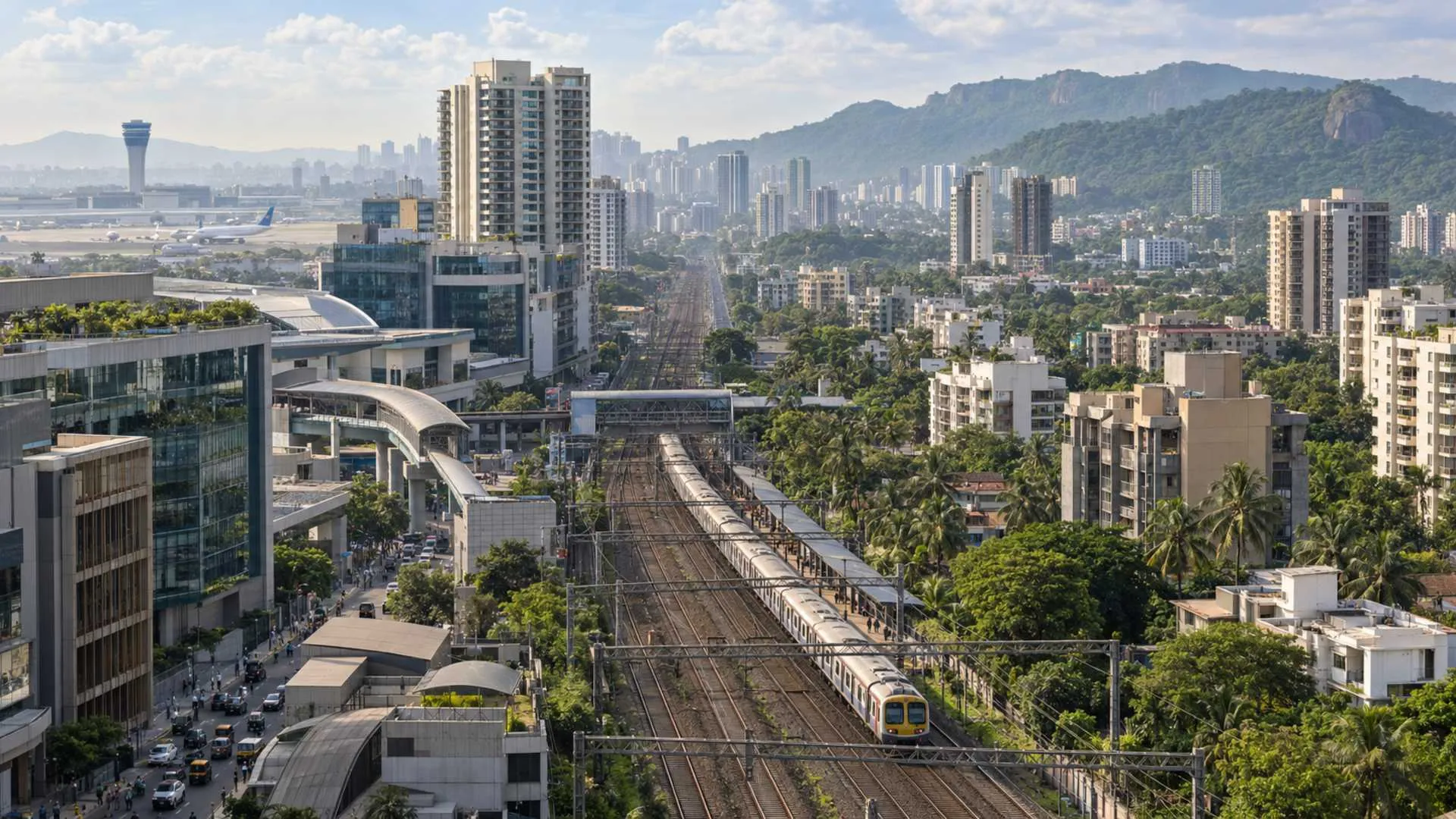
And for commuters, the Mumbai first home near railway station affordable guide remains highly relevant. In Mumbai, being closer to reliable mass transit can sometimes matter more than an extra bedroom.
Step 5: Check MahaRERA Before Paying the Booking Amount
This is where excitement should give way to investigation.
MahaRERA verification Mumbai property checklist 2026 should be mandatory for projects that require registration.
Nandivardhan recommends checking the project’s MahaRERA details, completion timeline, approvals, pending litigation and developer history before proceeding.
MahaRERA also requires promoters of registered projects to provide quarterly progress updates, including information on physical and financial progress, approvals and unit bookings.
So when researching how to buy property in Mumbai for the first time in 2026, do not simply ask the salesperson, “Is it RERA registered?”
Ask:
- What is the MahaRERA registration number?
- What completion date is officially declared?
- Do project details match the brochure?
- Are quarterly updates being filed?
- Are there complaints, regulatory orders, or litigation worth investigating?
- Does the agreement reflect what the sales team promised?
RERA registration is a regulatory checkpoint; not a substitute for independent due diligence.
Step 6: Build a Legal Checklist Before You Build an Interior Mood Board
The Mumbai property buying process legal checklist 2026 should change depending on whether you are buying new, under construction, or resale.
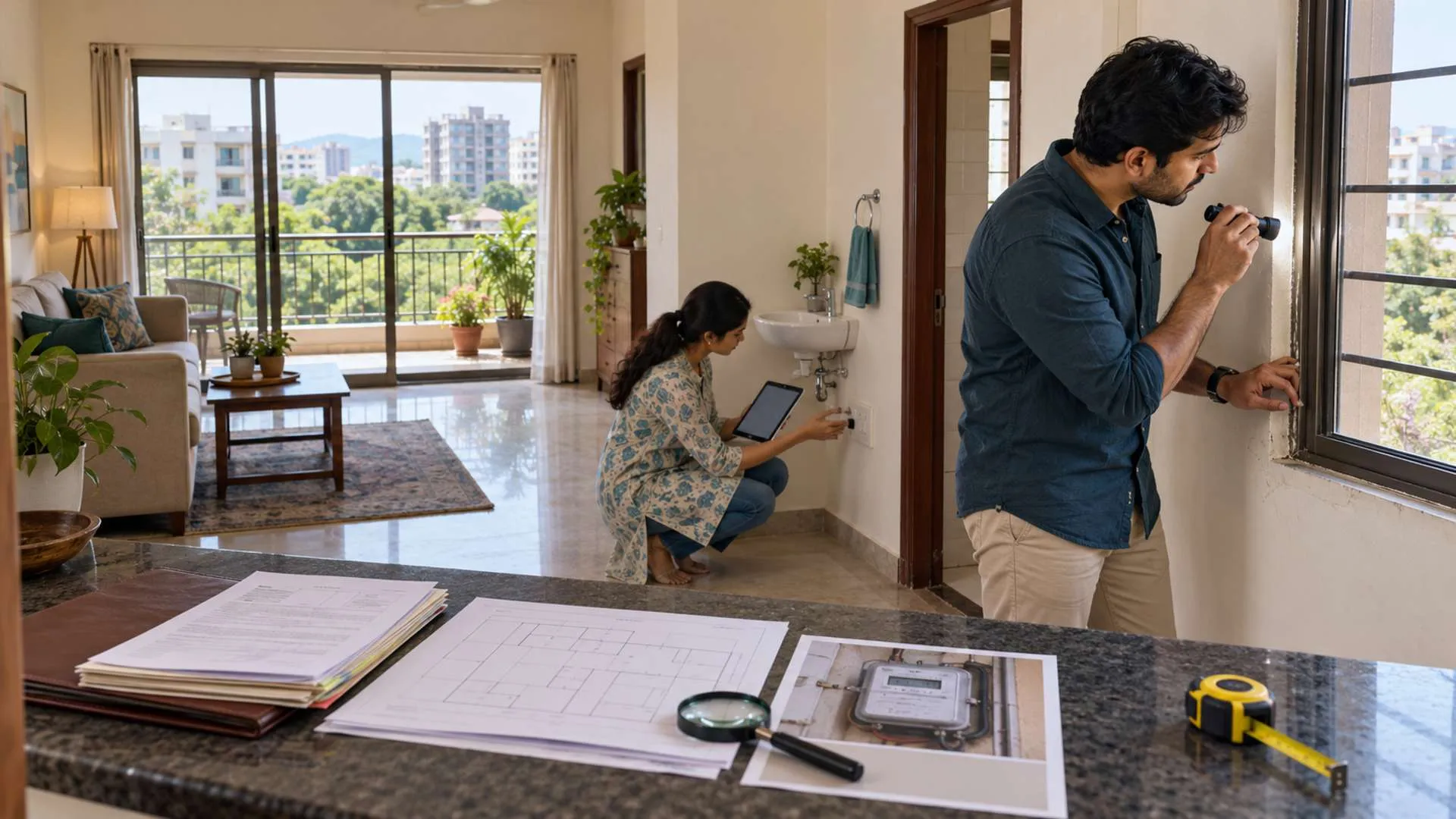
Nandivardhan recommends checking documents such as the sale deed, Occupancy Certificate, property-tax receipts, society NOC and maintenance receipts for resale property. For new projects, buyers should examine approved plans and applicable municipal and environmental approvals.
That answers what documents I need to buy a flat in Mumbai in 2026 only partly.
Your lawyer may also need to examine title history, encumbrances, development rights, permissions, agreement terms and whether the seller legally has the authority to transfer the property.
Two documents deserve particular attention:
Occupancy Certificate (OC): Indicates that the building has received the relevant permission for occupancy.
Completion Certificate (CC): Relates to construction being completed according to applicable approved requirements.
Nandivardhan specifically warns buyers not to ignore OC status.
If the paperwork is confusing, that is a reason to hire a property lawyer; not a reason to skip the paperwork.
Step 7: Understand Stamp Duty, Ready Reckoner and Registration
The phrase MahaRERA IGR Maharashtra GRAS stamp duty SRO Mumbai represents several different parts of the buying process.
Stamp duty is calculated using the applicable rules and valuation basis. Bajaj Finserv notes that it is calculated on the higher of the agreed transaction price or applicable Ready Reckoner value.
The same source describes a largely digitised process involving e-assessment and payment through Maharashtra’s GRAS system, followed by registration formalities at the relevant Sub-Registrar’s office.
This is why buyers should verify current government rates instead of depending entirely on a developer’s cost sheet.
Stamp duty is not a negotiation item. Your property price may be negotiable; statutory charges generally are not.
Step 8: Know the Hidden Costs
So, what are all the hidden costs of buying a flat in Mumbai in 2026?
Depending on the transaction, the list can include:
- Stamp duty and registration
- Applicable GST for qualifying under-construction property
- Home-loan processing and related costs
- Legal due diligence fees
- Maintenance or society deposits
- Parking or other separately chargeable items where legally applicable
- Property tax and recurring maintenance
- Interiors and furnishing
- Moving expenses
The Propertist estimates that total acquisition costs can commonly add 10–15% above the base property price, depending on the transaction.
Nandivardhan gives a somewhat lower general planning range of approximately 8–12% for additional costs.
The variation itself is the important point: there is no universal Mumbai “hidden-cost percentage.” Ask for an itemised all-inclusive cost sheet.
Step 9: Investigate the Developer as Closely as the Location
Mumbai buyers increasingly search by brand as much as by neighbourhood.
In the affordable and peripheral belt, research queries include Godrej Properties Panvel Navi Mumbai first home review, Rustomjee Global City Virar affordable review 2026, Lodha Palava Dombivli first home township review, Hiranandani Fortune City Panvel review 2026, and HDFC Affordable Housing Mumbai options 2026.
At the mid-premium level, buyers compare Piramal Revanta Mulund review first upgrade 2026, Wadhwa Atmosphere O2 Mulund metro linked review, Rustomjee Urbania Thane township review 2026, Godrej RKS Chembur premium mid review 2026, and L&T Rejuve 360 Mulund first premium review.
Premium searches include Oberoi Realty Goregaon Sky City premium review, Godrej Properties Bandra premium first home, Lodha World Towers Worli luxury guide 2026, Shapoorji Pallonji Nine Arcs Santacruz review, and Kalpataru Radiance Goregaon premium 2026.
Do not interpret a famous brand as permission to stop checking.
Verify the exact project, exact phase and exact RERA registration; not merely the developer’s reputation.
Step 10: Should You Buy New, Under Construction or Resale?
A ready home gives buyers something extremely valuable: visibility.
You can inspect the apartment, building, residents, amenities and neighbourhood before paying. But older properties can bring renovation expenses, society issues, or complex title histories.
Under-construction homes can provide newer amenities and staggered payment structures, but buyers assume completion and execution risk.
For a first-time property buyer in Mumbai, the decision should therefore depend on risk tolerance:
Ready-to-move: better visibility and immediate use.
Under construction: potentially broader choice and newer specifications, but more execution risk.
Resale: access to established neighbourhoods and societies, but requires rigorous document and physical-condition checks.
Step 11: Don’t Buy Only for Tax Benefits
Searches for PMAY CLSS Section 80C 24B home loan tax benefits India often bundle several schemes and provisions that have different eligibility rules and can change over time.
Home-loan principal and interest may receive tax treatment under applicable provisions depending on the buyer’s tax regime, property use and prevailing law. Government housing-subsidy schemes likewise have specific eligibility requirements.
Treat tax benefits as an advantage after the property makes financial sense; not as the reason to buy it.
A ₹1.5 crore liability does not become affordable merely because part of the financing may receive favourable tax treatment.
The Mumbai 2026 Buyer Checklist
Before signing anything substantial, confirm:
- Budget: Have I calculated the all-inclusive purchase cost?
- Down payment: Can I fund it without exhausting emergency savings?
- EMI: Can I comfortably afford the loan if interest rates or expenses change?
- Location: Have I tested my commute during rush hour?
- MahaRERA: Have I independently checked the project and promoter?
- Title: Has an independent lawyer reviewed the property’s ownership?
- OC/approvals: Are the relevant approvals available and verifiable?
- Developer: Have I investigated previous delivery and complaint history?
- Agreement: Are possession, carpet area, payment and promised amenities documented?
- Resale: Would someone realistically want to rent or buy this home later?
This is the core of the buying flat Mumbai 2000 word guide 2026: the right property is not necessarily the most expensive one you qualify to buy.
The Final Word: Buy the Mumbai You Actually Live In
Mumbai real estate sells dreams exceptionally well-sea views, metro connectivity, luxury clubhouses, new business districts and “future appreciation.”
Homebuyers need to buy something more practical.
They need to buy time, connectivity, financial comfort and legal certainty.
A ₹60 lakh home far from work may be perfect for one family and a commuting nightmare for another. A ₹2 crore apartment close to employment may be financially sensible for one buyer and dangerously overleveraged for the next.
So how much should I budget for buying property in Mumbai? Enough to cover the home and every acquisition cost without destroying your financial safety net.
And which Mumbai neighborhood is best for first-time homebuyers? The one that fits your income, workplace, family requirements and realistic holding period; not simply the locality expected to appreciate fastest.
Before booking your Mumbai home in 2026, shortlist three properties and compare their all-inclusive costs, MahaRERA records, legal documents, actual carpet area, commute and developer history side by side. Then have the final property independently verified. In Mumbai, the smartest property decision is not getting the keys first; it is knowing exactly what those keys are costing you.