

Is Navi Mumbai Property Still Worth Buying in 2026?
Navi Mumbai Property: Is It Worth Buying in 2026?
SHARE:
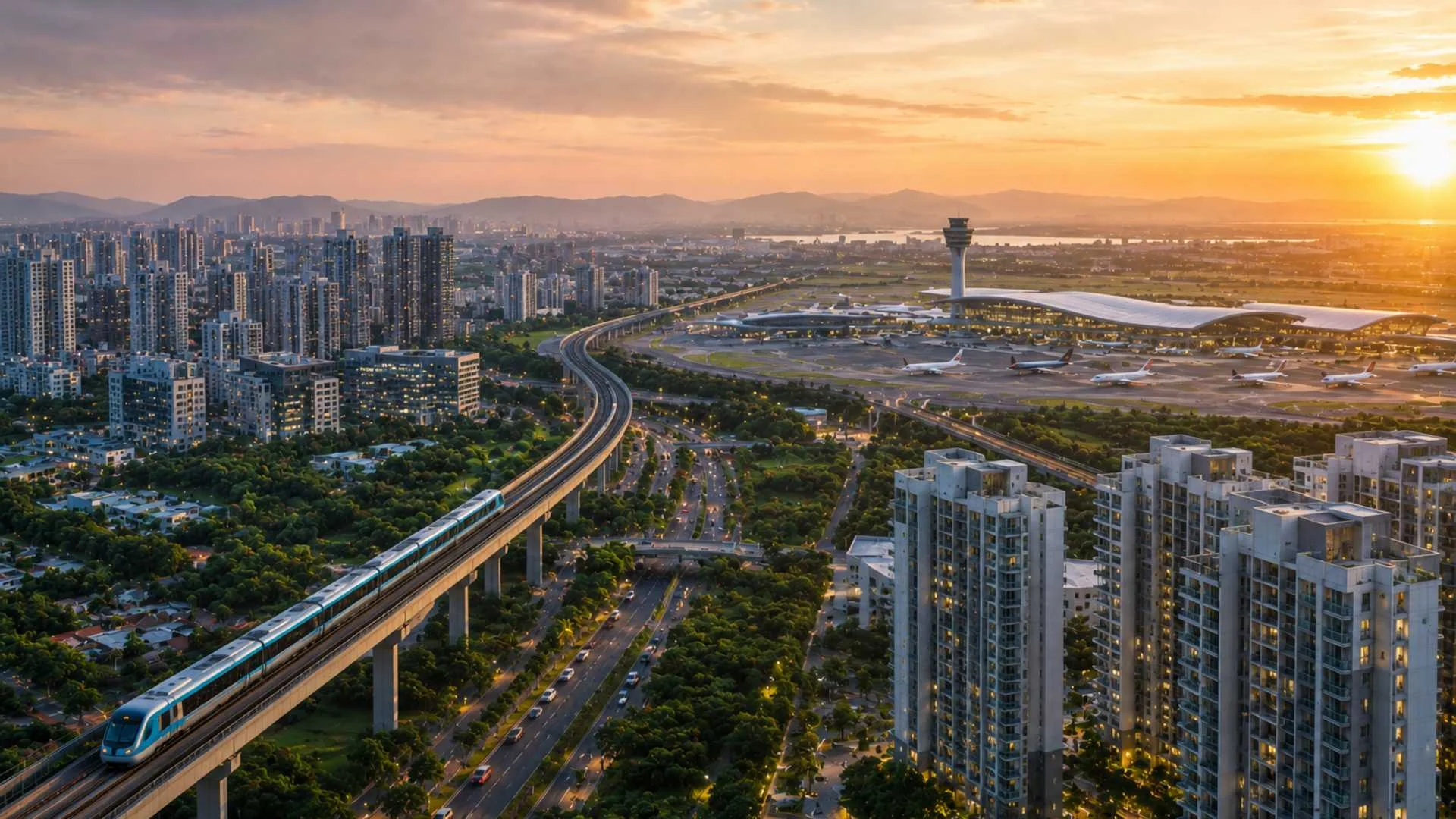
Navi Mumbai property is no longer a simple “buy before the airport” story. With Navi Mumbai International Airport already operational, the investment question has shifted from speculation to execution: which locations can still deliver value as the airport economy develops?
Is It Too Late to Invest in Navi Mumbai?
No, but the easy pre-airport appreciation phase may be behind us. Navi Mumbai International Airport began commercial operations on December 25, 2025, so buyers in 2026 are entering a market where the infrastructure trigger is already visible rather than merely promised. The airport’s initial plan targets a capacity of 20 million passengers annually. (Adani)
That changes the investment equation.
The market is moving from a speculative phase, where buyers bet on future infrastructure, to a utility phase, where actual passenger traffic, jobs, commercial activity and connectivity determine the next leg of growth.
According to Gami Group’s 2026 Navi Mumbai market outlook, property prices across the region broadly range from ₹8,000 to ₹25,000 per sq ft, depending on the micro-market, while annual appreciation could remain around 6% to 10% in selected locations. (Gami Group)
The bigger opportunity may therefore be identifying areas where airport-driven demand has not yet been completely priced in.
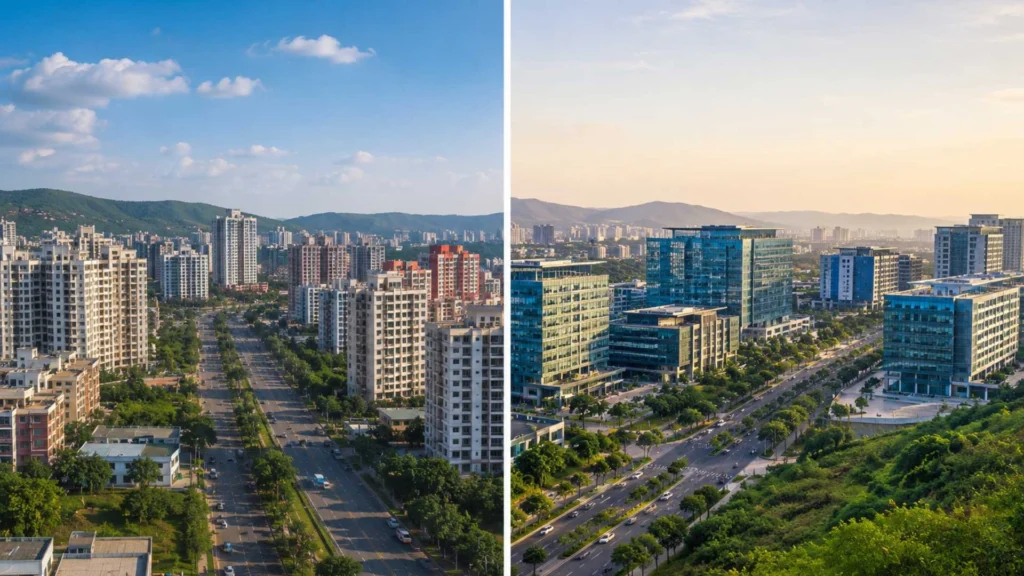
Ulwe, Kharghar or Panvel: Where Is the Opportunity?
The answer depends on whether the buyer wants affordability, rental demand or established liveability.
Ulwe remains the clearest airport-led play. Its proximity to NMIA, combined with Atal Setu connectivity, has made it one of Navi Mumbai’s most closely watched residential markets. Current market data puts Ulwe at roughly ₹9,263 per sq ft on average, although prices vary significantly by sector and project. (Housing)
The catch is that proximity alone does not guarantee appreciation. Buyers should compare the airport distance, road access, social infrastructure, project quality and actual rental demand, rather than paying a premium simply because a project is marketed as “airport-facing.”
Kharghar is the lifestyle-led alternative. It has a more established residential ecosystem, including schools, healthcare, retail and recreational infrastructure. Housing.com’s current data places average Kharghar prices around ₹11,510 per sq ft. (Housing)
For families seeking a long-term home rather than a pure airport bet, Kharghar can offer a more balanced proposition.
Then comes Panvel, the broader growth story. Its advantage is not just NMIA. Panvel sits at the intersection of the Mumbai-Pune corridor, airport influence zone and major road infrastructure. The market can therefore benefit from residential, logistics and employment-led demand simultaneously.
The Airport Is Only One Part of the Story
The next phase of Navi Mumbai’s property market will depend on what develops around the airport.
Atal Setu has already strengthened Mumbai-Navi Mumbai connectivity, while future metro and regional transport improvements could widen the airport’s effective catchment.
NMIA itself is also designed as a commercial ecosystem, with the airport projecting an initial capacity of more than 20 million passengers annually and dedicated opportunities for businesses and commercial activity. (Mumbai Airport)
That could eventually support demand from:
- Airport employees and airline staff
- Hospitality and retail businesses
- Logistics and aviation-linked companies
- Corporate offices and service providers
- Rental housing for professionals
In other words, the real property story may begin after the airport opens, not end there.
But Should You Buy Now?
The biggest mistake in 2026 would be assuming every Navi Mumbai property will appreciate simply because NMIA is operational.
A better approach is to separate the market into three categories:
For higher airport exposure: Consider Ulwe and nearby emerging nodes, but be selective about pricing and infrastructure.
For established end-use, Kharghar offers a stronger lifestyle ecosystem and potentially better resilience for family buyers.
For longer-term growth: Panvel and surrounding development corridors can offer broader infrastructure exposure, although patience may be required.
Gami Group similarly identifies Kharghar for planned development, Panvel for affordability and future growth, and Ulwe for airport-driven demand, highlighting how different nodes serve different investment strategies. (Gami Group)

The Real Question Is No Longer “Before or After the Airport”
The better question is: which Navi Mumbai micro-market can convert airport connectivity into sustained economic activity?
For investors, that distinction matters. Airport-led appreciation can create the first wave of price growth, but jobs, rentals, businesses and everyday connectivity create the second.
So, is Navi Mumbai property still worth buying in 2026? Yes, but not blindly. The strongest opportunities are likely to come from projects where the purchase price still makes sense against actual connectivity, neighbourhood development, rental potential and a 3-to-5-year holding period.
Want to compare Navi Mumbai locations, property trends and investment opportunities before making your next move? Explore RealtyConnect AI.