

Could Sports Infrastructure Create New Property Demand Beyond India’s Stadiums?
Sports Infrastructure & Property: Buyer Facts to Know
SHARE:
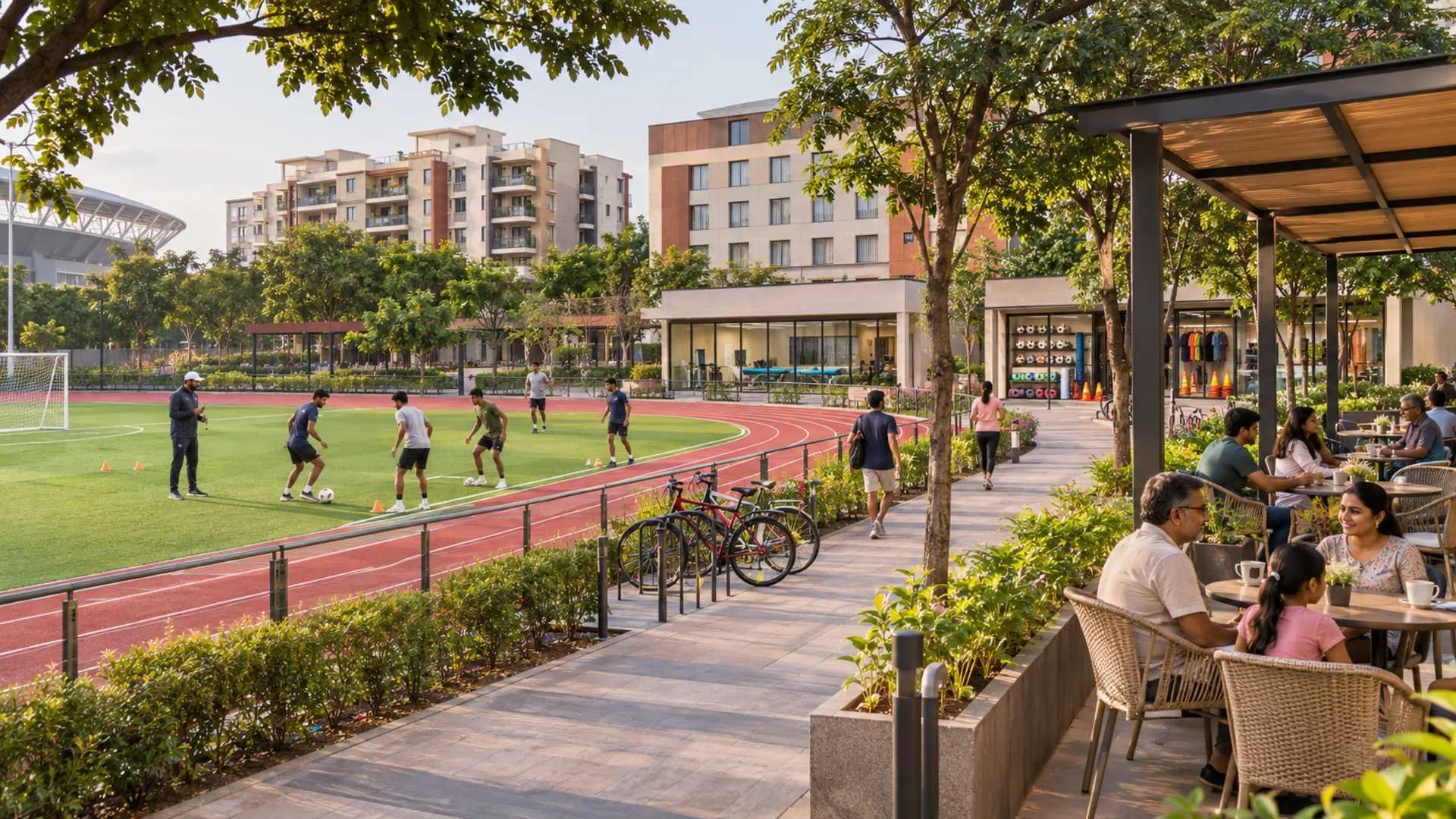


The value added by sporting infrastructure depends on regular footfall. If sporting facilities attract regular users, they can drive value in residential, retail, catering and general services. The presence of academies, community spaces and regular events means that sites which are primarily used for large events only will have different potential opportunities. With increased investment in sport in India, this is an important consideration for developers and buyers. However, to truly create value within a site, the location must be well accessible, well run, and have a true local market. Simply being near a stadium will not create inherent value within properties.
Can Sports Infrastructure Create Property Demand Beyond Stadiums?
Yes, where sporting facilities generate recurring activity. Training programmes, community recreation and events can create opportunities for supporting businesses and accommodation. The scale depends on who uses the facilities, how often they visit and what they spend. Nearby housing demand or price appreciation should be assessed separately rather than assumed.
India’s Sports Infrastructure Story Extends Beyond Spectator Seats
A stadium is only one part of the sports ecosystem. Multipurpose halls, athletics tracks, swimming pools and training facilities serve different users and operate on different schedules.
A July 2026 PIB update reported 349 sports infrastructure projects approved under Khelo India, involving investment of ₹3,176 crore. It also recorded 1,067 Khelo India Centres established and 267 academies supported. These are distinct measures, not a count of completed stadiums.
For real estate, the distinction is important. A training centre with scheduled daily use presents a different commercial proposition from a large venue dependent on a limited event calendar.
The ASSOCHAM-PwC report, “Sports Infrastructure: Transforming the Indian Sports Ecosystem,” published in March 2019, identified ineffective utilisation as a challenge. It recommended integrating facilities into urban planning and designing for a broad community to support regular use and revenue. Its analysis remains relevant as a planning framework, rather than current market data.
The opportunity starts with the operating schedule, not the seating capacity.
Why Everyday Use Matters More Than Match-Day Crowds
A major fixture can fill restaurants and hotels. A property business, however, must also cover costs between events.
McKinsey’s February 2026 analysis of European football infrastructure notes that venues traditionally optimised for approximately 25–30 match days a year leave substantial periods underused. It argues for programming and associated real estate that generate activity beyond fixtures. This is a European observation, not a utilisation estimate for Indian stadiums.
The relevant Indian question is whether a venue can support a dependable pattern of visits: morning training, school sessions, evening recreation and weekend competitions.
Each audience creates different requirements. Parents waiting through coaching sessions may value food outlets and comfortable waiting areas. Visiting teams may need short stays. Coaches and staff may require longer-term accommodation.
These are potential demand channels, not automatic outcomes. Their commercial value depends on attendance, affordability and the services already available nearby.
A crowded final demonstrates event demand. A busy weekly calendar offers stronger evidence of recurring demand.
Where Could Property Opportunities Emerge?
Sports-led development can extend beyond a stand-alone stadium into a district with several complementary uses.
Gensler’s June 2026 discussion of European sports districts describes a move towards places combining hospitality, retail, culture, workspace, housing and public space. Its central argument is that these areas should contribute to everyday city life.
For Indian locations, the following are practical possibilities to investigate:
| Property segment | Potential source of demand | Evidence worth checking |
|---|---|---|
| Hotels and short-stay accommodation | Teams, officials, families and event visitors | Event calendar, room nights and off-season demand |
| Rental housing | Coaches, staff and longer-stay trainees | Actual employment and accommodation needs |
| Food and convenience retail | Regular users and accompanying families | Repeat footfall and customer spending |
| Sports retail and services | Players, clubs and training programmes | Local participation and existing competition |
| Healthcare and recovery premises | Athletes and recreational participants | Operator commitments and a viable catchment |
This is an analytical framework, not a forecast of returns or a recommendation for a particular location.
The uses must complement the surrounding neighbourhood. Adding every property type to a master plan does not prove there is enough demand to support them.
Training Academies Could Produce a Different Housing Story
Elite competition brings spectators. Training brings repeat attendance.
That makes academies worth examining separately from stadiums when assessing sports infrastructure and real estate in India.
A residential training programme may accommodate athletes within its campus, leaving little external rental demand. A non-residential academy may draw mainly from nearby households. A regional training destination could attract participants who need temporary accommodation.
These scenarios have different implications for property.
Before assuming that an academy will support rental housing, establish its intake, programme duration, boarding arrangements and staffing. A facility with strong participation may still have limited need for homes outside its gates.
PwC’s sports infrastructure report emphasises the importance of facilities serving both community participation and athlete development. The property implication is to understand those users rather than treat all sports investment as one demand category.
An operating academy with a clear accommodation requirement is more informative than a proposed “sports hub” on a sales map.
Could Sports Facilities Make Nearby Homes More Attractive?
For families, convenient recreation can influence the appeal of a neighbourhood. But proximity is useful only when access is practical.
A nearby pool may be reserved for selected athletes. A school ground may have restricted hours. An academy may charge fees that place it outside a household’s budget.
Buyers should therefore investigate whether they can actually use the facility, at what cost and at the times they need.
Gensler’s sports-district analysis emphasises connections with surrounding neighbourhoods and everyday urban activity. Applied to housing, the relevant question is whether the facility improves residents’ routines.
There are trade-offs too. A location convenient for attending matches may also experience event traffic, parking pressure, or late departures.
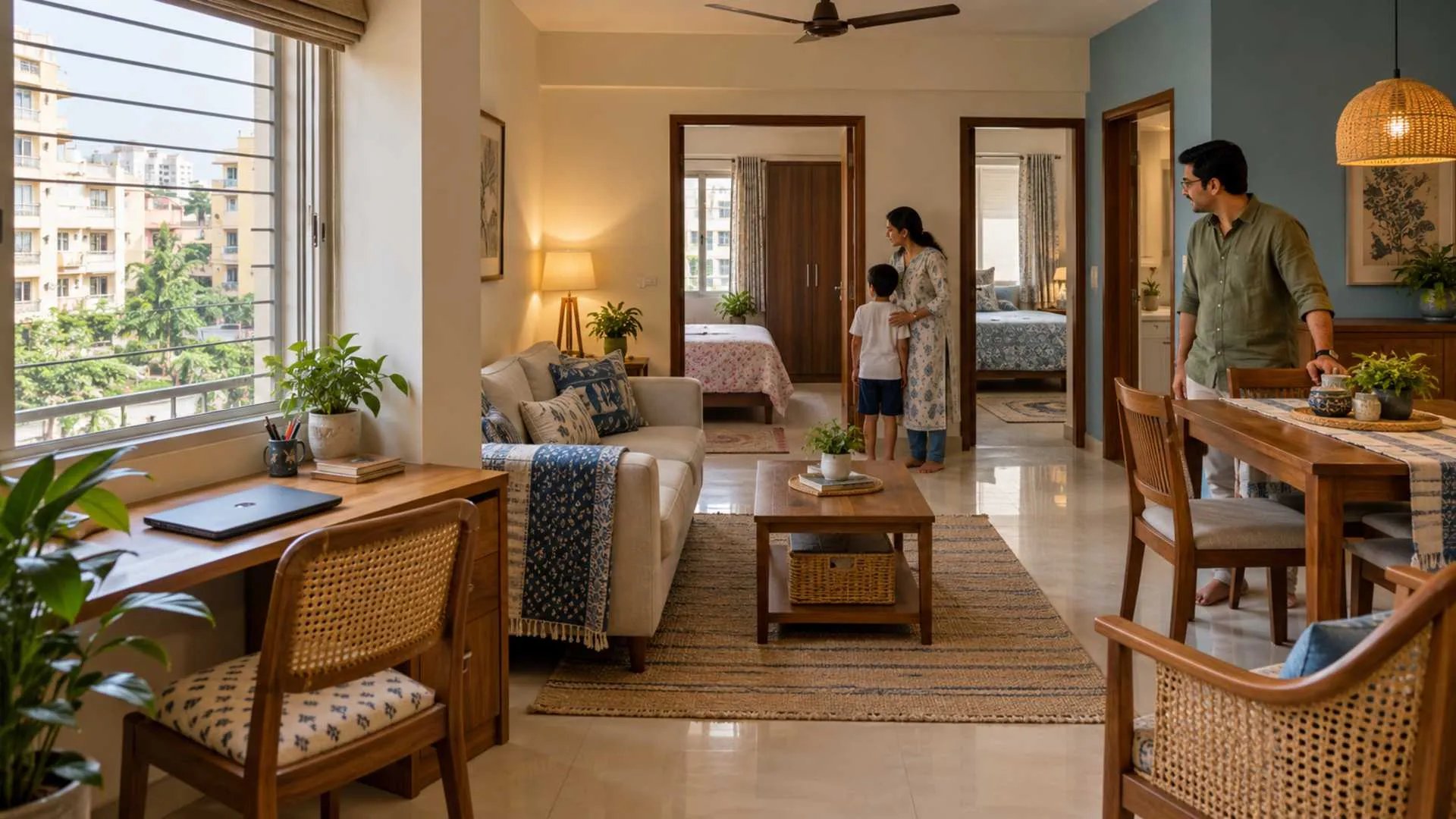
Visit both during an event and on a normal day. Check the route to the building, access for residents and the experience inside the apartment.
A useful amenity can strengthen a home’s appeal without proving a measurable resale premium. Schools, employment access, maintenance and competing housing supply still belong in the assessment.
The Commercial Test: Does the Property Work Without the Headline?
Sports branding can make a development memorable. It cannot substitute for sound property economics.
In a November 2026 National Association of REALTORS® article, former NFL player and investor Marques Colston cautioned against overemphasising the sports association while neglecting deal structure and fundamentals. The discussion also questioned whether stadium spending represents additional local activity or spending shifted from elsewhere. These are US perspectives, but the distinction is useful when evaluating Indian proposals.
For a café, assess ordinary weekday customers. For a hotel, investigate demand outside major tournaments. For a rental apartment, identify likely tenants and their budgets.
McKinsey likewise stresses deliberate decisions about funding, ownership and specialist operating partners. A venue owner need not operate every surrounding business to create a functioning district.
The stronger development proposal connects each use to a credible operator and customer base.
What Developers and Buyers Should Check Before Committing
The next generation of sports-led property projects will need to demonstrate how the district functions after construction.
Use these questions to examine the proposal:
- Status: Is the facility operational, under construction or only announced?
- Programming: What activities are scheduled throughout the year?
- Users: Are visitors mainly local residents, trainees or travelling spectators?
- Operators: Who runs the venue and supporting businesses?
- Access: Can people arrive conveniently without disrupting neighbouring homes?
- Accommodation: Are participants already housed within the campus?
- Maintenance: How will facilities remain usable between major events?
For commercial premises, compare the proposed rent with evidence of regular trading potential. For homes, compare actual liveability with alternatives in the same budget.
Developer presentations should distinguish completed facilities from later phases. A future tournament or proposed academy should not be presented as current tenant demand.
The strongest evidence is observable use, supported by a credible plan for keeping it active.
A Property Opportunity Built Around Participation
Sports infrastructure could create property demand beyond stadium walls, especially where training, recreation and events produce recurring activity. The opportunity may include smaller facilities integrated into neighbourhoods as well as large mixed-use districts.
For developers, that means planning around users and operating needs. For homebuyers, it means checking accessibility and daily life. For investors, it means examining the underlying demand before paying for the sports association.
The most valuable sports district may be the one people use even when no major match is scheduled.

FAQs:
 Will EV Charging Become as Important as Parking in Indian Apartments?