Open Shelves or Closed Cabinets? Why Practical Kitchen Storage Matters
Open Shelves vs Closed Cabinets: Kitchen Storage Guide
SHARE:
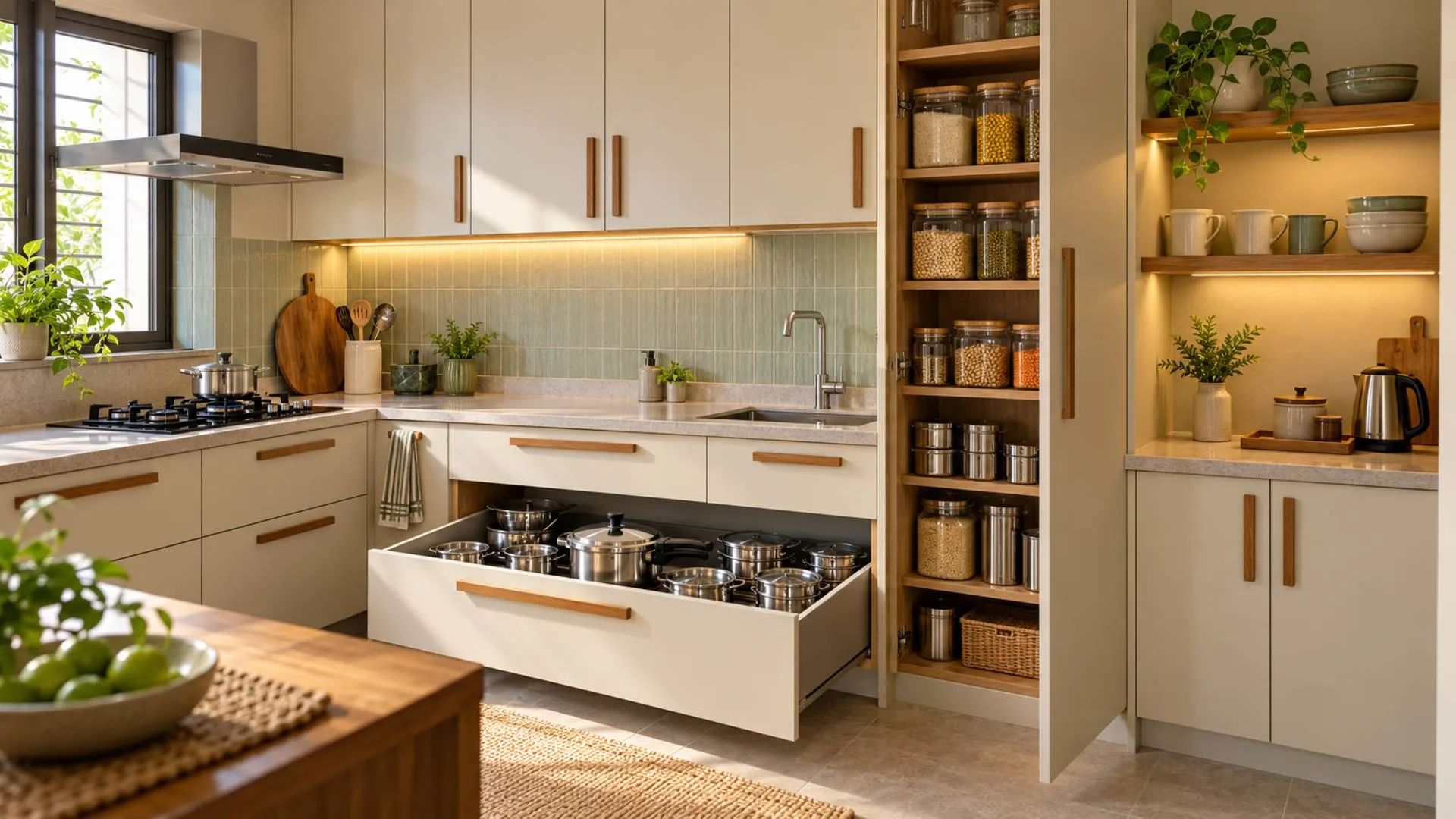
The kitchen is spotless in the picture: uniform bowls, neatly stacked plates and a wooden shelf with just enough to personalize the space. Then come the groceries, lunchboxes, pressure-cooker accessories and mugs that weren’t purchased in a set.
This tension between a styled kitchen and an everyday kitchen is why open shelves versus closed cabinets remains a design conundrum in 2026. Homeowners are seeking attractive interiors, but they want somewhere to put the stuff that makes a home function.
Practical storage is getting attention because the appearance and convenience don’t always march in step. A shelf can lighten up a wall but add objects to your cleaning routine. A cabinet can hide away clutter but make the frequently used items impossible to find.
The best kitchen design makes display and everyday storage separate but equal. It should be equally appealing after dinner as well as a property photograph.
Are open shelves or closed cabinets better for a kitchen in 2026?
Closed cabinets are generally the more practical starting point for storing groceries, cookware and mixed everyday items. Open shelves suit a limited selection of frequently used or decorative objects, positioned away from cooking residue. A combination can provide accessible display space without sacrificing concealed storage.
Why practical storage is getting another look
The references point to a reassessment of extensive open shelving, rather than proof that the style has disappeared.
An August 2026 Martha Stewart Living article carried by Yahoo Shopping examines how open shelves can make a home look cluttered when displays become overcrowded or difficult to maintain. Its advice centres on intentional display, with concealed storage handling other possessions.
That distinction is useful for Indian homeowners following kitchen design trends in 2026. The question is not whether a shelf looks fashionable. It is whether the household can comfortably maintain what the shelf exposes.
Ewart Woods’ storage-design discussion describes open storage as visually lighter but exposed, while closed storage conceals objects and adds visual solidity. It recommends balancing the two. These are design observations, rather than clinical evidence that cabinetry improves mental health.
A practical interpretation follows: if the room already contains many visible objects, more display space may not be what it needs.
Indian cooking makes shelf placement especially important
The open shelf versus cabinet comparison becomes more specific in a kitchen used for regular cooking.
KAFF’s guide to closed kitchen cabinets highlights grease, steam and dust as reasons to favour enclosed storage in working Indian kitchens. It also recommends keeping limited open shelving away from the stove and direct cooking residue.
For someone planning a modular kitchen in Pune, this means evaluating the cooking zone before selecting the upper-wall design. An attractive shelf beside the hob may be less convenient than one near a tea station.
Closed cabinets can reduce exposure for stored items, but they still require cleaning. Doors also do not replace ventilation, dry storage, or sealed containers.
Think about the household’s inventory: bulk grains, steel vessels, spice refills, serving dishes and small appliances. These items need useful dimensions and accessible positions more than they need a place in a display.
Choose storage around what you own and how you cook, not around the few objects shown in a render.
The best combination starts with an inventory
There is no verified universal formula requiring a fixed percentage of open and closed kitchen storage.
Final Draft Cabinetry’s comparison identifies the appeal of accessible, airy open shelves alongside their cleaning and tidiness demands. It recommends a hybrid approach: a limited display area supported by concealed storage.
Use the following as a planning exercise rather than a mandatory layout:
| Storage need | Starting option | What to check |
| Bulk groceries and refill packets | Closed pantry | Container sizes and visibility |
| Heavy cookware | Accessible lower storage | Load capacity and comfortable lifting |
| A few everyday cups | Small shelf or accessible cabinet | Cleaning and reach |
| Display crockery | Glass-front cabinet | Shelf spacing and arrangement |
| Small appliances | Dedicated storage position | Dimensions and access |
| Occasional serving pieces | Closed cupboard | Whether retrieval is convenient |
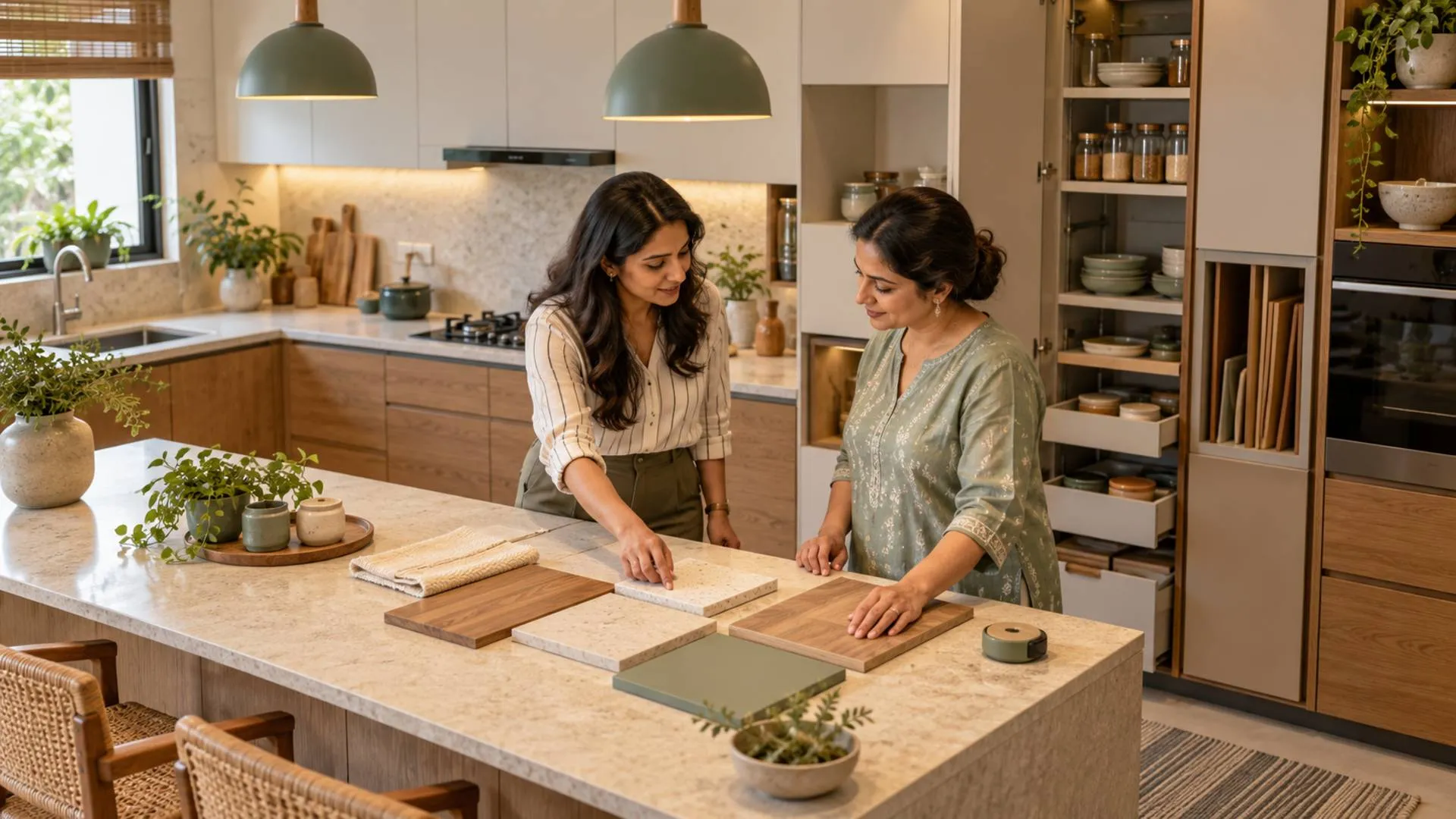
For a joint-family kitchen, discuss this inventory with everyone who regularly uses the room. A design that works for one person may require awkward reaching or repeated rearrangement for another.
Kitchen size also matters. A 3 BHK apartment does not automatically have a large kitchen, so bedroom count should not determine the storage scheme.
Measure the kitchen, then assign its contents a home.
Can closed cabinets look stylish rather than heavy?
Yes, but the design needs more than a fashionable finish.
A wall filled with deep cupboards can feel imposing. Consider where a visual break would help and whether every upper cabinet needs the same depth.
Light finishes, restrained material changes and well-positioned lighting can support a balanced appearance. Leave room for the backsplash or wall to remain visible where that suits the layout.
Glass-front cabinets offer another option. KAFF identifies glass panels as a way to introduce display while retaining cabinet doors.
The compromise is useful: the contents remain visible without being fully exposed. However, glass does not hide a crowded interior, and both sides of the doors need cleaning.
For luxury kitchen interiors in Pune, reserve display space for objects the household actually wants to see. Store packaging, spare containers and mixed utility items elsewhere.
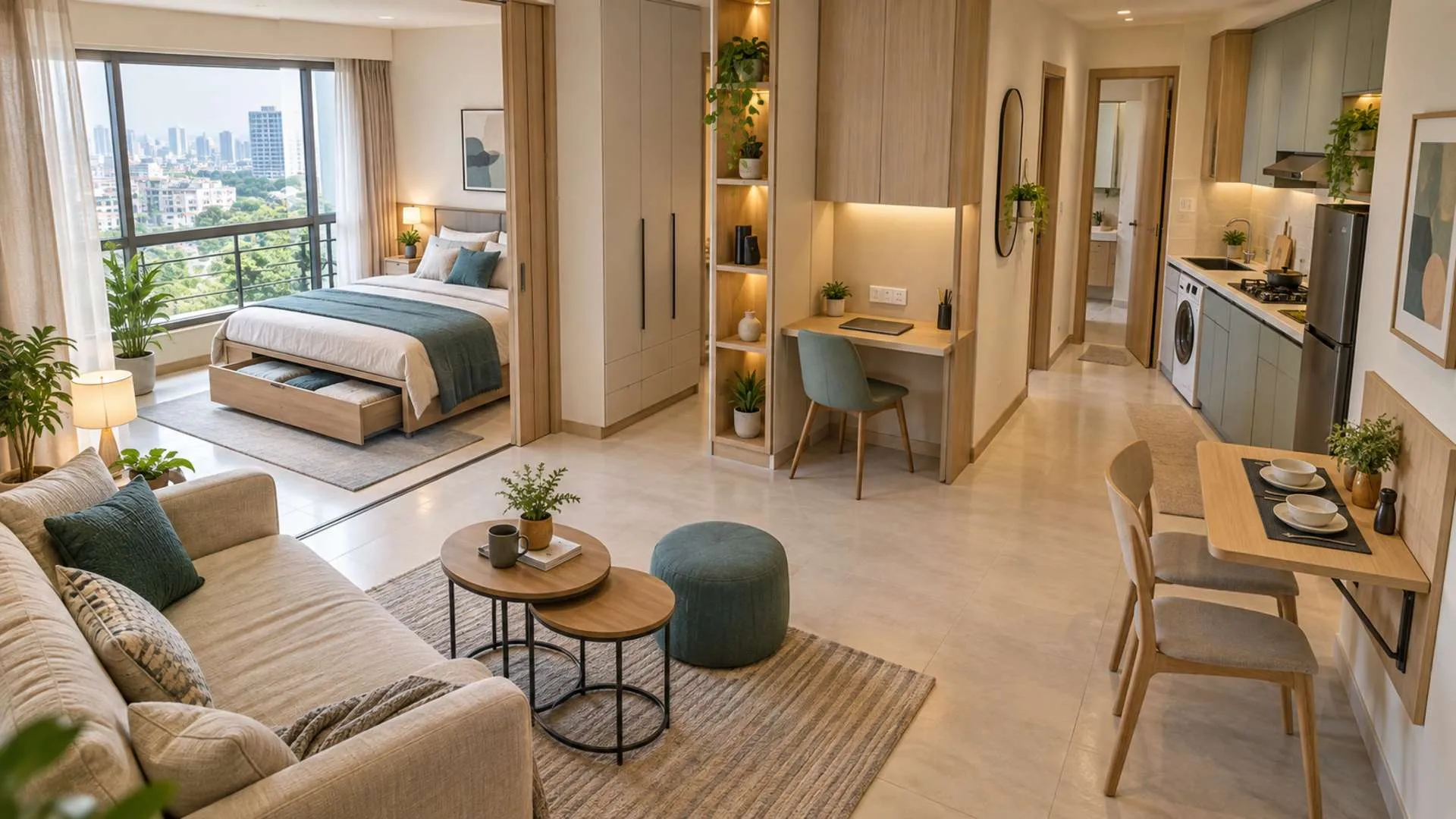
The same principle applies to a compact rental flat. A small, deliberate display area can add character without turning all storage into decoration.
Soft-close fittings are useful; organisation still does the work
Soft-close hinges and drawer systems can improve the experience of operating cabinetry. They do not increase capacity simply by closing quietly.
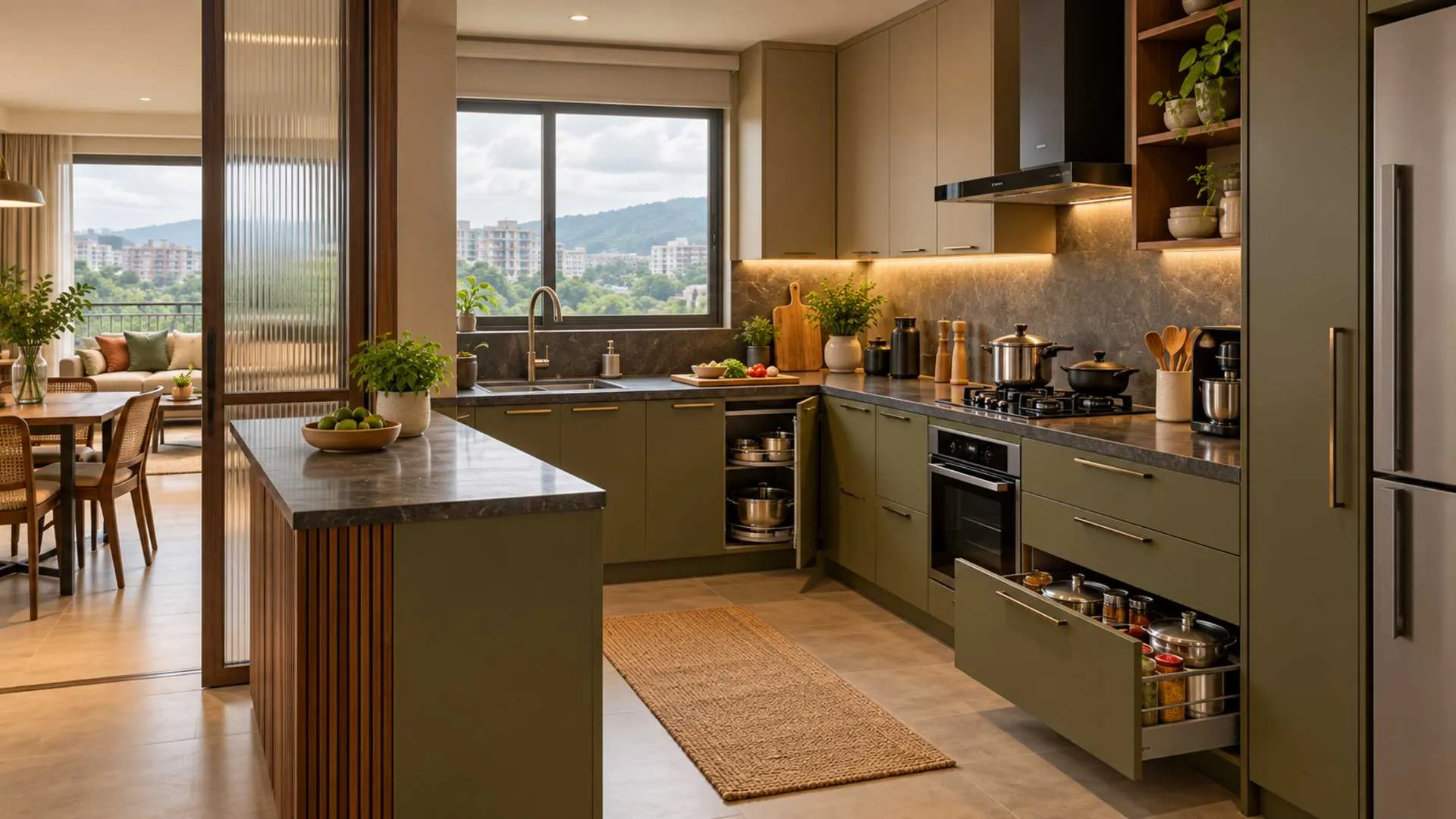
Pull-out pantry units and internal organisers can help make storage accessible, but their suitability depends on dimensions, hardware quality and the contents they must carry.
KAFF’s guide discusses pantry systems, pull-outs, corner fittings and drawer organisation as tools for improving closed storage.
Before ordering, ask the designer or installer to demonstrate the proposed arrangement with realistic contents. Can a large vessel fit? Does a drawer open without colliding with another unit? Can the user reach what is stored at the back?
For kitchen renovation in India, request quotations that separate cabinetry, finishes, hardware and installation. This makes an open-shelf versus closed-cabinet cost comparison more useful than comparing two unexplained package totals.
A simple shelf may have fewer components than a cabinet, but neither option has a universal price advantage across materials and specifications.
Resale value should not decide the entire design
The supplied references do not establish that open shelving or closed cabinetry adds a measurable resale premium.
For a property buyer, the useful test is whether the kitchen offers sufficient storage, functions comfortably and remains in good condition.
Tóth Tamás’ kitchen-storage discussion on Medium, published in December 2023, frames the decision around kitchen size, intensity of use and its relationship with the living area. It provides design considerations, rather than evidence of a 2026 Indian resale trend.
For home renovation in Pune, begin with changes that solve an identifiable problem. Rearranging contents, adding suitable organisers or reducing shelf overcrowding may be enough. A full replacement makes more sense when the layout or cabinetry itself is unsuitable.
Practical kitchen storage earns its value through everyday use. It should accommodate the household without demanding constant styling.
In the open shelves versus closed cabinets debate in 2026, a useful brief is straightforward: conceal what needs protection or volume, display what deserves visibility, and make both easy to reach.