Renovating for Comfort or Resale: Where Should Your Budget Go?
Home Renovation in India 2026: Comfort vs Resale Value
SHARE:

The kitchen still works, but the cabinets feel dated. The bathroom needs attention. A designer suggests new flooring, while the family wants better storage and quieter bedrooms.
Then comes the question that changes the entire renovation budget: are you improving the home for yourself, or preparing it for its next owner?
For homeowners planning home renovation in India in 2026, the two goals overlap, but they do not justify identical spending. A customised work corner may improve everyday life without attracting a matching resale premium. Repairing a leak can protect the property while also removing a concern for prospective buyers.
The decision becomes clearer when every proposed expense has a purpose: repair a problem, improve daily living or strengthen the home’s presentation.
A successful renovation budget begins with the problem you need to solve, before you choose the finishes.
Should I renovate for comfort or resale value, where should my budget go?
Prioritise essential repairs first. If you will continue living in the home, spend next on comfort, storage, ventilation and practical layouts. If selling soon, favour targeted kitchen and bathroom repairs, neutral finishes and clean presentation. Keep a contingency reserve, compare local properties and avoid assuming every renovation expense will return through the sale price.
Start With Your Moving Plans, Then Set the Budget
Before choosing tiles or cabinet shutters, decide how long you realistically expect to use the improved home.
If a sale is approaching, examine the property as a buyer would. Which defects create hesitation? Which changes would improve presentation without requiring a lengthy project?
If you expect to stay, consider recurring frustrations: inadequate kitchen storage, uncomfortable lighting, a bedroom that overheats, or nowhere to work privately.
HSBC’s renovation-budget guide recommends defining lifestyle priorities and weighing expenditure against likely value when renovating to sell. Its advice supports separating personal enjoyment from financial recovery.
That distinction makes room for personal choices without inventing an investment justification.
A reading nook can be worth creating because you will use it. It does not need to promise a higher selling price.
| Spending priority | When comfort is the goal | When resale is the goal |
| Leaks, wiring and plumbing | Resolve faults affecting daily use | Address defects that buyers will investigate |
| Kitchen | Improve workflow and storage | Repair or refresh before considering replacement |
| Bathroom | Improve ventilation, access and usability | Present a clean, functioning space |
| Paint and flooring | Choose durable finishes you enjoy | Favour broad appeal and repair visible damage |
| Personal features | Spend according to genuine use | Limit expensive, permanent customisation |
This is a planning framework, rather than a ranking of guaranteed returns.
Repair the Problem Before Buying the Makeover
Some of the most important home improvements are barely visible.
Architectural Digest India warns that electrical work, plumbing, waterproofing and civil changes can substantially affect costs. It also recommends understanding existing building plans before making alterations.
Repainting a damp wall without resolving the moisture source can mean paying twice. Replacing bathroom tiles while overlooking faulty plumbing may produce a similar result.
Arrange an inspection before finalising decorative work. Ask the professional to distinguish necessary repairs from optional improvements and explain the proposed sequence.
National Bank of Canada’s budgeting guide similarly places urgent work, including leaks, inadequate ventilation and electrical issues, ahead of cosmetic changes. Its Canadian cost benchmarks should not be transferred directly to Indian homes.
For comfort and resale alike, the priority is a home that functions properly.
Kitchens and Bathrooms: Refresh or Replace?
Kitchen renovation in India can range from repairing shutters to replacing cabinets, counters, appliances and service connections. Those are different projects with different budgets.
Bajaj Finserv’s affordable renovation guide identifies repainting, updated lighting, cabinet-handle changes and reuse as ways to improve interiors without automatically changing the layout.
For a seller, begin by asking what the existing kitchen actually needs. Serviceable cabinets may require adjustment, fresh hardware or a finish update rather than complete replacement.
For an owner staying longer, a modular kitchen may justify more work if it resolves poor storage, awkward movement or difficult access. Specify materials, hardware, ventilation and installation clearly.
Bathroom renovation needs the same discipline. Investigate leaks, drainage and ventilation before choosing premium tiles. A sound bathroom may benefit from selective fitting replacements and thorough cleaning; a defective one needs proper repair.
Does a modular kitchen increase resale value? It may improve appeal, but the supplied references do not establish an India-wide recovery rate. The same limitation applies to claims of 60–75% bathroom returns.
Buyers can appreciate a renovated room without paying the seller’s full renovation bill.
Keep Personal Luxury Within a Deliberate Limit
A distinctive home can be rewarding to live in. Before selling, however, ask whether a highly personal feature will help the next household or become something it wants removed.
A permanent entertainment wall, elaborate ceiling or specialised built-in arrangement should have a clear purpose in the budget.
Hightower’s home-improvement budgeting article notes that renovation returns vary with the local market and property condition. It also recommends comparing contractor proposals beyond their final price.
For flat renovation in Pune, compare similar homes in the same society or nearby developments. Ask what competing properties offer and whether prospective buyers are likely to recognise the proposed improvement.
A luxury finish cannot, by itself, resolve disadvantages involving location, layout or building condition.
There is also no universal “spend 10% before selling” rule established by these references. Set the scope around the property’s condition and credible local evidence.
When briefing an interior designer in Pune, including Imperial Infra Design Pune or another practice, ask for separate schedules covering essential repairs, comfort improvements and optional styling. That makes choices easier to review.
Protect the Budget From Everything Between the Big Purchases
Renovation cost in India includes more than materials and labour. Account for demolition, debris removal, delivery, installation, professional fees, applicable taxes, cleaning and temporary living arrangements where needed.
Comfortable Dwelling recommends defining the layout before obtaining contractor quotations and separating construction expenditure from furnishings. Its examples come from Canada, but that budgeting distinction is useful when planning an Indian home.
A finished shell still needs curtains, furniture and lighting to become usable.
Keep a reserve as well. ESL Federal Credit Union suggests allowing 10–20% for unforeseen work, while HSBC suggests adding 15%. Treat these as planning allowances, adjusted for the project’s uncertainty.
For illustration, ₹5 lakh of planned work plus a 15% contingency requires ₹5.75 lakh. If ₹5 lakh is the absolute ceiling, reduce the committed work to preserve a reserve.
Before signing, settle three points:
- The included materials, specifications and exclusions.
- The approval process and price for additional work.
- The payment stages, completion responsibilities and defect correction.
A detailed quotation makes comparison more useful than a low headline price.
Spend for the Benefit You Actually Want
Renovation returns need careful language. Recovering part of a project’s cost is different from making a profit.
If hypothetical work costs ₹4 lakh and adds ₹2.8 lakh to the selling price, the seller recovers 70% of the expenditure. The unrecovered amount remains ₹1.2 lakh, before financing or other costs.
Comfort can still justify that spending when the household enjoys the improvement over time. It simply belongs in a different part of the decision.
When renovating for comfort or resale, protect the home first, improve its usefulness next and give optional luxury a firm limit. Before approving your home renovation budget, compare a repair-only plan with a fuller makeover.

FAQs:
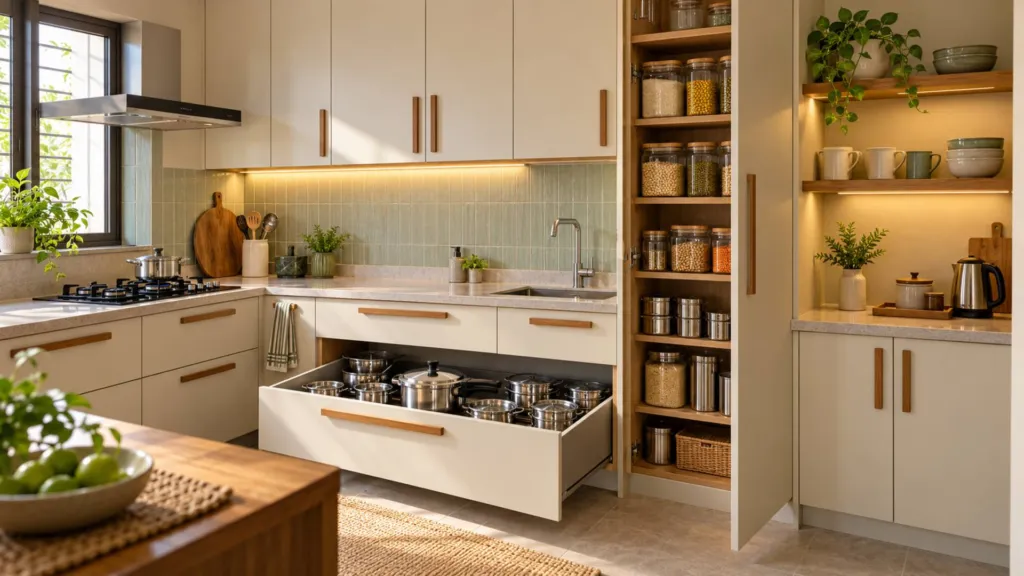 Open Shelves or Closed Cabinets? Why Practical Kitchen Storage Matters