

Which Area in Navi Mumbai Is Best to Live in 2026?
Which Area in Navi Mumbai Is Best to Live in 2026?
SHARE:
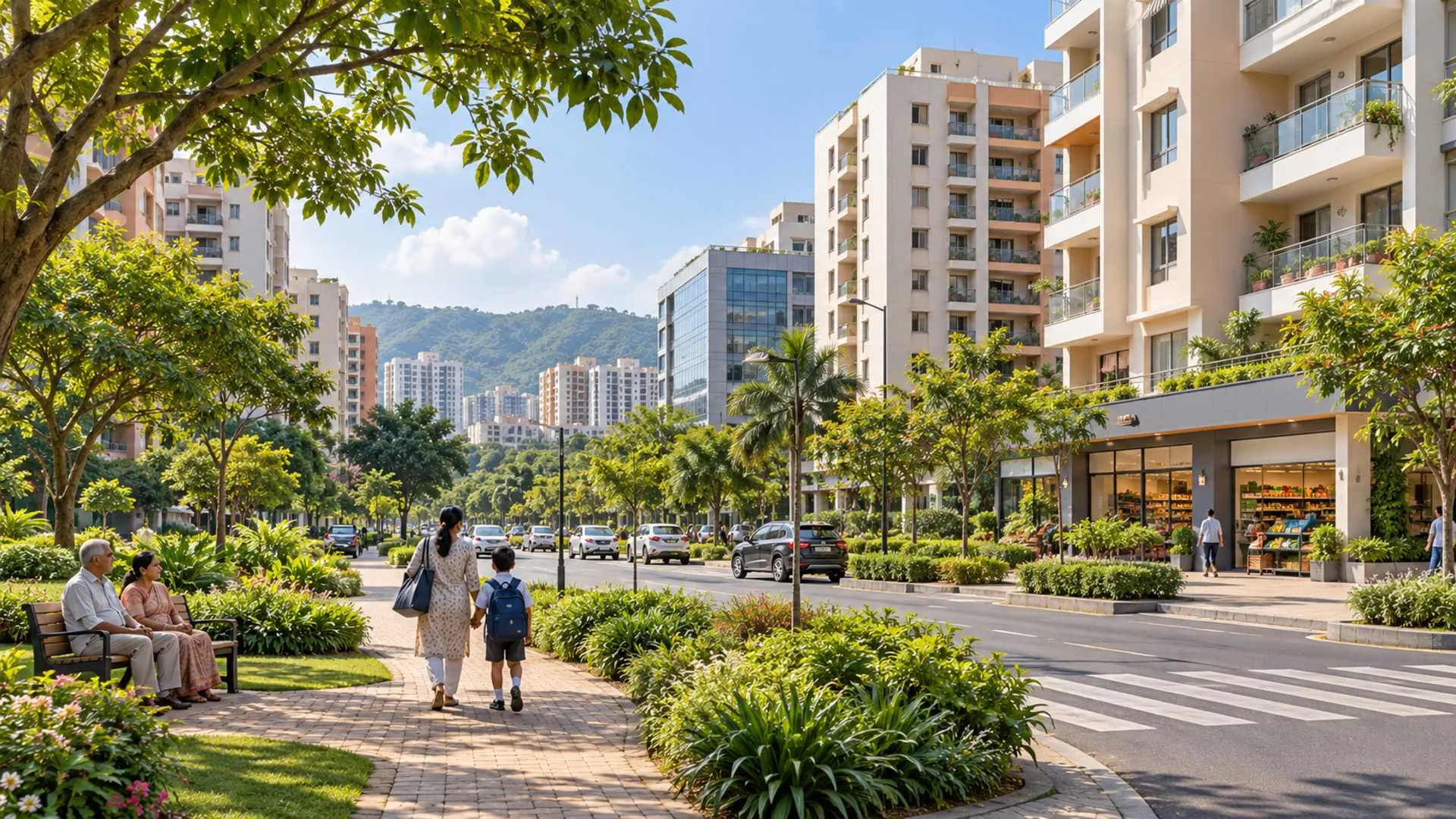


The airport makes the headlines. The school commute dictates the location.
That’s the rub in Navi Mumbai’s realty in 2026. When it comes to buying a flat in Navi Mumbai, buyers have a choice between well-established localities offering convenience or rising residential areas selling proximity to the new airport and other infrastructure projects.
But which is better? A lesser-priced Panvel flat may offer more space, but will that extra space compensate for the longer drive to the office? Will a Seawoods flat allow you to do without the car, or will you still have to drive because the project is too far? How much does Kharghar’s family-centric image matter if the society you choose has schools that are a strain to get to?
In Navi Mumbai, the best localities are those that best accommodate your daily commute at a price you are willing to pay. Here’s a comparison of Navi Mumbai’s best localities.
Which area in Navi Mumbai is the best to live in 2026?
For a practical shortlist, consider Kharghar for family living, Vashi for an established residential and commercial setting, and Seawoods or Nerul for premium convenience. Airoli and Ghansoli suit buyers working nearby, while Ulwe and Panvel merit attention for airport access. Taloja and selected peripheral pockets offer lower entry prices, with greater location-specific trade-offs.
These are editorial recommendations based on neighbourhood characteristics, rather than an official ranking. The right choice changes with your workplace, children’s needs, budget and willingness to wait for surrounding development.
Navi Mumbai area comparison: What do property prices tell buyers?
The first surprise is how widely published prices differ.
Square Yards’ October 2026 locality guide publishes the following broad price ranges. They provide an initial comparison across Navi Mumbai areas, rather than verified quotations for a particular apartment.
| Locality | Published indicative price per sq ft |
|---|---|
| Seawoods | ₹18,900–₹34,750 |
| Vashi | ₹23,650–₹35,300 |
| Nerul | ₹24,050–₹32,600 |
| Airoli | ₹21,900–₹23,900 |
| CBD Belapur | ₹14,000–₹19,950 |
| Kharghar | ₹17,500–₹37,650 |
| Ulwe | ₹13,100–₹18,300 |
| Panvel | ₹9,000–₹14,500 |
| Kamothe | ₹11,900–₹14,375 |
| Taloja | ₹8,900–₹12,600 |
Source: Square Yards. These are the guide’s published ranges; its summary table and individual locality averages are not identical. The figures should not be treated as registered transaction prices or directly comparable carpet-area quotations.
A second supplied reference, Navi Mumbai Hub, quotes approximately ₹14,500–₹16,600 per sq ft for Ulwe and ₹13,350–₹15,000 for Panvel. The overlap is useful, but the differences underline why a single “Navi Mumbai property rate” cannot settle a purchase decision.
Before comparing two prices, establish the area measurement, building age, possession status and included charges. Ask whether the figure uses carpet area, built-up area, or another basis.
Then compare total consideration. A seemingly cheaper apartment can become less attractive after renovation, maintenance, parking and daily transport costs enter the picture.
Kharghar, Vashi or Seawoods: Which suits family life?
Kharghar deserves an early place on a family’s shortlist.
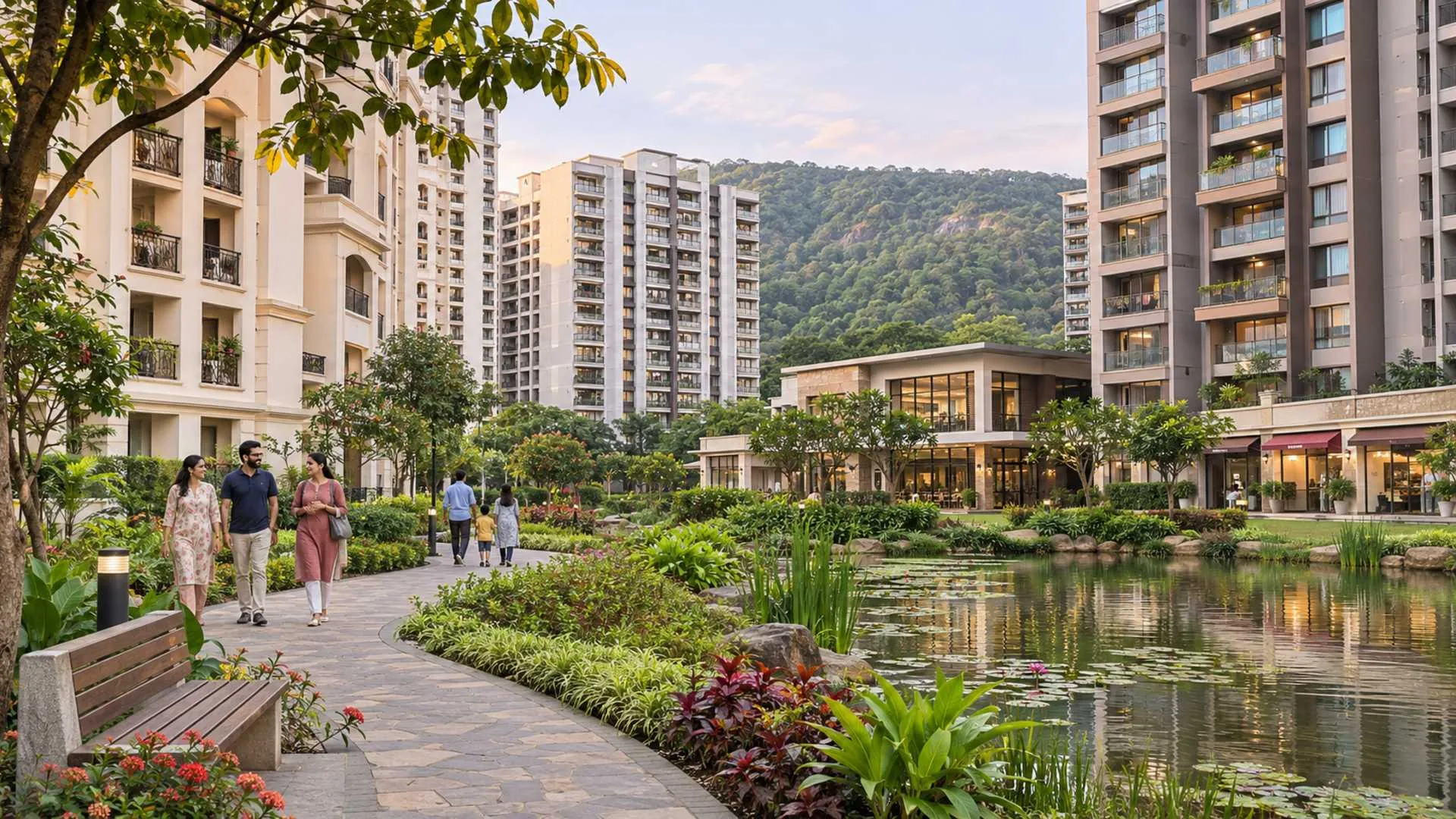
The Propertist’s Kharghar guide identifies Central Park, the hills, educational institutions and the golf course among the locality’s attractions. It also distinguishes established sectors such as 7, 10 and 12 from newer residential pockets. That sector-level distinction is more useful than treating every Kharghar address as equivalent.
For parents, the real test is straightforward: can the household manage school, work, groceries and medical appointments without several complicated journeys?
A park-facing brochure image does not answer that question. Visit the specific building when school traffic is moving, check the walking environment and speak to residents about water supply and everyday maintenance.
Vashi offers a different proposition. Its established commercial and residential setting makes it a sensible starting point for buyers who value an existing urban ecosystem. NayeGhar’s neighbourhood guide includes Vashi among its key residential choices, alongside Nerul and Kharghar.
The decision between Kharghar and Vashi should therefore begin with the household’s destination map. A family working around Vashi may gain little by moving farther away solely for a newer clubhouse.
Seawoods and Nerul appeal to buyers seeking premium convenience. Square Yards highlights the station-oriented setting around Seawoods-Darave and the area’s retail offering. However, “near the station” should be tested from the society gate to the actual entrance, including crossings and pedestrian access.
Sanpada also belongs on the shortlist for buyers considering established neighbourhoods and Palm Beach Road access. Revaa Homes’ luxury-area guide places Palm Beach Road prominently within its discussion of premium living. A Palm Beach Road flat still needs individual assessment: the address alone does not establish an open view, quiet surroundings, or convenient access.
For family buyers, a usable neighbourhood can justify more than an impressive amenity list.
Airoli and Ghansoli: Start with the office address
For an IT professional, a flat in Airoli or Ghansoli may deserve priority over a more heavily advertised airport-corridor project.
Navi Mumbai Hub identifies Airoli and Ghansoli with IT and industrial proximity. That makes them relevant starting points for households whose employment is concentrated in this belt.
The practical comparison is Airoli’s employment access versus Kharghar’s family-oriented attractions. Neither wins automatically.
If both adults travel to nearby offices, a shorter commute may outweigh a larger apartment elsewhere. If one works remotely and the children attend school farther south, the balance can shift.
Do a weekday trial journey before paying a booking amount. Include the time spent leaving the building, reaching transport and entering the workplace. The advertised driving distance captures only part of that experience.
For renters, the same exercise helps identify the best locality in Navi Mumbai without the commitment of a purchase.
Ulwe, Panvel and Taloja: Affordability needs a closer look
The Navi Mumbai airport impact is most relevant when it changes an actual journey or employment opportunity.
Navi Mumbai International Airport began commercial operations on December 25, 2025, according to Akashvani News. It should therefore be described as operational, rather than an entirely future catalyst.
Adani Realty’s airport-area outlook identifies Panvel, Ulwe and Kharghar as residential locations to examine. Its discussion links Ulwe with airport proximity and Panvel with railway, highway and township development. As a developer’s outlook, it offers context rather than independent proof of future returns.
For someone seeking a flat near the airport in Navi Mumbai, Ulwe is worth investigating. However, the nearest airport-facing location on a map may not deliver the simplest route to the passenger terminal.
Panvel offers another route into Navi Mumbai investment, particularly for buyers comparing space and total purchase cost. Specify whether the property is in an established urban pocket or a township marketed under the wider Panvel name. Those settings can create different daily experiences.
For an affordable flat in Navi Mumbai, Taloja, Kalamboli, Kamothe and Dronagiri warrant investigation. NayeGhar includes Taloja and Kalamboli among its budget-oriented choices, while Navi Mumbai Hub identifies Dronagiri as an emerging, lower-entry market.
A first-time buyer searching below ₹1 crore should filter by configuration, usable area and possession status before judging availability. A compact resale apartment and a larger under-construction home are different products, even when their advertised prices match.
Ask whether the saving survives higher commuting costs, furnishing expenses and the time required for surrounding services to develop.
Connectivity in 2026: Separate the operating network from the promise
Navi Mumbai Metro is already part of the city’s transport system. Maha Metro’s annual report records the opening of the 11.1-km Belapur–Pendhar Line 1 in November 2023, with 11 stations. Its usefulness still depends on the distance between the apartment, station and final destination.
The Harbour railway corridor also matters for buyers comparing Mumbai-bound journeys. Central Railway’s published Harbour timetable identifies the CSMT–Panvel network. Buyers should check current services and transfers for their particular commute.
Atal Setu, or MTHL, adds another important connection. MMRDA identifies it as the Sewri–Nhava Sheva link. However, a bridge-crossing time is not a door-to-door commute from every Navi Mumbai housing development to South Mumbai. Local access, traffic and the destination beyond the bridge remain relevant.
The Ulwe Coastal Road requires particular care. Although some promotional material presents completion as a settled milestone, Homebazaar’s October 8, 2026 update still described construction as incomplete. An official opening confirmation is needed before treating the proposed benefit as available.
Choose your home using the transport you can use today. Evaluate future infrastructure as a separate benefit.
Which Navi Mumbai area makes the strongest investment case?
Navi Mumbai appreciation should be assessed using comparable properties over a clearly stated period. A percentage gain reported for one sector cannot establish returns across premium nodes, affordable pockets and every new launch.
Rental yield needs the same discipline. In a hypothetical example, a ₹1.2 crore apartment earning ₹30,000 monthly produces a 3% gross annual yield. That calculation precedes maintenance, vacancy, repairs and other ownership expenses. It is an illustration, rather than a market forecast.
For a Navi Mumbai versus Thane comparison, use actual shortlisted homes. Citywide averages can conceal the very differences that matter: area measurement, building quality, job access and recurring costs.
Before deciding, ask for three things:
- A written price breakdown and clearly identified area measurement.
- Project documents, possession information and applicable approvals for professional review.
- Recent, genuinely comparable sale and rental evidence.
For developers, this creates a clear opportunity. A project that can demonstrate reliable services, practical access and transparent costs gives buyers a stronger reason to engage than a distant infrastructure promise.
The best address is the one you can test
So, which area in Navi Mumbai is best to live in 2026?
Start with Kharghar for family priorities, Vashi for an established urban setting, Seawoods and Nerul for premium convenience, and Airoli or Ghansoli for nearby employment. Investigate Ulwe and Panvel where airport access matters, and assess Taloja, Kalamboli, Kamothe or Dronagiri when affordability leads the search.
Then narrow the decision to the building and street. Visit at different times, test the commute and compare total ownership costs.
Ready to buy a flat in Navi Mumbai? Shortlist two neighbourhoods and three comparable homes in each, then make every seller show how the property will work for your life. There is no defensible universal winner between Ulwe, Kharghar and Panvel.
An Ulwe property purchase may suit a buyer whose thesis centres on airport-linked demand. Kharghar may suit someone prioritising immediate residential use. Panvel may appeal where the specific project offers an acceptable balance of space, access and price.