

Maharashtra Stamp Duty in 2026: Are Homebuyer Concessions Still Available?
Maharashtra Stamp Duty 2026: Rates & Homebuyer Concessions
SHARE:

For Maharashtra homebuyers waiting for the return of the dramatic stamp-duty cuts seen during the pandemic, 2026 brings a less exciting but important answer: the broad statewide reduction is no longer available.
The temporary 2020–21 concession that helped energise property registrations has ended. What remains is a more targeted system: women buying residential property in their sole name can still benefit from a 1% concession, while certain specialised transactions have separate relief.
For ordinary buyers, however, Maharashtra stamp duty rates in 2026 largely remain at normal prevailing levels, making stamp duty one of the highest costs to calculate before signing a sale agreement. Home First Finance Company, India’s June 2026 guide places effective residential rates at 6% for men and 5% for women in Mumbai, and 7% and 6%, respectively, in Pune, Thane and Nagpur.
What is the stamp duty rate in Maharashtra in 2026?
For a typical residential purchase, Mumbai’s effective stamp duty is generally 6% for male buyers and 5% for eligible female buyers. Pune, Thane and Nagpur generally stand at 7% for men and 6% for women because of applicable local levies. The earlier broad stamp-duty reduction is not currently available to ordinary homebuyers.
The Stamp-Duty Cut Buyers Remember Is Gone
When people search “Maharashtra stamp duty reduction 2026 still available,” they are often thinking about the extraordinary pandemic-era intervention.
Maharashtra temporarily reduced stamp duty during 2020–21 to stimulate housing demand. CREDAI-MCHI subsequently argued for an extension after the measure helped accelerate registrations.
That concession should not be confused with today’s rules.
In 2026, there is no comparable blanket stamp duty relief Maharashtra homebuyers 2026 programme covering ordinary residential purchases statewide. Buyers instead need to determine the rate applicable to their location, ownership structure and transaction.
That distinction matters because even one percentage point can translate into a substantial amount on Mumbai or Pune property.
Mumbai vs Pune: Why Your Address Changes the Bill
According to Home First Finance Company, India’s 2026 stamp-duty guide, Mumbai’s effective rate is 6% for men and 5% for women, including the applicable Metro Cess. Pune, Thane and Nagpur are listed at 7% for men and 6% for women, reflecting additional local levies.
| Location | Male buyer | Eligible female buyer |
| Mumbai | 6% | 5% |
| Pune | 7% | 6% |
| Thane | 7% | 6% |
| Nagpur | 7% | 6% |
| Rural Maharashtra* | ~4% | ~3% |
*Rates can depend on the property’s exact jurisdiction and transaction. Buyers should verify the applicable duty with IGR Maharashtra before payment.
This explains the frequently searched question “Pune stamp duty 7% vs Mumbai 6% why difference?” Pune’s effective structure can include both the Metro Cess and Local Body Tax, whereas Mumbai’s cited 6% effective rate includes the Metro Cess.
In other words, two ₹1 crore homes in Maharashtra can produce different tax bills simply because they sit in different jurisdictions.
Buying a ₹1 Crore Mumbai Flat? Here Is the Difference
Consider the query: Mumbai stamp duty on a ₹1 crore flat how much to pay?
Using the prevailing effective rates cited above:
- Male buyer at 6%: approximately ₹6 lakh
- Eligible female buyer at 5%: approximately ₹5 lakh
That is a ₹1 lakh difference on a ₹1 crore transaction.
Now consider Pune. At the cited effective rates, the same ₹1 crore value would mean roughly ₹7 lakh for a male purchaser and ₹6 lakh for an eligible female purchaser.
Registration charges are separate. Home First Finance Company reports a registration fee of 1% of property value, capped at ₹30,000 for properties above ₹30 lakh.
So buyers asking how much stamp duty Maharashtra home purchase 2026 should never budget only for the advertised property price.
The 1% Women’s Concession Is Still the Big Homebuyer Benefit
One concession remains particularly relevant: Maharashtra stamp duty women concession 2026.
Eligible women purchasing residential property in their sole name receive a one-percentage-point reduction compared with the corresponding male rate, according to Home First Finance Company current guide. The same source notes that the concession does not extend in the same way to joint ownership with a male co-owner or commercial property.
That makes the savings meaningful as property values rise.
A 1% concession means:
- ₹50 lakh property → ₹50,000 potential saving
- ₹80 lakh property → ₹80,000 potential saving
- ₹1 crore property → ₹1 lakh potential saving
- ₹2 crore property → ₹2 lakh potential saving
So the answer to “can I get stamp duty relief for women buyer in Maharashtra?” is yes, but buyers must ensure that their ownership structure satisfies the applicable conditions.
Home First Finance Company also reports that the earlier restriction affecting disposal of properties purchased using the concession has been removed, giving women purchasers greater flexibility.
Ready Reckoner Rate: The Number Buyers Cannot Ignore
Here is where many calculations go wrong.
Stamp duty is not necessarily calculated simply by multiplying the negotiated purchase price by 5%, 6% or 7%.
The Ready Reckoner Rate, often searched as circle rate or government market value, is critical to valuation for stamp-duty purposes. The applicable value can therefore differ from what a buyer informally considers the property’s “price.”
This makes Mumbai ready reckoner rate stamp duty calculation 2026 and equivalent Pune calculations particularly important for resale transactions where the negotiated consideration may differ from government valuation.
A 2026 Bombay High Court case also illustrates how disputes can arise over the value on which duty should be determined: litigation concerning an auctioned property involved authorities assessing stamp duty using an independently determined market value.
The safest approach is to calculate duty using the official valuation applicable to the exact property and instrument, not an online percentage alone.
The ₹1 Lakh Penalty Has Made Underpayment Much Riskier
2026 has also brought a significant enforcement change.
The Times of India reported that, effective January 1, 2026, Maharashtra introduced a revised penalty framework under amendments to the Maharashtra Stamp Act for documents executed with insufficient stamp duty. The maximum fine can reach ₹1 lakh, compared with the earlier ₹5,000 figure cited for the relevant offence.
The amendments affect provisions dealing with offences involving inadequate stamp duty, and serious cases can have consequences beyond simply paying the original shortfall.
That gives the search “Maharashtra stamp duty new ₹1 lakh penalty avoid how” a simple answer:
Do not undervalue the transaction, do not rely on unofficial calculations, and ensure the correct instrument and duty are determined before registration.
A high-profile Pune dispute in 2026 showed just how seriously authorities can treat alleged misuse of stamp-duty exemptions. In April, Maharashtra’s Chief Controlling Revenue Authority upheld an order requiring ₹21 crore in stamp duty in connection with a ₹300 crore Mundhwa transaction after rejecting the exemption claim.
But Maharashtra Is Still Giving Stamp-Duty Relief; Just Not to Everyone
This is where the headline becomes more nuanced.
Maharashtra continues to use stamp-duty concessions for specific policy objectives and transaction categories. That does not mean ordinary apartment buyers have received a new statewide reduction.
Recent measures concerning specialised land transactions or long-term lease structures should therefore not be interpreted as a general residential stamp-duty holiday.
For example, a concession aimed at a particular land or infrastructure category does not automatically reduce the duty payable when someone purchases a 2BHK in Pune.
“Maharashtra has announced stamp-duty relief” and “my home purchase gets cheaper” are not necessarily the same statement.
That distinction is especially important in news headlines, where transaction-specific concessions can easily be mistaken for a statewide housing benefit.
Gift Deeds, PMAY and Special Transactions Need Separate Calculations
Not every property transfer is a conventional sale.
Family gift deeds, inherited property arrangements, MHADA transactions, redevelopment documentation, long-term leases and government housing schemes can attract different provisions.
Similarly, a buyer searching for PMAY affordable housing stamp duty concession should not automatically assume that PMAY eligibility creates a universal Maharashtra stamp-duty waiver. Scheme benefits and state stamp-duty rules need to be checked independently for the particular transaction.
The same principle applies to the frequently quoted family gift deed stamp duty ₹200 flat Maharashtra phrase. Concessional treatment depends on the instrument and qualifying relationship; buyers should confirm the current statutory provision rather than treating ₹200 as a universal charge for every family transfer.
Is Now a Bad Time to Buy Because Stamp Duty Is Higher?
Not necessarily.
Mumbai’s property market has continued registering strong transaction volumes despite the absence of the pandemic-era blanket concession.
Hindustan Times reported that Mumbai recorded an estimated 13,617 property registrations in July 2026, up 8.3% year-on-year and the strongest July in more than 14 years. Stamp-duty collections exceeded ₹1,223 crore.
That tells buyers something important.
Stamp duty influences the final acquisition cost, but it rarely determines the entire investment case.
A ₹1 lakh tax saving matters. But paying ₹10 lakh too much for the wrong property, choosing a poor location, or ignoring legal problems matters considerably more.
What Homebuyers Should Do Before Registration
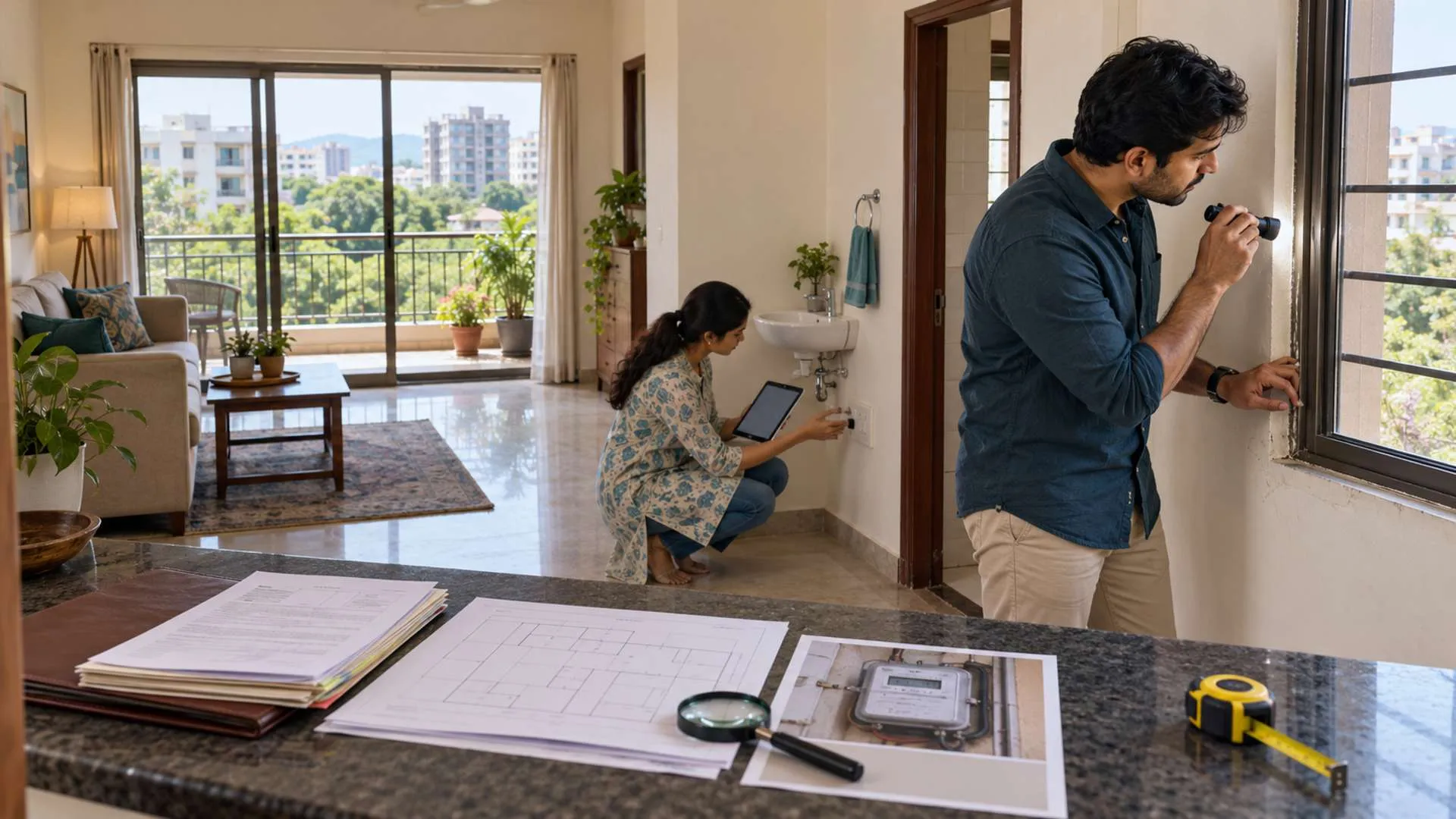
Before paying stamp duty in 2026, buyers should verify four things: the property’s applicable Ready Reckoner valuation, the rate for its exact municipal jurisdiction, whether the ownership structure qualifies for any concession, and the separate registration charge.
Payments and official verification should ultimately be routed through the appropriate IGR Maharashtra/GRAS framework, rather than relying solely on developer quotations or third-party calculators.
For a high-value or unusual transaction, gift, redevelopment, lease, inheritance, or disputed valuation, professional legal or tax advice may also be worthwhile.
So, Is Maharashtra’s Stamp-Duty Reduction Still Available?
Not as the broad homebuyer discount many people remember.
The pandemic-era statewide reduction has ended, while the 1% women’s residential concession remains a significant targeted benefit. Effective rates commonly cited for 2026 are 6% for men and 5% for eligible women in Mumbai, and 7% versus 6% in Pune, Thane and Nagpur.
Meanwhile, Maharashtra is becoming tougher about underpayment: the 2026 penalty changes make accurate stamping more important than ever.
The takeaway for buyers is straightforward: don’t wait for an old stamp-duty discount that no longer exists. Calculate today’s complete acquisition cost and check whether you qualify for the concessions that actually do.
Calculate Before You Book
Buying in Mumbai, Pune, Thane, Navi Mumbai or anywhere else in Maharashtra? Check the latest IGR Maharashtra notifications, Ready Reckoner valuation and applicable concessions before paying your token amount. A difference of one percentage point can save lakhs on a premium home, but an incorrect stamp-duty calculation can now make it much costlier