Mumbai’s 39,111-Structure Demolition Drive: Who Faces Action From October 1?
Mumbai BMC Demolition Drive 2026: Who Faces Action?
SHARE:
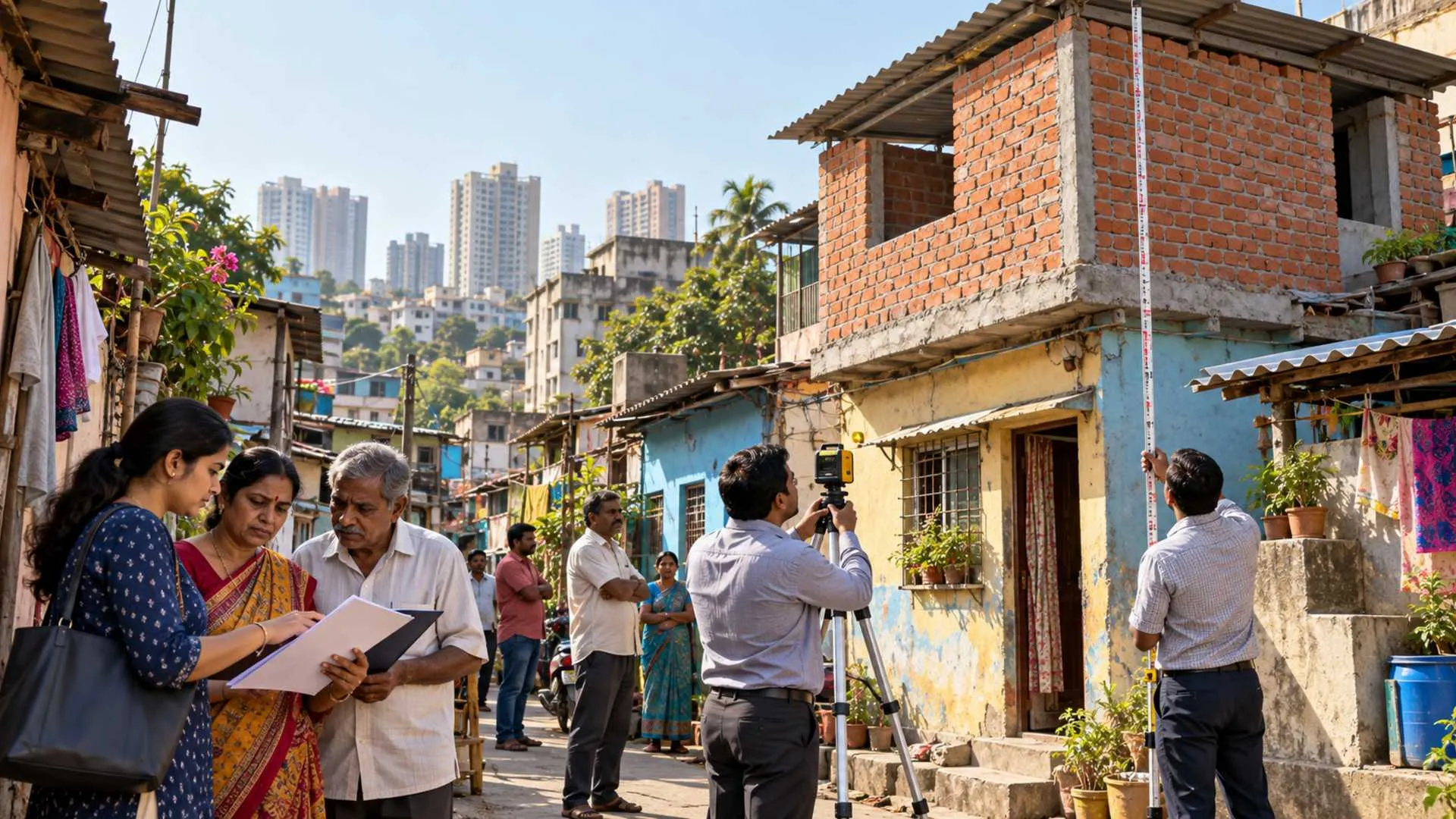
Mumbai is gearing up for a major enforcement action in 2026, focusing on illegal construction in slums. The city’s municipal corporation plans a special campaign from October 1 to December 31 targeting structures that are 14 feet or larger.
The numbers are significant: 39,111 structures have been flagged throughout Mumbai and its surrounding areas. However, this doesn’t mean all these homes will be demolished starting October 1. What gets taken down and when will depend on specific property records, official notices, inspections, legal challenges, and any potential policy shifts.
This campaign has already sparked political and legal debate. Elected officials are calling for discussions and guarantees for resident relocation, while the city administration points to safety concerns and unauthorized building growth. With the campaign’s start date approaching, the key issues are not just the scale of the operation, but who will be directly affected and what legal options those residents have right now.
Will my home be demolished in Mumbai’s BMC drive starting October 1?
A home is not automatically marked for demolition merely because it is in Mumbai or in a slum settlement. The announced drive targets unauthorised structures or additions in slum areas that measure 14 feet or more. Risk depends on the exact structure, approved or protected portion, height, land status, SRA or other scheme coverage, municipal records and any notice issued by the ward office. Residents should obtain the notice and property records, verify what portion is alleged to be unauthorised and seek prompt legal advice rather than relying on rumours.
The Times of India reports that the BMC Mumbai demolition drive in October 2026 is planned as a three-month exercise. Of the 39,111 structures identified, 31,227 are in the eastern suburbs, 4,536 are in the western suburbs and 3,348 are in the island city. The BMC has said Mumbai contains about 2,23,150 slum structures overall.
That distribution places the overwhelming numerical weight in the eastern suburbs. It does not mean every slum home in Kurla, Ghatkopar, Vikhroli, Chembur, Mankhurd, Govandi or Deonar is on a demolition list. Nor does it establish that every identified structure is legally identical. Each ward office must still connect the broader survey to the relevant structure, alleged violation and enforcement process.
The Indian Express reports that the drive follows deadly incidents involving informal housing, including a landslide in Kurla and a house collapse in Mankhurd. The civic argument is therefore framed around safety as well as unauthorised construction. Reports also say residents have been asked to remove unauthorised portions voluntarily before municipal teams act.
What does Mumbai’s 14-foot rule actually target?
The campaign is directed at unauthorised vertical additions and slum structures measuring 14 feet or more, not at all Mumbai real estate above that height. The phrase “14-foot rule” can sound citywide, but the reported drive concerns structures within slum areas and alleged unauthorised construction.
This difference is crucial for a regular apartment owner. A lawfully approved flat in Mumbai within a sanctioned building is not brought into this particular slum-enforcement exercise simply because the building is taller than 14 feet. Apartment owners can still face separate BMC action for illegal extensions, enclosed refuge areas, altered balconies or other unauthorised work, but those are different enforcement questions.
Likewise, being below 14 feet should not be treated as a permanent certificate of legality. A structure can face action under other laws if it encroaches on a road, footpath, drain, railway boundary, water body or public land, or if it violates a specific order. Conversely, a structure identified in a height survey may have documents, protected status, pending proceedings or rehabilitation claims requiring examination.
The BMC’s wider “Pedestrian First” effort targets encroachments on footpaths and public space. Residents should not merge every BMC action in Mumbai into one programme: footpath clearance, dangerous-building action and project-specific demolitions can involve different laws and facts.
Why the October drive remains contested
The Hindustan Times reported on September 29 that the proposed operation had triggered a fresh confrontation between corporators and the civic administration. Representatives across political lines have asked for further discussion, while opposition leaders have warned of protests if action begins without resolving rehabilitation concerns.
ThePrint has also reported pushback against applying the height standard across thousands of homes without adequately addressing present housing realities. Political claims that the campaign could affect around 1.5 lakh residents are estimates advanced by opponents of the drive, not a confirmed BMC count of people who will be displaced. They should be reported as claims, not settled outcomes.
The present position is therefore fluid. As of September 29, the drive remains reported as scheduled from October 1 to December 31, but opposition does not itself cancel an administrative programme. Equally, an announced programme does not remove the need for lawful, structure-specific procedure. Any stay, revised circular, ward-level instruction or court order issued after publication could change the position rapidly.
For residents, the safest source is not a social-media forward. It is the notice served by the relevant BMC ward, the municipal record relating to the structure, the SRA or land-owning authority record where applicable, and current advice from a lawyer experienced in Mumbai municipal and housing law.
What rights do residents have after receiving a BMC notice?
An allegation that a structure is unauthorised does not generally allow public authorities to ignore due process. In its November 2024 demolition judgment, the Supreme Court laid down nationwide safeguards against arbitrary demolition, including prior show-cause notice, an opportunity to respond and time to challenge a final order. The judgment also recognised exceptions: its general directions do not apply in the same way to unauthorised structures in public places such as roads, streets, footpaths, alongside railway lines or near rivers and water bodies, or where demolition is ordered by a court.
The Bombay High Court reinforced the importance of process in 2026 when it upheld compensation in a case involving an unauthorised Jogeshwari tenement demolished without prior notice. The ruling did not convert an illegal structure into an authorised one. It underscored that even eviction of an encroacher must follow the law.
Anyone receiving a BMC notice in Mumbai should first preserve the complete notice, envelope, service date and photographs of the property. The recipient should identify the section invoked, the deadline, the measurements and the precise construction alleged to be unauthorised. Relevant records may include photo passes, electoral or utility records, tax receipts, survey extracts, SRA eligibility papers, tenancy evidence, sanctioned plans, earlier permissions and court or authority orders.
A written reply should address the notice rather than merely asking for sympathy. If the notice is factually wrong, served on the wrong person, ignores protected status or covers an authorised portion, supporting documents must be placed before the authority within the stated time. Where urgent demolition is threatened, a lawyer can assess whether a representation, statutory appeal, RERA or SRA route, or court remedy is available. A stay order is never automatic, and missing the response deadline can materially weaken a case.
Residents should not obstruct officials physically or pay anyone who claims they can “settle” the matter unofficially. They should request identification, keep an inventory of possessions and record events lawfully. Where vulnerable residents, children, older people or persons with disabilities are involved, those circumstances should be documented and raised through the proper channel.
What happens after demolition and is compensation guaranteed?
There is no universal BMC compensation amount for every demolished structure. Rehabilitation, alternate accommodation or monetary relief depends on eligibility, the land-owning body, the applicable slum policy or SRA scheme, the structure’s status, cut-off requirements, court directions and whether officials followed due process.
Residents should therefore be cautious about the question, “What compensation does BMC give?” A person eligible under a notified rehabilitation scheme may stand differently from someone occupying a newly built unauthorised upper floor or an obstruction on a public footpath. Even where a court awards compensation for unlawful procedure, that does not automatically validate the underlying construction or create the same entitlement for every case.
Before voluntary removal or enforced action, affected households should seek written clarification about rehabilitation eligibility, the portion to be removed, possession records and the handling of belongings. If only an added storey or extension is alleged to be illegal, the notice and order should make the scope clear. Technical advice may also be necessary because partial demolition can affect structural stability and adjoining homes.
Does the drive affect Mumbai flat buyers?
The October campaign is not a blanket threat to people looking to buy a flat in Mumbai in an approved apartment project. Still, it carries a broader warning for every property search in Mumbai: never treat possession, electricity bills or years of occupation as proof that construction is authorised.
Before buying a resale or ready-to-move flat in Mumbai, obtain an independent title review and compare the unit with the sanctioned plan. Verify the Occupancy Certificate for the relevant wing and floors, Completion Certificate where applicable, approved layout, BMC property records, society documents and pending municipal notices. In an SRA-linked building or redevelopment, confirm approvals, allotment status, transfer restrictions and authority permissions. For a BMC-approved flat in Mumbai, the documents must cover the actual unit—not merely the project’s original ground-floor structure.
The 39,111 figure reveals the scale of Mumbai’s vertical informality, but it does not settle the fate of 39,111 households. Height may trigger scrutiny; legality and due process determine what should happen next. The immediate task for affected residents is to verify, document and respond. The task for buyers is equally clear: buy the approvals, not just the address.
For continuing Mumbai property updates and practical buyer guidance, visit RealtyConnect. Residents facing a notice should obtain advice from a qualified municipal-law professional based on their own documents and the latest ward-level or court directions.