Pune’s Property Investment Share Rises: Why Institutions Are Taking Notice
Pune Property Investment 2026: Why Institutions Are Investing
SHARE:
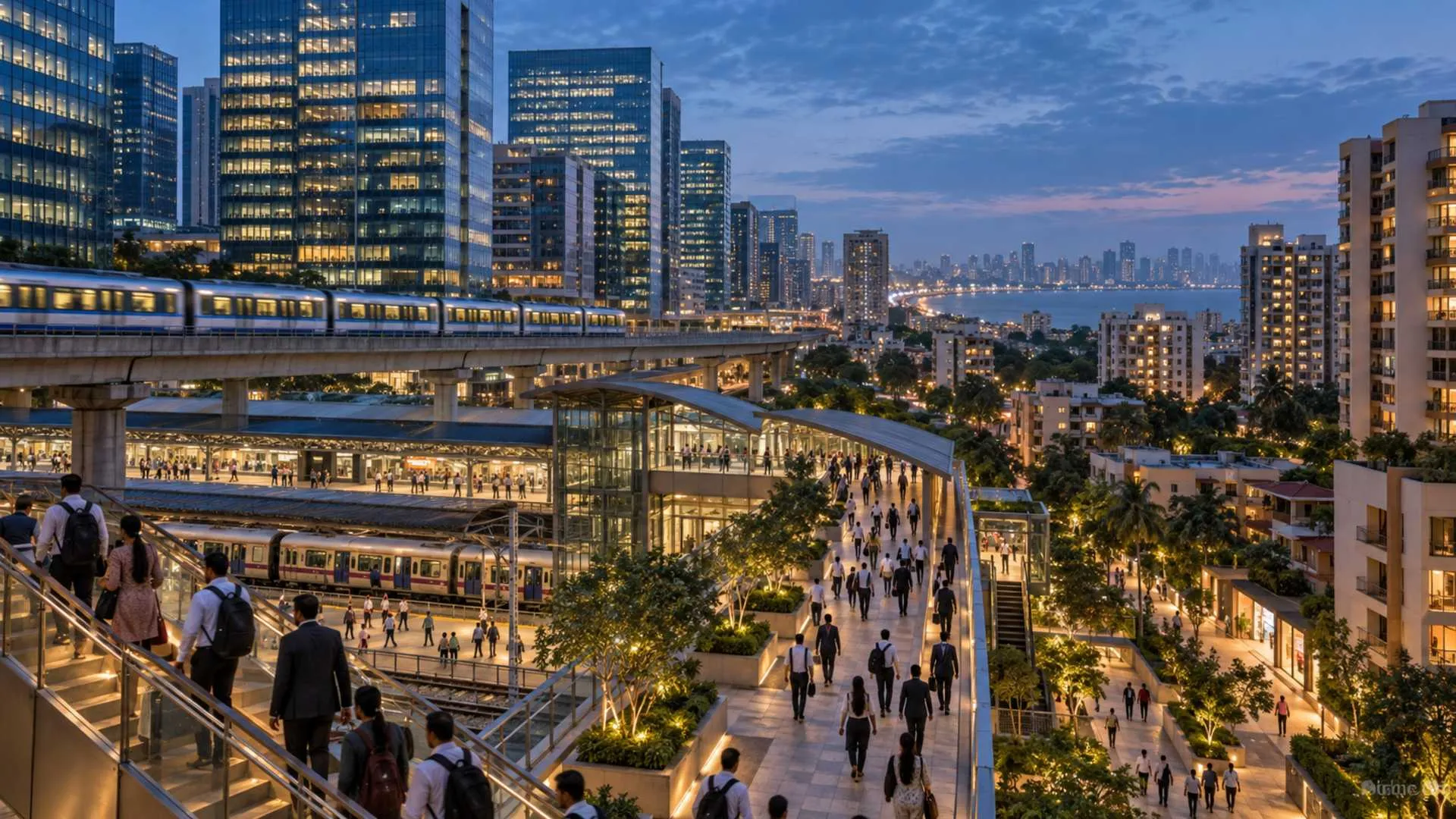
Pune is attracting a larger slice of India’s institutional property investment and the story reaches well beyond rising apartment prices.
The city’s share of real estate private equity inflows increased from 6% in FY26 to 11% in H1 FY27, according to ANAROCK data reported by Business Standard. The latest period covers April–September 2026. That is a five-percentage-point gain, bringing Pune’s share close to twice its previous level.
For developers, this puts greater attention on projects capable of attracting professional investors. For homebuyers, it raises a practical question: does institutional confidence make a flat in Pune a stronger purchase?
The answer begins with understanding what investors are buying. A fund acquiring an income-producing office building is assessing tenants, leases and future cash flows. A family purchasing an apartment is assessing affordability, possession, schools and daily travel. Their interests can overlap, but their investment decisions are different.
Why is Pune attracting more institutional real estate investment in 2026?
Pune offers a combination of IT and engineering employment, growing Global Capability Centre activity, and opportunities in income-producing commercial property. These fundamentals help explain institutional interest. Its rising investment share signals greater capital allocation, although returns still depend on individual assets, acquisition prices, tenant quality and local supply.
That explanation is consistent with Integrow Asset Management’s assessment of commercial property demand in MMR and Pune, which highlights Pune’s technology ecosystem, manufacturing base, competitive office rentals and growing GCC presence.
What Pune’s 11% investment share actually tells us
The headline is significant, but the comparison needs context. FY26 is a full financial year; H1 FY27 is six months. The figures show a change in allocation share between those periods, rather than a like-for-like annual growth rate.
ANAROCK’s figures also show that investment is becoming more geographically diversified:
| Market or investment category | FY26 share | H1 FY27 share |
| Pune | 6% | 11% |
| Bengaluru | 13% | 17% |
| MMR and NCR combined | 40% | 16% |
| Pan-India and multi-city transactions | 18% | 49% |
These figures, reported by Business Standard, describe investment allocation rather than residential sales or property-price growth. Multi-city transactions form a separate category, making simple city-versus-city comparisons incomplete.
The numbers do not establish that money has moved directly from Mumbai or Delhi into Pune. A lower share can reflect changing deal composition, transaction timing, or larger investments elsewhere.
Pune’s gain is evidence of greater investor attention; it is not a prediction that every property in Pune will appreciate.
The attraction: businesses that need space and buildings that earn rent
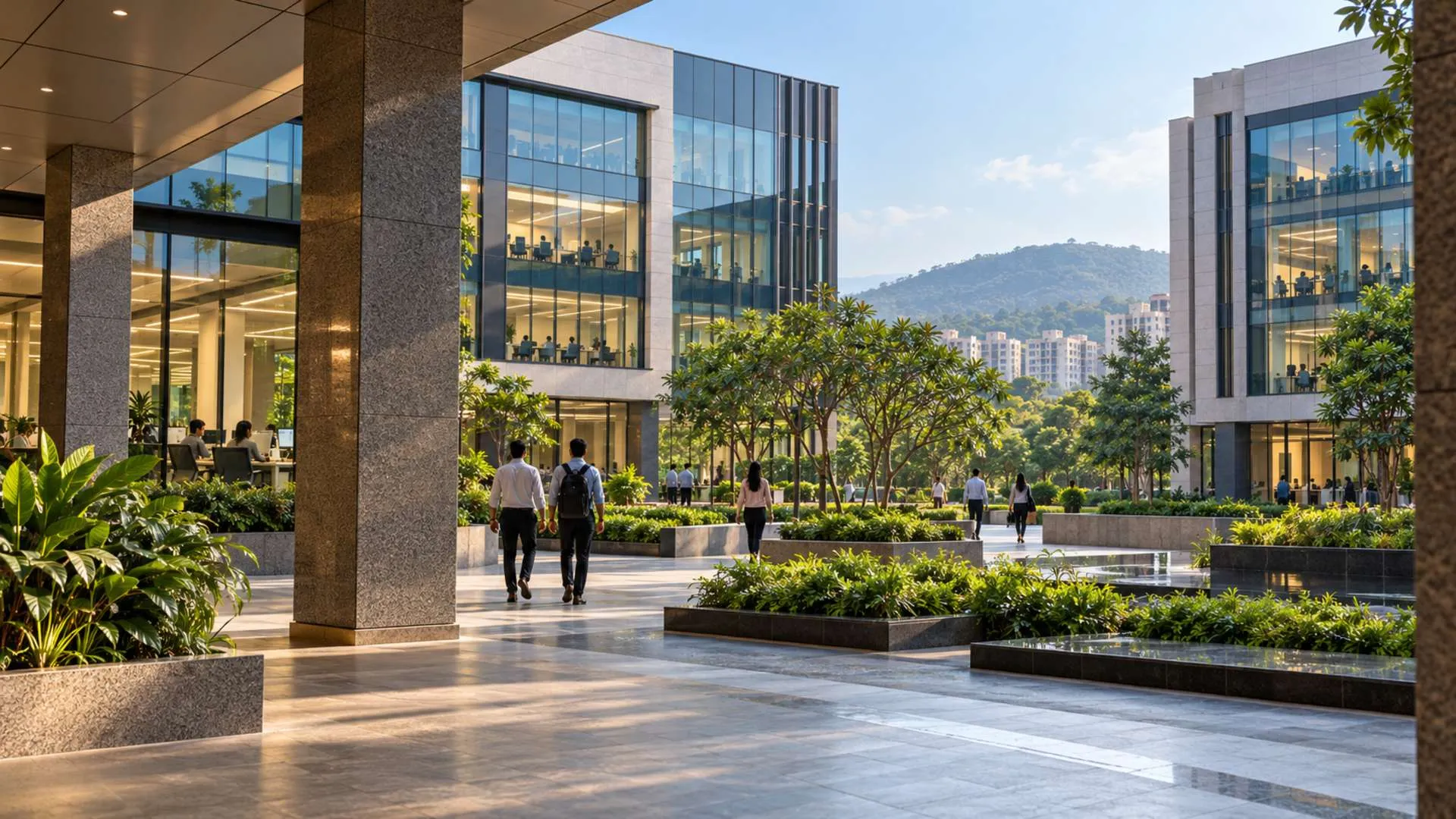
Institutional investors need a credible explanation for future income. Pune’s mix of technology, engineering and manufacturing businesses offers several potential sources of occupier demand.
Integrow’s analysis points to demand for quality offices and to investors’ preference for assets with dependable tenants and longer leases. Its investment framework considers tenant credit quality, weighted average lease expiry, competing supply and exit liquidity. These are useful indicators of how professional investors assess an office acquisition.
A Global Capability Centre, or GCC, can support this investment case when its expansion produces actual occupied space. Such centres may house technology, engineering, finance, or other corporate functions. For a landlord, the important evidence is a signed lease, sustainable rent and a tenant’s commitment to the location.
That distinction matters. An expansion announcement creates interest; an occupied building creates income.
Nationally, offices attracted 35% of real estate PE inflows in H1 FY27, with investors buying completed, leased Grade A assets, according to The Economic Times’ report on ANAROCK’s findings. Domestic investors also deployed approximately $1.3 billion across 24 transactions during the period.
These national figures provide context for Pune’s momentum. They do not reveal Pune’s precise office-versus-residential investment split, but they show why leased commercial property deserves attention alongside housing.
For developers, the opportunity is concrete: build properties that businesses can occupy efficiently, maintain them well and support transparent leasing. Institutional scrutiny places value on execution that remains useful after the launch campaign ends.
Which Pune locations deserve closer attention?
The available city-level investment figures do not provide a verified ranking of Pune micro-markets by PE inflows. Buyers should therefore distinguish established employment corridors from locations demonstrably receiving the most institutional capital.
UrbanPillar’s overview of Pune’s real estate market identifies Hinjewadi, Kharadi and Magarpatta as technology employment centres, while highlighting Pimpri-Chinchwad’s manufacturing base. These are relevant starting points for examining office demand and nearby housing requirements.
In western Pune, Hinjewadi warrants attention because of its employment ecosystem. Baner, Balewadi and Wakad can enter the same property search, but their appeal must be assessed building by building. Office quality, access and competing supply can differ substantially within a corridor.
In eastern Pune, Kharadi and the Hadapsar–Magarpatta belt offer another employment-linked investment story. Kolte-Patil’s Pune property investment guide, updated in September 2026, discusses commercial concentrations in Hinjewadi, Kharadi, Viman Nagar and Magarpatta. As developer commentary, it provides location context rather than independent proof of investment returns.
For someone considering a 2BHK flat in Pune, the useful question is specific: which occupied workplaces can this home serve with a practical daily commute?
A neighbourhood’s association with an IT hub is only the beginning. The project’s actual entrance, road access, public transport and surrounding services determine everyday convenience.
QTS 4.0: a useful signal, with clear limits
Pune’s housing absorption offers another piece of context. Reporting on Knight Frank India’s H1 2026 findings placed Pune’s Quarters-to-Sell figure at 4.0, the lowest among the eight markets covered.
As explained in The Economic Times’ coverage of the inventory report, QTS estimates the time required to sell existing inventory using the average sales pace of the preceding eight quarters.
Four quarters means approximately one year, not four months. It is an inventory measure, not a safety rating or a guaranteed clearance date.
Relatively efficient absorption can support confidence in residential demand. However, a citywide average can conceal slower sales in a particular price bracket or neighbourhood.
It also cannot explain an office fund’s decision on its own. Commercial investors need evidence about commercial occupancy, lease income and supply. Residential QTS supplies broader market context.
What institutional capital means for Pune homebuyers
The potential connection runs through employment. Investment in offices can support business expansion; occupied offices can support nearby rental demand; sustained demand may influence residential values.
Each step needs evidence. Capital entering a commercial asset does not automatically produce new jobs, and new jobs do not automatically justify a higher apartment price.
For residential buyers, institutional activity is most useful as an additional research signal. It can encourage closer examination of employment-linked locations, developer execution and neighbourhood infrastructure.
The same discipline applies to rental investments. Amar Builders’ office investment guide distinguishes gross rental yield from returns after expenses. Although its market estimates are developer-published, the distinction is essential: maintenance, taxes, vacancy and transaction costs affect what an owner actually earns.
Before committing to an investment flat in Pune, ask:
- Are comparable homes actually occupied, and what rent do signed leases support?
- Does the purchase price remain reasonable after all acquisition costs?
- What competing supply could affect rent or resale?
- Can the investment withstand vacancy or a delayed sale?
These questions turn a promising market story into a decision that fits an individual budget.
Pune’s next test is sustained performance
Pune’s rising property investment share gives developers and buyers a reason to watch the city closely. It strengthens the case for examining its commercial assets, employment corridors and housing demand together.
The next test is whether investor interest translates into durable occupancy, reliable income and well-executed projects. More capital may encourage new developments, including premium housing, but the investment-share figures do not establish how much luxury supply will follow.
The strongest property investment case combines a credible location with an appropriate price and dependable execution. Pune’s headline momentum makes those checks more relevant.
Planning to buy property in Pune or compare employment-linked neighbourhoods? Explore RealtyConnect and start your search with a clear budget, realistic commute requirements and a shortlist you can verify before booking.